

Storage that works in a small bathroom runs from a $20 basket on the floor to a three-tier rolling cart you can move when the space needs to shift.
What you pick depends on how much wall you have left and whether you’re willing to drill into it.
A wine rack mounted near the shower holds six rolled towels in individual slots, and a ladder rack leans against the wall without touching the floor plan at all.
1. Over-Door Storage
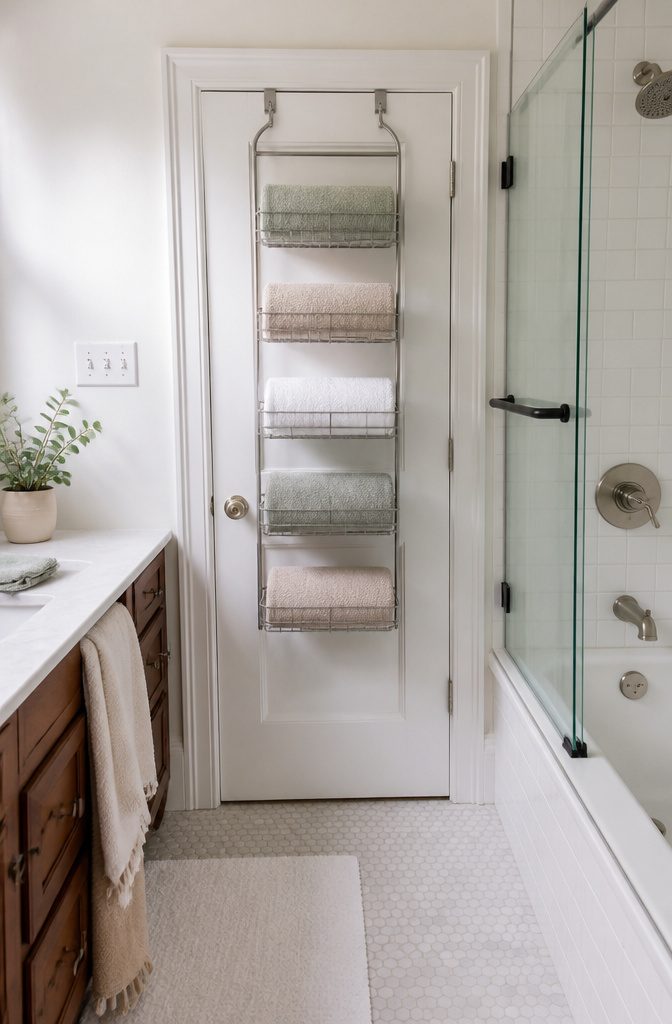
The space above the bathroom door sits unused in most rooms, and a shallow shelf mounted there holds rolled towels without claiming any wall you actually see.
The shelf keeps spare towels within reach but out of the way, which matters when every other surface already has a job.
Most small bathrooms have the door close to the shower, so grabbing a fresh towel mid-routine takes one step instead of three.
I install wooden shelves for warmth or wrought-iron ones when the room skews industrial, both mounted directly above the frame.
Perfect for anyone without a linen closet, hang a tiered shelf over the door frame to keep towels and linens within reach.
The tiered version adds hooks below the shelves, which turns the same footprint into storage for hand towels, robes, and whatever else cycles through daily use.
Over-the-door racks made from high-quality steel hold up to bathroom humidity and install with screws or simply hang over the top of the door. Either way, the approach clears counter space and keeps towels off the sink or the floor.
2. Ladder Racks
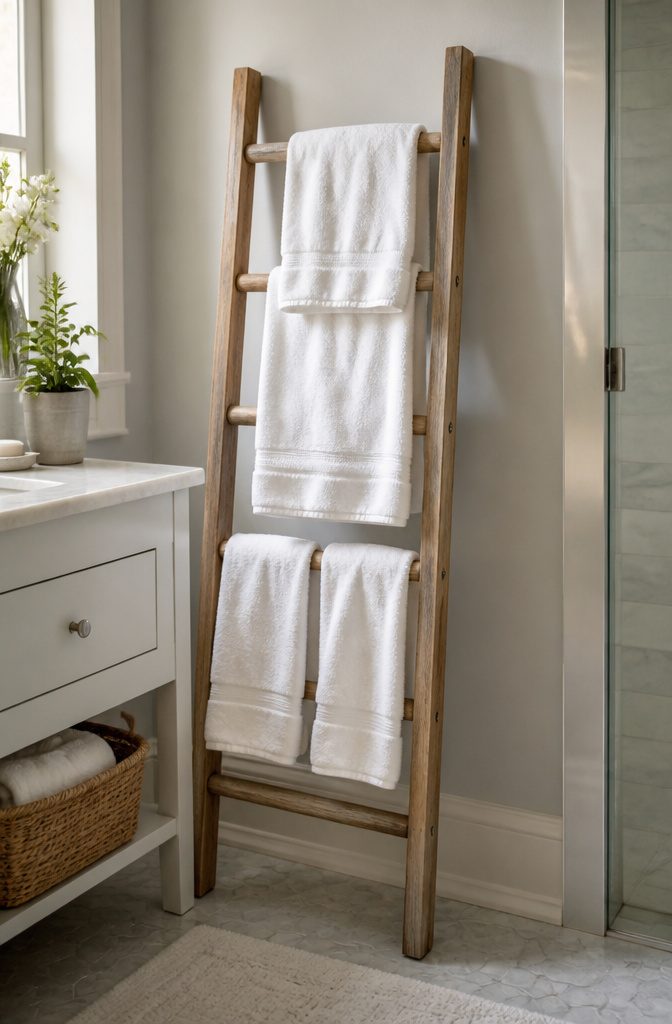
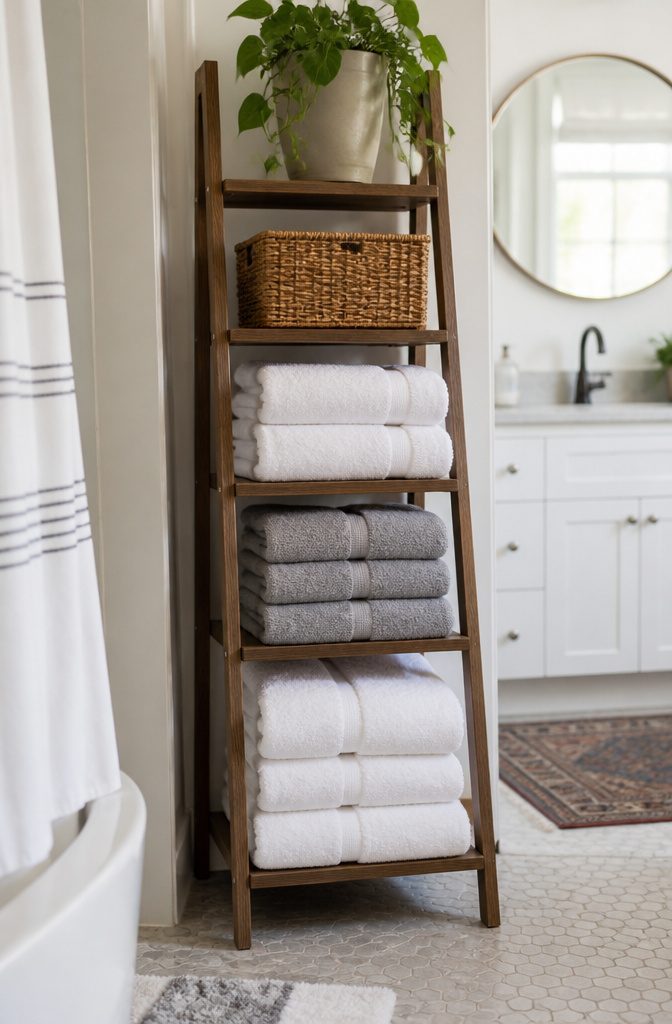
A ladder takes up almost no floor space while holding several towels at once.
You lean it against the wall, hang towels over the rungs to dry, and on models with shelves, stack clean towels higher up. I like this for bathrooms where floor space is already spoken for but wall space sits empty.
The narrow frame slides into tight spots a cabinet or cart would never fit. That leaves the floor clear for a basket or a small bin where you actually need it.
Ladder racks made from reclaimed hardwood give you the sturdiness without much weight, and the rustic look works with most bathroom styles without trying too hard.
Some people repurpose an old work ladder if they have one sitting around.
It does the same job and costs nothing, though you lose the shelves and any finish meant for a damp room. For a bathroom that gets regular use, I’d go with a model built for it.
3. Shelves and Vertical Racks

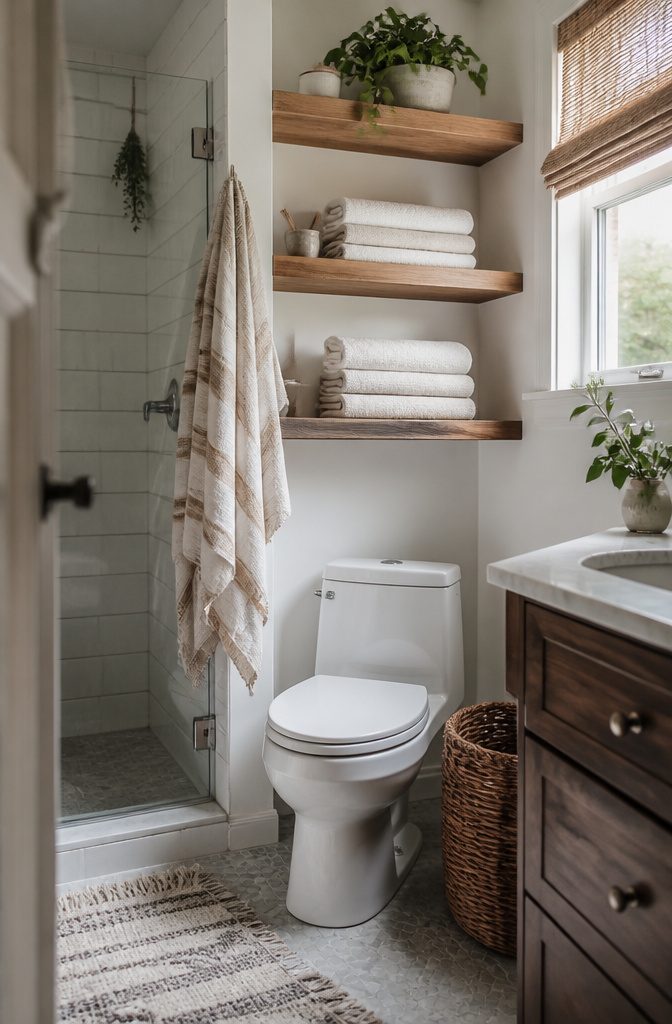
A wall-mounted shelf above the toilet is one of the fastest ways to reclaim floor space without adding another piece of furniture.
The shelf sits in dead air that isn’t doing anything else, and you can stack rolled or folded towels within arm’s reach of the shower.
I prefer rolled towels on open shelves because they stay tidier and you can see every edge at once.
A vertical towel rack works the same way but mounts flat against any small patch of wall.
The rack I see most often is a six-tier metal design that holds as many towels as a linen closet but takes up less than a square foot of floor.
The open frame makes it easy to grab what you need and put it back without moving other towels out of the way. Corner mounting is an option if the wall beside the vanity is already spoken for.
4. Baskets and Crates
Baskets and Crates
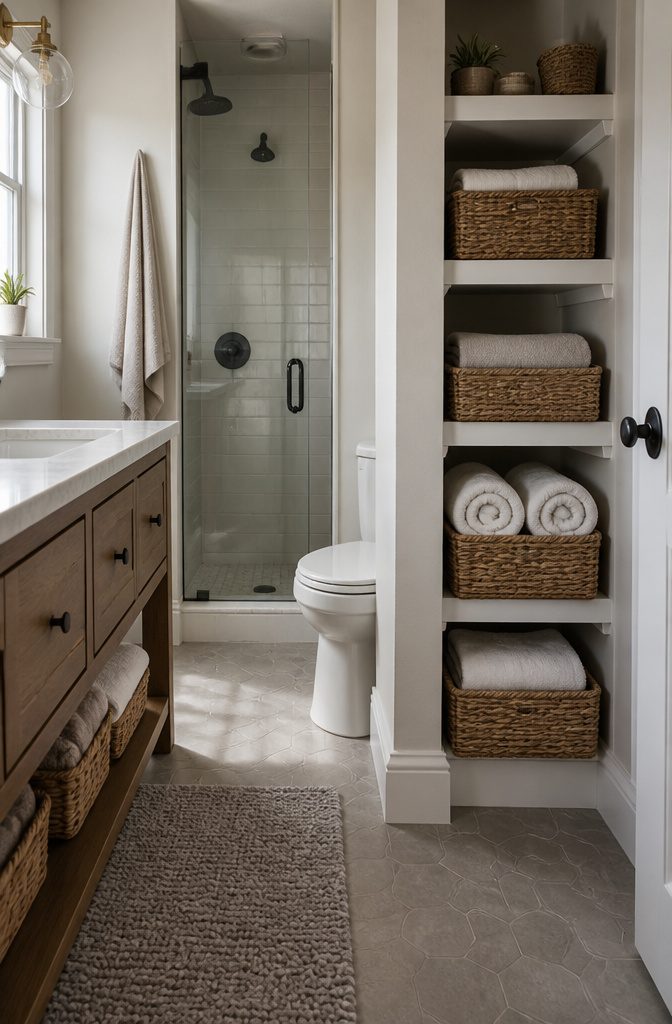
A floor basket works well in corners or under the sink if you have six to eight inches of clearance.
Rolled towels in a seagrass basket give a spa feel without taking up wall space, and natural materials like jute or seagrass suit humid rooms better than painted wood or metal that can warp or rust.
I keep guest hand towels rolled in a small bowl on the counter, which looks better than a folded stack and takes up less room.
Wall-mounted baskets free up the floor entirely. You can nail a rectangular woven basket directly to the wall or hang one with handles from a hook.
An old wooden box with a leather strap works the same way and reads more industrial if that suits the room better.
The box approach costs nothing if you already have one at home, and a basket runs about $20–$26 depending on size and material.
5. Carts and Caddies
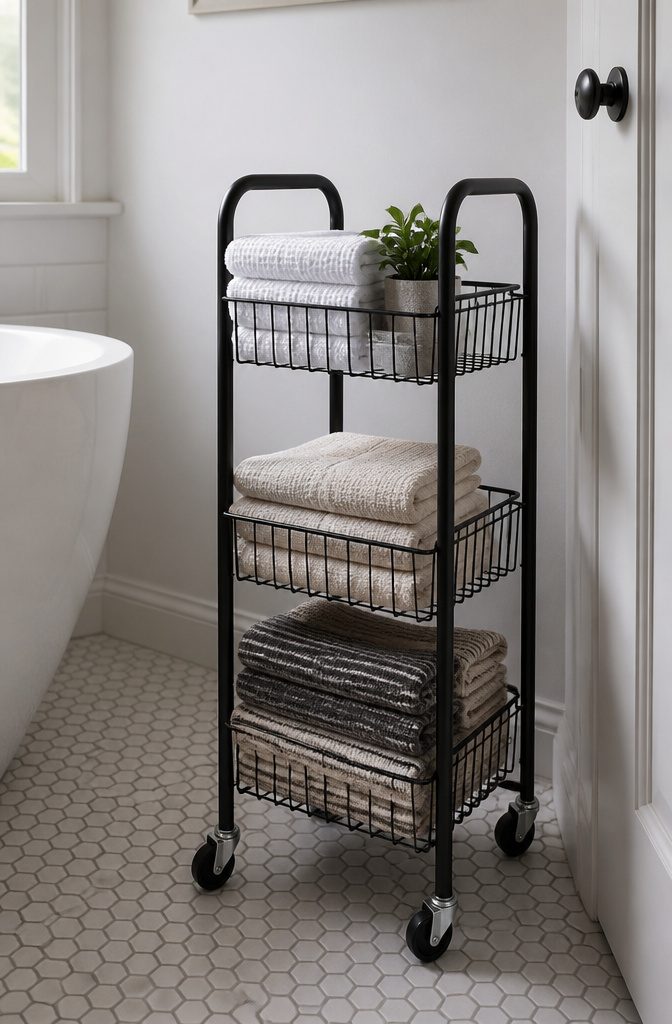
A rolling cart gives you towel storage that moves when you need it and disappears when you don’t.
I use this setup most often in bathrooms that change roles throughout the day: a cart holds the morning routine near the shower, then rolls to a corner or into a closet by evening.
The SPACEKEEPER three-tier trolley is built for exactly this, with dividers, compartments, and side hooks that keep rolled towels separate from bottles and razors.
The lockable castors matter more than they sound like they would; without them, the cart drifts every time someone bumps it.
A slim caddy works if the gap is tight. Eighteen inches between the toilet and shower is enough for a three-tier unit that holds spare towels and shower supplies without blocking the path.
Bar carts do the same job with a different look, and I point clients toward them when the bathroom connects to a bedroom or hallway where the cart doubles as visible storage rather than something to hide.
Either way, wheels win over fixed furniture in a small bathroom, because the floor plan changes the moment you can roll the storage out of the way.
6. Towel Bars, Rails, and Holders
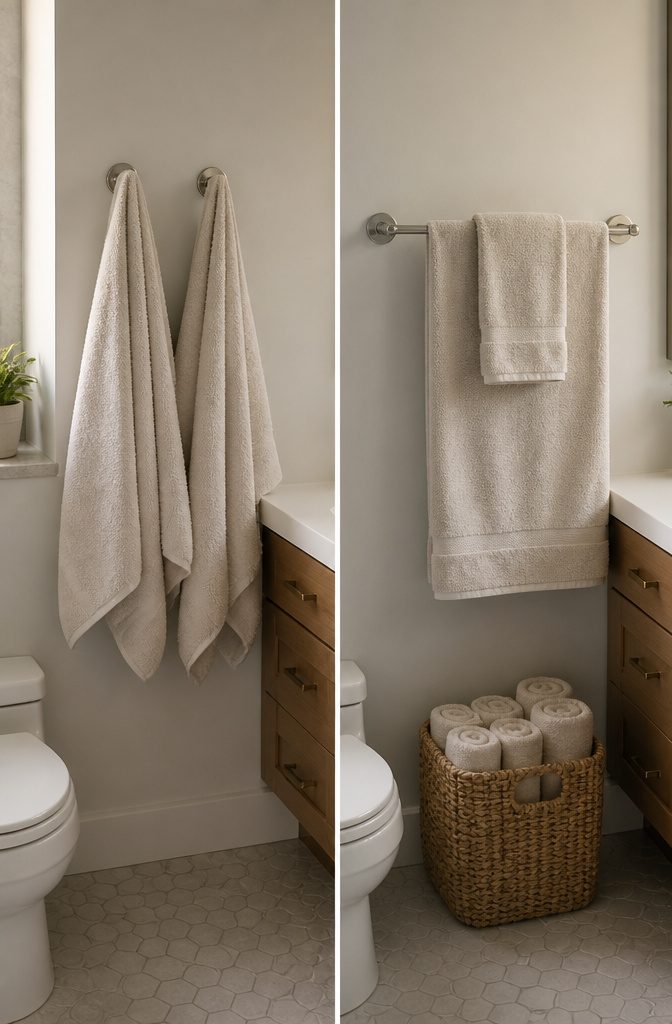
A swivel towel bar that rotates 180 degrees lets you drape and reach from any angle, which matters more than it sounds in tight quarters where you can’t circle around to the other side.
These bars hold multiple towels without stacking them flat on top of each other the way a single fixed rod does.
The rotation makes retrieval quick when someone behind you is trying to squeeze past. Expect dimensions around 13.78 × 1.18 × 9.65 inches and a weight near 1.7 pounds, so mounting on drywall with anchors holds fine.
Vertical racks beat horizontal ones in small bathrooms because they claim height instead of spreading sideways.
A six-tier metal rack fits into a corner or narrow wall stretch and holds as many towels as you need within arm’s reach. The open tiers make grabbing one easy without disturbing the rest.
I prefer vertical designs for renters and anyone working around furniture that can’t move, since the footprint stays small and the rack doesn’t block cabinet doors or crowd the sink counter.
7. Repurposed Household Storage
Wine racks hold rolled towels in individual slots and mount near the shower where you can reach them without dripping across the floor.
A sturdy wall-mounted rack fits up to six standard towels, which covers what most small bathrooms need for one or two people between laundry days.
The spacing keeps towels visible and stops them from bunching into a damp pile the way a single basket does.
Magazine racks work the same way if the slots are wide enough for a rolled towel, and a small bookshelf gives you adjustable shelves that hold folded stacks or baskets of washcloths.
The advantage here is that you’re not buying storage built for bathrooms, which tends to cost more and look less interesting.
A bar cart on wheels holds spare towels in baskets on the lower shelf and toiletries on top, and you can roll it out of the way when floor space matters.
8. Under-Sink and Vanity Storage
Under-Sink and Vanity Storage
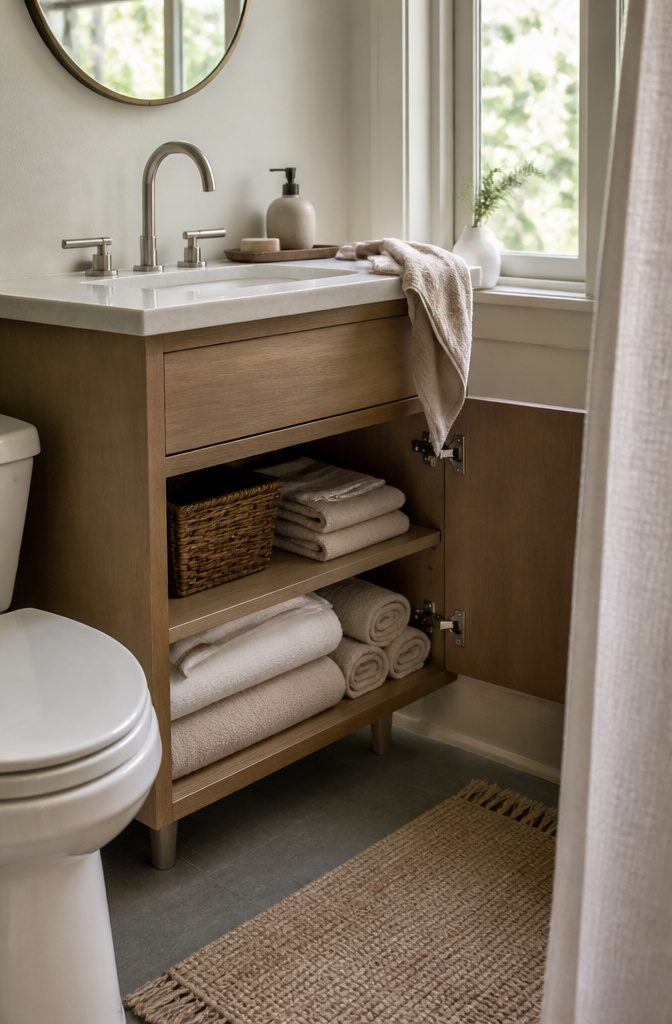
The cabinet under your sink probably holds cleaning supplies and a tangle of old toiletries, but it can fit several folded towels if you reorganize what’s already there.
A shallow basket or tension shelf adds a second level, and towels stacked flat take up less vertical space than you’d expect.
I prefer this spot for hand towels rather than bath sheets, since the depth of most under-sink cabinets makes it awkward to pull out anything bulky.
If your vanity has drawers, the bottom one is usually deep enough for bath towels folded in thirds and stacked on their side.
Built-in drawer dividers keep stacks from sliding around when you open and close, though a simple tension rod running front to back does the same job for less money.
The real advantage here is keeping towels completely out of sight without giving up wall space you might need for hooks or a mirror.
Finding and Using Overlooked Space
Finding and Using Overlooked Space
The best small-bathroom storage sits in places you wouldn’t put a piece of furniture.
Above the door is the first one I look for: mount a shelf across that empty span and you gain room for rolled towels without touching the floor or blocking a single wall.
Most bathroom doors sit close to the shower in a tight layout, so whatever you store there stays within reach when you need it.
Corners pull the same trick.
A corner shelf runs floor to ceiling if you have a lot of towels, or stops halfway to hold a few near your other bathroom products. Either way, it uses the triangle of space a freestanding cabinet wastes.
Narrow gaps count too. An 18-inch slot between the toilet and shower fits a three-tier caddy for towels and spare essentials, and vertical racks made for tight wall spaces hold more than any horizontal bar while taking up less room.
Keeping Clean Towels Separate from Used Ones
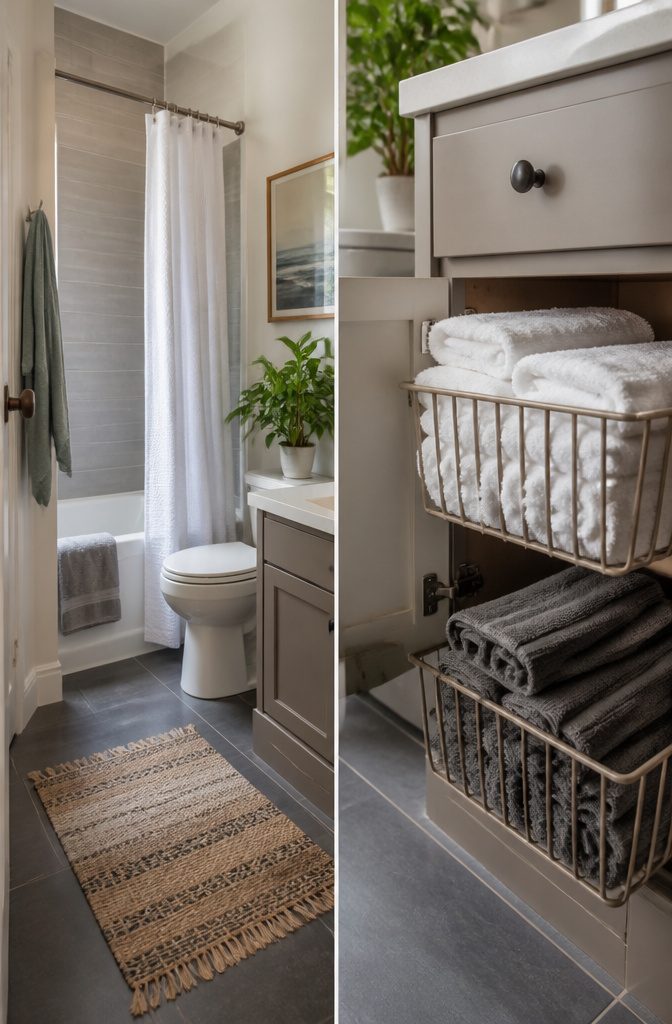
The basic rule is straightforward: fresh towels stay folded or rolled in a closed space, and damp towels hang out in the open until they dry.
That separation keeps clean towels from picking up moisture and the smell that comes with it, and it means you always know which ones are ready to use.
A small bathroom usually has room for at least a single wall-mounted towel bar where the towel you dried off with this morning can air out between showers.
If you have the floor space, adding a small laundry basket gives you a place to toss used towels and clothes without piling them on the counter or leaving them wadded up behind the door.
I fold clean towels into thirds and stack them on a shallow shelf or inside a narrow cabinet. Rolling works just as well and fits better in a basket or bin, especially when the shelf is tight.
The goal is not a hotel display. It is keeping what is clean separate from what is not.
Storage That Adds to the Room’s Look
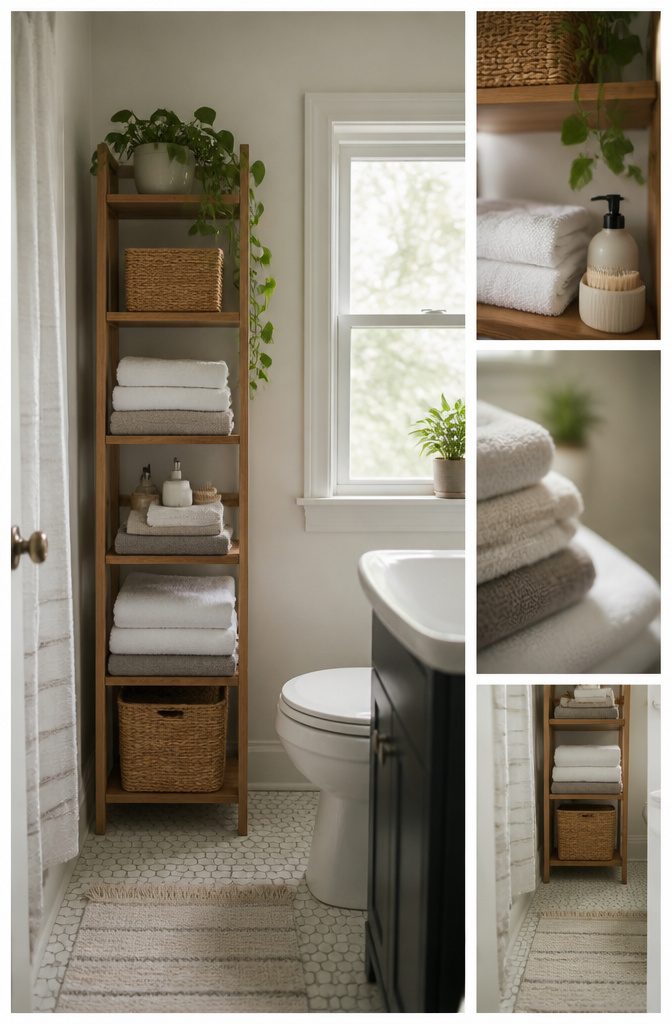
A decorative basket on the floor holds rolled towels and becomes part of the room instead of an afterthought shoved under the sink.
Natural materials like jute or seagrass pair well with most bathrooms, and a basket takes up floor space without adding visual clutter to counters or walls.
I like using them near the shower or beside the toilet, where the towels stay within reach but off surfaces you want clear. A basket also doubles as storage for other bathroom items if you need the flexibility later.
Rope cleats mounted to a wooden shelf bring in a nautical detail while holding towels neatly in place, and the trim keeps folded towels from sliding around.
A small bowl of hand towels next to the basin reads more spa than storage and suits a bathroom where you want that relaxed feel.
The thread between all of these is the same: storage that contributes to the look of the room does not need to be hidden, so you can place it where it works functionally and still have it improve what someone sees when they walk in.
Frequently Asked Questions
Where is the best place to store bathroom towels?
The best place depends on your layout, but above the door, on wall-mounted shelves near the shower, or in under-sink cabinets all work well for small bathrooms.
Rolled towels in a floor basket or on a ladder rack are good alternatives when wall and cabinet space is limited.
Keep clean towels in closed or defined spaces and hang damp ones on a bar or hook where air circulates.
What are some clever storage ideas for a small bathroom?
Mount a shelf above the door to use space that normally sits empty, fit a slim rolling cart or caddy into gaps between the toilet and shower, or install a vertical towel rack that claims height instead of width.
Corner shelves, over-the-door racks, and wall-mounted baskets all add storage without taking up floor space. Repurposed items like wine racks or magazine racks can hold rolled towels in tight spots.
What to use instead of a towel rack?
A ladder rack leaning against the wall, a rolling cart with shelves, or hooks mounted individually on the wall all work in place of a traditional towel bar.
Wall-mounted baskets, over-the-door racks, and vertical multi-tier racks also hold towels without needing a horizontal bar. Floor baskets are another option if you have a corner or space beside the toilet.
Is it better to roll or fold towels for storage?
Rolling works better for open shelves, baskets, and tight spaces because you can see every towel at once and grab one without disturbing the rest.
Folding in thirds suits closed cabinets and deep drawers where towels stack flat. Both methods take up about the same amount of space, so pick based on where you’re storing them.