
The tactics that work take between ten seconds and an hour depending on what you have time for and whether you’re trying to finish one surface or power through an entire room.
What stops most people isn’t the work itself but the thought of eight hours on Saturday scrubbing a whole house, which is why the methods that build momentum fast—twenty-minute timers, single-room focus, accountability groups, podcasts saved only for cleaning—outperform vague plans to tackle everything at once.
1. Play Music, a Show, Podcast, or Audiobook While Cleaning
Pairing cleaning with audio you genuinely want to hear makes the work something to look forward to instead of dread.
Save a podcast or audiobook you care about for cleaning hours only, and the task turns into the excuse you need to press play.
Ann Patchett novels, true crime series, or a show like Gossip Girl all work the same way: the entertainment becomes the reward, and because you only let yourself enjoy it while cleaning, your brain starts to blur the line between the two.
After a few sessions, the desire to hear what happens next can pull you off the couch faster than any resolution to tidy up.
Music works too, especially if you build a playlist that matches the energy you want. Dance tracks during a power clean feel different than background instrumentals during slower organizing work, and both beat silence.
The format matters less than the restriction: whatever you choose, keep it exclusive to cleaning time so the association builds and the next episode or album starts to feel like a reason to get moving.
2. Tie a Reward or Treat to the Job

The trick that works for a lot of people is tying the cleaning job to something you actually want.
Set a reward that you only allow yourself during the task, whether it’s a specific snack, a special drink, a favorite show, or music you save for this one use.
Laundry expert Patric Richardson calls it "cleaning candy," and the whole concept hinges on exclusivity. If you let yourself have the treat any other time, the association breaks down and the motivation goes with it.
Giving yourself something to look forward to when the task ahead of you is otherwise uninteresting (or even loathsome!) is an easy way to turn things around. You may not want to clean, but you do want to eat that snack or listen to that podcast, so you end up cleaning just so you can do it.
Over time, your brain links the reward to the work, and the job feels less like something you’re forcing yourself through.
The version I see most often is snacks or candy kept visible but off-limits except when you’re actively scrubbing or sorting. If you go that route, wear gloves while you clean and take them off when you reach for food.
That keeps cleaning products off what you eat and gives you a built-in pause between tasks. The reward can just as easily be a meal out when the job is done, especially if you’re too tired to cook afterward.
3. Set a Timer and Race the Clock
A timer turns cleaning from an open-ended slog into a fixed sprint. Set it for twenty minutes and work straight through, or challenge yourself to finish one room before the beep.
I keep the method simple: pick the task, start the timer, move fast. The commitment is small enough that starting feels easy, and once the timer runs, momentum usually carries past it.
The Pomodoro approach works when the job is larger: twenty-five minutes of cleaning, then a five-minute break, then another round. The break matters because it keeps energy up without turning the whole afternoon into one exhausting push.
I’ve used a microwave timer for quick kitchen cleanups, racing to wipe down all the cabinet handles before it beeps. The adrenaline when you beat it makes the next round easier to start.
Seven-minute sprints work for very small pockets of time.
If the bus is ten minutes late, that’s enough to clean a half bath or clear a countertop. Low commitment, immediate reward, and the dopamine hit when you finish keep the method working.
4. Break the Job Into Small Tasks or One Small Area

The whole house feels overwhelming, so face one room or one limited task instead.
I focus on a bedside table, the kitchen counter, or the bathroom sink rather than trying to clean every surface at once. Once that small area looks finished, momentum builds naturally, and the next task feels easier to start.
A to-do list of five to seven household tasks that don’t take more than ten minutes apiece works the same way. Vacuum the bedroom.
Wipe down the sink. Put away the laundry pile.
Each time you cross one off, you get a small hit of progress that keeps you moving forward. The list turns a shapeless afternoon into something concrete.
Another approach is thinking of ten tasks that take less than ten seconds each, then doing all ten in a row. Put a dish in the sink.
Hang up a towel. Push in a chair.
Toss a wrapper. The speed makes it feel less like cleaning and more like clearing, and the rhythm carries you through without overthinking.
5. Make a Checklist and Cross Off Completed Jobs

A written list turns vague intention into visible structure. When I write down five to seven household tasks that each take under ten minutes, the scale of what I am doing shifts from overwhelming to specific.
Vacuuming the bedroom is one line. Cleaning the sink is another.
Each one gets crossed off when it is done, and that crossing-off matters more than it should. The act of marking a task complete delivers a small hit of dopamine, which keeps momentum going when willpower alone would not.
I keep the list somewhere I will see it often—taped to the fridge, set on the counter, stuck to the bathroom mirror—with a pen or marker nearby.
The physical act of putting a heavy black line through finished work registers as progress in a way that mental accounting does not.
Tasks that might blur together when I think about cleaning the whole house become countable wins when I can point to what I finished and what remains.
6. Arrange Accountability With Other People

Arrange Accountability With Other People
Cleaning with a group that reports back makes the job harder to avoid.
One format I’ve seen work is Friday Family Clean, where four people (two adults and two kids) turn on dance music and power clean together for an hour.
The group energy matters more than the playlist, though finishing with popcorn and a movie doesn’t hurt retention.
Facebook accountability groups run on a different rhythm but follow the same principle. Everyone posts what they plan to tackle, leaves for a set amount of time, then returns to report what actually got done.
The structure is surprisingly effective for people who need external pressure to start, but the format has one clear weakness: if members start chatting instead of cleaning, the accountability window turns into a distraction.
I’d recommend setting a timer and staying off the thread until the work is finished.
Strange as it sounds to announce your plan to strangers and return with proof, the method works because it converts a private intention into a public one.
7. Invite People Over or Plan a Party

Nothing moves a cleaning session forward like telling someone they can stop by tonight. The pressure is real, and inviting people over creates a deadline you will actually meet.
I’ve used the two-hour version more than once: imagine company arriving in two hours and clean whatever you would normally clean if that was the case.
It works because you stop debating what matters and focus on the rooms guests will see.
The five-minute version is different.
That is stash and dash, where you cram things out of sight and deal with consequences later. Acceptable with five minutes’ notice, but not the point here.
These games are supposed to replace that method, not repeat it. The real win is avoiding a credit card statement stuffed under the bed or dirty dishes hidden in the bathtub, because someone will look.
Sometimes I take it further and actually send the invitation.
The fear of friends seeing the mess is enough to light a fire, even if closets and bedrooms stay untouched. At minimum, the main living space gets a real once-over.
8. Turn Cleaning Into a Game or Challenge

The commercial-break pickup is the one I reach for most often: grab as many out-of-place items as you can in 30 seconds, then return them before the show resumes.
It works because the timer is tight enough to silence hesitation, and you stop before the task feels endless. A number-based item hunt runs the same way but without the show.
Pick a number between 1 and 50, then collect and put away exactly that many things. The arbitrary count makes it feel less like a chore and more like a scavenger hunt with a finish line.
If you’d rather skip the cleaning task altogether, the physical challenge trade gives you that out: do 30 push-ups, 50 crunches, or 75 squats instead of the chore you were avoiding.
The best part is you’re still doing something useful for yourself even if you dodge the dishes. I find this works well when motivation is very low but you still want to move.
9. Watch Cleaning Videos for Inspiration or Pretend to Film One
Watching cleaning videos before starting gives a surprising push when motivation runs low. Clean With Me videos on YouTube show someone else working through the same jobs, and that visibility makes starting feel less abstract.
Blogs like Becoming Minimalist, The Minimalists, and A Slob Comes Clean work the same way: reading for fifteen minutes before picking up a cloth shifts the mental state from avoidance to readiness.
Another version skips the audience entirely and puts you in the role instead.
Narrating your own work out loud as though filming changes how carefully you move through a room, even when no camera runs. The performance aspect keeps focus tighter, and talking through each step makes it harder to drift away mid-task.
I delete the footage immediately afterward when I actually record, but the effect holds either way: pretending someone watches makes me less likely to take shortcuts I would take alone.
10. Use a Habit Tracker or Routine

Scheduling a specific time turns a chore you keep avoiding into something that simply happens.
I write windowsills on my calendar for Tuesday from 4 to 5, spend that hour, and then forget about them for a year. The decision fatigue disappears because the decision was already made.
A habit tracker does the same thing for daily work. Willpower is finite—if you already ran three miles and paid bills, you may not have enough left to choose cleaning over the couch.
A tracker that lists wiping counters, putting clothes away, and making the bed removes the choice. Those tasks stop being decisions and become automatic, which means they no longer drain discipline.
The tracker is just a piece of paper or an app, but what it does is shift cleaning from something you motivate yourself to do into something you do without thinking about it.
11. Prepare Tools and Supplies Before Starting
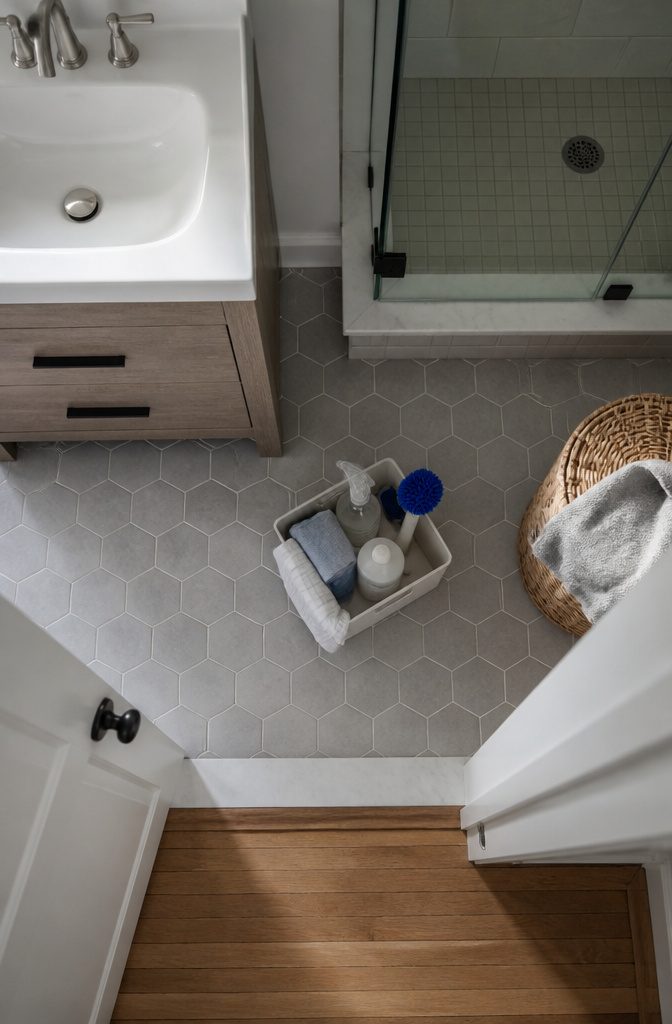
I put everything within arm’s reach before I start.
A caddy or bucket with the products I need sits right where the work happens, which means I am not walking back to a closet every time I realize the glass cleaner is still under the sink.
That interruption kills momentum faster than anything else, and the job stretches out longer than it should.
I keep a small bin stocked with microfiber cloths, all-purpose cleaner, glass spray, and a scrub brush, and I move it from room to room as I go.
If you have to stop and hunt for supplies, the mental friction of starting again is worse than the physical pause.
Non-toxic cleaners matter when the job is happening in a closed space or when you are doing multiple rooms in one session.
Vinegar and baking soda work, but I also keep a bottle of plant-based all-purpose concentrate around because it cuts grease without the smell that makes you open every window.
Perfection in the product lineup matters less than having what you need ready so nothing breaks the rhythm once you begin.
12. Choose High-Priority Jobs and Separate Major From Routine Cleaning

Motivation stalls when the job feels bigger than it is.
Keep larger seasonal projects separate from your regular weekly routine. No one wants to spend 8 hours on a Saturday scrubbing the deck when all you needed was to vacuum the living room and wipe down the bathroom.
The toilet scrub belongs in a different window than the deep spring clean, and mixing them guarantees you’ll either avoid both or burn out halfway through.
I find it easier to protect motivation by scheduling those big jobs on their own and setting realistic expectations around the everyday maintenance.
Pick a realistic amount of time to devote each week, clean that much, and when you’re done, you’re dismissed. You don’t have to do it all.
The small stuff keeps the house livable. The large stuff gets its own calendar slot, and trying to cram them together is where most cleaning plans fall apart.
13. Change the Room’s Furniture Arrangement
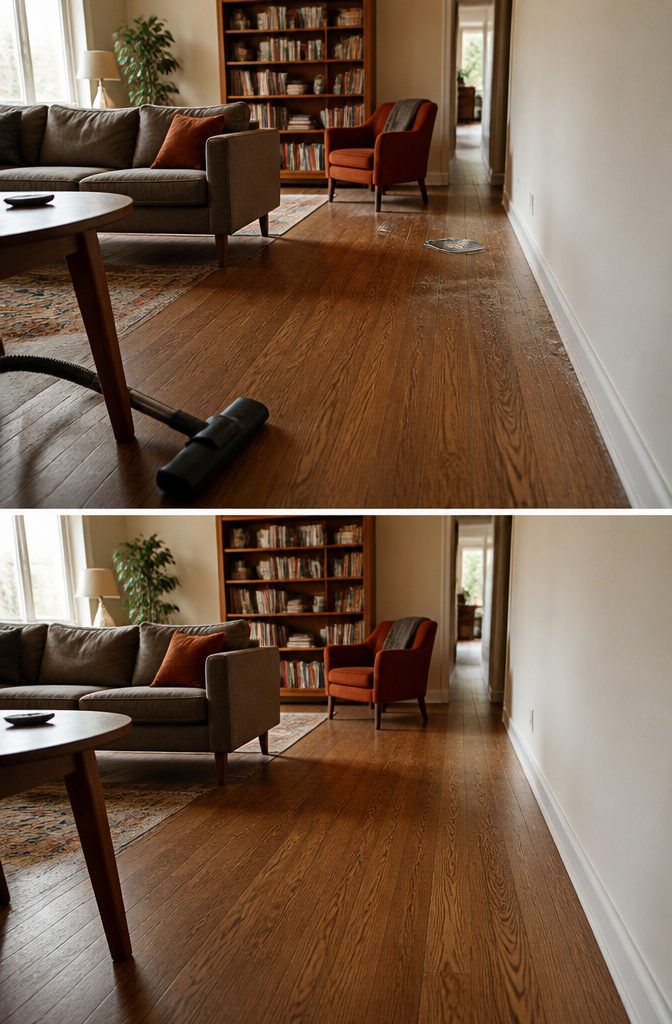
Moving the furniture around makes a room feel new enough that you suddenly care what it looks like.
I’ve seen this work when every other tactic stalls: shift the couch, angle the bookshelf, pull the bed six inches from the wall, and the space stops reading as background you’ve learned to ignore.
The change breaks the visual routine that lets clutter become invisible.
The best part is that rearranging forces at least some cleaning as a side effect.
You have to move the chair to vacuum under it, and once the chair is out of position you notice the baseboard dust and the forgotten magazine wedged behind the leg.
A new furniture layout also exposes problem zones you’d stopped seeing, which means you finally address them instead of working around them for another month.
14. Use a Sensory or Mood Boost Before Starting

The shift in how you feel before you start cleaning changes whether you start at all. A quick shower, a five-minute walk outside, or a few minutes of meditation can reset your energy enough to get you moving.
Playing music is one option, but scent works a different way. Spruce is motivating, lavender is both uplifting and relaxing, peppermint acts as a stimulant, and rosemary sharpens focus and concentration.
A diffuser with any of those oils makes the room smell better as you work, which is its own small reward.
Eating well and drinking enough water throughout the day keeps energy more stable than skipping meals and relying on caffeine.
A bad diet is one reason people feel tired in the first place. The limit on mood boosts is time.
A walk or a shower should take ten minutes, not half an hour. Past that, preparation turns into procrastination.
15. Ask Household Members to Share the Work

Whoever shares the house shares the work—that’s the baseline. Assign tasks by what each person can stand doing, not by some rotation that makes everyone equally miserable.
I handle bathrooms without complaint, but vacuuming makes me want to walk out the door. Someone else in the house doesn’t mind pushing the vacuum around.
That person gets vacuuming every time, and I get the tub. The distribution feels fair because nobody is stuck with the task they hate most, and that alone removes a layer of resistance before the work even starts.
This works for families, roommates, or anyone splitting a space.
Sit down once and map out who tolerates what. The conversation takes ten minutes and saves weeks of resentment.
A partner who genuinely prefers wiping counters to scrubbing floors should get counters. A teenager who would rather haul trash than fold laundry should haul trash.
Matching ability matters too—if someone’s back gives out halfway through mopping, they shouldn’t be assigned mopping. Build a list where no one is set up to avoid their job because they dread it.
Why These Approaches Work When Cleaning Feels Hard

Most cleaning advice fails because it ignores what actually stops someone mid-scroll: the thought of spending eight hours on Saturday scrubbing a whole house.
Breaking work into smaller chunks — one room, one surface, one twenty-minute block — creates momentum instead of dread.
Research on dopamine tells the rest: crossing an item off a list delivers a chemical reward that keeps you going, which is why a checklist of small tasks outperforms a vague plan to "clean everything."
The other pattern that works is tying something you enjoy to the job itself.
A podcast you save for cleaning, candy you only eat while wiping counters, or music that stays exclusive to chore time forms an association that makes starting easier.
The reward sits inside the work instead of waiting until after, and that timing matters. When the pleasant thing happens during cleaning rather than as a distant prize, your brain stops treating the task as pure punishment.
Frequently Asked Questions
How do I get motivated to clean?
Pair the work with something you enjoy and save only for cleaning time: a podcast, music, or a snack you don’t allow yourself otherwise.
Set a timer for 20 minutes to make the job feel finite, or break it into small tasks like one counter or one room so starting feels easier.
A checklist of 5 to 7 quick jobs gives you visible progress as you cross each one off.
How can I get energy to clean my room?
Take a quick shower, walk outside for 5 minutes, or drink water before you start. Focus on one small area like a bedside table or desk instead of trying to tackle the whole room at once.
Playing upbeat music or using a motivating scent like peppermint or rosemary can shift your mood enough to get moving.
Why do I have no motivation to clean the house?
The job feels too big when you think about the whole house at once, which triggers avoidance instead of action. You also may be running low on willpower if you’ve already spent energy on other decisions that day.
Breaking the work into one room or one 20-minute block makes it manageable, and tying a reward to the task gives your brain a reason to start.
What is the 20 minute rule in cleaning?
Set a timer for 20 minutes and work straight through without stopping, then decide whether to continue or take a break.
The method turns an open-ended task into a fixed sprint, which makes starting easier and builds momentum once you’re moving. A related approach is the Pomodoro method: 25 minutes of work, then a 5-minute break, repeated as needed.