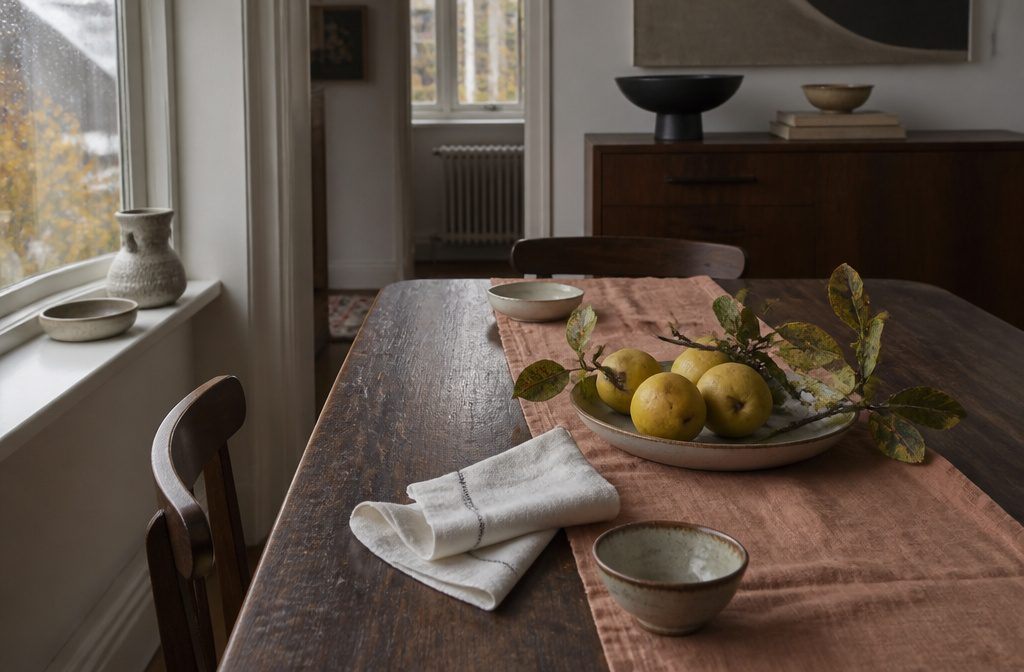
A dining table holds a centerpiece, linens, and small objects at the same time, and which pieces you keep on it daily depends on how often you actually sit down to eat there.
A centerpiece that blocks conversation across the table defeats the point no matter how balanced it looks, so the tallest arrangements stay under 12 inches or clear sightlines entirely above 24.
1. Choose a Focal Centerpiece
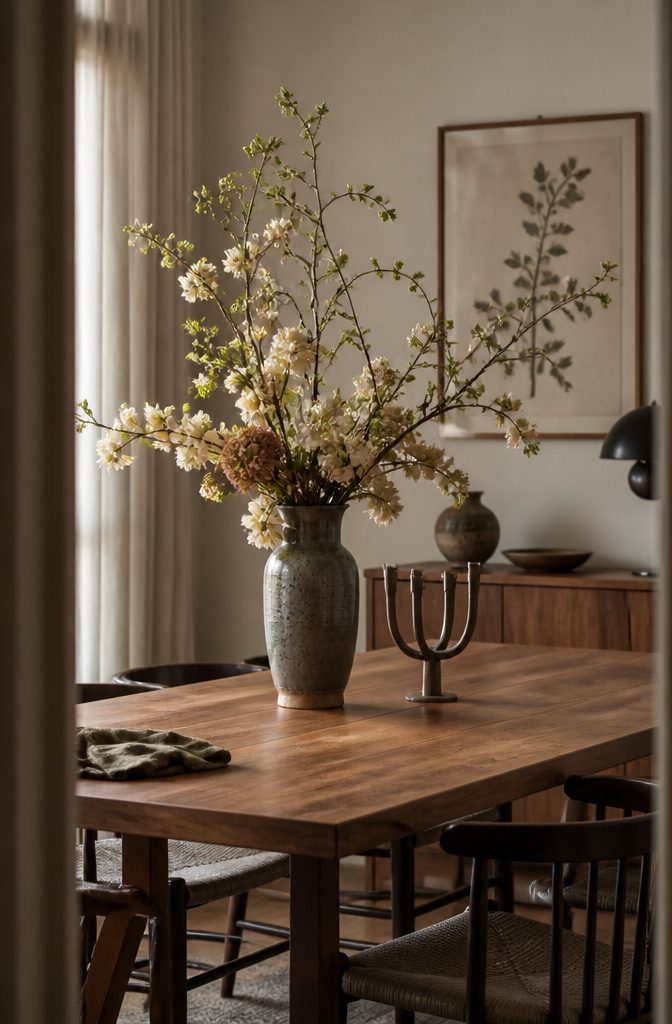
A single object that draws the eye the moment someone walks into the room sets the entire table.
That piece can be a tall floral arrangement, a sculpture, or even an oversized candle arrangement, but it needs enough presence to anchor everything else you add.
A stunning floral arrangement in a beautiful vase works in nearly any room, while a statement sculpture feels more natural in a modern dining space where the lines stay clean.
The choice has to fit the room’s style: a candelabra looks right in a traditional setting, but the same piece can feel forced in a minimalist room.
Height matters here.
A focal centerpiece should be tall enough to command attention without blocking conversation across the table. If you can’t see the person sitting opposite when the piece is in place, it’s too tall for a dining table you actually use.
I coordinate the centerpiece with wall art hung directly above the table when the room allows it, which creates a vertical line that pulls the whole space together.
2. Use Greenery, Flowers, or Plants

Fresh flowers, potted plants, faux stems, or dried foliage bring instant color and an organic feel to the center of the table.
I reach for fresh greenery or blooms when the table sits near a window and the arrangement can be swapped out weekly.
Orchids in simple pots work well if you want something that lasts longer without constant watering, and a tall vase filled with green branches keeps the look clean without competing with the rest of the room.
Faux flowers are the better call in low-light dining rooms, where real stems fade quickly. Match the plant color to the palette you already have, though contrast can look excellent when the rest of the room stays muted.
If you want something even simpler, dried pampas grass or other dried foliage holds up for months in a plain vase or jar.
Just keep it out of direct sunlight, which causes dried material to discolor and fall apart faster than it should.
3. Add Art or Collected Objects
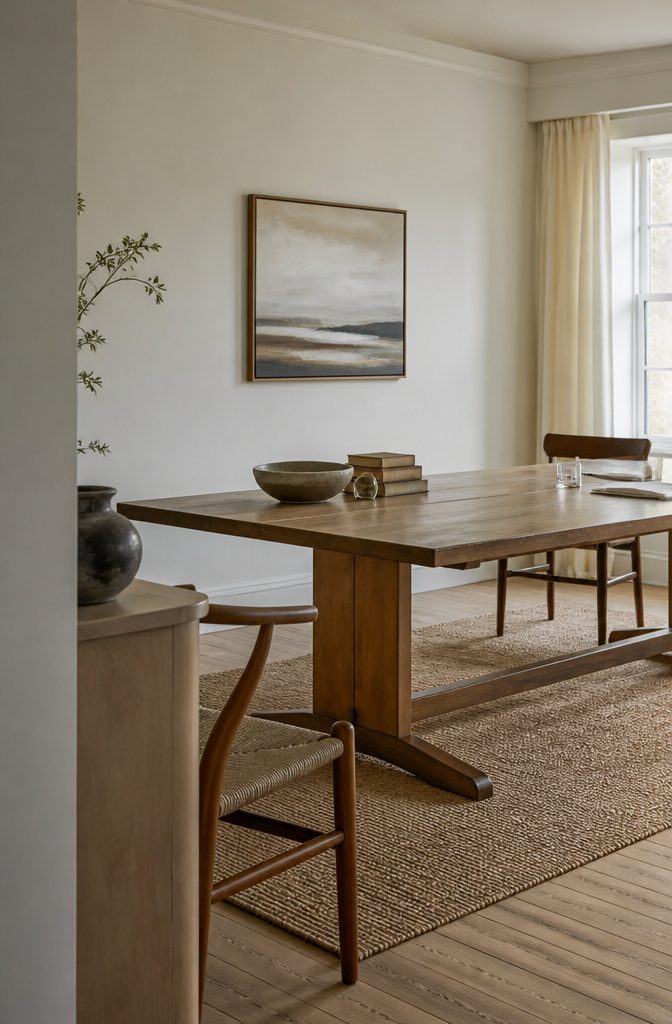
A small sculpture, a stack of vintage books, or a favorite travel souvenir can sit on the table year-round and give the space more personality than any generic centerpiece.
I keep pieces to three to five objects in different heights so the arrangement looks relaxed, not staged.
A low ceramic bowl in the middle, a short stack of books beside it, and a small glass figurine leaning against the stack reads as something you casually placed there, not something that took twenty minutes to adjust.
If you have a gallery wall or a single piece of art hung above the table, coordinate the centerpiece with that backdrop.
The connection makes both feel intentional. Family photos in decorative frames work well if you want a more intimate feel, while a single statement sculpture keeps the look modern.
Anything past five pieces starts to feel busy, and the table still needs room for keys, paperwork, or your morning coffee when life calls for it.
4. Build Arrangements with Varied Heights

One tall item, one medium, one low is the simplest way to make a centerpiece look deliberate instead of flat.
The eye moves more naturally when it has height to follow, and grouping objects in threes, fives, or sevens rather than even numbers keeps the arrangement from reading as too rigid or symmetrical.
I typically start with three: a tall vase or candlestick, something mid-height like a bowl or shorter vessel, and a low element that anchors the group without blocking sightlines across the table.
The varying heights give you room to cluster things casually in the center or offset them to one side if you’re setting out serving pieces. Just keep the tallest object under eye level when someone is seated.
A centerpiece that obstructs conversation defeats the point, no matter how balanced it looks from above. If you’re working with a smaller table, even two items at different heights will read better than a single piece sitting alone.
5. Add Candles or Candleholders
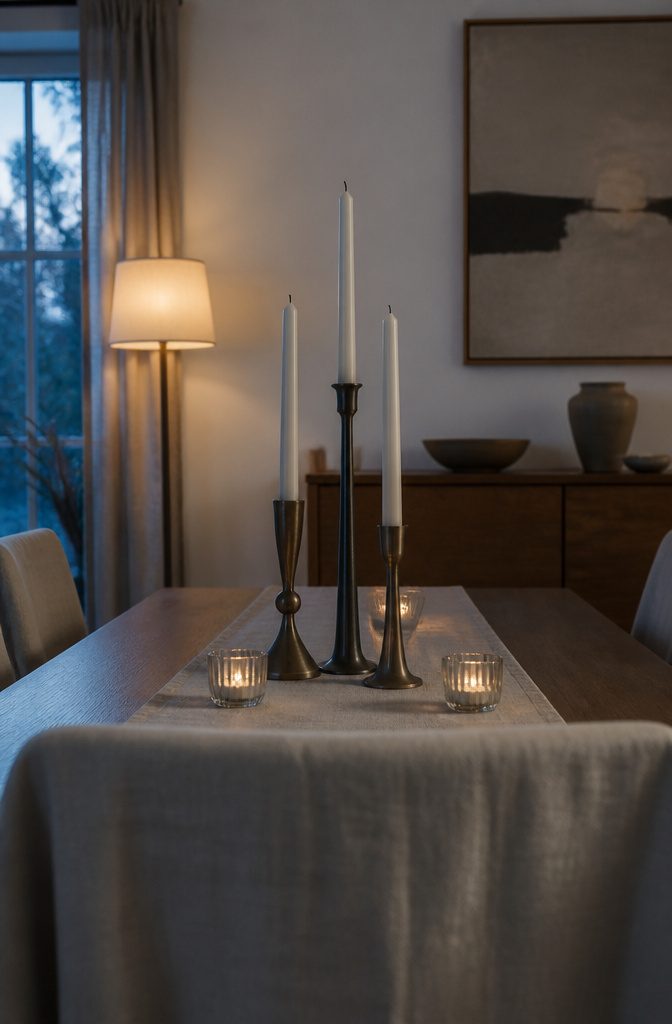
Candles bring three things to a dining table at once: soft, flattering light, vertical interest, and atmosphere that shifts the moment from functional to deliberate.
A cluster of tapers in varying heights works well in the middle of the table, especially when you need to fill space without blocking sightlines across it.
I prefer candleholders that rise in a staggered arrangement rather than all at one level, because the varying heights give you the same visual weight as a larger centerpiece without the footprint.
Votives and lanterns throw a different kind of light—closer to the surface, warmer on the objects around them—and they work better on smaller tables where tall candles would crowd the space.
The practical limit is wax. Candleholders contain drips and keep the table surface clean, and that matters more on a wood or upholstered piece than it does on glass.
Scented candles add fragrance, though I’d choose the scent carefully; something too strong during a meal competes with food rather than setting the mood around it.
6. Set a Color Palette
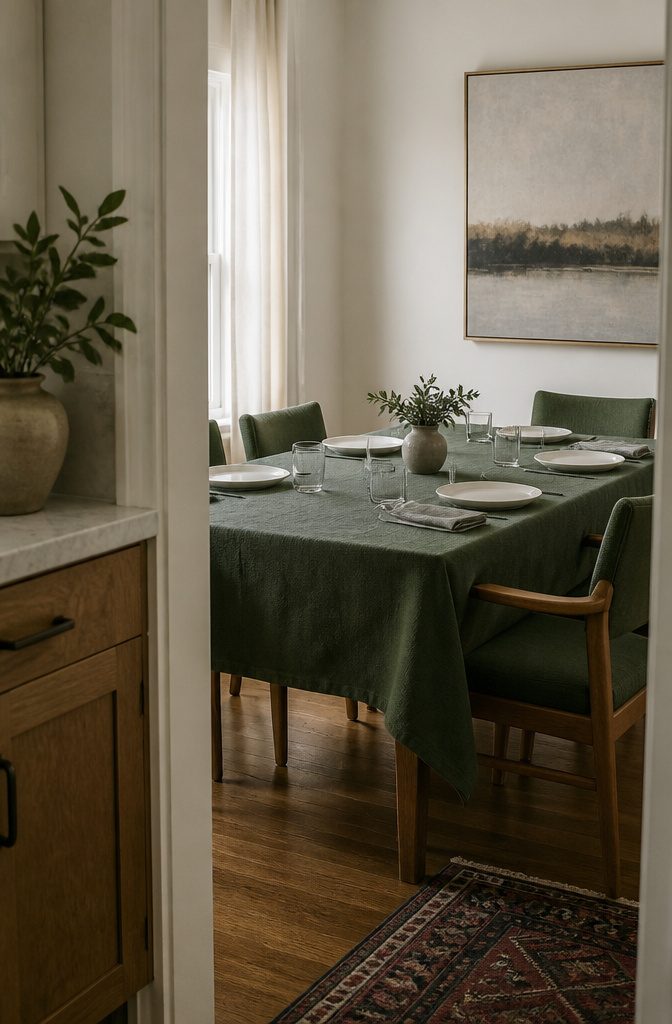
A color scheme holds the table to the room instead of letting it float.
The simplest path is a monochromatic setup that repeats one color from the walls or upholstery — placemats and napkins in the same family as the chairs, or a table runner that picks up the rug.
That read works for everyday use because it never looks like you tried too hard.
Contrast gives you more presence. If the room skews neutral, a tablecloth in forest green, navy blue, or burnt orange pulls the eye without requiring a full seasonal reset.
I’d keep the rest of the pieces quieter when the base layer is that strong — white plates, plain glassware — so the color does the work.
For a setup that survives the calendar, stick to blacks, whites, grays, and earth tones instead of bright or festive shades.
Bright risks looking like accidental holiday decor. Neutral holds through dinner parties and Tuesday nights alike, and you can shift the mood with small swaps — candles, a different centerpiece — without replacing the linens.
7. Use Table Linens or Coverings

A table runner down the center of a rectangular table frames whatever you place on top and leaves the ends or sides open for serving dishes.
Runners work best on long, narrow proportions where they guide the eye without fighting the shape.
On a round table, a runner can look awkward because it cuts across the curve rather than following it, though a cloth or placemats still make sense there.
Placemats give each seat its own defined zone and add a layer of texture or color without covering the whole surface.
I reach for them when the table itself has a finish worth showing off or when the setup needs to stay flexible for different numbers of guests.
They suit round and square tables especially well, where a runner would just compete with the geometry.
A tablecloth dresses the whole table at once and reads more formal, which is why it shows up for holidays or dinner parties where the occasion calls for something finished.
Practicality cuts both ways: a cloth hides the table completely, so if you have beautiful wood or stone, skipping any foundation layer and letting the material speak for itself often makes more sense.
8. Keep the Table Functional and Uncluttered
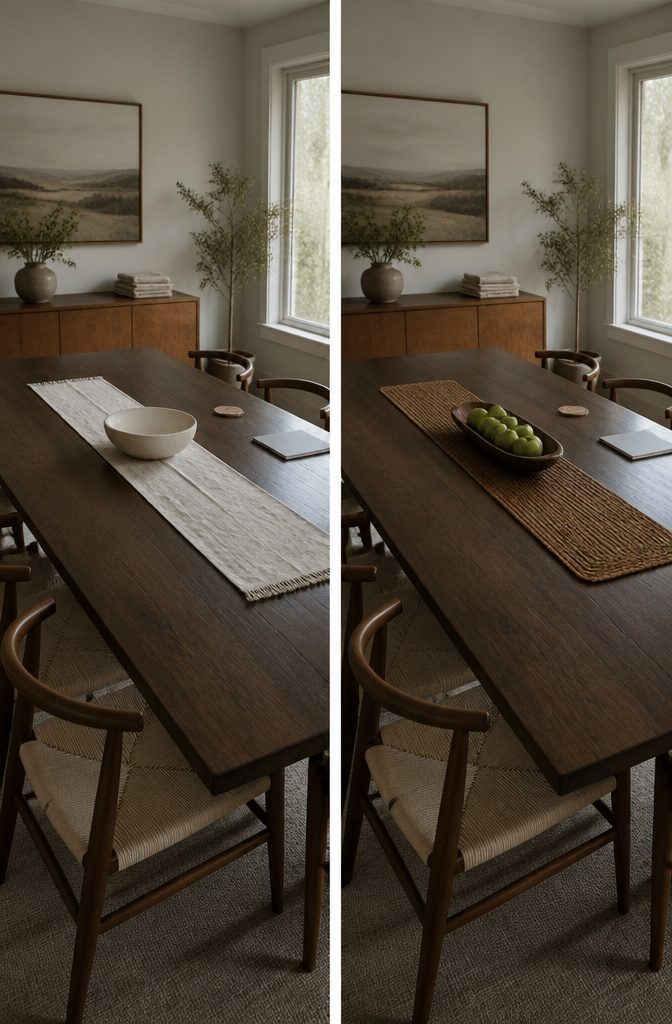
Leave enough room for actual meals. A styled dining table still needs to function when you sit down to eat, which means space for plates, serving dishes, and elbows.
I treat the centerpiece or runner as something that can be moved when the table is in use, not as a permanent fixture. A vase or tray can shift to a buffet or sideboard during dinner and return afterward.
The mistake I see most often is building an arrangement that’s beautiful but immovable. If you have to clear six objects every time you need the table, the styling becomes a chore instead of a decision you enjoy.
I keep the center light: one low bowl, a runner with a single accent piece, or a small grouping that lifts off in one move.
That way the table stays approachable for weeknight meals and still reads as finished when you walk past it.
9. Style for the Season or Occasion
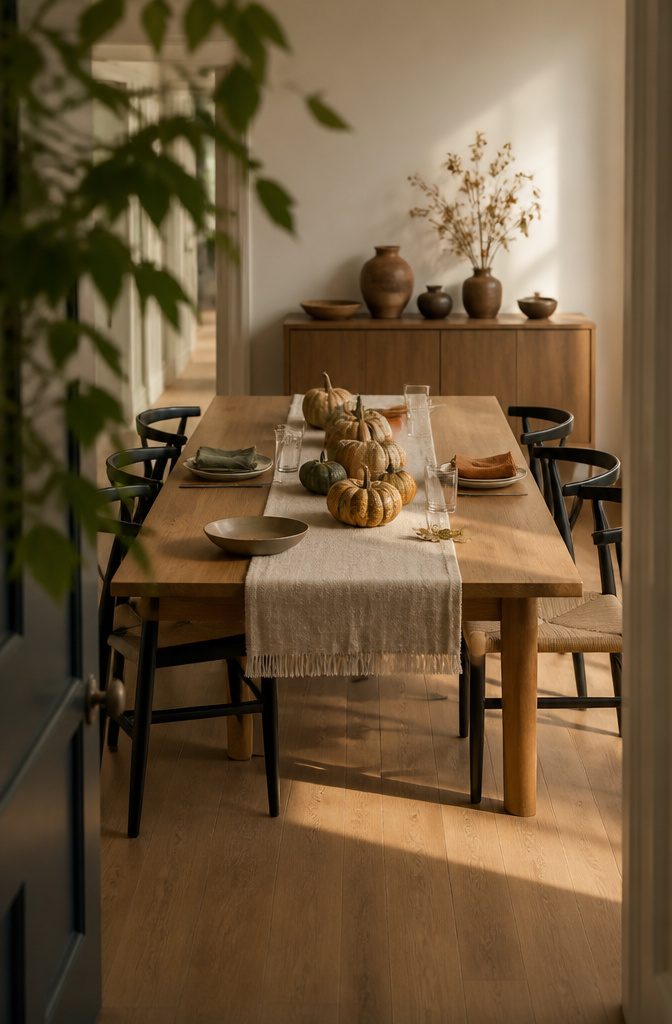
Switching accents or shifting your everyday arrangement for guests keeps the table feeling current without starting from scratch each time.
Christmas, Easter, Thanksgiving, and Halloween all invite their own looks, but the approach is the same: a few seasonal pieces layered over what is already there, not a full teardown. Spring pulls toward pastel flowers and light linens.
Fall works better with warm jewel tones or muted earth shades, plus pumpkins or gourds if the occasion calls for it. The mood dictates the palette, and the change takes minutes if the base is neutral.
Between holidays, the table still deserves attention. I adjust mine every few weeks, not because it needs it but because I notice it more when something has shifted.
A small swap, a different runner, a bowl that was not there last month, keeps the room from feeling static without requiring a project.
10. Use a Tray to Gather Objects
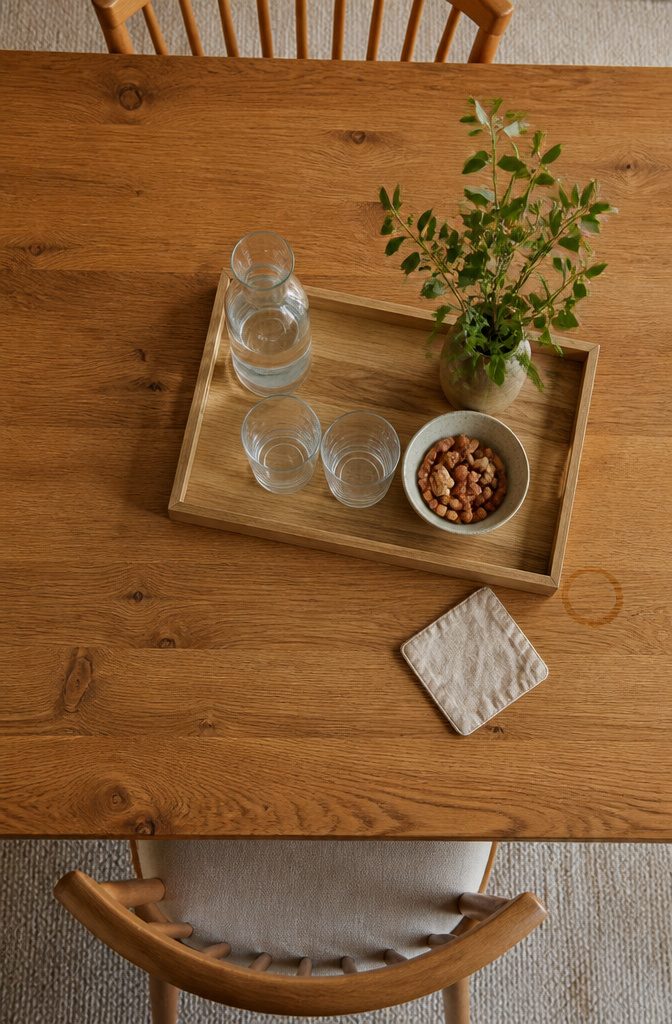
A tray gathers an arrangement into one object instead of leaving pieces floating on the table. The rule I follow is about one-third the width of your table, which feels substantial without crowding the surface.
Go smaller and the whole thing looks timid. Go larger and you lose room for place settings or serving dishes when you need them.
What goes on the tray depends on how you use the table. A mix of high and low florals with a low bowl of nuts and a small carafe keeps things relaxed.
If the table doubles as a refreshment station during gatherings, the tray holds a drink pitcher, glassware, and something small to snack on.
A candle and a small collection work just as well if you want something quiet the rest of the week. The tray itself does the organizing, so the objects inside can vary without the table feeling cluttered.
11. Use a Bowl of Fruit or Natural Foods
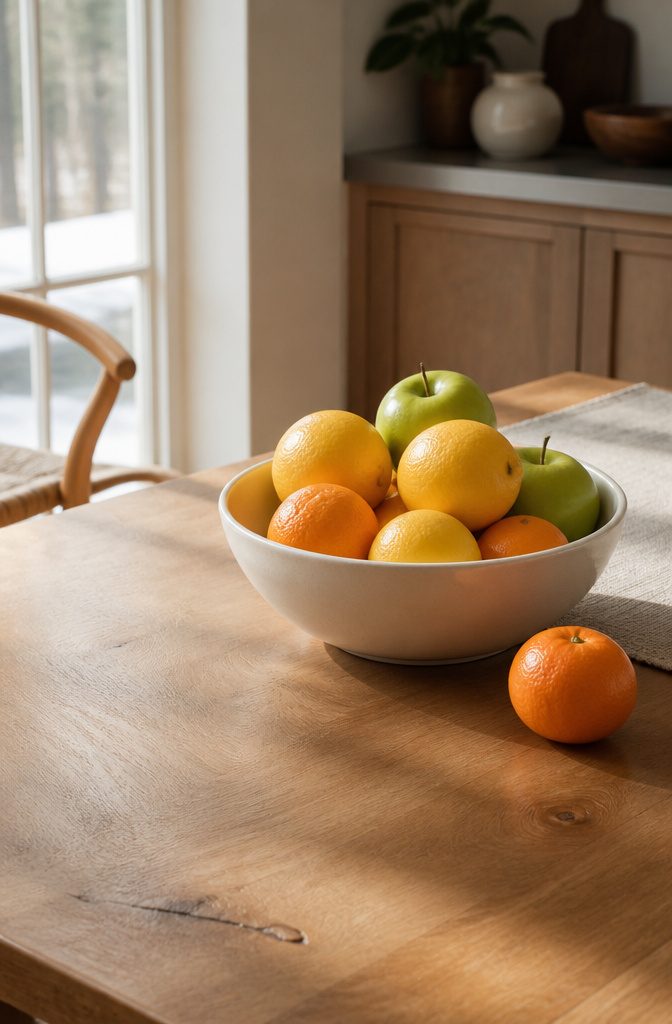
A bowl of fruit on the table gives you color that changes with the week and a snack within reach at the same time.
I fill a simple ceramic or wooden bowl with whatever looks good at the market, and the bright tones of citrus, apples, or stone fruit hold up against most table finishes without competing with the rest of the room.
A floral-patterned bowl pairs especially well with the saturated colors most fruit brings, though a plain white or stoneware bowl works just as cleanly if the table already carries pattern elsewhere.
Swapping the fruit as seasons shift keeps the look from going stale. Winter lemons and oranges read sharper than summer peaches, and that shift alone can refresh the table without adding a single new object.
If you want the color but not the maintenance, faux fruit stays consistent and never browns on the underside.
It reads as decor rather than function, but for a table that sees more guests than daily meals, that tradeoff can make sense.
12. Use Place Settings as Decor

Coordinated plates, napkins, and glassware carry the styling work when the table is actually set for a meal.
A charger underneath the dinner plate adds immediate depth to each seat, and rattan, wood, or brass are the three materials that read most intentional without looking fussy.
I keep cloth napkins folded inside rings or tucked beneath the top plate rather than off to the side, because that small shift makes the whole setting feel considered instead of assembled at the last minute.
Colored or etched glassware brings in subtle shine and a hint of palette without committing the whole table to one scheme.
The appeal of working with place settings as decor is that they refresh every time you set the table, so the look changes with the occasion while the rest of the styling stays put.
13. Choose a Minimalist Arrangement

One simple centerpiece or a restrained display keeps the table from feeling cluttered.
A minimalist approach works especially well when your dining room already has a strong focal point, like a statement light fixture or bold artwork, because adding too much to the table competes for attention.
I’ve found that pairing subdued table decor with a sleek, clean-lined table creates a refined look without visual noise.
The choice depends on what the room already gives you. If the space feels busy, one eye-catching item can anchor the table without adding more layers.
That might be a single floral arrangement, an elegant candelabra, or a unique piece of sculpture. Let that one element resonate with your style and complement the room’s aesthetic rather than filling every inch of surface.
A minimalist arrangement also suits tables that get used daily. Fewer objects means easier clearing for meals, and the table still looks intentional when nothing sits on it at all.
14. Use Symmetry or Balanced Placement

Two matching arrangements set at opposite ends of the table bring instant visual order. I like this approach when the table is long enough to carry them without looking crowded—typically six feet or more.
Place identical vases or candleholders near each end, then leave the center open or anchor it with a single low piece.
The symmetry reads as intentional rather than accidental, which matters when you’re working with everyday objects that could otherwise look randomly placed.
You can also mirror a large centerpiece with smaller items on either side. A wide bowl flanked by two short candles or a pair of small plants keeps the weight distributed without making every object identical.
The balance calms the eye, and it’s forgiving: if one side holds a stack of coasters and the other a small dish, the pairing still works as long as the heights and visual weights are close.
15. Match the Arrangement to the Table’s Shape and Scale

A long rectangular table can hold a centerpiece up to one-third of the table width, which lands between 18 and 24 inches for most six-seat tables. That gives room for plates and conversation without the arrangement crowding either end.
Round tables follow different logic: with no long axis, everything radiates from the center, so I use a single arrangement that fills one-third to half the diameter instead of a row.
A low compote bowl or a wide shallow tray works better than a runner, which fights the curve.
Height matters as much as width.
Keep low arrangements at 12 inches or under so they sit below eye level when everyone is seated. Tall pieces work when they clear sightlines entirely, which means above 24 inches.
Anything in between blocks the one thing a dining table is built for. On round tables, 10 to 12 inches is about right, since people talk straight across from every direction.
Small tables under four seats need a lighter touch: a single object or a tight grouping, not a layered arrangement scaled for a bigger surface.
16. Add Displayable Drinkware
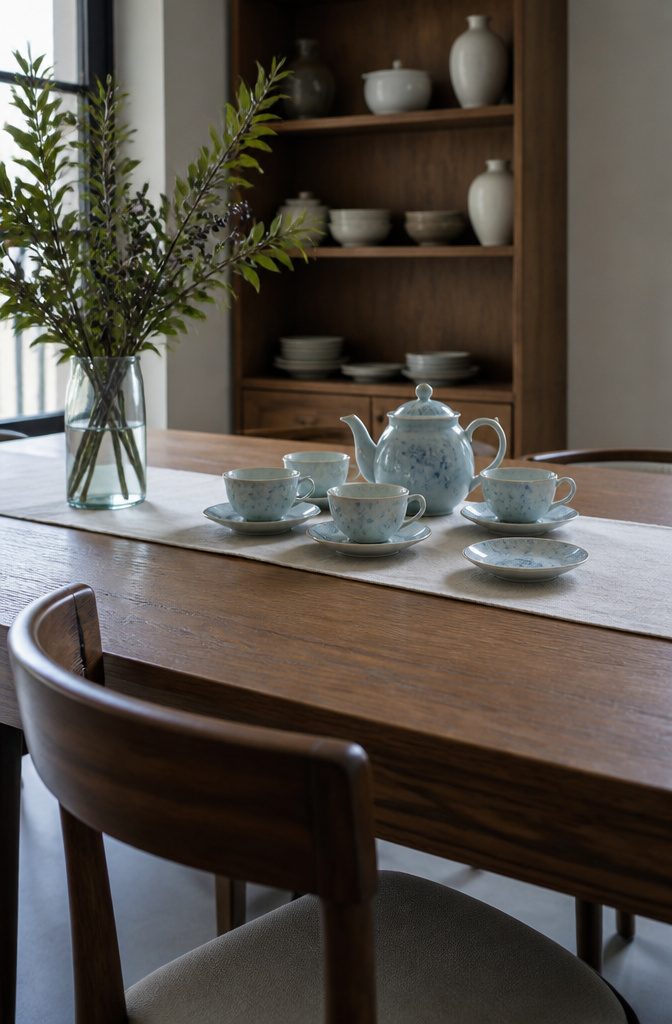
Displayable drinkware brings decoration and function together in one move.
A vintage tea cup set or a coordinated coffee service can sit at the center or the edge of the table and still look intentional, especially when the cups match the room’s larger palette or texture.
I’ve found that thrift shops turn up better visual weight than most retail options; older porcelain reads more collected than cheerful.
If you don’t already own a set worth showing, this is a practical reason to shop for one.
The detail that matters is consistency. The cups don’t need to be strictly vintage, but they should feel like they belong to the same family as the table’s other elements.
When the drinkware shares a color or finish with the room’s other surfaces, it anchors the arrangement instead of floating as an afterthought.
The bonus is readiness. A cup set that lives on the table doesn’t need to be fetched when company arrives, and the transition from decoration to use happens without rearranging.
17. Use Multiple Related Floral Arrangements

Two identical arrangements at opposite ends pull the eye from seat to seat instead of parking attention in the center.
The rhythm works because the space between them stays open for serving dishes or conversation, while the doubled florals give the table enough presence that you can stop there.
I’d keep the arrangements low and simple so they mirror each other without demanding too much fuss when you need to clear space.
If the table is long, a third arrangement in the middle breaks up the span without blocking sightlines.
For balance, add a bowl or a pair of candlesticks between the florals. The symmetry reads as intentional rather than spare, and the setup adapts to dinner or display without rearranging the whole surface.
Room Lighting and Atmosphere

The light fixture above the table does more than fill the room. A chandelier or pendant light changes how the centerpiece reads, pulling color forward in glass decor or throwing soft contrast across wood and linen.
I look for fixtures that sit low enough to anchor the table without blocking sightlines across it, and a dimmer switch makes the same fixture work for both weeknight meals and longer gatherings.
Sconces around the perimeter or a floor lamp in the corner add ambient fill without competing with the overhead piece.
If you want flexibility, choose a chandelier with a removable cover that you can swap seasonally or one that is easy to hang temporary decor from.
Small table lamps or candles layer in warmth for everyday use, but the overhead fixture sets the atmosphere first. Get that part right and the table decor has the light it needs to look deliberate instead of flat.
Furniture and Wall Decor That Complete the Room

A display case, sideboard, or wall table adds storage and serving space right where you need it.
A display case holds fine china or family heirlooms, though I’ve seen the same piece work just as well for framed photos or small art objects. Wall tables and sideboards are more versatile.
The top can hold decor when the room is at rest, then shift to serving dishes or a buffet setup when you’re hosting. Below, you store linens, serving pieces, or kitchen overflow.
Wall art balances the room visually. If one wall holds a sideboard and the opposite wall sits empty, a gallery of smaller pieces or one large print gives the space symmetry and keeps it from feeling lopsided.
That balance makes the dining area feel intentional rather than provisional, and it anchors the table without crowding it.
Frequently Asked Questions
What do you put in the middle of your dining room table?
A single focal piece or an odd-numbered grouping works best in the center.
A vase of greenery, a pair of candles, and a low bowl make a reliable combination. Keep the arrangement under 12 inches tall so guests can see across the table, and no wider than one-third of the table’s width.
What is the 3-5-7 rule in decorating?
Group decor objects in odd numbers of 3, 5, or 7 rather than even numbers to keep the arrangement from looking too rigid or symmetrical.
A trio typically includes one tall item, one medium, and one low piece so the eye moves naturally through varying heights. This approach makes a centerpiece look deliberate instead of flat.
How do I beautify my dining table?
Start with a runner or placemats that repeat a color from the room, then add a centerpiece proportionate to the table’s size.
Layer in texture through linens, greenery, or candles, and coordinate place settings when the table is in use. Leave enough room for actual meals so the styling stays functional, not just decorative.
What are some common table decor mistakes to avoid?
Centerpieces that block conversation across the table are the biggest mistake, along with pieces too small for the table’s scale.
Even-numbered groupings feel static, and arrangements with no variation in height read as flat. Overcrowding past 5 items makes the table feel busy instead of intentional.