

A 30- to 60-minute pass through the whole house covers trash pickup, surface wiping, and high-traffic vacuuming when you move room to room without backtracking.
Most people lose time walking back for supplies or scrubbing cleaners that never got the two to five minutes of contact time they need to break down soap scum and grease on their own.
1. Gather Your Supplies and Set a Timer
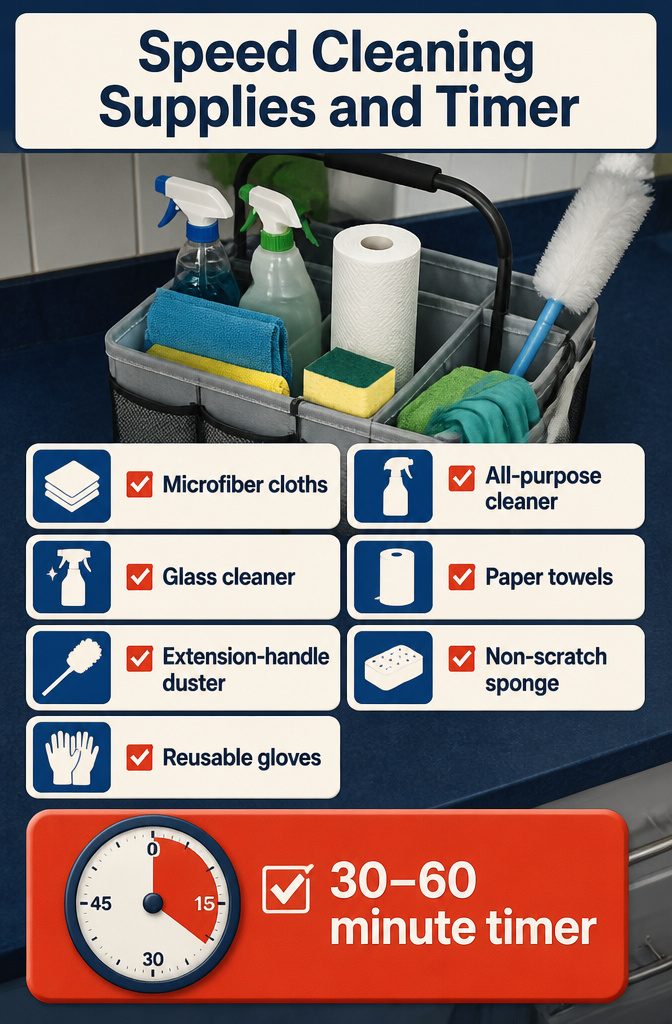
Before you move, assemble everything in a portable caddy or basket. Microfiber cloths, all-purpose cleaner, glass cleaner, and paper towels cover most jobs.
A duster with an extension handle, a non-scratch sponge, and reusable gloves fill out the rest. The caddy keeps you from losing momentum by walking back to the kitchen for something you forgot halfway through another room.
Set a timer once you start.
Whole-house speed cleaning takes 30–60 minutes depending on the condition of the space. A timer holds focus and keeps you working at pace.
If you only have 15 minutes, set it for that and see what you finish. These are planning frameworks, not completion guarantees.
The size of the home, the number of people living in it, how much clutter sits out, and how long it has been since the last clean all decide how far you get before the alarm sounds.
2. Collect Trash, Dishes, and Misplaced Items
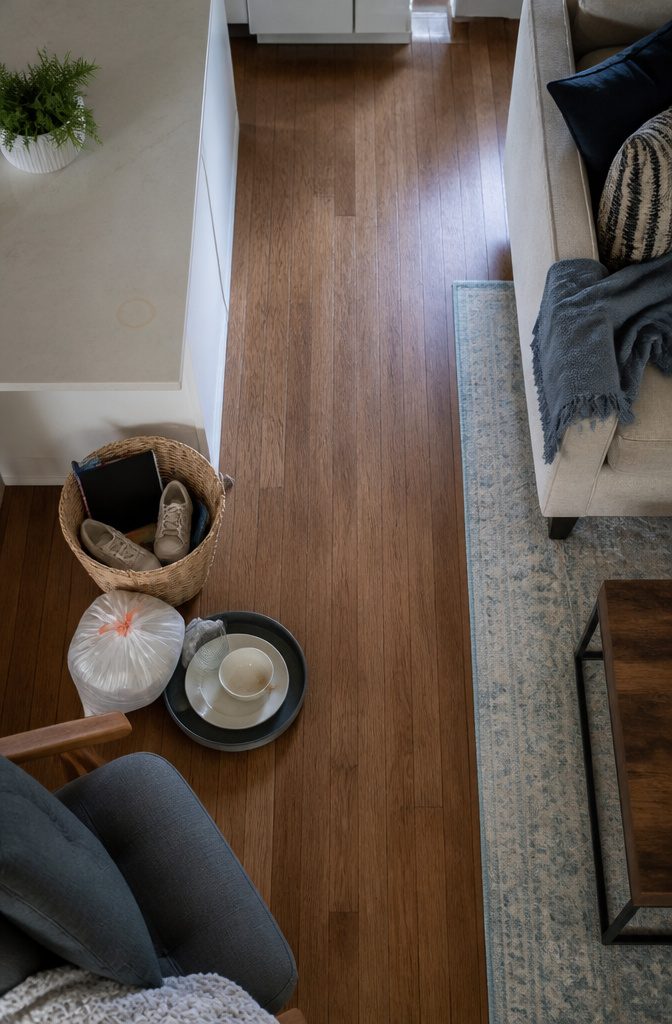
Before you touch a surface, gather trash, dishes, and anything that belongs somewhere else.
Cleaning around clutter means slower work and corners you never reach, so I always make one sweep through the room first: dishes to the sink, laundry into a hamper, rubbish into the bag.
Countertops and floors cleared this way give you a clean line from one end of the room to the other.
I keep a basket handy for misplaced items. Instead of stopping mid-task to return a book or a pair of shoes, I toss them in the basket and deal with it after the cleaning pass is done.
The system keeps you moving, and if guests are arriving before you can sort it, the basket goes in a closet. Finish wiping and vacuuming without backtracking through rooms you already cleaned.
Skip organizing drawers or closets unless that was the point from the start.
If something belongs in a drawer but the drawer is a mess, it goes in the basket. You can return to it later when cleaning is no longer on a timer.
3. Choose What to Clean and Which Route to Follow

When you’ve got thirty minutes before someone walks in the door, prioritize the rooms guests will actually see.
I clean the entry, the bathroom they’ll use, and whatever room we’ll spend time in. Bedrooms with closed doors can wait.
The choice between task-by-task and room-by-room depends on whether you can finish without stopping.
Task-by-task moves faster when you’re cleaning the whole house in one pass: declutter every room, dust every room, wipe surfaces, then vacuum all floors at the end. You carry one caddy, stay in one rhythm, and cover more ground.
Room-by-room suits detailed work or any session where you might need to walk away partway through. Finishing one space completely feels better than half-finishing six, and visible progress keeps you moving when the clock is tight.
Both patterns work. I follow top-to-bottom order either way and leave floors last so dust and crumbs land where I’ll sweep them up.
4. Wipe Surfaces and Let Cleaners Sit When Needed

Spray your counters, tub, and toilet bowl with a product that matches the surface, then move on instead of scrubbing right away.
Cleaners need contact time to break down soil, and most work better when you let them sit for one to two minutes on light buildup, three to five minutes on moderate grime, or five to 10 minutes on heavy soap scum or grease.
Disinfecting takes longer, usually five to 10 minutes depending on what the label says, and the surface has to stay visibly wet the whole time or the product won’t finish the job.
I apply bathroom cleaner to the shower walls and toilet, then wipe down the bedroom while it sits.
By the time I’m back, the soap film lifts with almost no pressure. Kitchen grease works the same way: spray the stovetop, walk away, come back when the timer goes off.
One cloth for the toilet, a separate one for every other surface. Switching between a bathroom fixture and a kitchen counter with the same rag moves more problems than it solves.
5. Vacuum or Sweep High-Traffic Paths

Most sources treat floors as the last task, and that sequence makes sense when you clean top to bottom. But when time is tight, I skip the whole-room vacuum and focus on the paths people actually walk.
High-traffic zones collect the most visible dirt, and cleaning just those paths makes the entire house look better without committing twenty minutes to every corner.
I run the vacuum down the center of the living room, across the kitchen floor, and through the hallway. Those are the routes guests see and the ones that show footprints, crumbs, and tracked-in debris.
Corners and edges can wait. A quick sweep or vacuum pass through busy areas instantly improves appearance, and if you saved floors for last the way most cleaning sequences suggest, you avoid re-dirtying them after wiping counters and dusting shelves.
On hard floors, I sweep or vacuum loose grit before mopping, and I only mop the high-traffic sections when time is limited. Start in the farthest corner and work toward the door so you don’t walk across the clean surface.
6. Add Finishing Touches to Each Room

Finishing touches make the difference between a room that looks tidied and one that looks ready. In the bedroom, making the bed is the single fastest transformation you can do in two minutes.
Fluff the pillows, straighten the duvet, and tuck in any stray sheets. The bed sets the tone for the whole room, and once it’s made, the rest feels pulled together even if you skipped the dresser.
Living rooms get the same treatment with cushions and throws. Fluff the cushions, fold or drape the throw so it looks intentional rather than kicked aside, and the seating area reads as finished.
Bathrooms need fresh towels if the old ones look rumpled, and every room benefits from a quick bin check. If the bin is full or visible trash is sitting on top, pull the bag and replace it.
These moves take seconds individually, but they’re what someone walking in will notice first, and they close out each room so you can move to the next without second-guessing whether you missed something.
Keep Up Between Sessions So the Next Clean Stays Short
Speed cleaning works when you run it often enough that the house never gets very dirty. Tackle small messes as they happen instead of letting them stack up for the weekend session.
That means sweeping crumbs at the end of the day, wiping the dining table after a meal, and grabbing a cloth when the bathroom counter gets splattered. The more you catch in real time, the less scrubbing you face later.
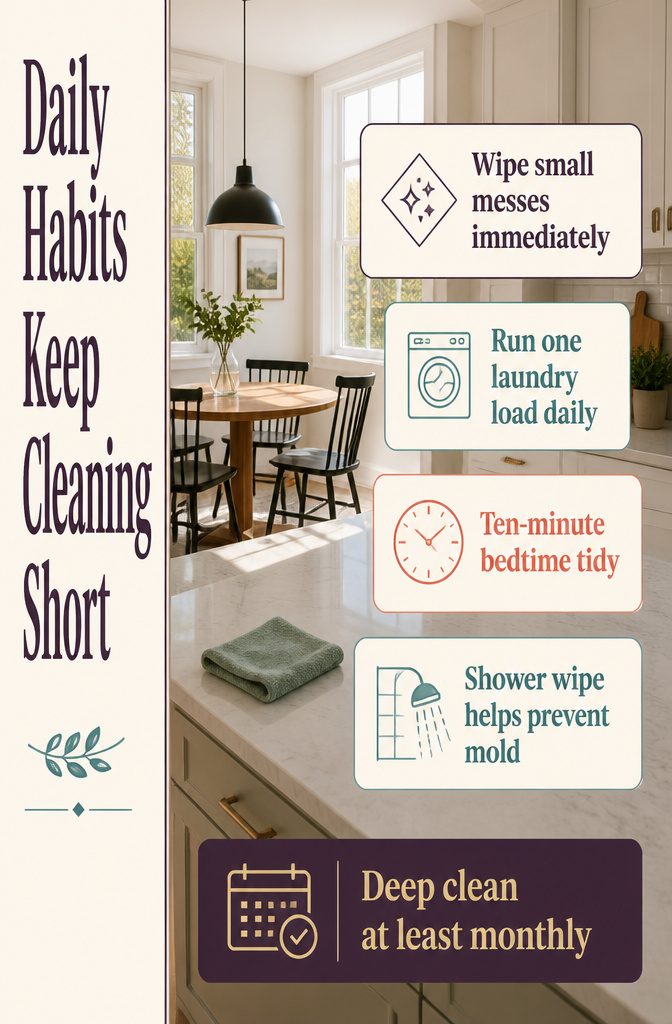
A few habits cut the workload before it starts. Make the bed right after you get up.
Run one load of laundry each day so the pile stays manageable. Wipe the shower after use to keep mold from building up, and clean kitchen surfaces while you cook instead of waiting for baked-on grease.
Spend 10 minutes before bed tidying common areas, and most of the visible mess disappears without a formal session.
Speed cleaning is maintenance, not a substitute for deep work, and that deep clean still needs to happen at least once a month.
Task-by-Task or Room-by-Room

Task-by-task cleaning wins when you have an uninterrupted stretch and plan to cover the whole house. You declutter every room, dust all surfaces, wipe counters and tables, then finish with floors.
The method keeps you from backtracking and avoids switching tools midstream. Room-by-room makes more sense if you expect interruptions or need detailed work in specific areas.
You complete one room from top to bottom before moving on, which means you can stop after the bathroom or kitchen and still have something to show for it.
Both patterns follow the same order inside each space: clear clutter, handle high and dry surfaces, move to lower and wet ones, and leave the floor until the end.
The choice depends less on efficiency in theory and more on whether your morning lets you finish what you started. If guests are coming and time is short, neither method helps as much as picking priority zones.
Clean the entryway, living room, and bathroom, then stop. A visible high-traffic area that looks finished beats half a house that doesn’t.
What I Keep in My Cleaning Caddy

I keep a portable caddy or basket stocked so I never waste time walking back for supplies. Here’s what goes in it:
- Microfiber cloths — I use them on every surface and toss them in the wash at the end
- All-purpose cleaner for counters, cabinets, and most hard surfaces
- Glass cleaner for mirrors and windows
- Disinfectant cleaner for toilets, sinks, and high-touch spots
- Magic eraser for scuffs and marks that won’t wipe off
- Paper towels or flour sack dish towels when I need something disposable
- A scrub brush and non-scratch sponge for tougher jobs
- Dust spray and a microfiber duster
The vacuum and mop stay in a central spot since they don’t fit in the caddy, but everything else moves with me room to room.
I keep a second caddy in the bathroom so I’m not hauling supplies upstairs when I just need to wipe down a sink.
Frequently Asked Questions
Should I clean one room at a time or complete one task throughout the house?
Task-by-task works best when you have uninterrupted time and plan to clean the whole house, since you carry one set of tools and stay in the same rhythm.
Room-by-room suits detailed work or sessions with interruptions, because finishing one space completely means visible progress even if you need to stop halfway through.
What is the most efficient order to clean a house?
Gather your supplies first, then collect trash and misplaced items before touching any surface. Dust and wipe from top to bottom, and save floors for last so everything lands where you’ll vacuum or sweep it up.
How can I clean my house faster without overlooking important areas?
Carry all your supplies in a caddy so you never walk back for something you forgot, and set a timer to stay focused.
Prioritize high-traffic rooms guests will see, skip organizing drawers unless that was the plan, and clean visible floor paths instead of every corner when time is short.
How often should I follow this cleaning method?
Speed cleaning works when you run it often enough that the house never gets very dirty. Tackle small messes as they happen, spend 10 minutes before bed tidying common areas, and schedule deeper work at least once a month.
How do house cleaners clean so fast?
Practice and repetition build speed, since cleaners know which tasks matter most and how to avoid getting sidetracked. They use equipment suited to different surfaces and keep everything in a portable caddy so they never lose momentum.
Can you really clean an average size house in 2 hours?
Yes, if your supplies are ready, the home is organized, and you already follow speed-cleaning habits. Whole-house speed cleaning typically takes 30–60 minutes depending on the condition of the space, so 2 hours leaves room for detailed work.
What should be included in a 5-minute room clean?
Put misplaced items in a basket and hide it, then straighten bedding and pillows. Wipe visible surfaces with a microfiber cloth, then vacuum or sweep the floor.