

A spotless bedroom takes 20 to 30 minutes if you’re keeping up with it weekly, but that estimate falls apart the moment you stop to reorganize a drawer or sort through old mail instead of cleaning.
The stage that derails most people is sorting belongings. They return every misplaced item immediately and end up wandering the house, so I keep a container by the door and deal with it all after the room is clean.
1. Clear Out Trash and Misplaced Items
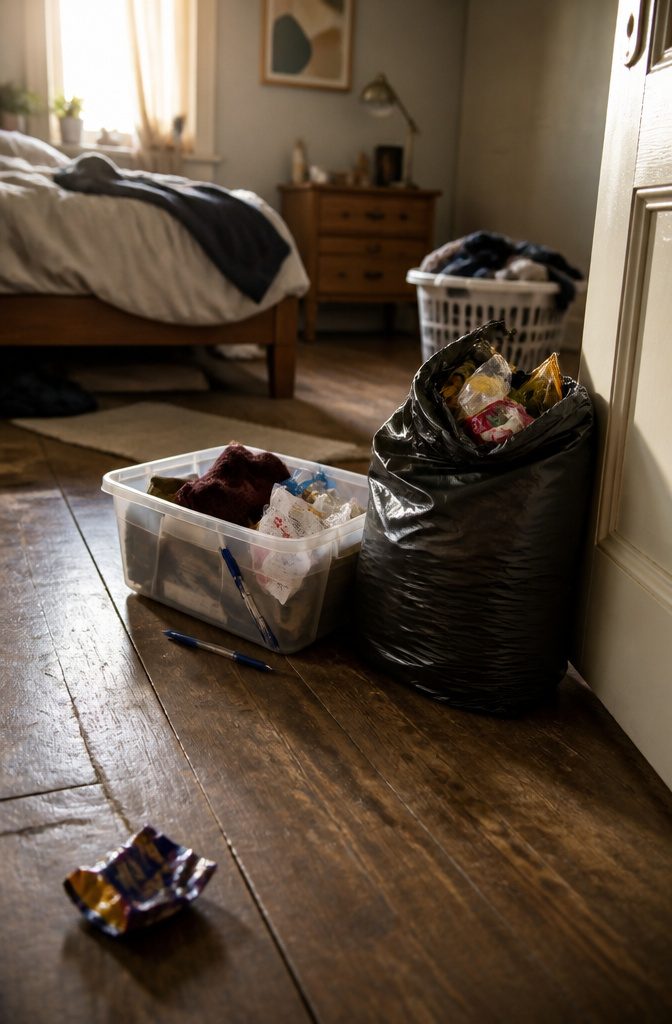
Start with a trash bag and a container. Walk the room once and toss anything that’s genuinely garbage: wrappers, old receipts, broken pens.
If something belongs in a different room, drop it in the container and deal with it later. Dirty clothes go straight into the hamper or a laundry basket if the hamper’s full.
I usually give this stage about three minutes.
The goal isn’t to organize drawers or sort every stray object. You’re clearing the obvious stuff so the real cleaning isn’t tripped up by clutter.
A lot of people try to return every misplaced item immediately and end up wandering the house. The container keeps you moving.
Once the bag and the container are full, set them by the door and keep going. You’ll put things back after the room is clean, not in the middle of it.
2. Sort and Put Away Clothing and Other Belongings
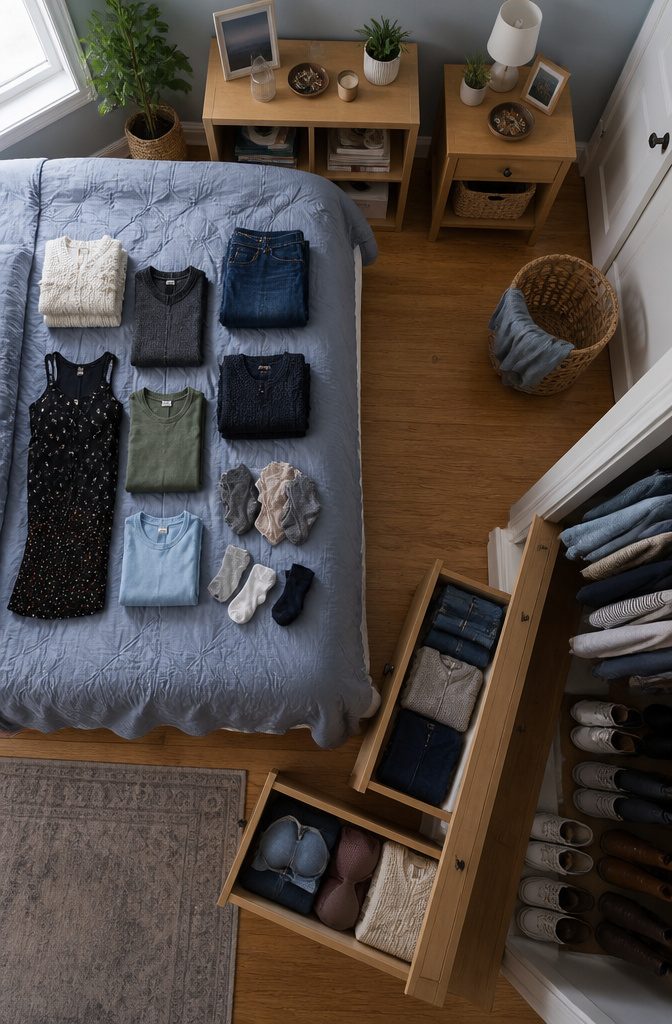
I sort clothing first because dealing with an entire category at once keeps the work moving. Group similar items together—all the dresses in one pile, all the underwear in another—then put each group away before starting the next.
Folding one shirt, then a pair of socks, then back to another shirt slows things down, because your hands and your focus keep resetting.
Clean clothes go straight back into drawers or onto hangers. I check whether anything needs refolding in the dresser while I’m there, and in the closet I rehang anything that slipped off and arrange clothes so like items sit together.
If shoes live on the closet floor, I tidy those and keep frequently worn pairs toward the front so I’m not digging past boots to find sneakers on a weekday morning.
Books, jewelry, picture frames—anything that has a proper place gets returned to it now, while the bed or floor is clear enough to use as a sorting surface.
3. Make the Bed and Change the Linens
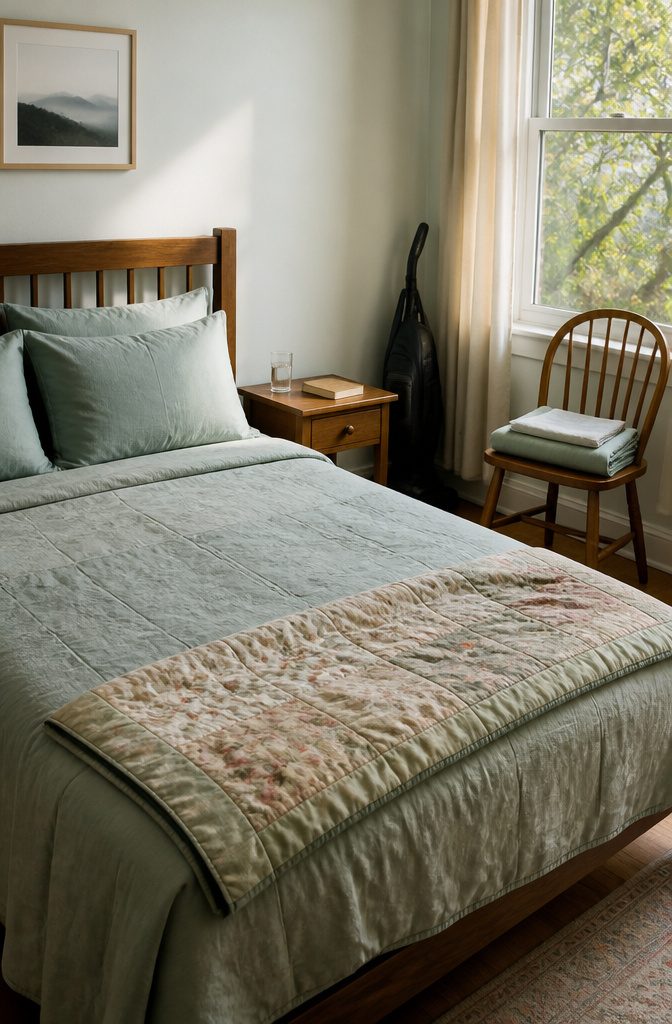
Strip the bed completely and wash sheets and pillowcases weekly, or at least every other week. That frequency matters more than most people think.
Eight hours a night means dead skin, sweat, and hair accumulate fast, and the difference between clean bedding and overdue bedding shows up in how the room smells and how well you sleep.
While the mattress is bare, vacuum it to pull out dust and debris that settle into the surface.
If you have pets, this step catches hair that laundry alone won’t handle. Then remake the bed from the bottom up, starting with the fitted sheet and working through the flat sheet, blankets, and pillowcases in order.
A made bed changes the visual weight of the whole room instantly, even if nothing else is done yet.
Keep a second set of sheets on hand so you can remake the bed right away instead of waiting on the dryer.
4. Dust Furniture, Lamps, and Other Surfaces
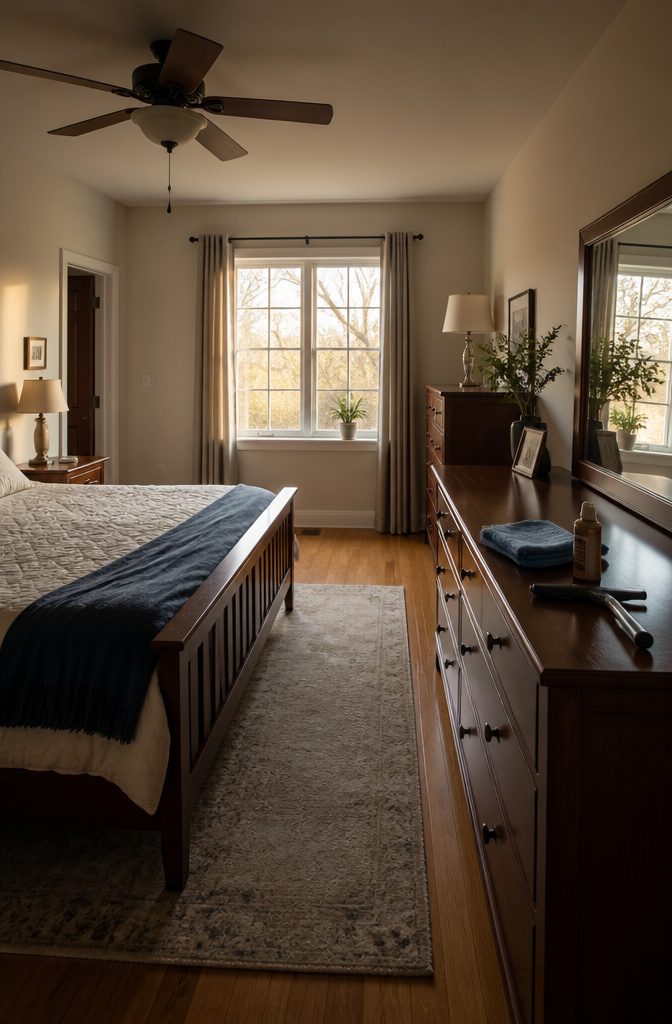
I dust from the ceiling down to the floor, so nothing settles on surfaces I already wiped. Start with ceiling fan blades if you have them, then move to lampshades, the tops of picture frames, and light switches.
After that, work through furniture: dressers, nightstands, shelves, and the headboard. Don’t skip the sides or the back if you can reach them.
A microfiber cloth picks up dust without pushing it around. If dust has built up, I dampen the cloth first to grab it instead of scattering it into the air.
For furniture with a finish, follow up with furniture polish or all-purpose cleaner to leave the surface clean and add a little shine.
Mirrors and glass frames get a separate pass with a squeegee or a clean cloth and glass cleaner.
Walls, baseboards, door frames, and window sills collect more dust than most people expect, so I wipe those down too when I’m already moving through the room.
5. Pull Out Items Under the Bed and Clean Underneath

I slide everything out from under the bed first, because you can’t clean what you can’t reach. Boxes, bins, spare bedding, whatever has been shoved back there needs to come out completely.
Dust and wipe the floor underneath—hardwood takes a microfiber duster, carpet takes the vacuum hose with the brush attachment. If you’ve been ignoring this spot for months, the amount of dust will surprise you.
Returning items is where most people lose time. Start with the largest boxes or bins and work down to smaller pieces, placing the things you need most often closest to the edge.
A storage bag you open twice a year goes to the back; seasonal bedding you swap monthly stays within arm’s reach. Arrange things so you can reach them, not just cram them back in.
6. Vacuum or Sweep the Floor

Vacuum or Sweep the Floor
Once surfaces are done, give the floor a thorough pass with a vacuum or sweep, depending on what you’ve got underfoot. Carpet needs a vacuum with strong suction and a brush roll that actually lifts dust.
Hardwood does fine with a vacuum on the hardwood setting, a broom, or a Swiffer if you’re moving fast. Tile responds well to a quick mop or a Swiffer WetJet.
The places that matter most are the ones you usually skip: corners, the space under the bed, and behind furniture.
Pull out throw rugs and shake them outside before you vacuum the floor beneath. If you’ve got hardwood under the bed, a microfiber floor duster makes short work of dust without dragging the vacuum back there.
Budget around 15 minutes for floors in a typical bedroom. For a speed clean, one quick pass gets most of the visible dirt and keeps the room from feeling neglected.
How Long a Bedroom Clean Takes
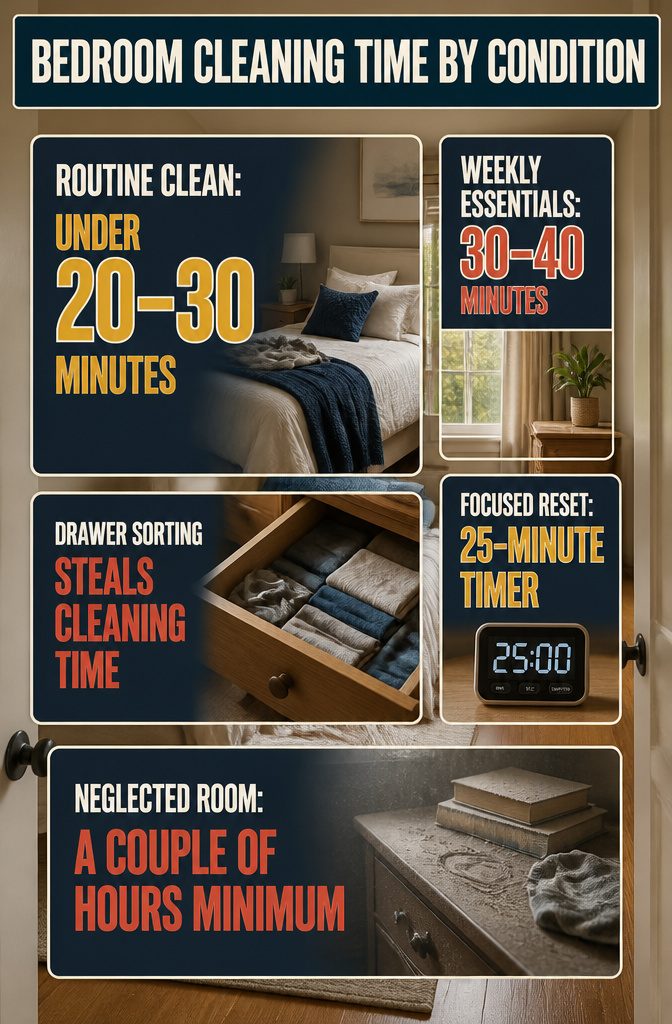
Most bedrooms can be cleaned in under 20 or 30 minutes if the space isn’t packed with excess belongings. That estimate assumes you’re maintaining a room that gets regular attention, not rescuing one that’s been ignored for weeks.
A long-neglected bedroom with built-up dust or dirt will take longer, likely a couple of hours at minimum, especially if you’re planning a deep clean rather than a quick surface pass.
For weekly maintenance, setting aside 30 to 40 minutes gives you enough time to hit the essentials without rushing.
A 25-minute timer works if you focus only on putting things back in place and skip any real scrubbing. I find 30 minutes is enough for most bedrooms when you stick to the high-impact areas: bed, surfaces, and floors.
The length also depends on whether you get sidetracked. If you stop to reorganize a drawer or sort through old magazines, the clock keeps running and the actual cleaning doesn’t move forward.
How Often to Clean Your Bedroom

The question of how often you should clean your room really splits into two parts: the quick reset that keeps things manageable, and the deeper work that gets at dust and grime.
I lean toward frequent light cleaning and less frequent deep cleaning, because the daily work makes the bigger jobs much faster when they arrive.
Most bedrooms can realistically be cleaned in under 20 or 30 minutes, as long as they aren’t crammed full of excess stuff.
That 20 to 30 minutes is your weekly clean: making the bed, putting things back where they belong, wiping surfaces, running the vacuum.
The almost-daily part is smaller still. As you get dressed, clothes go straight into the hamper or back on the hanger.
As you use something, it returns to its spot. Those quick resets keep clutter from building up in the first place.
Deep cleans happen every 2 to 3 weeks for most bedrooms, or every 1 to 2 weeks if you leave the window open regularly and dust settles faster.
A deep clean takes at least a few hours, not minutes, because you’re moving furniture, cleaning underneath, and reaching surfaces the weekly routine skips.
Frequently Asked Questions
How long should it take to tidy a dirty room?
Most bedrooms take 20 to 30 minutes if they get regular attention. A long-neglected room with built-up dust or dirt can take a couple of hours or more, especially if you’re doing a deep clean rather than a quick surface pass.
How often should you clean your bedroom?
Quick resets should happen almost daily: make the bed, put clothes away, return items to their spots. A 30-minute clean covers the essentials weekly, while deep cleaning every 2 to 3 weeks gets at dust and grime under furniture and in corners.
What supplies do you need to clean a bedroom?
You’ll need all-purpose cleaner, glass cleaner, furniture polish, a vacuum, and a duster. Optional tools depend on your room, but a microfiber cloth, a Swiffer, and a mop or broom help with floors and surfaces.
What can you do to make a room look cleaner?
Put items back where they belong and simplify what you keep out in the open. Gradual decluttering and using organizers prevent clutter from building up, which keeps the room looking cleaner even between full cleaning sessions.