
Vintage bathroom decor spans Victorian floor tiles to mid-century lighting, and which pieces work depends on the room’s size and how much moisture it holds.
The catch: wallpaper and wood paneling both need proper ventilation or the steam lifts the paper and rots the wood from behind within months.
A pedestal sink opens the floor in a tight bathroom, but you lose the storage a vanity would bring and have to make that up with wall cabinets or floating shelves instead.
1. Choose a Vintage Direction and Mix Eras Thoughtfully

The foundation of a vintage bathroom that reads as intentional rather than costumed is mixing eras instead of committing to one.
Victorian floor tiles can sit under mid-century lighting, and Art Deco mirrors work beside modern fixtures with vintage-inspired detail. You want a room that feels nostalgic without turning into a period replica.
A retro bathroom doesn’t have to have a defined period or style, but you’ll know upon entering that it has a distinct feel to it that isn’t just from the current period.
That distinct feel comes from pulling a few strong vintage pieces into a space that otherwise stays functional. I’ve learned the hard way that overloading a small bathroom with too many antique finds makes it feel crowded and impractical.
The approach that works better: choose one or two statement vintage pieces, then layer in modern materials with retro patterns or curved edges.
Matte black faucets, for example, bridge contemporary function and vintage charm without requiring salvaged parts. The combination gives you character and reliability in the same room.
2. Use a Considered Color Palette
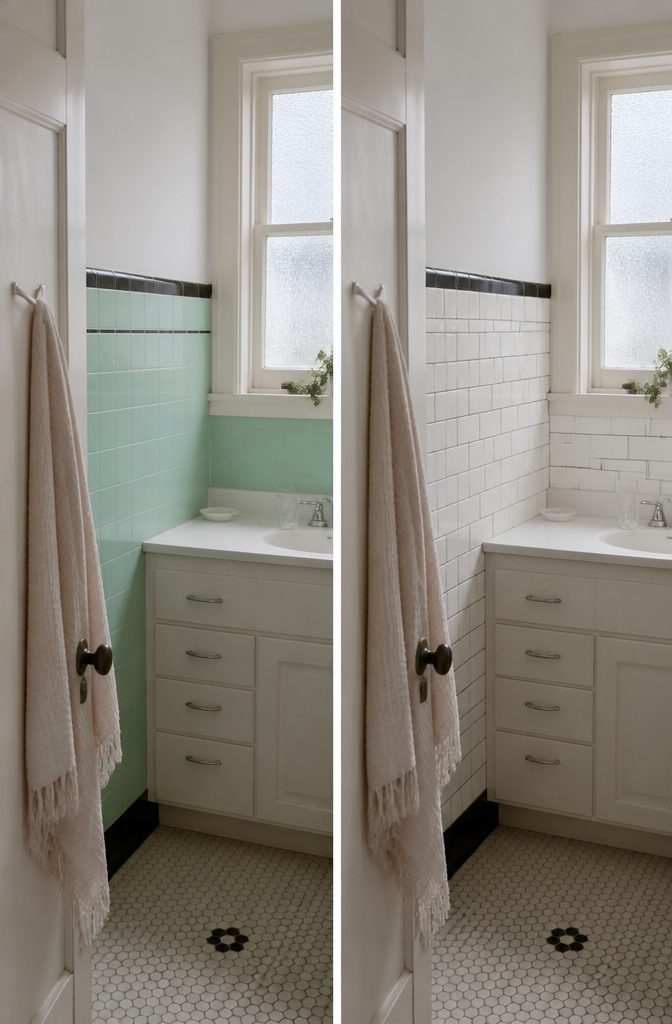
Color decides whether the room reads 1920s, 1950s, or something between, and pastels are where vintage bathrooms feel most at home.
Light pink, mint green, aqua, and sunny yellow tile show up constantly in mid-century schemes, and they still work because the colors carry nostalgia without looking precious.
Pair pastel tile with a black border if you want the sleeker Art Deco feel, or leave it soft for the postwar look.
Jewel tones and bold single colors take a different route. A vivid green backsplash or bright blue floor tile becomes the anchor, and everything else stays neutral to let the color carry the room.
I’ve found this approach works better in smaller bathrooms where one strong choice replaces the need for pattern or multiple finishes.
Black and white is the safest vintage palette and the most forgiving over time.
White cabinets, black countertops, and neutral tile give you flexibility with linens and accessories without locking the room into one era. The combination reads classic rather than nostalgic, which matters if you’re renting or planning to sell.
3. Add Vintage Character with Tile

Tile is where most of the period character in a vintage bathroom actually lives.
Checkerboard floors in black and white are the pattern I see work fastest when someone wants immediate recognition—alternating squares read as twenties or thirties without much else in the room needing to match.
Hexagonal tile in white or pale gray sits a little earlier, closer to the teens, and it softens the geometry enough that the floor doesn’t take over.
Subway tile on the walls keeps the look clean if the era you’re after is broad rather than specific, though colored subway tile in mint, pink, or pale yellow pins the decade tighter.
Geometric patterns and small decorative borders bring in more detail, which helps when the fixtures themselves are modern and the tile has to carry the vintage feel alone.
The choice between a bold floor that becomes the focal point and quieter tile that lets other elements lead depends on how much contrast the room can hold before it fragments.
4. Use Wallpaper or Wall Treatments

Wallpaper brings instant vintage character, especially when you choose florals, damask, or geometric prints that nod to Victorian or mid-century design.
A gold and white pattern reads elegant in a half bath, while bold retro geometrics work well in a larger space where you want personality.
Moisture matters: wallpaper needs good ventilation in a damp bathroom, so I recommend it for powder rooms or bathrooms with an exhaust fan that runs reliably.
If you can’t find vintage stock you like, plenty of modern papers mimic the look without the search.
Wainscoting and wood paneling add texture and make a new space feel older fast. Shiplap painted white or in soft pastels pairs well with vintage fixtures and gives you that farmhouse or cottage look.
You can use planks that lock together or flat panels that screw into studs, but line the wall with a moisture barrier to prevent buildup behind the wood.
Picture rail molding is another option if you want a more European apartment feel. Installation is straightforward enough for an afternoon, and the return in character is immediate.
5. Choose Vintage-Style Fixtures and Sanitaryware

Sinks, tubs, and faucets are where vintage style reads most clearly, because these pieces sit at eye level and decide the room’s period.
A porcelain pedestal sink or a console sink with exposed piping establishes the era immediately, and the DXV Belshire Collection carries that through with faceted cross handles and geometric lines drawn straight from Art Deco design.
The Belshire Freestanding Soaking Tub anchors the room as a focal point, with clean lines that reference the period without requiring the compromises of an original fixture.
Reproduction options from Kingston Brass and Signature Hardware give the same look at a lower entry point, and I find them useful when the budget needs to cover more than one bathroom or when the space calls for a specific finish the higher lines don’t stock.
The Ponds Farmhouse chose a Victoria Albert freestanding tub over a vintage cast-iron clawfoot for practical reasons that come up often: old tubs are narrow and lose heat quickly, which sounds fine until you’re twenty minutes into a cold bath.
A modern tub in a traditional silhouette gives you the look and the comfort, and the Victoria Albert option holds heat because it’s made of stone rather than bare metal.
6. Choose Mirrors and Lighting as Visible Accents

A large mirror with an ornate or metal frame changes how a bathroom feels without touching a single tile.
The Kelso Gold Washed Mirror Frame brings warmth over a pedestal sink, while the Acadia Oiled Bronze Frame works when you want something quieter that still reads vintage.
For a leaner mid-century look, the Broadway Brushed Chrome Slim Frame sits close to the glass and reflects light without adding visual weight.
Pair any of those with period-style sconces or a simple pendant, and the room has character before you’ve committed to wallpaper or a full fixture swap.
One thing worth knowing: older lighting fixtures may not hold up near a shower or anywhere moisture sits.
Reproduction pieces built for damp locations give you the look without the risk, and they’re often easier to install than salvaged originals that need rewiring.
7. Repurpose Furniture and Vintage Pieces for Storage

An antique dresser or cabinet becomes a vanity when you cut a hole for the sink and seal the wood properly. For $100 or less, you can paint a vanity and create a high-end look without tearing anything out.
Benjamin Moore Balboa Mist and White Dove both work if you want a soft neutral base, while Annie Sloan Chalk Paint in Duck Egg gives you a dusty blue-green and Graphite reads almost black.
The project takes a long weekend if you let each coat cure fully.
Beyond the vanity, thrifted pieces fill gaps where built-ins would cost more and contribute less character. A tall corner cabinet holds towels and gives you a place to display transferware or apothecary jars filled with soaps.
An old TV cabinet can become linen or jewelry storage. Chippy paint and mismatched heights read vintage immediately, and the furniture costs less than custom cabinetry while keeping the room from looking like every other bathroom.
8. Layer in Textiles and Small Accessories
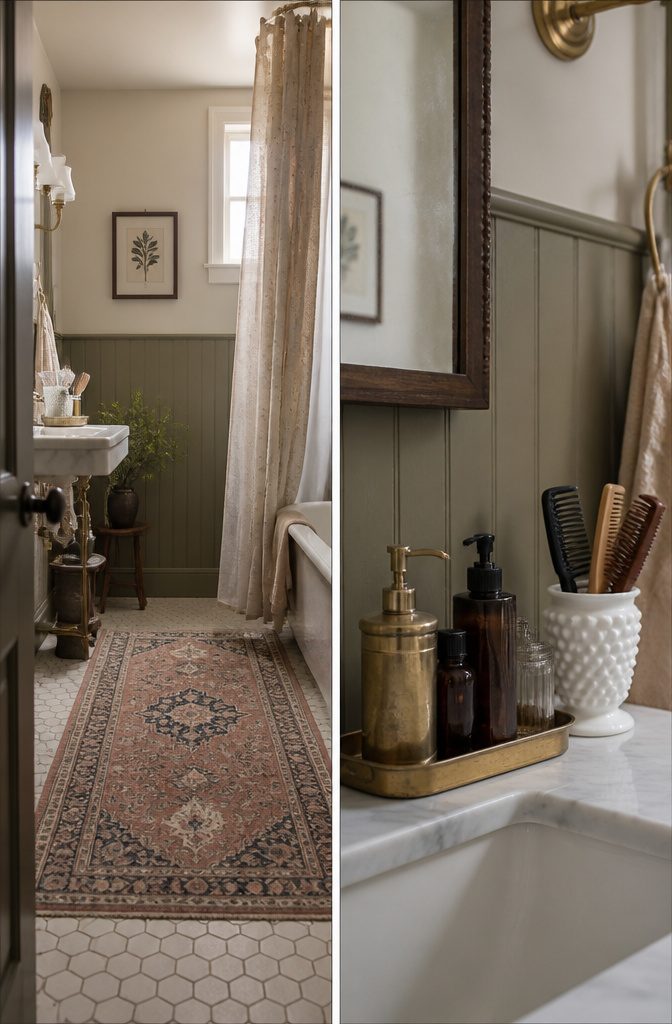
Textiles soften the room and give you a way to bring in pattern or warmth without painting or tiling.
A water-resistant Persian-style rug works better than a standard bath mat if you want the look of something collected rather than bought at a big-box store.
Ruggable sells versions that hold up to splashes and can be washed, which solves the usual problem of vintage rugs in a damp space.
For the shower, I reach for a fabric curtain with a vinyl liner behind it instead of one piece doing both jobs.
The fabric reads softer and lets you pick a pattern or weave that suits the era, while the liner handles the actual moisture and prevents mildew.
Small accessories finish the room: a brass or ceramic tray to corral brushes and bottles, a hobnail milk glass vase for combs, a few framed botanical prints, potted greenery if the light allows.
These pieces add personality without demanding wall work or plumbing changes, and most can be thrifted or swapped out as your taste shifts.
9. Make Choices That Suit the Room’s Space and Use

Vintage bathrooms often sit in the smallest, most awkwardly shaped parts of older homes, so any vintage choice has to answer whether it leaves enough room to dry off without hitting a towel bar.
A medicine cabinet mirror adds storage without eating floor space, and a wall-mounted sink does the same—both free up circulation in tight quarters.
Newbury Home suggests floating shelves and hanging accessories to keep toiletries within reach but off the counter.
Pedestal sinks open the floor further, House Digest notes, though you lose the storage a vanity would bring and need to make that up elsewhere, either with a basket underneath or separate wall cabinets.
Modo Bath frames the question around storage first: without enough of it, clutter piles on every surface and the room feels even smaller. Bathroom cabinets and shelves help, especially recessed ones that sit flush with the wall.
Clear floor space improves comfort and mobility, and when paired with good lighting—for visibility, accessibility and daily tasks—the room works better even if the footprint stays small.
The vintage look matters, but not if it forces you to store shampoo bottles in another room.
Thrifting and Budget Choices

Local thrift shops and flea markets are where I look first for vintage bathroom pieces that cost a fraction of new.
Plant stands turn up often and add height without taking floor space — a small side table, a teak stool, or even a coat rack works for hanging plants if the room runs damp enough to support them.
Estate sales are better for tile, wallpaper remnants, and rugs, because people clear out whole bathrooms at once and price to move.
If you want vintage-inspired fixtures on a budget, waiting for sales or hunting open-box listings on eBay and Facebook Marketplace cuts the cost without settling for reproductions that look thin.
Kingston Brass and Signature Hardware both make reproduction basin taps and shower systems that hold up, but patience gets you the real thing for less.
Repurposing furniture you already own saves more — an old shelf becomes a towel rack with hooks, and a thrift store shelving unit painted black adds storage without looking new.
For Delft tile, the blue-and-white ceramics that give a bathroom an antique spa feel, check local thrift shops first.
If nothing turns up, Wayfair, Kilim, and Society6 all carry versions that mix well enough to tell a story across the wall.
Bathroom Size and Storage
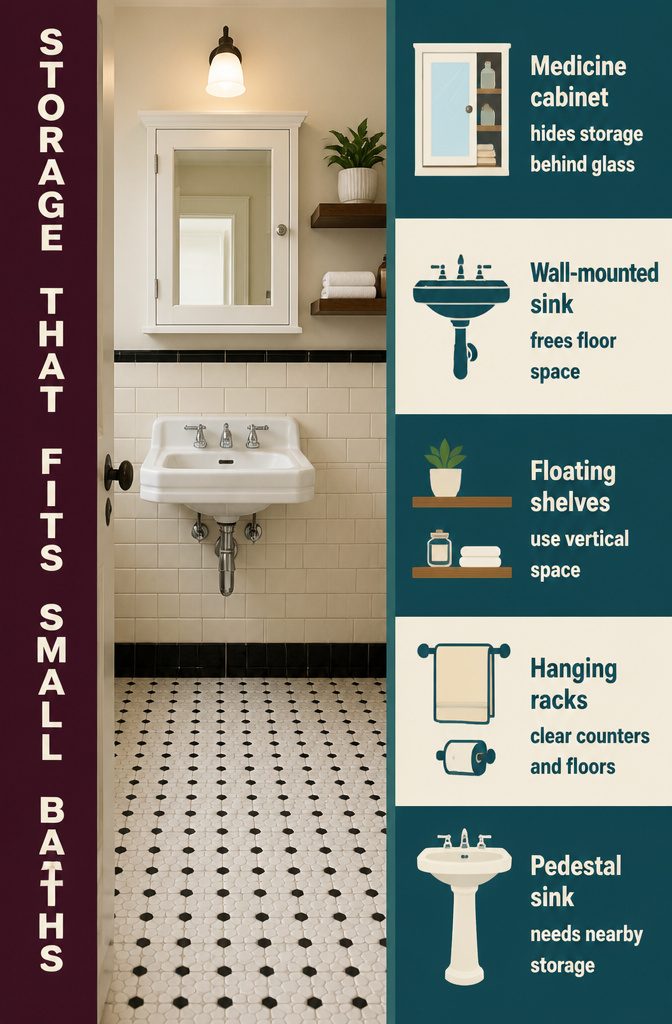
Small vintage bathrooms often demand storage choices that keep the style intact without eating up square footage. A few classic moves let you save floor space and still have somewhere to put things:
- A medicine cabinet mirror adds storage behind the glass instead of flat against the wall, and you skip the separate cabinet that would jut into the room.
- Wall-mounted sinks open up floor area that a vanity would cover. Hang the sink, and you can slide a large basket for towels underneath or keep the floor clear for easier cleaning.
- Floating shelves use vertical space that would otherwise go empty, and they look right in a vintage room when finished in natural wood or painted white.
- Hanging accessories like toilet paper holders and towel racks stay off the counter and the floor, leaving both surfaces free.
When a pedestal sink frees the floor, I store the usual under-sink items in a separate wall cabinet or on shelves mounted nearby. A freestanding apothecary cabinet works if you have the floor space and want the storage visible.
Moisture and Older Materials

Wallpaper needs proper ventilation in a bathroom or the moisture works its way behind the paper and lifts it within months.
An exhaust fan that runs during showers and for twenty minutes after makes the difference, especially in a small room with no window.
I’ve seen vintage-pattern wallpaper hold up fine in a powder room with no shower, but the same paper failed near a tub where steam built up daily.
If you love the look but the room stays damp, save wallpaper for the wall farthest from water.
Wood paneling or wainscoting brings instant period character, but moisture can collect behind it if you skip the liner. A vapor barrier between the wall and the wood prevents buildup that rots the paneling from behind.
Older lighting poses a different problem: true vintage fixtures are easy to find and often cheaper than reproductions, but they may not be rated for damp locations near a shower.
For those spots, reproduction lighting built to current standards is the safer choice.
Frequently Asked Questions
What are some vintage bathroom ideas for a small bathroom?
A medicine cabinet mirror adds storage without taking floor space, and a wall-mounted or pedestal sink opens up the floor so the room feels larger.
Floating shelves and hanging accessories keep toiletries within reach but off surfaces. Checkerboard floors or one strong vintage piece like a framed mirror or a painted vanity bring character without crowding the room.
What color bathroom fixtures are popular now?
Matte black faucets bridge contemporary function and vintage charm, and they work across multiple eras without requiring salvaged parts.
Brass, chrome, and gold finishes remain popular in vintage-inspired designs. White porcelain stays the most versatile choice because it pairs with any color scheme and reads classic rather than dated.
What is a classic bathroom?
A classic bathroom mixes vintage elements like pedestal sinks, clawfoot tubs, or checkerboard floors with neutral palettes that don’t lock the room into one decade.
Black and white tile, subway walls, and simple fixtures give you timeless appeal without the risk of looking costumed. The room reads elegant and functional rather than trendy or replicated from a single period.