

Bedroom organization methods range from rolling bins under the bed to seasonal closet rotation, and the right combination depends on which storage problems you’re actually solving.
The system collapses fast if clothes worn once have nowhere to land except the floor, or if jewelry piles loose in a drawer where chains tangle overnight.
A five-minute reset before bed keeps surfaces clear without turning into weekend work, and vacuum-sealed bags compress off-season textiles to about one-third their original size so they fit under a bed frame with six inches of clearance.
1. Start by Clearing What Doesn’t Belong

Every bedroom holds three kinds of clutter, and the first pass sorts them into three containers: donations, trash, and items that belong in another room. The sorting matters more than the speed.
I recommend setting a timer for 15, 30, or 60 minutes and stopping when it rings, even if the room isn’t finished. A manageable session beats trying to clear everything in one exhausting push.
Start with surfaces before opening any drawers or doors. Clear nightstands, dressers, and any flat space where receipts, broken pens, old magazines, and stray safety pins tend to pile up.
Then move to clothing. The standard I use is simple: anything not worn in the past 12 months goes into the donation bin.
That rule forces honesty about what actually gets used. Once the extras are out, the room feels lighter and ready for the next step.
2. Use the Space Under Your Bed
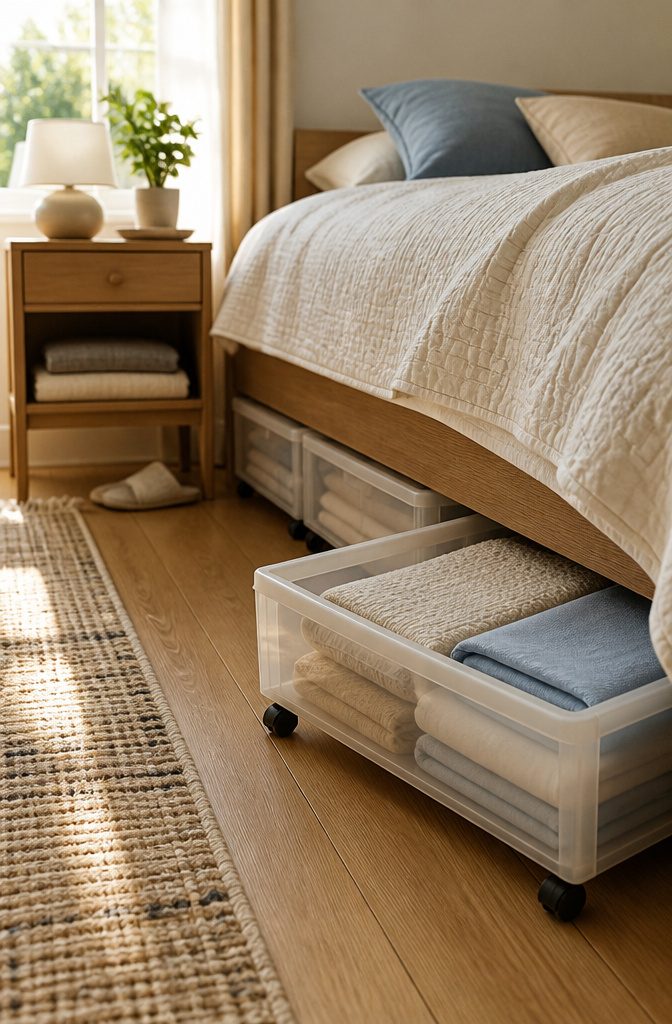
The floor under your bed is probably the single biggest unused zone in the room, and rolling storage bins turn it into drawer space you can actually reach.
If you have at least 6 inches of clearance, rolling containers work on carpet and let you pull out games, linens, or off-season clothes without crawling.
I keep blankets and spare sheets under the bed in drawers built into the frame, which means the linen closet stays clear and I’m not digging through stacks every time I need to change the bed.
Storage beds with built-in drawers cost more up front but they replace a dresser, which matters in a small room.
Nightstands with drawers do the same thing on a smaller scale. If you’re stuck with a plain frame and low clearance, vacuum-sealed bags compress contents to about one-third their original size and take under two minutes to seal.
They fit into spaces too shallow for bins and keep dust off anything you’re not using regularly.
3. Organize Drawers With Dividers and Groups

Drawers turn chaotic fast when items pile on top of each other, so dividing them into fixed compartments solves half the problem before you ever fold a shirt.
Honeycomb organizers snap together to fill the width of a drawer and can be cut to match depth, with each opening sized to hold one larger pair of socks or two smaller ankle-sock pairs.
They work especially well in underwear and sock drawers, where loose items drift otherwise.
For nightstands and deeper drawers, shallow trays lock each item into its own zone. I like the way a divided tray forces you to commit to what belongs there, since overflow has nowhere to hide.
If the organizer slides around, a dab of museum putty on the bottom holds it, or a pair of cord clips wedged at the back keeps it from drifting.
Taller fabric organizers handle deeper drawers and bulkier items like scarves or belts.
Stacking four jewelry trays in one drawer clears a dresser top entirely. Drop a dryer sheet or two in the bottom of each drawer to keep clothing smelling fresh between washes.
4. Sort and Store Your Closet by Season
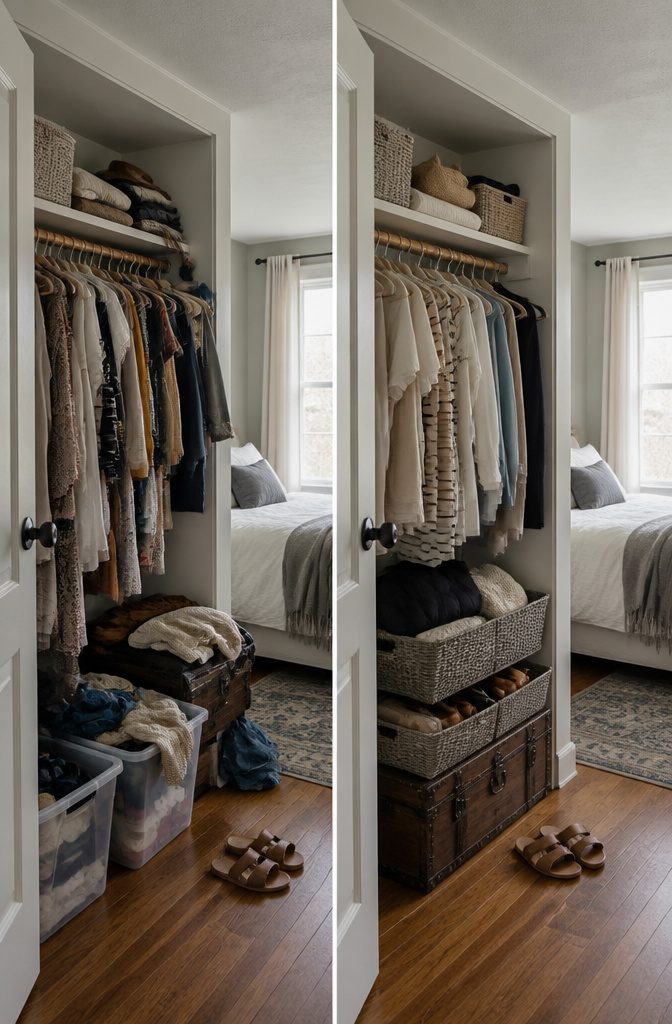
I clear the closet by season twice a year, and the rule I follow is simple: if you haven’t worn it in the current season, pack it away.
Winter coats, heavy sweaters, and boots go into vacuum-sealed bags or storage bins when warm weather arrives. Light dresses, linen shirts, and sandals get tucked out of sight once cold months hit.
The space you free up in the main closet makes it easier to see what you actually reach for, and mornings move faster when you’re not sorting through clothes that don’t fit the weather.
I store those off-season bins in a few spots depending on what else the bedroom offers. Under the bed works if the frame allows it.
A wardrobe or storage trunk can hold seasonal extras along with scarves, gloves, and accessories that only show up a few months a year. You want it within reach but not taking up the best space.
You want to be able to pull the bins when the temperature shifts without dismantling the whole closet, but you don’t want them taking up the hanging space or drawer fronts you use every day.
5. Add Hooks and Shelves to Doors and Walls

Doors and walls are where you add storage without giving up floor space.
An over-the-door rack holds shoes, bags, scarves, and accessories in plain view, and the best systems use a full-height rail you can attach baskets or shelves to for a setup that fits what you actually own.
I find these work especially well on closet doors, where the rack stays hidden when the door is closed.
Look in and around side tables and nightstands, on and inside your dresser, consoles, armoires, closets, hooks, storage racks, vanity tables, open shelves, under and around the bed, inside a storage ottoman or bench, and anywhere your clothes tend to pile up, such as on a corner or in a chair of the room.
That habit of checking every storage point matters, because hooks and racks only help if you use them instead of piling things on furniture.
Wall hooks handle the clothes you wore once but plan to wear again, which keeps them off the chair or floor without committing them back to the closet.
A bench or pair of stools at the foot of the bed does the same job for pajamas or tomorrow’s outfit.
Floating shelves hold books, hats, or small bins for jewelry and belts. Hooks and shelves add function, but too many crowd a small room fast.
6. Give Jewelry, Shoes, and Accessories Their Own Spot

Jewelry ends up tangled in a dish, shoes crowd the closet floor, and scarves slide off hangers because none of these things has a real home.
Stackable jewelry trays fix the first problem without eating drawer space: I use four trays in one drawer, each holding a different category so I can pull the earring tray without disturbing anything below it.
The clear acrylic kind works better than fabric because you see what’s inside before you lift the lid.
For shoes, space savers let you stack pairs vertically instead of lining them up side by side, which matters in a narrow closet.
A hanging jewelry organizer with clear zippered pouches goes on the closet rod when drawer space runs out, and the double-sided design keeps necklaces visible without opening every compartment.
Accessories like belts and hats belong in their own bin or basket rather than loose on a shelf, because the second they scatter, the whole system collapses.
7. Set Up One Drop Zone Near the Door

A drop zone lives between the bedroom door and wherever you normally head next, usually on top of a dresser or a small table.
It holds the pocket contents, jewelry, and loose daily items that would otherwise land on every flat surface. Without one, you end up with keys on the nightstand, a watch on the dresser, and earrings near the lamp.
I keep the zone small on purpose.
A valet tray works when smaller items are the problem. A decorative basket or box handles bulkier things like shoes or bags.
If you have three or more display items already sitting on a dresser, put the tray down anyway. It corrals the clutter and makes dusting easier, since you can lift everything in one motion.
Empty the zone about once a week. Anything that stays longer than that needs a permanent home somewhere else in the room.
8. Choose Furniture That Fits a Small Space

When the bedroom is tight on space, furniture that does more than one thing solves the problem without crowding the floor.
A platform bed with storage drawers underneath holds extra linens or off-season clothes right where you sleep, and that frees up a closet shelf or dresser drawer somewhere else.
I keep bed sheets in the bedroom where they belong instead of piling them in a linen closet, which cuts down on the avalanche every time I need a set.
Nightstands with two deep drawers beat single-drawer versions when you need a place for charging cables, books, or anything else that would otherwise sit out on top.
If the room is large enough, a small dresser next to the bed works even better and gives the space a finished look.
Match the height to the top of the mattress or go one to three inches higher. Platform beds sit too low for most dressers to work as nightstands, so stick with the deepest nightstand you can fit.
Foldable and stackable pieces help when you cannot leave furniture out all the time. A folding desk or nesting tables tuck away when you are done, and stackable bins slide under the bed or into a closet.
Keep larger pieces against the wall and leave the center of the room open so the space reads larger and you can move through it without turning sideways.
9. Arrange Furniture Into Zones for Each Activity
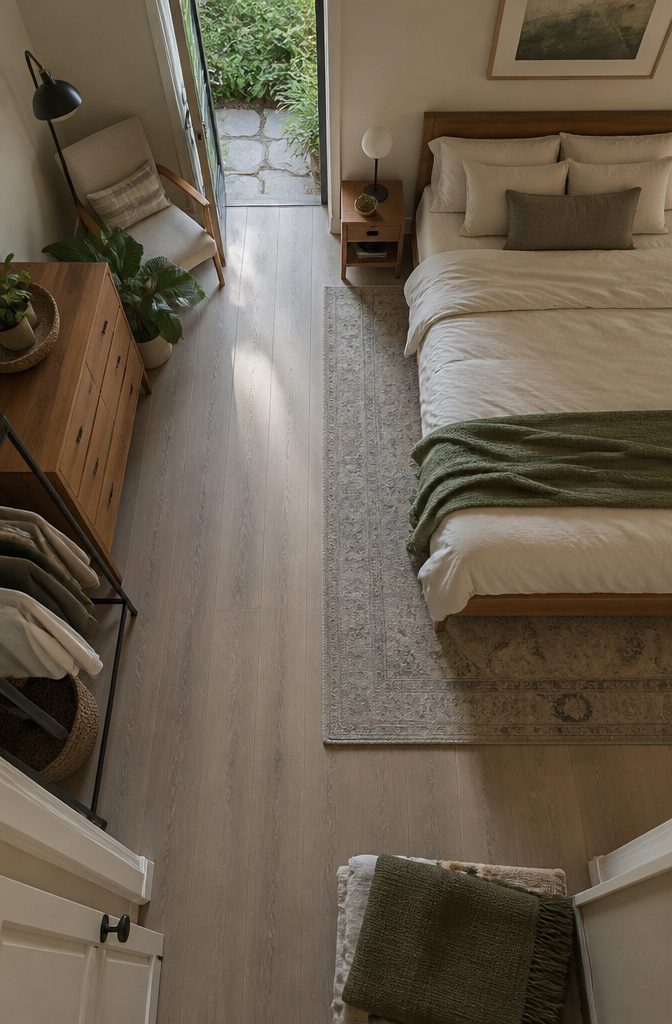
The room stays more organized when each piece of furniture supports one activity instead of catching whatever lands near it.
I arrange beds against the wall farthest from the door to anchor the sleeping zone, then position a dresser or clothing rack near the closet to define the dressing area.
Storage pieces like a bookshelf or a bench with bins go wherever wall space allows, as long as they don’t sit in the path between the door and the bed.
A narrow walkway of at least two feet keeps the zones from feeling crammed together.
In smaller bedrooms, I skip bulky furniture and use a wall-mounted shelf or a slim nightstand instead of a full dresser in the sleeping zone. Let each area do its job without forcing the room into hard divisions.
A rug under the bed or a floor lamp next to a chair signals the boundary without adding walls or curtains that chop up the space and make it feel tighter than it is.
10. Tidy for Five Minutes Before Bed

Before you go to bed, take five minutes to clear surfaces, put stray clothes back where they belong, and reset your nightstand.
That means folding the throw blanket, moving water glasses to the kitchen, and putting whatever landed on the dresser back in its actual spot.
You’re not deep cleaning. It is making sure you wake up to a room that already feels calm instead of one that requires decisions before coffee.
I treat this as part of shutting the day down, the same way I check that the front door is locked. Five minutes is enough to handle the small daily accumulation without it turning into weekend work.
If you skip it, the clutter compounds fast. A few days of dropped earrings, pocket change, and yesterday’s jeans draped over a chair, and suddenly the bedroom feels like a staging area instead of a place to rest.
The drop zone you set up near the door will need attention about once a week.
Empty it, sort what is in it, and return everything to where it lives. That keeps the temporary holding spot from turning into a permanent pile.
11. Pack Away What You Use Once or Twice a Year
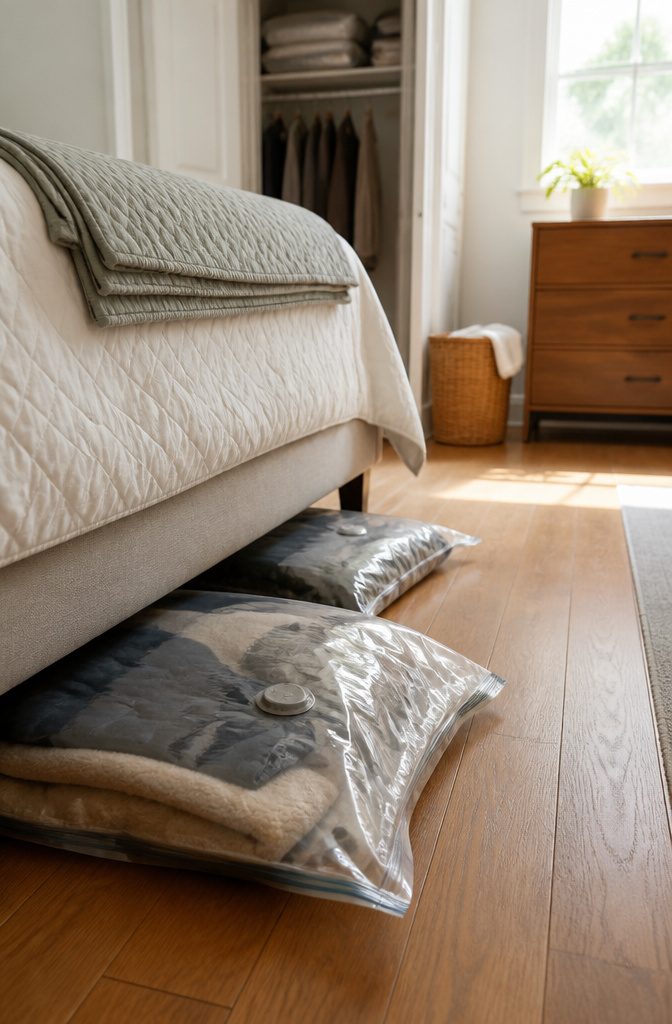
Bulky winter coats, heavy quilts, guest bedding, and any clothes you haven’t touched in six months qualify as infrequent enough to pack away.
The test is simple: if you only pull it out once or twice a year, it doesn’t need to live in your closet or dresser all the time.
Vacuum-sealed bags are the most space-efficient option. They compress textiles down to about one-third or one-quarter of their original size, which means even a few inches of clearance under the bed becomes usable.
A bag takes less than two minutes to fill and seal with your vacuum, and it protects the contents from dust while they sit.
Store those bags under the bed, on the top shelf of your closet, or in another room if you have one available.
Label each bag clearly so you can find what you need when the season shifts without having to unseal everything.
Keeping only what you actually wear within arm’s reach makes mornings faster and stops things from disappearing in the back corners.
12. Keep Decor to a Few Chosen Pieces
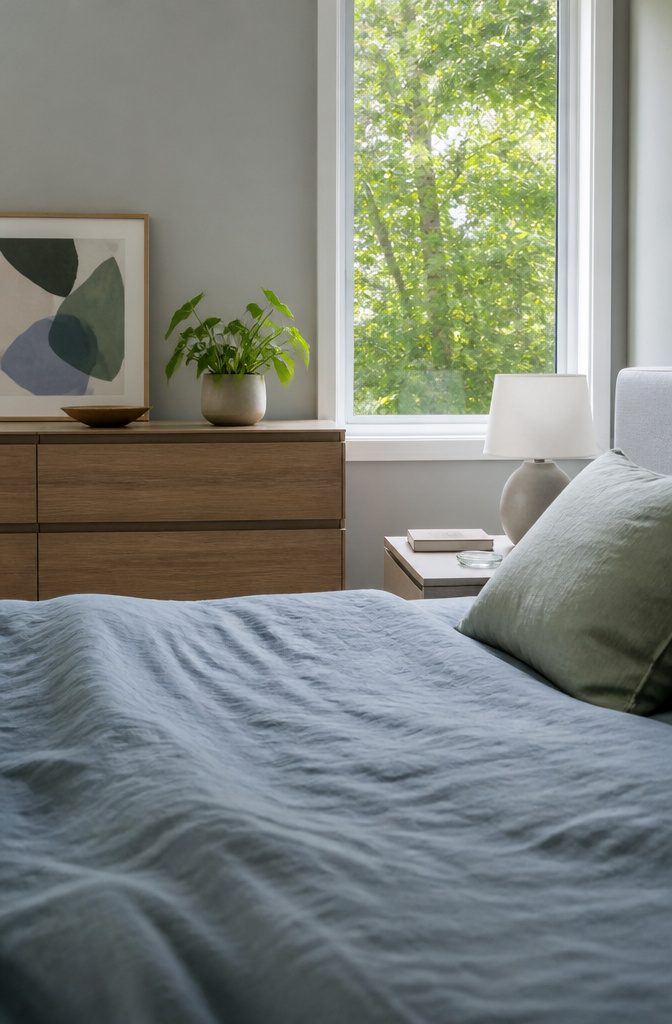
Too many decorative objects compete for attention and make a bedroom harder to keep organized.
I start by choosing three to five pieces that matter personally—a framed photo, a small plant, a bowl that catches loose change—and giving each one a deliberate spot.
The rest goes into a drawer or onto a single shelf in the closet, where it stays available without cluttering horizontal surfaces.
Soft blues, muted greens, and gentle grays work well when you want calm rather than stimulation. Those colors show up in what stays on display: a throw pillow, a small piece of art, bedding that ties the room together.
I avoid scattering decor across every surface. A nightstand holds one or two things, not six.
The dresser top stays mostly clear. When every surface carries something, the room reads as crowded no matter how tidy the drawers are.
What belongs on display is what you reach for or look at daily. Everything else is decoration for decoration’s sake, and a bedroom organized enough to stay that way does not have room for it.
Clean Surfaces and Furniture After You Clear Them
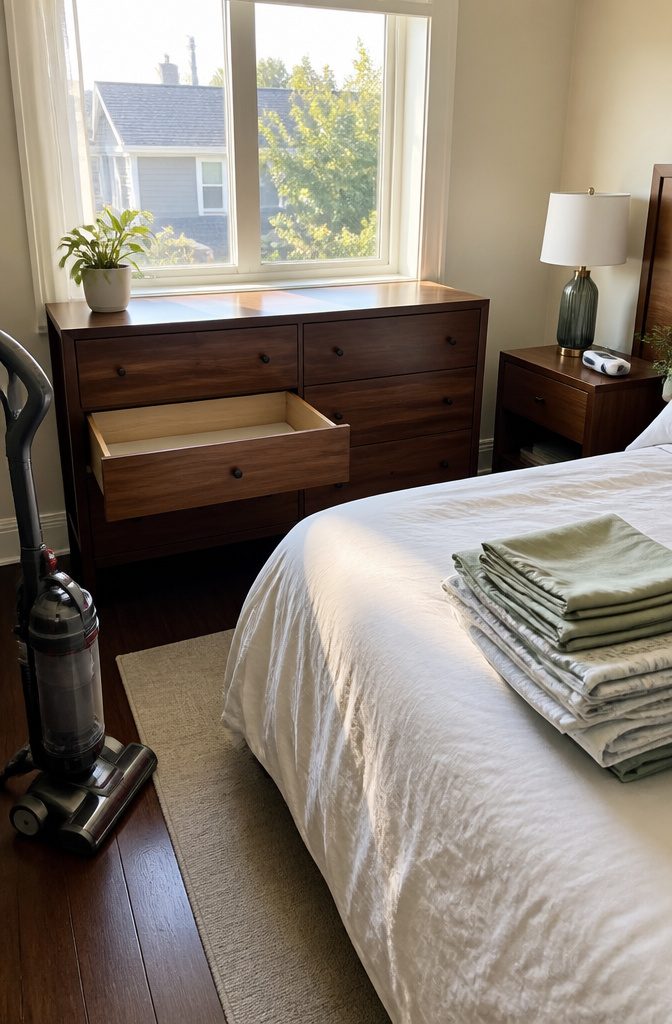
Once the drawers and closet are emptied, wipe down every surface before you put anything back. Dust and lint settle fast in dresser drawers, and cleaning them now means your folded clothes go into a space that actually feels fresh.
Use any household cleaner you already have, work through the inside of each drawer, then move to the tops of the dresser, nightstands, and headboard.
If the headboard is upholstered, a lint brush pulls off dust without leaving residue. The same move works on lampshades.
Sweep, mop, or vacuum the floor while furniture is pulled out and accessible.
Change the sheets at the same time. Window sills, light fixtures, and switches get wiped last.
The whole sequence takes twenty minutes, and skipping it means you are organizing over grime. A dryer sheet or two at the bottom of each drawer keeps the space smelling clean between washes.
Where to Put Clothes You Will Wear Again

Clothes that have been worn once but are still clean pile up fast if there’s no designated spot for them.
Hooks mounted on the wall give them a place to land instead of sliding into a heap on the floor. An over-door rack with hooks works the same way and doesn’t require drilling.
I usually recommend a bench or a pair of stools at the foot of the bed for pajamas you’ll wear the next night or jeans you plan to put on again tomorrow.
The laundry hamper should sit where you actually take your clothes off, not hidden in a closet where it’s easy to ignore. A lidded basket like the La Jolla in natural woven materials adds warmth without looking like laundry equipment.
The medium size fits most bedrooms; the large size works for two people but takes up more floor space than you’d expect. A stylish hamper you can leave out in the open gets used more than one tucked away.
Frequently Asked Questions
How do I organize my bedroom the quickest?
Start with the bed, clear visible surfaces, and tackle one drawer or shelf.
Skip closets and under-bed storage on the first pass. A 15 to 30 minute session that clears what you can see makes the room feel immediately better without the exhaustion of trying to finish everything at once.
What if I have zero storage in my bedroom?
Use wall hooks, over-the-door racks, and under-bed containers to create storage where none exists.
Rolling bins work under any bed with at least 6 inches of clearance, and an over-the-door rack on the closet holds shoes, bags, and accessories without taking up floor space. Floating shelves and baskets add capacity without requiring furniture.
What can I do to make a small bedroom appear less messy?
Limit furniture to pieces that do more than one thing, like a platform bed with storage drawers or a nightstand with deep compartments.
Pack away off-season clothes and anything you haven’t worn in 12 months to free up closet space. Keep decor to 3 to 5 chosen pieces instead of scattering objects across every surface.
Do I need to buy new furniture to organize my bedroom?
No. Start by clearing what doesn’t belong and using what you already have: trays for drop zones, bins for drawers, baskets for shelves, and hooks for walls.
Most organization problems are solved by getting rid of the excess and giving the rest a fixed spot, not by adding furniture.