
Small bathrooms lose space fast when daily items pile up on counters or hide in cluttered cabinets, and the fix depends on whether you need better use of what you already have or actual square footage back.
The difference shows up in drawer dividers versus an over-the-toilet shelf, and both approaches appear in the 15 methods below, starting with the step that clears room before you buy anything: decluttering products you stopped using months ago.
1. Declutter and remove items you do not use
Declutter and remove items you do not use
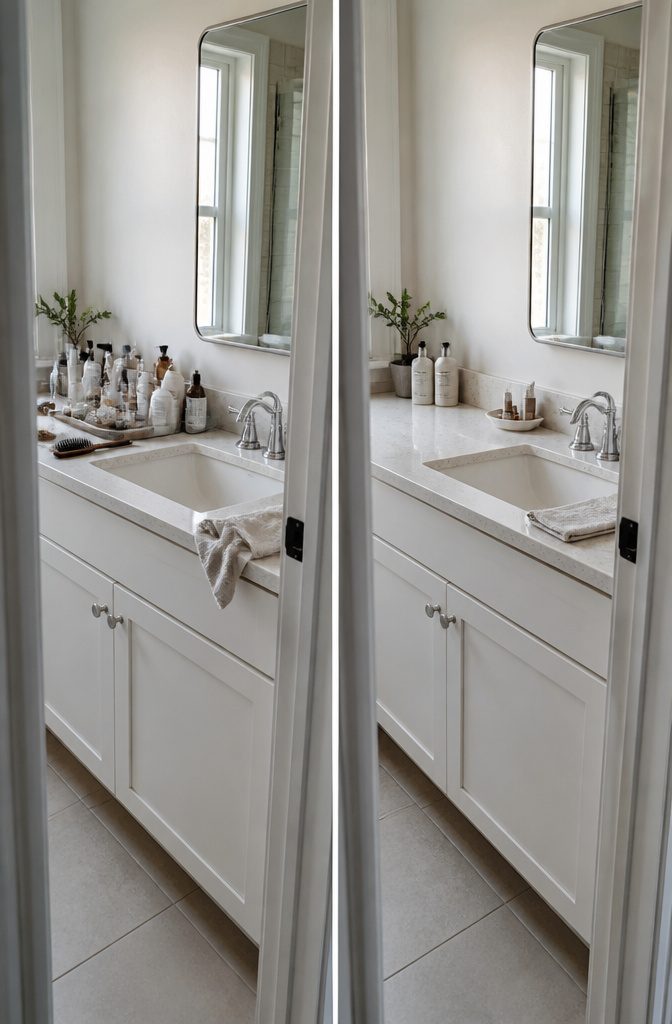
Start by touching every product in the bathroom and deciding whether it stays.
Toss anything you haven’t reached for in the past month, along with expired makeup, skincare, and medicine. Three half-used bottles of the same shampoo become one.
Beauty products untouched in three months get donated or thrown out. Broken applicators, dried-out mascaras, and empty bottles go immediately.
I treat this as the actual first step, not something to do while organizing. Clear the clutter before you buy bins or measure shelves, because the space you think you need shrinks once the unused products are gone.
Check dates, consolidate duplicates, and be picky. A fresh bathroom with room to work beats a neatly arranged collection of things you never use.
2. Use vertical wall space with shelves and hooks

When floor space is tight, wall-mounted shelves and hooks pull storage off the counter and leave the room open underneath.
Floating shelves above the toilet hold rolled towels, extra toilet paper, and small bins for toiletries without taking up any square footage.
Choose shelves that match your bathroom hardware so they feel intentional instead of tacked on. I keep frequently used items on lower shelves and backstock supplies or decorative pieces up top where they’re out of the way.
Hooks work especially well in bathrooms without space for a towel bar.
Install them on the back of the door or along a blank wall for towels, robes, or even hair tools. Wall-mounted baskets are another option for items you reach for daily, keeping them accessible but off the counter.
In corners, a narrow ladder shelf or etagere fits without blocking movement and gives you room for bath towels or a small plant.
3. Use space above or around the toilet
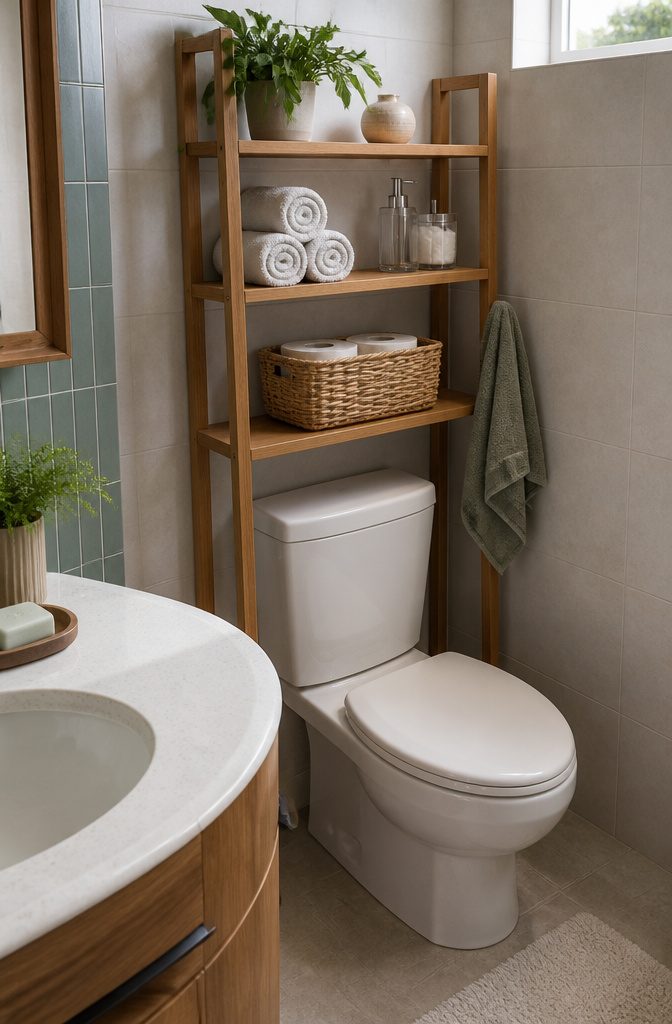
The area around and above the toilet is some of the best unclaimed storage in a small bathroom.
An over-the-toilet étagère or wall-mounted cabinet turns that dead zone into shelves for towels, extra toilet paper, and daily-use products without taking floor space you need for anything else.
I’ve seen bathrooms gain three or four shelves’ worth of capacity just by adding a unit here, and it reads as intentional rather than makeshift when the finish matches the rest of the room.
If you have wall clearance above the tank, a cabinet like the West Elm Isley Bathroom Cabinet ($399) or Pottery Barn Sausalito Wall Cabinet ($599) gives you enclosed storage that hides clutter instead of displaying it.
For tighter budgets or rentals where you can’t mount hardware, a narrow rolling cart fits in the gap between the toilet and the wall and moves when you need to clean behind it.
Floating shelves work too, though they require you to keep what sits on them looking organized.
A wicker basket holding a few spare rolls of toilet paper solves the out-of-stock problem and ties the shelves together visually if you use the same material elsewhere in the room.
4. Add over-the-door storage

The back of the bathroom door is probably the easiest square footage in the room to put to work.
Hanging an over-the-door organizer gives you pockets for hair tools, extra toiletries, cleaning supplies, or styling products without claiming any floor or counter space.
I prefer the ones with adjustable shelves or multiple hooks, because they let you customize the fit instead of forcing everything into identical compartments.
A hanging shoe organizer works just as well if you already have one.
The pockets hold bottles, brushes, baby wipes, and anything else that would otherwise pile up under the sink. Some people use simple adhesive hooks on the back of the door for towels or robes, and that approach costs almost nothing.
A narrow shelf mounted above the door can store extra toilet paper or rolled towels, though you’ll need to confirm the clearance before you hang it.
5. Make better use of the inside of cabinet doors
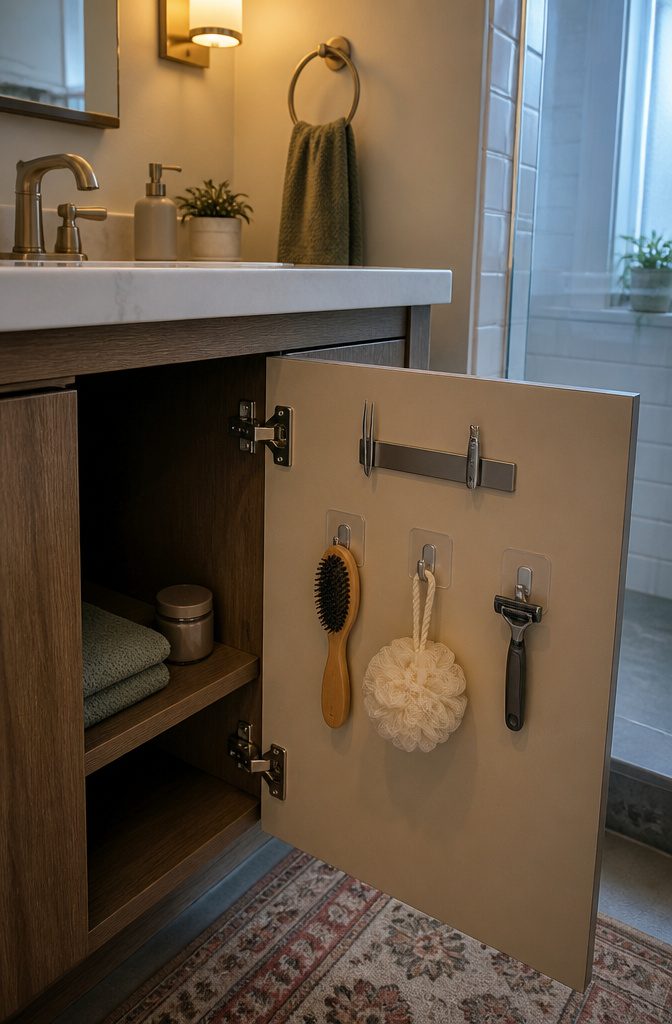
The back of a cabinet door holds more than most people use it for. Mount adhesive hooks inside to catch hair brushes, loofahs, or razors, and you clear drawer clutter without drilling.
A magnetic strip stuck to the inside of a medicine cabinet keeps tweezers, nail clippers, and bobby pins in plain sight instead of loose in a drawer where they disappear.
I prefer the magnetic strip for small metal items because it turns wasted vertical surface into organized storage that actually works when you open the door in a hurry.
Hair tools with long cords take up cabinet space fast. An over-the-door rack designed for flat irons, curling wands, and dryers moves them out of drawers entirely and keeps cords contained.
Some versions hang baskets on command hooks, which work just as well if the door clears the frame. Either way, the inside of the door becomes functional storage instead of blank space you open past every morning.
6. Improve under-sink storage with bins and organizers

The cabinet under the sink wastes space the moment you toss things straight onto the shelf. Bins and stackable organizers turn that tall cavity into layers you can actually use.
I put a small pull-out drawer or a set of stacking shelves at the back for cleaning supplies, then drop a bin at the front for backup toilet paper.
Scott ComfortPlus fits neatly if you stack it two rolls to a bin, which keeps the package from tipping and lets you see what you have left.
A tension rod mounted a few inches below the cabinet top gives you a place to hang spray bottles by their triggers.
The bottles stay upright, the nozzles stay dry, and the floor of the cabinet opens up for taller items.
The same rod works for small cleaning cloths hung on S-hooks. None of this costs much, but the difference in what you can fit and find is immediate.
7. Organize drawers with dividers or inserts

Drawers fill with clutter fast when small items roll loose. Dividers or inserts hold products by type so you can find what you need without digging.
I use clear dividers in vanity drawers to separate makeup from grooming tools, and adjustable dividers when the drawer holds items of different sizes. Small bins inside the drawer work well for lip balms, hair ties, and dental floss.
Measure the drawer before buying inserts.
Narrow-width organizers fit shallow drawers that would otherwise feel useless, and custom-cut dividers make better use of odd dimensions than generic trays. I place the products I use daily at the front so they stay within reach.
The same dividers work under the sink or in a wooden bathroom tray. Giving each drawer a single purpose keeps the system from breaking down a week later.
8. Group items in baskets, bins, or containers

Group similar products together in clear bins or baskets so you can see what you have and grab what you need without digging.
I keep hair products in one container, skincare in another, dental supplies in a third. Labels help if other people share the space, but clear containers often do the job on their own.
Dollar Tree bins work as well as anything pricier for this, and light-colored or transparent storage makes a small bathroom feel less crowded than dark bins that visually fill the space.
If you have cabinet doors or drawers, washable fabric baskets keep dust off what is inside and wipe clean when something spills.
The system only holds up if containers have a specific job.
A catch-all bin becomes the new clutter drawer. Pick a size that fits the category without leaving room for random extras to creep in.
9. Use magnetic storage for small metal items

A magnetic strip mounted inside a cabinet door keeps bobby pins, tweezers, nail clippers and hair clips visible instead of sliding around a drawer.
Attach the strip to the inside of the medicine cabinet or any cabinet door you open often, and the small metal items stick in plain sight where you can grab exactly what you need.
I find this works best on a door you face straight-on rather than one tucked to the side, because the items read at a glance instead of requiring you to lean in.
Some metal medicine cabinets take magnetic containers directly on the inside wall without needing an adhesive strip.
Small magnetic cups hold bobby pins in one spot and tweezers in another, and because the containers lift off, you can pull the whole thing down if you’re standing at a different mirror.
The setup clears drawer space for anything larger, and nothing gets buried under cotton rounds or lotion tubes.
10. Add shower storage with caddies or wall shelves
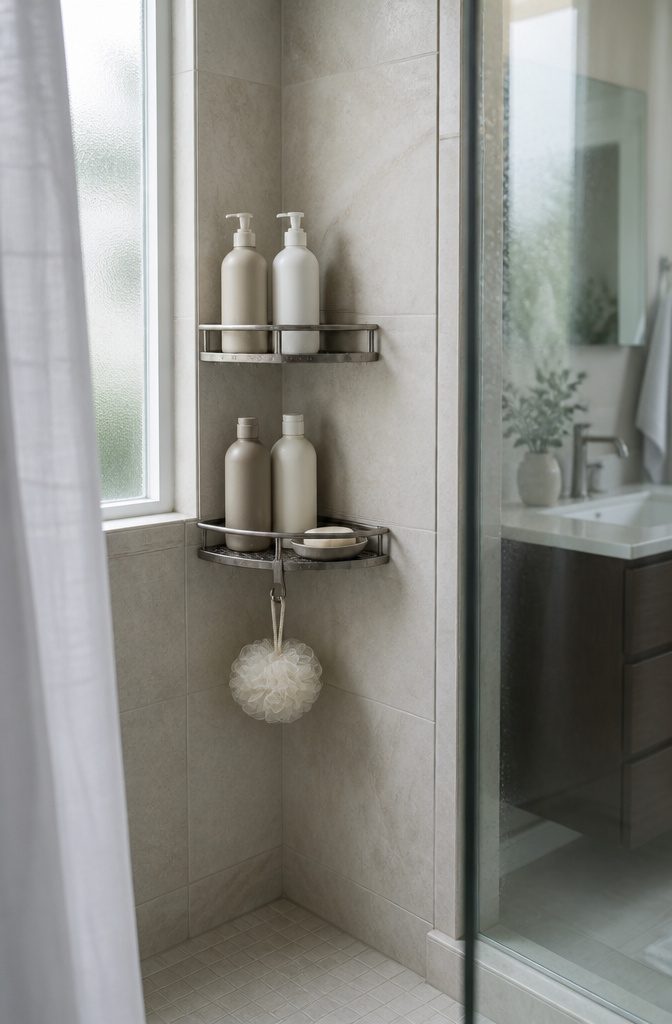
Bathing products pile up on the shower floor or ledge when there’s nowhere else for them to go, and that clutter makes a small bathroom look worse than it is.
I keep shampoo, conditioner, body wash, and soap in the shower itself using caddies, corner shelves, or wall-mounted dispensers rather than letting bottles migrate to the counter.
Adhesive-backed shelves hold better than suction-cup models, which tend to lose their grip in a humid shower. Corner shelves work especially well because they claim space that would otherwise sit empty.
The other detail that matters is material. Rust-proof shelves with drainage holes keep water from pooling under bottles, which means less cleanup and no orange stains working their way into the finish.
Caddies that hang from the showerhead or mount to the wall stay out of the way, and many include hooks for loofahs or razors so nothing ends up on the floor.
11. Hang towels and robes on hooks, racks, or ladders
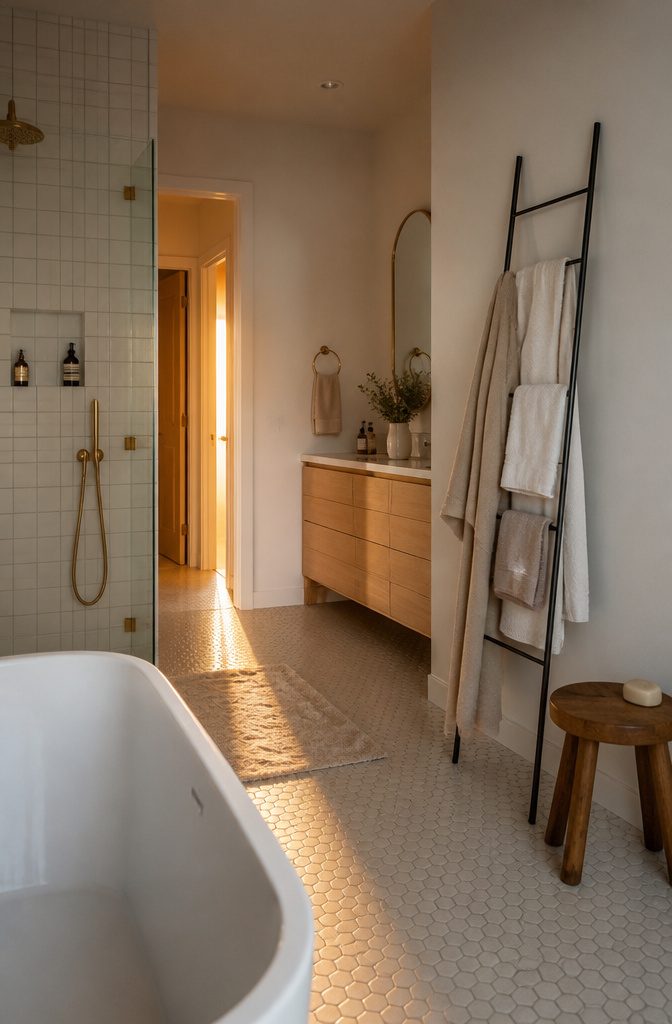
Towel bars eat up wall length fast, and in a tight bathroom that length is often better spent on hooks, racks, or a leaning ladder instead.
Hooks go on the back of the door or any empty wall patch, and they hold towels, robes, and even a hair dryer without taking up cabinet real estate.
I like them better than bars when you need more than two towels accessible at once, because you can cluster three or four hooks in the same run a single bar would need.
A ladder gives you the same vertical hang but reads less utilitarian.
The Umbra Blanket Ladder at $80 leans against the wall and holds multiple towels without any mounting hardware, which makes it a good fit for renters or anyone who doesn’t want to drill.
Metal versions keep the look minimal, and the whole piece stays narrow enough that it doesn’t block floor traffic the way a freestanding shelf would.
12. Use a rolling cart or freestanding storage

A rolling cart or freestanding shelf goes where built-in storage doesn’t, and it moves when the layout changes. I’ve found three-tier metal carts useful in rentals where drilling into tile isn’t an option and under-sink space is already full.
They fit next to the toilet or in the gap between the vanity and the wall, and the wheels let you pull the cart out to reach what’s on the back tier.
Narrow cabinets and stools with storage inside work the same way: they add capacity without permanent mounting hardware.
The width matters more than the height. A cart or cabinet wider than twelve inches starts blocking movement in a bathroom where two people need to pass.
Slim profiles keep the floor plan open, and open shelving on a cart makes it easier to see what you have instead of digging through a closed bin every morning.
13. Keep counter items on trays or tiered organizers

Grouping daily items on a tray or tiered stand keeps the counter clear without burying what you reach for every morning.
I collect perfume bottles, leave-in conditioner and skin care on a long tray against the wall, then use a small canister for bobby pins so they stop migrating across the vanity.
A tiered organizer works the same way but gains height: stackable rounds or a two-level stand let you fit twice the volume in the same footprint, which matters when counter real estate runs short.
If most of your routine items are small—makeup, cotton rounds, razors—vertical holders do better than flat trays.
A standing makeup organizer or a stackable set in the corner uses space you would otherwise lose, and everything stays visible instead of layered behind taller bottles.
Access gets harder on the top tiers, so put your less-used items there and keep daily staples on the lower level.
14. Store some supplies elsewhere
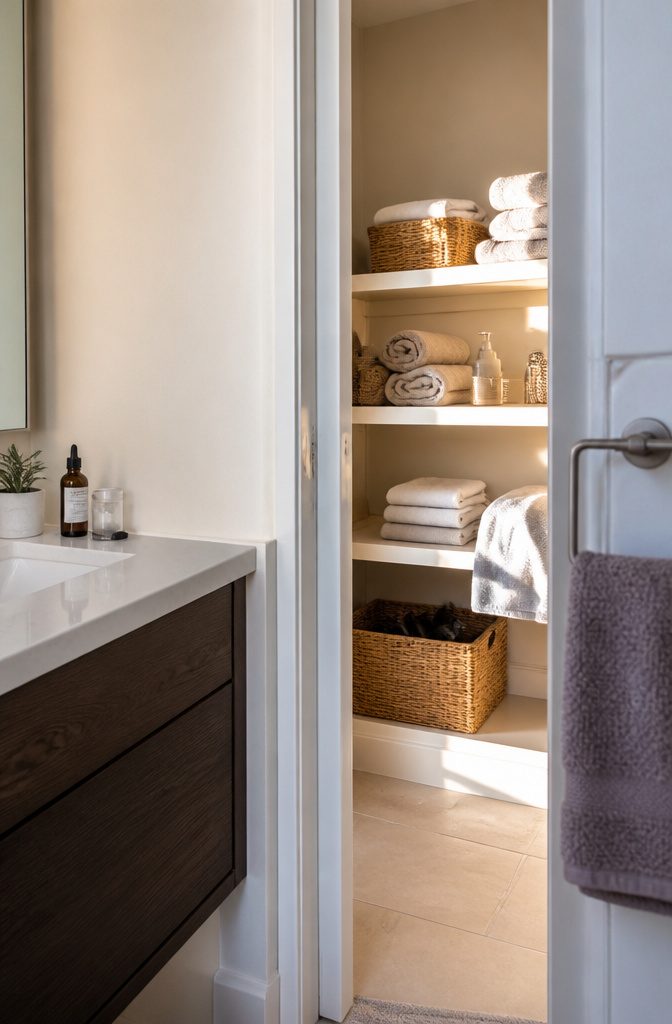
Not every bathroom supply needs to live in the bathroom. Move backups, extra towels, and rarely-used products to a nearby linen closet or bedroom storage if you have the space elsewhere.
The items worth keeping in the bathroom are the ones you reach for daily or couldn’t do without on short notice. Everything else is taking up real estate you need for the things that actually belong there.
I start by pulling out anything I use less than once a week. Hair tools I haven’t touched in months, backup bottles of shampoo, the full stack of bath towels when two per person would cover it.
Those go to a hall closet or under a bed in another room. The bathroom gets what you need this week, not what you might need eventually.
Rolling towels instead of folding them helps when you do keep extras nearby, because they stack deeper in a closet and fit into baskets without the bulk.
15. Use clear or attractive storage as part of the decor
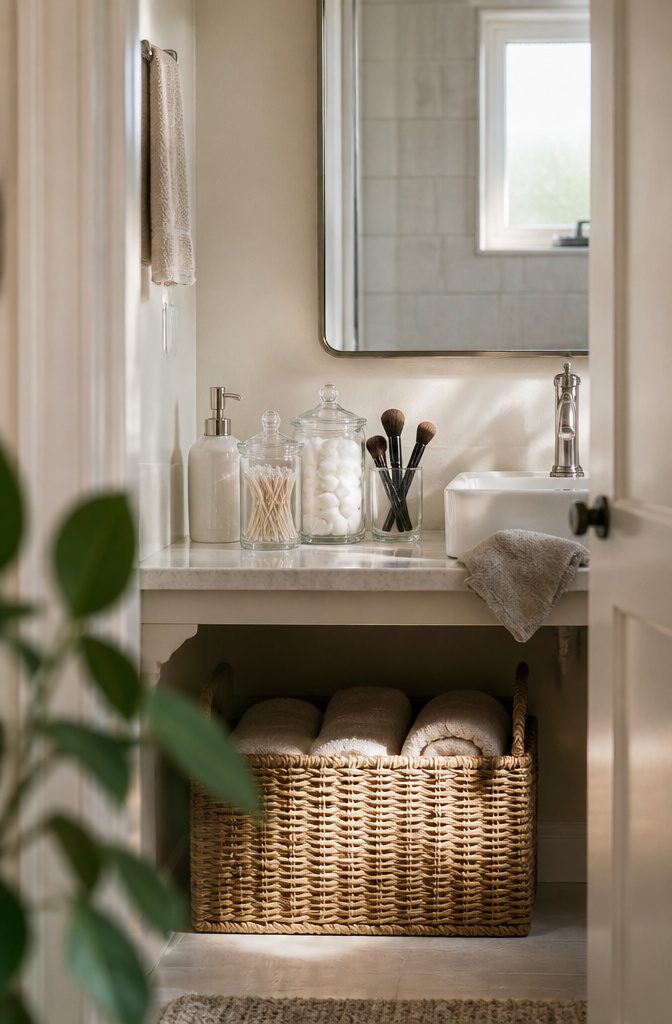
Glass containers and mason jars turn everyday bathroom items into visible decor. Cotton swabs, cotton balls, and makeup brushes look intentional in clear glass rather than left in their original packaging.
I keep toothbrushes and small tools in painted mason jars on the counter, which costs almost nothing if you find the jars at a thrift store. Any drinking glass works if you cannot find jars.
Wicker baskets do the same thing for larger items.
A basket holding rolled towels or toiletries reads as decor instead of clutter, especially if the basket itself has texture or color. The approach works because you skip adding separate decorative objects and let the storage itself carry that role.
Pick a soap dispenser you actually like instead of leaving the plastic bottle on the counter, and swap in simple canisters for items that come in packaging that looks cheap.
The bathroom feels bigger when every visible object earns its place.
Keep the system going with weekly resets and regular decluttering
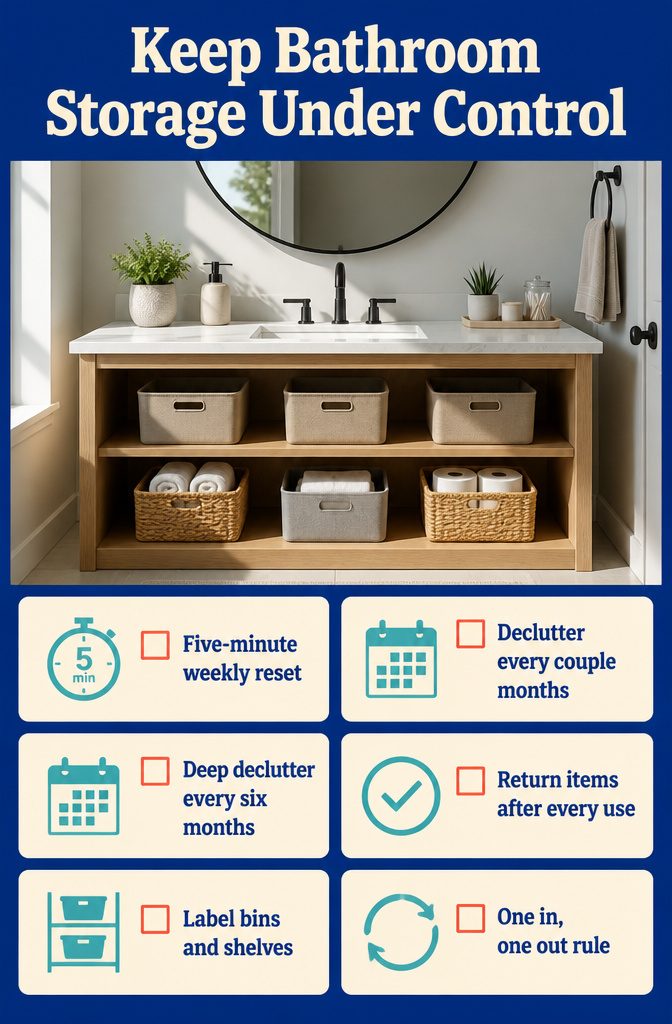
A bathroom stays organized only as long as the habits behind it hold.
A five-minute weekly reset puts stray items back where they belong and keeps surfaces clear before the clutter builds. Beyond that:
- Declutter every couple of months to catch products you stopped using or duplicates that crept in.
- Deep declutter every six months, pulling everything out and deciding what still earns its place.
- Put items back after use, every time. Organization fails the moment you stop.
- Label bins and shelves so everyone in the house knows where things go.
- Follow a one in, one out rule: before buying a new product, ask whether you need it and whether you have room for it.
These aren’t extra steps. They’re what keep the system from collapsing a month in.
Make the room feel larger through decor choices
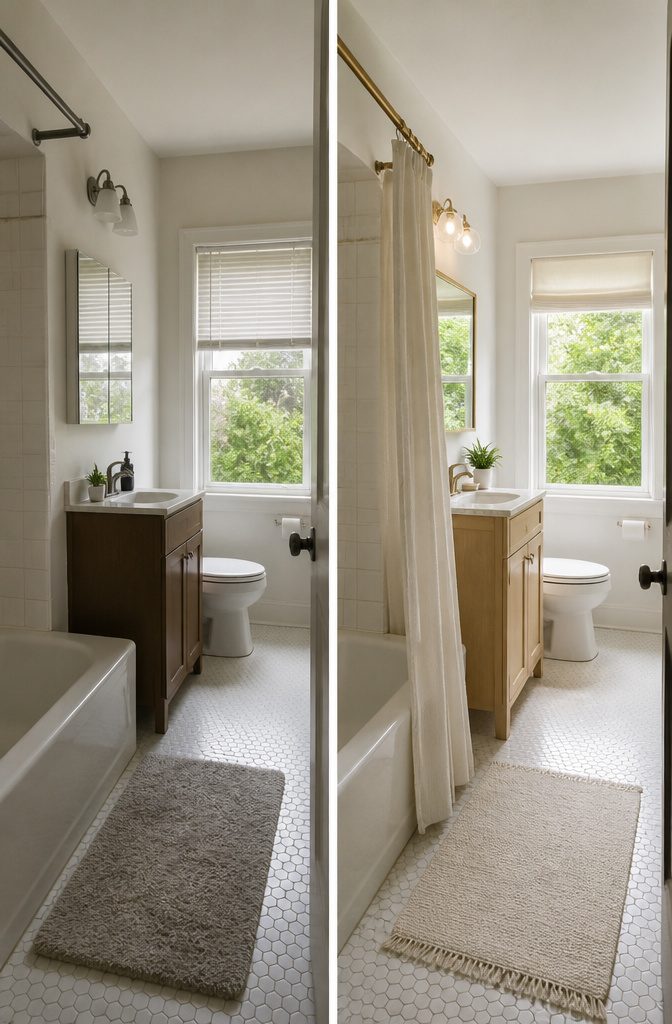
A short lead-in and then a few appearance moves that make the room feel less cramped:
- Raise the shower curtain a few inches above standard height. The added vertical line pushes the ceiling up visually. A regular curtain from Ikea with brass hooks will still reach the floor when the rod sits higher.
- Use light colors on walls and fixtures. Dark colors absorb light and make small rooms feel smaller. Repainting is cheap and changes how the space reads immediately.
- Replace or reframe the mirror. A larger mirror opens up the wall and reflects more light back into the room. Frameless mirrors have the same effect. If you have an old medicine cabinet with a mirror front, swapping it for a standalone mirror updates the look fast.
- Update the light fixtures above the sink. Even a small fixture change makes a difference when the old ones were attached to a medicine cabinet or builder-grade vanity.
- Swap curtains for blinds or a shade. The more natural light the room gets, the bigger it feels, and window treatments that sit flat let in more than fabric panels do.
Frequently Asked Questions
How do you maximize storage in a small bathroom?
Use vertical wall space with shelves and hooks, add storage above the toilet, hang organizers on the back of the door, and install bins or pull-out drawers under the sink.
These methods add capacity without claiming floor space you need for movement.
How should a bathroom be organized?
Keep items you use daily within easy reach, group similar products together in bins or baskets, and give each drawer or shelf a single purpose.
Store backups and rarely-used items outside the bathroom to free up space for what you actually need.
Where should I put toiletries in the bathroom?
Keep daily toiletries in vanity drawers or on the counter in trays, and store bathing products in shower caddies or wall-mounted shelves.
Move backup supplies and items you use less than once a week to a linen closet or bedroom storage.
How do I keep my bathroom from getting cluttered again?
Do a 5-minute weekly reset to put stray items back where they belong, and follow a one in, one out rule before buying new products. Declutter every couple of months to catch duplicates and products you stopped using.
How often should I declutter my bathroom?
Do a quick review every couple of months to remove products you stopped using, and pull everything out for a deeper declutter every 6 months. A weekly 5-minute reset prevents buildup between these larger sessions.
What are the categories for bathroom closet organization?
Separate daily essentials like toothpaste and face wash, hair care products, body care items, first aid supplies, medications, cleaning products, backup supplies, seasonal items like sunscreen, and guest toiletries. Use baskets or bins to keep each category contained.