

A cozy bedroom sits somewhere between soft textures, warm light, and a color palette that doesn’t overstimulate before sleep.
The fix is specific: layer three or four fabrics across the bed, use bulbs in the 2700K–3000K range, and pull clutter off every surface you see when you walk in.
A study from St. Lawrence University found that clutter in open spaces extended the time it took people to fall asleep, which makes tidying the bedroom a fix that shows up in how you rest, not just how the room looks.
1. Layer Bedding and Textiles
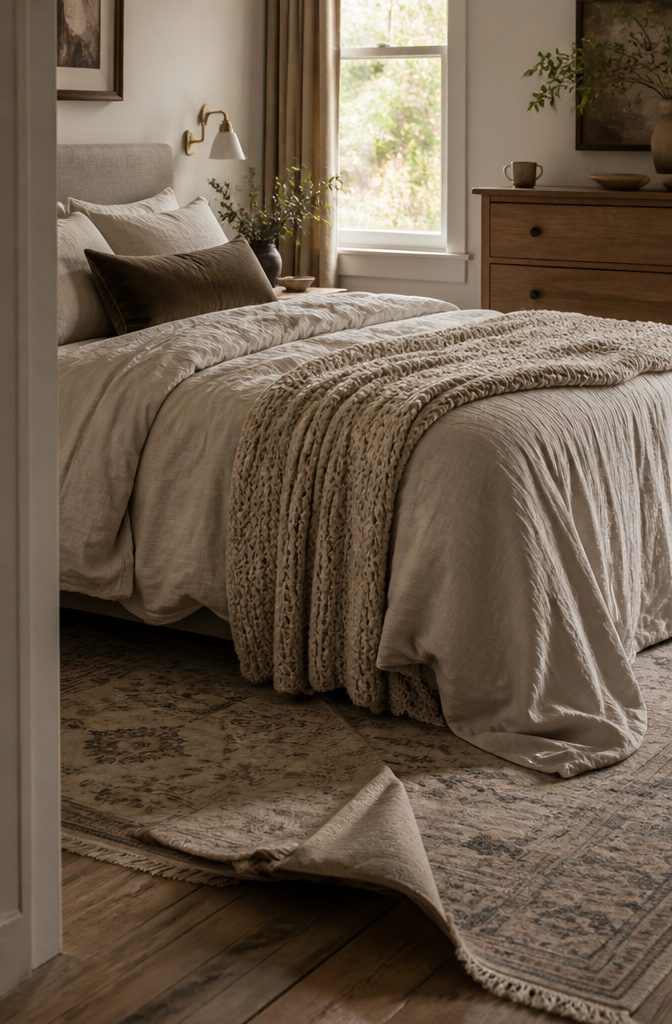
The difference between a bed that looks made and one that looks finished comes from mixing three or four different textures across the layers.
Start with cotton or flannel sheets as the base, then build up with a duvet, throws, and pillows in contrasting fabrics.
Velvet adds weight and a low sheen. Chenille and brushed cotton soften the look without reading precious.
Faux fur works as an accent pillow or a small throw draped at the foot. Linen brings structure, and waffle-knit holds its shape over time while adding dimension.
I keep coming back to chunky knit throws because they add visual warmth the moment you walk in, and they’re genuinely useful on cool evenings.
A lived-in, layered look signals comfort before you climb into bed. A velvet lumbar pillow against a linen duvet or a faux fur accent on a cotton quilt gives the room character.
The fabrics can mix freely. Overlapping textures add depth as long as the color story stays coherent.
2. Use Warm, Layered Lighting
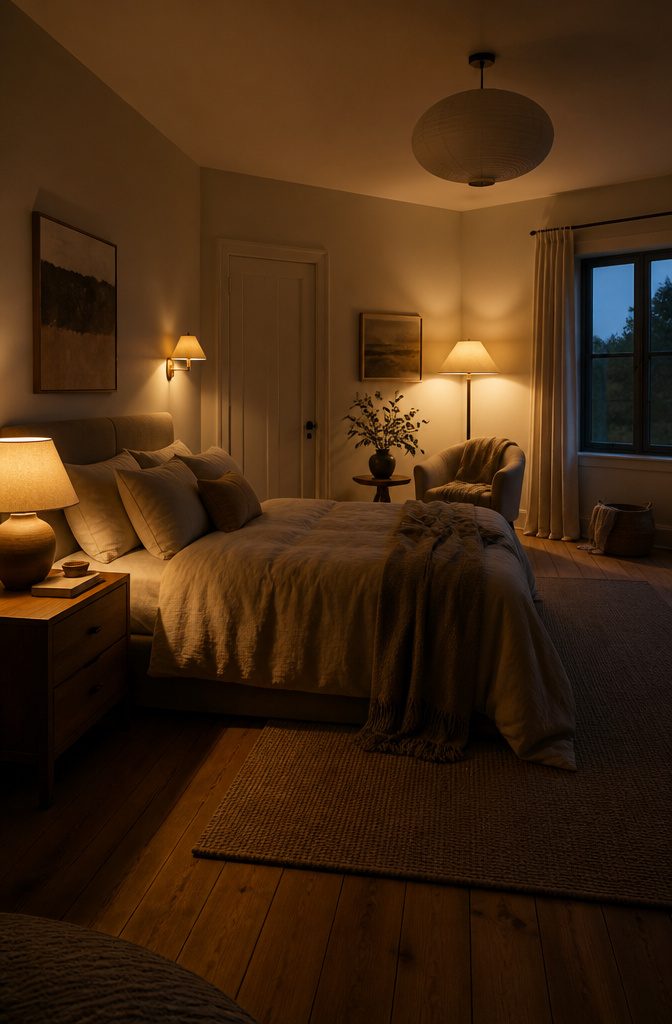
Overhead lighting is what you want to turn off first. A single ceiling fixture casts flat, cold light that makes a bedroom feel functional rather than restful.
Instead, combine lamps at different heights: a pair of bedside lamps, a floor lamp in the corner, perhaps a sconce or string lights along a shelf.
Each source sits at a different level and throws light in a different direction, which creates depth a ceiling fixture cannot replicate.
The bulb temperature matters as much as the fixture. LED bulbs in the 2700K–3000K range produce the amber glow most people associate with warmth and ease — close to candlelight, minus the fire risk.
Bulbs above 3500K start to read as clinical, which is exactly what you are trying to avoid.
If you can add dimmers, do it; the ability to lower the light as the evening winds down makes a bigger difference in daily comfort than most expect.
If a dimmer switch is not an option, plug-in lamp dimmers or smart bulbs give you the same control without rewiring.
3. Choose a Soothing Color Palette

The palette sets the mood before anything else enters the room. I build most cozy bedrooms on warm white or cream as the main wall color — ivory rather than stark white — with warm beige or taupe as a secondary tone.
These soft neutrals reflect light gently and create a calm backdrop that doesn’t compete with the textures you layer on top.
Accent colors stay earthy and muted: terracotta, sage green, dusty rose, or muted gold.
They add warmth without overwhelming the base, and you can adjust them seasonally through throw pillows or a blanket. Wood tones in furniture and woven accessories complete the palette by adding natural warmth that paint alone can’t deliver.
Cozy doesn’t require light walls.
Deep charcoal, navy, or forest green can feel just as enveloping when balanced with lighter bedding and warm lighting. A dark wall behind the bed with cream-colored linens works in almost any bedroom size.
4. Add a Soft Rug or Carpet

A soft rug underfoot changes how a bedroom feels the moment you step out of bed.
The floor reads warmer, the room quieter, and the whole space more finished. I look for low-to-medium pile when the rug sits in a bedroom, because it still feels plush without trapping dust or becoming a maintenance problem.
High pile looks inviting in photos but loses that softness fast once it gets walked on daily.
Soft wool is the material I reach for first. It holds up, it stays comfortable, and it works in nearly any color.
Jute adds texture and pairs well under a smaller accent rug if you want to layer. Sheepskin works as a bedside runner, and braided rugs bring in a cottage warmth that fits older homes especially well.
For color, deep blush, muted terracotta, sage green, or sapphire blue all ground a cozy bedroom without feeling too neutral or too loud. The right rug pulls the palette together and makes bare floors feel intentional instead of unfinished.
5. Bring in Plants and Natural Touches

Bring in Plants and Natural Touches
A fiddle-leaf fig in the corner or a trailing pothos on a shelf brings immediate life and texture to a neutral bedroom.
I look for plants that add organic shape without demanding a lot of fuss: monstera, mini succulents clustered on a nightstand, or a sprig of lavender all read as cared-for rather than styled.
Pampas grass has become a go-to for adding height and softness without needing water, and it pairs well with the warm tones most cozy bedrooms already lean into.
Natural materials carry the same weight. A wood bed frame, rattan nightstand, or linen curtains add warmth that manufactured finishes rarely match.
Even small touches work: a ceramic bowl, a piece of driftwood on a dresser, or a vase of flowers in muted tones layers in color and texture without disrupting the palette. The bedroom feels lived in, not assembled.
6. Add Wall Art, Pictures, or Wallpaper

Walls give a bedroom its personality, and the difference between a room that feels finished and one that doesn’t usually sits right there.
I start with a few meaningful pieces rather than filling every surface — three to five works you actually care about beat a dozen that just cover space.
Canvas prints at 14 × 11 inches work well over a nightstand or grouped asymmetrically on a wide wall; the size reads substantial without dominating a small bedroom.
Wallpaper brings texture in fast. Grasscloth adds a woven, organic layer that catches light differently than paint, and it warms up a room that skews cool.
Flocked patterns give you tactile depth, though I’d keep them to one accent wall behind the bed rather than wrapping the whole room.
If you’re renting or commitment-averse, framed art and leaned prints on a shelf next to the bed give you the same visual weight with none of the permanence.
7. Choose a Comfortable Bed, Mattress, and Bed Frame
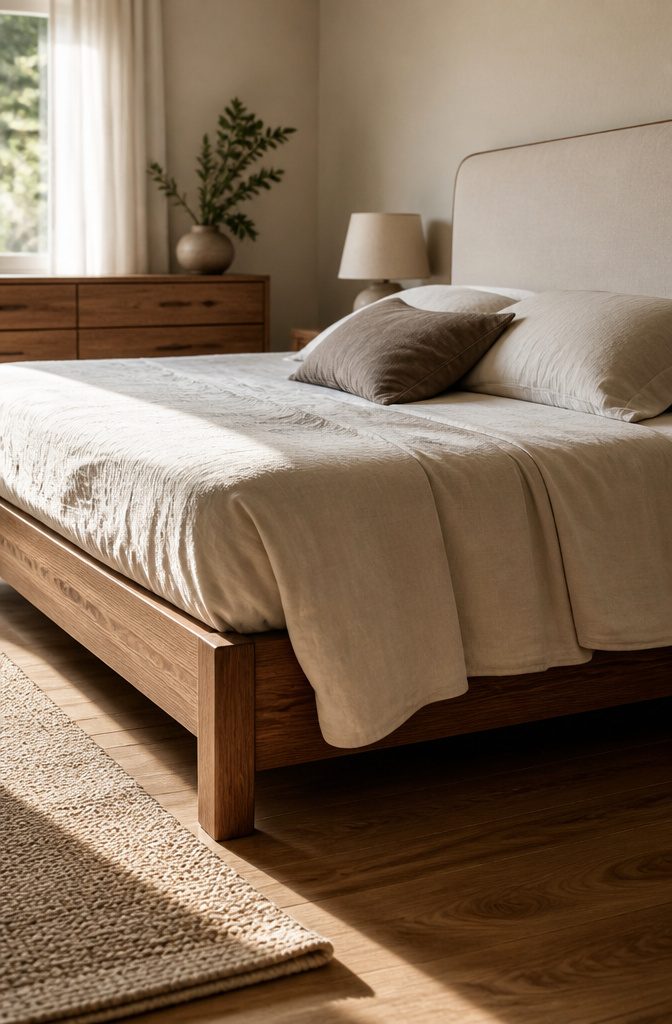
The bed grounds everything else you do in the room, so the mattress should support your body well rather than look right on paper.
A mattress that feels comfortable in the showroom for three minutes may not hold up through a night if it doesn’t match how you sleep, and trading up here pays off in better rest, which matters more than any decorative detail you add later.
The frame and headboard anchor the bed visually. A headboard that fits the room’s color and proportions gives the wall behind the bed a finished look without needing art or extra styling.
I look for frames that sit sturdy on the floor and headboards that feel intentional rather than fussy, because the bed takes up more square footage than anything else in the room and a wobbly frame or an awkward headboard announces itself every time you walk in.
Bed linen is where comfort meets skin, so high-quality materials like silk, cotton, or linen feel better and last longer than budget options.
Cheap sheets pill quickly, trap heat unevenly, and make the bed less inviting no matter how carefully you style it. The texture of good linen relaxes over time instead of degrading, and that difference shows up every night.
8. Add a Seating or Reading Nook

Add a Seating or Reading Nook
A chair or pouf near a window or empty corner turns that wasted square footage into a place for hobbies or unwinding before bed.
An oversized armchair or chaise lounge works especially well if you read at night, and the extra size keeps it from feeling like leftover furniture. When space allows, add a small coffee table or side table within reach.
A footrest or pouf paired with the chair creates the kind of setup where you actually sit, not just walk past.
I prefer placing the seating away from the bed itself so the nook feels separate, a second purpose for the room instead of an accessory to sleep.
If the bedroom is small, a single upholstered pouf can double as a footrest and occasional seating without crowding the floor.
9. Use Curtains to Soften or Darken the Room
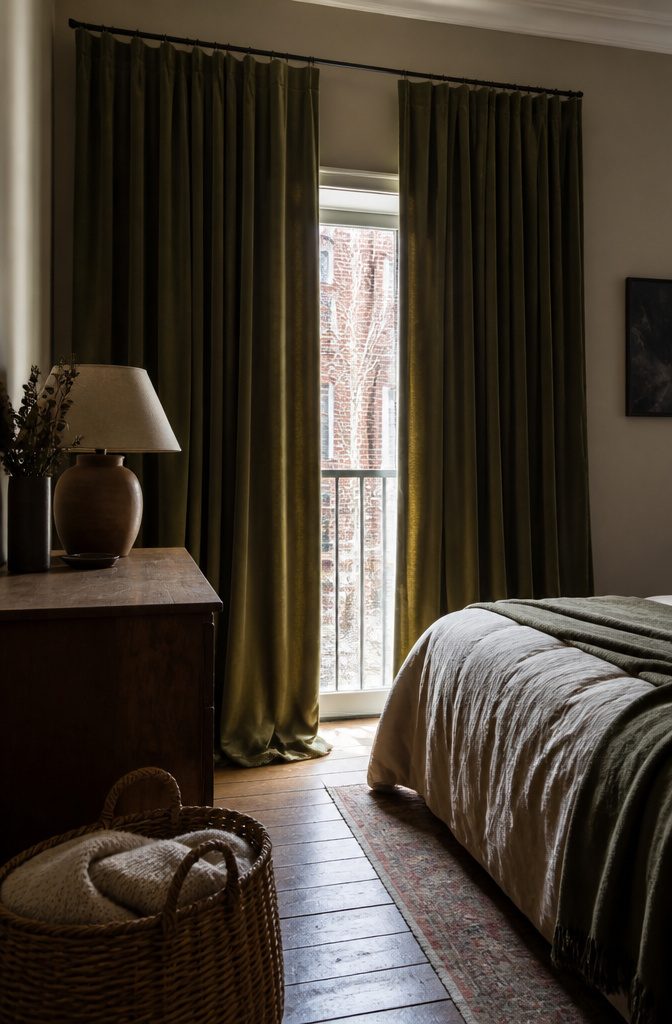
Curtains add more than privacy. Thick or blackout curtains block light completely, which matters if streetlights hit the window or if you work nights and sleep past sunrise.
I’ve found that thermal drapes do double duty: they darken the room and cut down on drafts near older windows, which makes the space feel warmer without adjusting the thermostat.
Heavy fabric—velvet, lined linen, thermal weaves—also softens hard surfaces.
A bedroom with bare windows and hard floors can feel echoey; floor-length curtains hung high above the frame absorb sound and make the ceiling look taller at the same time.
If you’re short on storage, long curtains can hide open wardrobes or under-window clutter that you’d rather not look at before bed.
The weight of the fabric is what makes the difference: lightweight sheers add softness but won’t darken the room or contain noise the way a heavier curtain will.
10. Keep the Room Tidy and Reduce Clutter
Keep the Room Tidy and Reduce Clutter
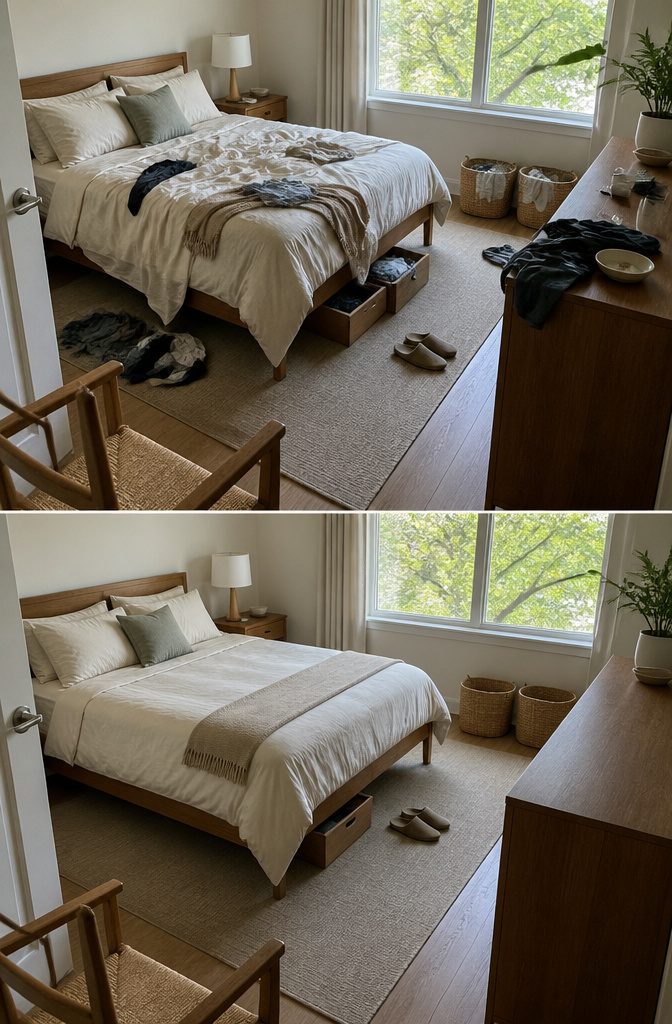
A messy bedroom takes longer to fall asleep in.
A study from St. Lawrence University found that clutter in open spaces extended the time it took people to fall asleep, and that a disorganized bedroom correlated with higher anxiety and poorer sleep quality overall.
The fix is straightforward: remove items that do not belong in the room and keep surfaces clear.
I treat nightstands, dressers, and chairs as prime real estate, because clutter there registers first when you walk in and last thing before sleep.
Storage ottomans, under-bed boxes, and floating shelves handle the overflow without breaking the aesthetic.
Color-coordinated baskets or bins keep the look cohesive. A tidy bedroom always reads more inviting than one crowded with things, and the breathing room makes warmth and texture feel intentional rather than accidental.
11. Add Personal Decorative Objects
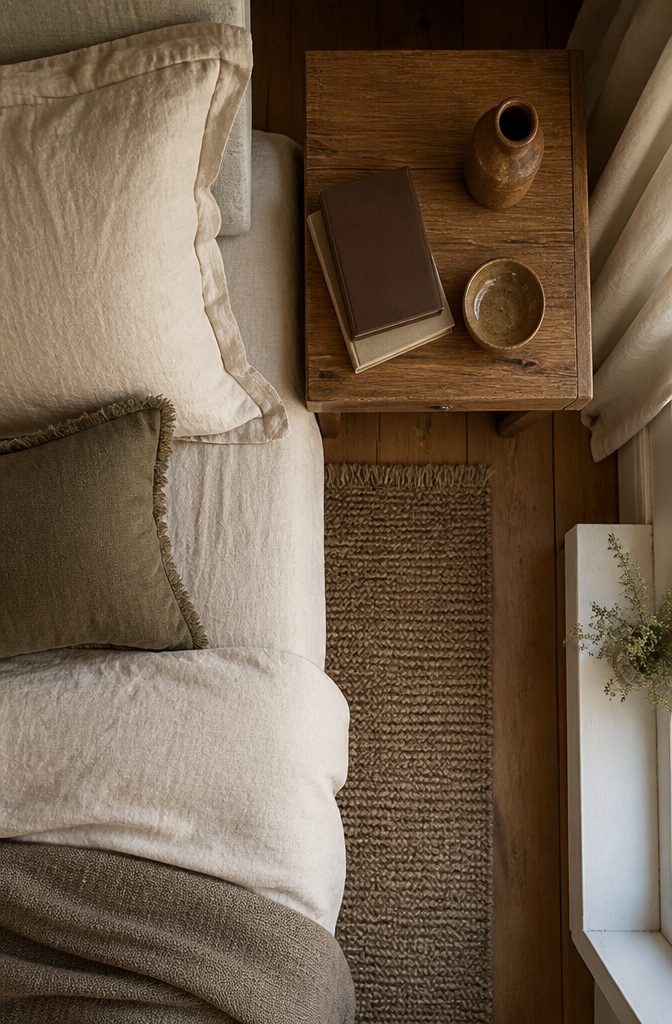
The objects you choose to put on view should feel chosen, not just placed.
A small stack of hardcover books on the nightstand, a ceramic dish that holds rings at the end of the day, a framed photo from a trip that still matters—these make the room read as someone’s, not a staged set.
I avoid scattering too many small things across surfaces, because that tips toward clutter fast. Three or four items per surface is usually the ceiling before it starts to feel busy.
If the decorations share a color with the bed linen or throw pillows, the room holds together without looking matched on purpose.
A vase in the same warm brown as the throw blanket, or candles that echo a stripe in the duvet, ties the pieces into one space instead of a collection of unrelated objects.
The link can be subtle—it just needs to register when you scan the room.
12. Use a Bedspread to Make the Bed Look Neat

A bedspread is what I reach for when I want a tidy look without fussing over every pillow and fold underneath.
It covers the whole bed in one layer, so even if the sheets are wrinkled or the duvet is bunched, the surface reads as neat from the doorway.
That matters in a bedroom where you want the calm of order without the daily effort of a perfectly made bed.
Velvet is the material that takes a bedspread from functional to cozy.
The texture catches light softly and adds weight, so the fabric drapes instead of floating. In a room already layered with other textiles, a velvet bedspread works as the anchor that pulls everything together.
Choose one in a color that either matches your duvet or contrasts just enough to frame the bed without competing with the rest of the palette.
13. Add a Bed Bench
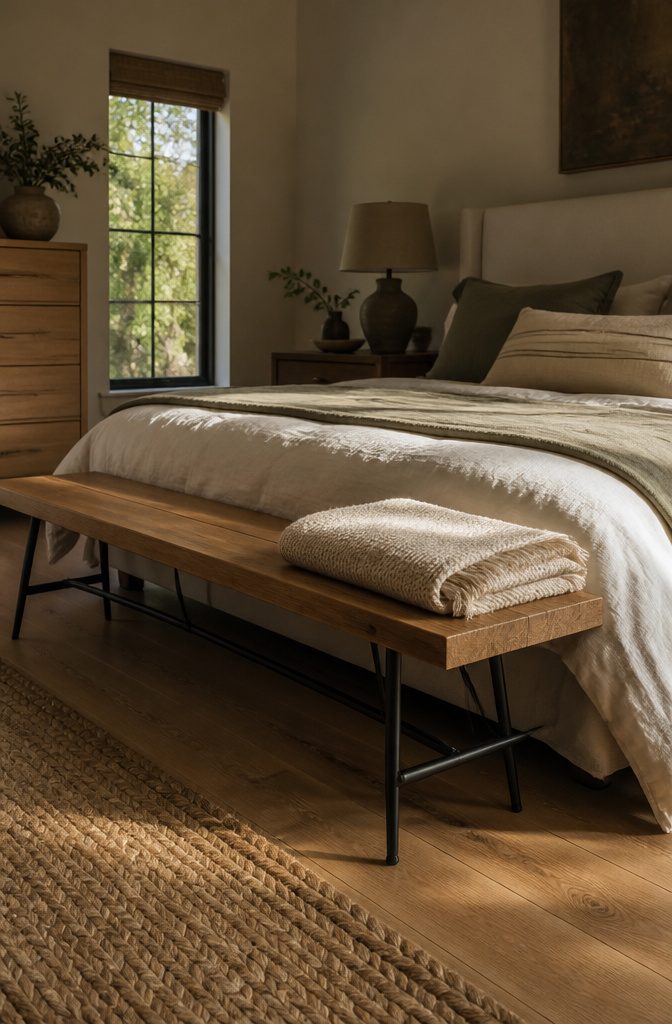
A bed bench at the foot of the bed holds the extra blankets and throws that otherwise pile on a chair or the floor, and it visually stretches the sleeping area in a way that makes the whole bed feel more deliberate.
The storage piece doesn’t have to match the bed frame.
I prefer mixing materials and heights here—a wood bench with metal legs under an upholstered headboard, or a low velvet ottoman against a painted wood frame—because the contrast keeps the room from reading too coordinated.
In smaller bedrooms, a bench with a lift top or open shelf below adds function without taking up more floor area, and that practical layering is what turns a decorative idea into something that actually solves a problem.
14. Use a Canopy or Curtain Over the Bed

A curtain hung over the bed gives you the sheltered feel of a canopy without needing posts or clearance.
If a full canopy frame won’t fit — low ceilings, tight corners, or a bed already against the wall — a ceiling-mounted track or rod does the same visual work.
The fabric drops from above and pulls closed at night, which reads instantly as cozy even when the room itself is plain.
I’d run the curtain rod the full width of the bed rather than just at the headboard.
That way the fabric can close around three sides, and the effect holds. Sheer linen or cotton gauze keeps the look soft without blocking air, which matters more than people expect when fabric sits that close to where you sleep.
15. Choose a Distinctive Bedside Table

A stool works just as well as a nightstand, and choosing one with texture or an odd shape gives the room a point of interest the matched furniture set never will.
I’ve used a velvet ottoman next to a bed more than once, and the soft surface turns it into somewhere to sit while you pull on shoes.
An old wooden stepladder or a low ceramic garden stool both hold a lamp and a book without looking like they came from the bedroom aisle.
Height matters here: keep the surface within a few inches of the mattress top, or reaching for your phone in the dark becomes awkward.
Organic shapes—rounded, asymmetric, anything that breaks the rectangle—add warmth without adding more stuff, and a single distinctive piece does more for the room than three safe ones.
16. Use Symmetry and Proportion in Furniture Placement
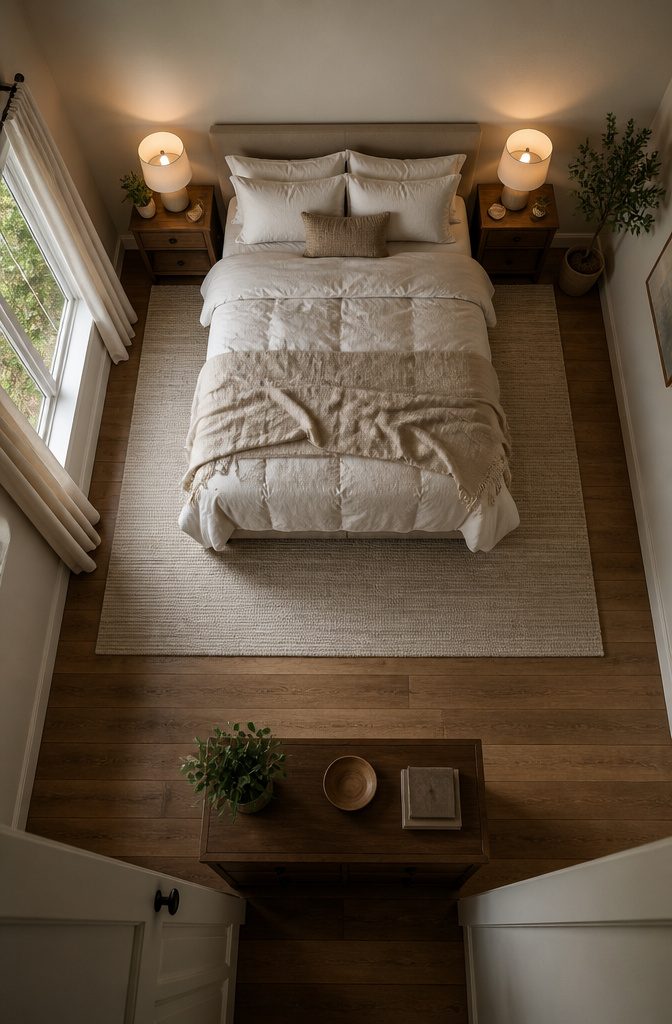
Balanced furniture placement anchors a cozy bedroom without calling attention to itself.
Centering the bed on the longest unbroken wall gives the room a natural focal point and leaves matching clearance on both sides—enough space for identical nightstands, matching lamps, and symmetrical movement around the bed.
That setup reads as intentional rather than squeezed in, which matters when you want the room to feel restful instead of improvised.
Skip placing the bed directly under a window or opposite a mirror. A window above the headboard disrupts the symmetry you just built, and waking to direct drafts or glare breaks the point of the room.
A mirror facing the bed bounces light and movement back at you when you’re trying to settle in.
If the layout forces one or the other, the window is easier to solve with blackout curtains; the mirror usually needs to move.
Proportion follows the same principle: furniture should match the scale of the room and each other.
Oversized nightstands beside a narrow bed, or a king frame in a ten-by-ten room, tips the balance and makes the space feel cluttered even when it is technically clear.
17. Limit Electrical Appliances
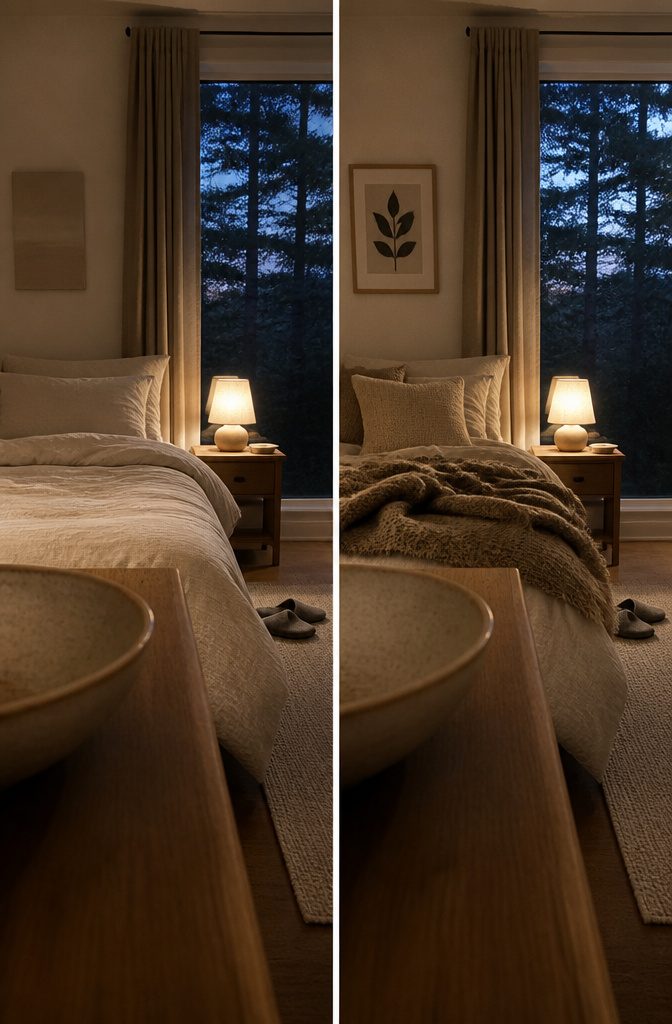
Removing or minimizing devices like TVs, computers, and work equipment keeps the bedroom peaceful and lets it function the way a cozy space should.
Those pieces bring the mental load of work and screen time into the one room that ought to feel separate from both.
I notice the difference immediately when a bedroom holds only what belongs there: a bed, a nightstand, soft light, and nothing that pings or glows.
If you need a workspace in the bedroom and can’t put it anywhere else, keep it small and tidy. Light colors and simple decorations help the workspace fade into the background rather than dominate the room.
This prevents the desk from becoming the focal point. Anything that doesn’t support rest or relaxation can go somewhere else, and the room will feel calmer for it.
Why a Cozy Bedroom Supports Better Sleep

You spend about a third of your day in the bedroom, which makes it the one room where comfort has the biggest effect on how you actually feel.
A space that feels cozy doesn’t just look inviting—it helps you relax faster and stay asleep longer. When the room around you is warm, soft, and calm, your body reads that as safe, and sleep comes easier.
The connection runs both ways. A bedroom that supports rest tends to have the same qualities that make it feel cozy: dim lighting instead of overhead glare, soft textures within reach, and colors that don’t overstimulate.
I’ve noticed that the choices that make a room feel like a sanctuary—thick bedding, warm tones, quiet surfaces—are the same ones that help you wind down at the end of the day.
A cozy bedroom isn’t just about aesthetics; it’s about creating an atmosphere that tells your nervous system it’s time to let go.
Making a Small Bedroom Feel Cozy

Smaller rooms do some of the coziest work when you let softness do the talking and keep the surfaces clear. Here’s what holds up in tight quarters:
- Neutral color palette first. Creams, warm whites, and soft beiges keep the space feeling open while layered textiles bring in the warmth. Dark or busy walls compete for space you don’t have.
- Bed frame with a modest footprint. Choose something with visual presence but clean lines. A heavy frame eats floor space without adding comfort.
- Vertical storage over horizontal clutter. Shelves and wall-mounted units take the load off the floor. Boxes and baskets on those shelves hide what doesn’t need to be seen.
- Curtains to conceal storage. A floor-length curtain panel can hide an open closet or shelving without the cost or footprint of doors.
- Clear surfaces wherever possible. A nightstand with one lamp and nothing else reads calmer than a stack of books and charging cables. Small rooms fall apart fast when every flat surface is working.
How Personal Touches Make a Room Feel Lived-In
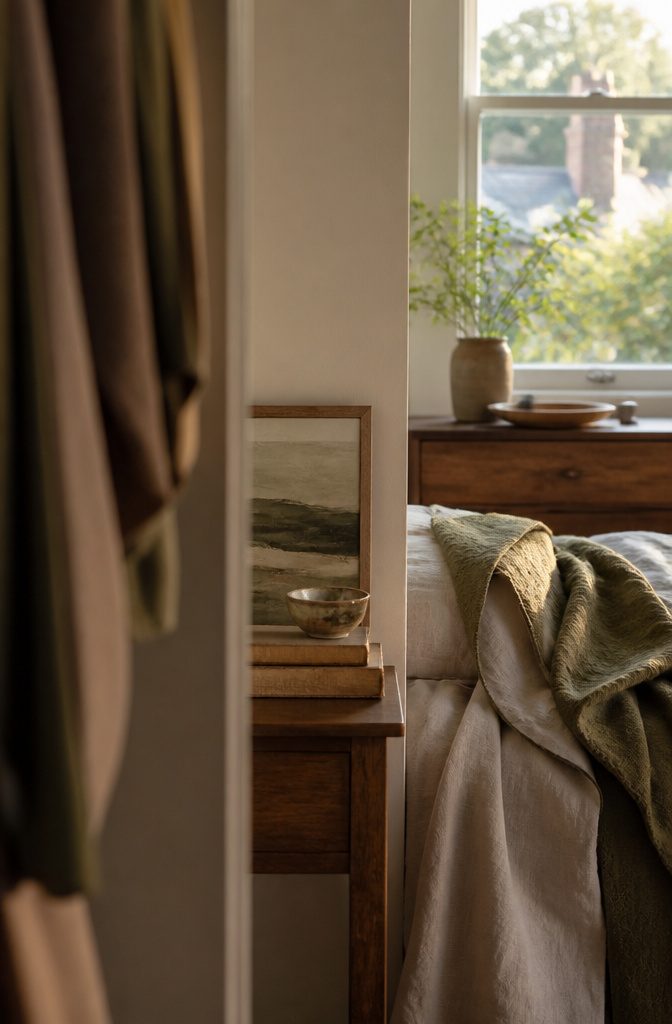
A bedroom starts feeling like yours when it holds things you chose or made or care about.
I look for objects that prompt a memory or reflect a genuine interest—a framed print from a trip, a ceramic piece someone gave you, a stack of books you actually read—rather than things bought in sets to fill a shelf.
The difference shows immediately. A room arranged around someone’s taste reads as lived-in; a room arranged around matching accessories reads as staged.
The details themselves matter less than the fact that they mean something to you.
Coordinating colors or finishes helps the room feel intentional rather than cluttered, but perfect curation isn’t the goal. I’d rather see three objects a person loves than ten bought to look good together.
Art is one of the clearest ways to do this. A single piece that reflects your taste—whether it’s a photograph, a painting, or something you framed yourself—grounds the room in a way generic prints don’t.
Even small decorative choices, like the finish on a picture frame or the color of a throw pillow, make the space feel distinct when they reflect deliberate preference rather than default options.
Frequently Asked Questions
What are the best cozy bedroom ideas for small spaces?
Start with a neutral palette in warm whites or creams to keep the space open, then layer in soft textures like a chunky knit throw and a low-pile wool rug.
Choose a bed frame with clean lines and a modest footprint, add one warm bedside lamp, and use vertical storage to keep surfaces clear. Skip competing elements and let 2 or 3 thoughtful pieces do the work.
How do I make my bedroom feel cozier without redecorating?
Swap your overhead bulb for a warm-toned bedside lamp in the 2700K–3000K range, add a chunky knit throw at the foot of the bed, and place a soft rug beside the bed if you don’t have one.
Mix in an extra pillow in velvet, chenille, or faux fur. These changes take under an hour and make an immediate difference.
What colors make a bedroom feel the most cozy?
Warm neutrals like soft whites, creams, warm beiges, and taupes reflect light gently without feeling cold.
Add earthy accents in terracotta, sage green, dusty rose, or muted gold for warmth without disrupting the calm. Deep tones like charcoal, navy, or forest green can also feel cozy when paired with lighter bedding and warm lighting.
What is a cozy neutral bedroom color palette?
Build on warm white or cream (ivory rather than stark white) as the main wall color, with warm beige or taupe as a secondary tone.
Add muted earthy accents like terracotta, sage green, dusty rose, or muted gold, and complete the palette with wood tones in furniture and woven accessories.
What type of lighting works best for a cozy bedroom?
Combine lamps at different heights instead of relying on overhead lighting: a pair of bedside lamps, a floor lamp in the corner, perhaps a sconce or string lights.
Use LED bulbs in the 2700K–3000K range for a warm amber glow, and add dimmers if possible to lower the light as evening winds down.
What furniture makes the biggest difference in a cozy bedroom?
The bed frame and area rug have the greatest impact.
A bed frame in solid wood or upholstered in a neutral fabric, with a headboard that anchors the room, sets the tone for every textile decision that follows. A soft rug underfoot makes bare floors feel warm and finished.