

You can clear cobwebs from most rooms in under 20 minutes with a vacuum or damp cloth, but outdoor webs under eaves and along fences take longer because the silk hardens on rough surfaces.
Most people skip the check that tells them whether the web is still occupied—a dusty, gray web means the spider left, while a clean, shiny one is still in use.
Crawford notes there are about 30 web types most Americans could encounter, and each one collects dust differently.
1. Check What Kind of Web It Is

Before you touch anything, look at whether the web is still in use.
A dusty web means the spider has moved on; a clean, shiny one may still be occupied. Crawford notes there are about thirty possible web types most Americans could encounter, and each spider builds differently.
Cobwebs—the tangled, irregular kind—collect dust because no one is maintaining them. Funnel webs and sheet webs look like dirty fabric stretched flat, and orb webs are the geometric ones you see outdoors.
If the web looks fresh and taut, watch it for a day or two. Old dead insects that sit there without being cleared are a sign the spider left.
You can also tap the web lightly to see if anyone reacts. An active spider keeps its trap clean; an abandoned one turns gray with whatever floats through the room.
2. Pick a Tool for the Surface and Reach

A vacuum with a long wand or crevice tool gets cobwebs down fast, especially from ceiling corners and high walls where they collect.
The suction pulls in the web without spreading dust, and most extension wands reach eight feet or more without a ladder. I use this first on intact webs that haven’t hardened yet.
Soft or extendable dusters work well for grabbing sticky threads, but the webs cling to the bristles and you’ll need to clean the tool between passes or the next swipe just spreads what you already caught.
An extendable duster reaches the same spots a vacuum does, though with more manual work afterward.
A sock or cloth secured to a broom handle with a rubber band does the same job for free. Dampen the fabric so webs stick to it instead of floating off, then pull it down and throw it away.
This setup is what I reach for on outdoor railings and fences where I don’t want to drag a vacuum outside.
A broom clears webs quickly, but the bristles hold onto them and you’ll spend time picking threads out before the next room.
For outdoor work, a rough branch grabs more web than a smooth pole, but a rough branch indoors can leave scuff marks on painted walls or wallpaper, so save that method for exterior siding and eaves.
3. Work From High Areas Downward

Start at the ceiling and work your way down to the floor. Cobwebs cling overhead first, so clearing from the top prevents you from knocking dust and web fragments onto surfaces you already finished.
- Lay a towel or sheet over furniture below to catch debris before you start.
- On textured surfaces like plaster or stucco, use soft, controlled broom strokes. Aggressive brushing can leave scuff marks on walls.
- For ceilings and smooth walls, a vacuum with a long tube attachment pulls webs off cleanly without spreading dust. Skip the brush head so the web sticks to the tube opening instead of scattering.
- Vacuum the floor afterward. Fallen web fragments blow around easily and settle back into corners if you leave them.
- Clean the tool when you finish. Broom bristles hold sticky silk residue that grabs the next web less effectively, and a clogged vacuum tube loses suction fast. Rinse the broom head with warm, soapy water or wipe down the vacuum tube.
4. Handle Windows, Fabrics, and Fixtures

Windows collect webs in the corners, between the screen and the glass, and along the sill where spiders hide. Vacuum first with a crevice tool to pull off the bulk of the web without smearing it across the glass.
Then spray the window and screen with water from a bottle if you’re working indoors, or use a hose with a spray nozzle from outside.
The water loosens any sticky residue the vacuum missed and sends spiders on their way. Wipe the glass and screen with a cloth to clear what’s left.
Fabric picks up cobweb strands that cling and stretch when you try to brush them off.
A lint roller grabs them cleanly without pushing the stickiness deeper into the weave. If the fabric is washable, run it through a cycle after rolling to get rid of any spider eggs.
Turn off the power before you clean light fixtures and ceiling fans.
Debris falls while you work, and a vacuum keeps it out of your eyes. The same crevice tool that handled the windows will reach into fixture grooves and fan blade edges where webs settle.
5. Clean Outdoor Walls and Eaves

Outdoor walls and eaves collect webs quickly because they sit undisturbed, and the rough texture gives spiders plenty of anchor points. Under decks, around log piles, and along the roofline are all common spots.
I find a sock secured to a pole with a rubber band works better than most tools for these areas, because the fabric grabs the web without smearing dirt across siding.
This free and quick hack is ideal for balconies, fences, and other tricky outdoor spots. As spiders become more active in warm weather, their webs can quickly build up in hard-to-reach places.
That reach matters when you’re working overhead without a ladder.
A garden hose or pressure washer knocks down webs fast if the surface can handle water, and a stiff-bristled broom does the same for dry work on plastered walls where you want to avoid powdery debris.
For stubborn webs under eaves, an oscillating sprinkler or leaf blower clears multiple spots at once without needing to move the ladder constantly.
6. Stop Webs From Coming Back

Regular dusting is the simplest way to stop cobwebs from forming again.
I dust high corners and ceiling edges every week, or push it out to every two weeks if things stay clean. Vacuuming the same spots keeps spiders from settling in the first place.
Seal the entry points next. Spiders get in through cracks in windows, door frames, and vents.
I cover those gaps with caulk or weatherstripping and add insect screens to vents. Moving potted plants a few feet away from the house helps too, since spiders hide in foliage and use it as a bridge indoors.
Natural repellents give you another layer of defense.
Spiders avoid strong scents like peppermint, eucalyptus, tea tree, and citrus. A 50/50 mix of water and white vinegar in a spray bottle works for corners and baseboards.
For a stronger option, I use 10–20 drops of orange or peppermint oil, two cups of water, and a small dab of dish soap. Spray it along window sills and door bases where spiders tend to reappear.
What Cobwebs Are and How They Form
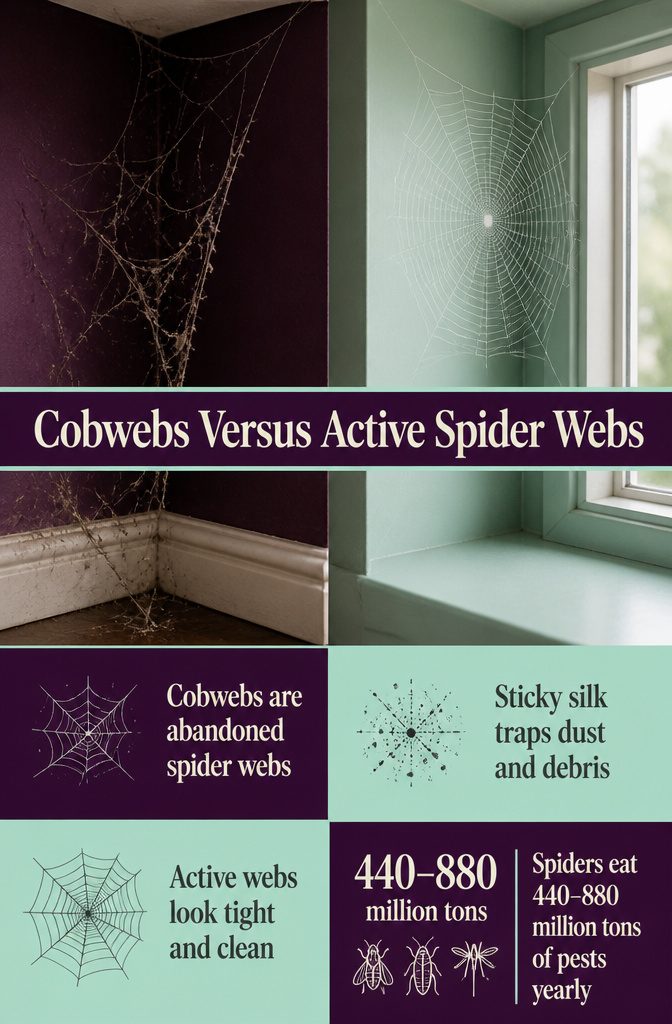
Cobwebs are abandoned spider webs, left behind when a spider dies or moves to a new location. The silk stays sticky after the spider leaves, and that stickiness traps dust, dirt, and debris.
What starts as a clean, elastic web becomes loose and visibly dirty over time. That dusty appearance is what separates a cobweb from an active spider web.
An active web looks tight and clean, with little to no dust clinging to the threads. If you spot a shiny, intact web, a spider is nearby and still using it to catch prey.
Spiders worldwide eat about 440 to 880 million tons of insects and other pests annually, which makes them useful for keeping flies, roaches, and mosquitoes out of living spaces.
The difference in appearance tells you whether you’re dealing with an old web that only needs cleaning or a current one where the spider is still working.
A Sock-on-a-Pole Tool You Can Make
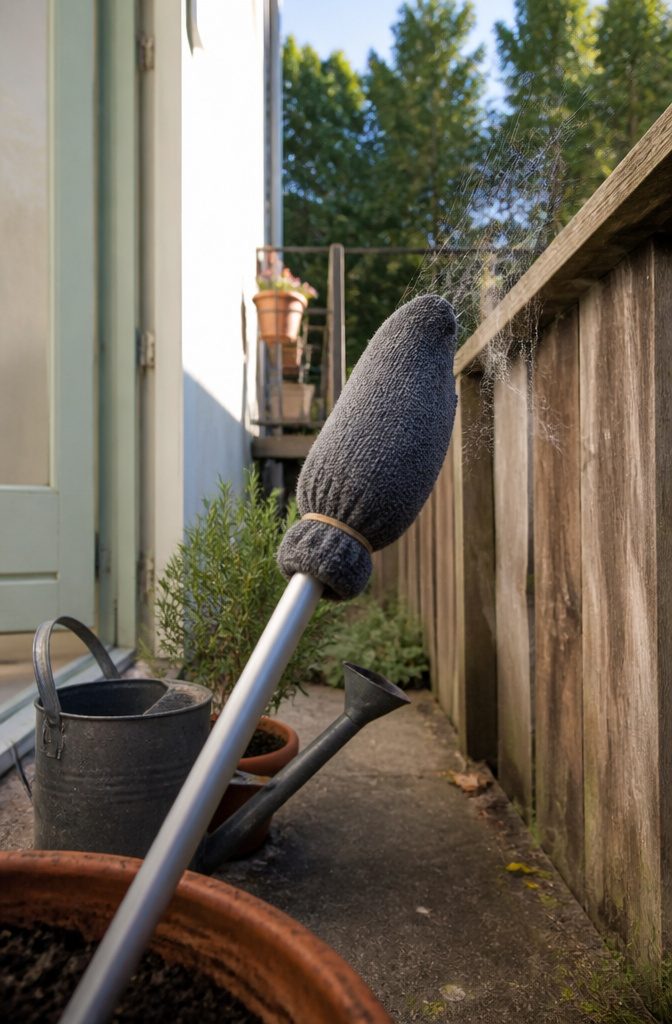
A Sock-on-a-Pole Tool You Can Make
I find this approach works better than most store-bought dusters when the job is messy or the reach is long. Attach an old sock to a broom handle or extension pole and secure it with a rubber band.
Microfiber socks grip cobwebs well, though any spare sock does the job. If you’re working outdoors on fences, eaves, or balconies, add a few drops of peppermint or eucalyptus essential oil to the fabric before you start.
Both oils repel spiders, so you’re cleaning and discouraging the next round at the same time.
For higher areas where a standard broom falls short, a 6–12 ft telescoping extension pole gives you the reach without a ladder.
I use it for the tops of windows, door frames, and fence lines where cobwebs build up fast in warm weather.
If the cobwebs are thick or stuck to painted surfaces, spray the sock lightly with water or a 50/50 mix of water and white vinegar. The moisture helps webs stick to the fabric instead of drifting loose.
When to Call a Professional
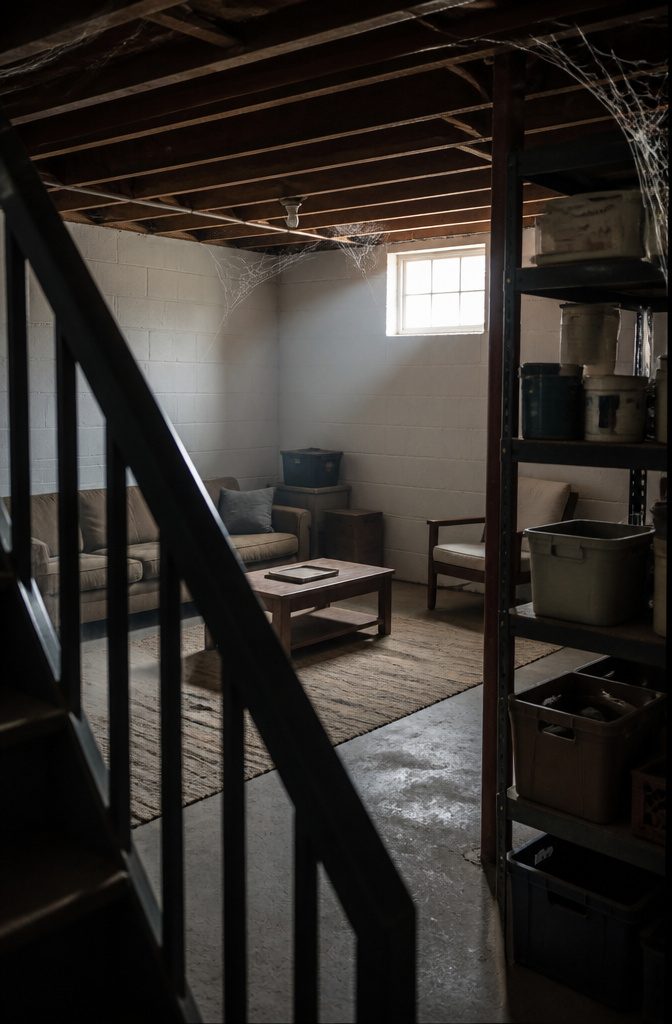
I clean cobwebs myself most of the time, but recurring webs mean you are dealing with spiders, not dust.
If you knock down webs and they reappear within days, you have an infestation rather than a maintenance issue. At that point, cleaning alone will not solve it.
Merry Maids recommends a deep clean every six to twelve months for most homes, and that schedule works when spider numbers stay low. When they do not, call a professional exterminator.
They know what signs point to a real problem and where spiders hide between cleanings. A smaller spider population means fewer webs, so pest control may be the faster fix.
Professional cleaners are also worth considering if you do not have time to stay on top of it. They catch webs in places you overlook and can handle the job on a schedule that keeps them from piling up.
Frequently Asked Questions
What’s the difference between a cobweb and a spider web?
A cobweb is an abandoned web that has collected dust and debris after the spider left or died.
A spider web looks clean and tight because a spider is actively maintaining it to catch prey. The dusty, loose appearance is what separates an old cobweb from a working web.
Is it okay to vacuum cobwebs?
Yes, a vacuum with a long wand or crevice tool is one of the fastest ways to remove cobwebs from high corners and walls.
The suction pulls in the web without spreading dust, and most extension wands reach 8 feet or more without needing a ladder.
Why does my house get so many cobwebs?
Spiders enter through cracks in windows, door frames, and vents, then build webs in undisturbed corners and high areas.
Regular dusting every week or two prevents webs from forming, and sealing entry points with caulk or weatherstripping keeps spiders out in the first place.
Should you remove cobwebs?
Spiders eat 440 to 880 million tons of insects and pests annually, keeping flies, roaches, and mosquitoes out of living spaces.
If you want the pest control benefits, leave active webs alone. If you prefer a clean appearance, remove the dusty, abandoned cobwebs and focus on sealing entry points to reduce future webs.
What will dissolve cobwebs?
Water or a 50/50 mix of water and white vinegar dissolves sticky cobweb residue on windows, walls, and fixtures. Spray the surface after vacuuming to loosen what the vacuum missed, then wipe with a cloth to clear what remains.