

A tidy bedroom takes an hour if you work room-to-room in order, longer if you stop to sort sentimental clutter or guess where things go.
Most people stall at the start, staring at the mess instead of clearing one surface completely, which kills momentum before the room looks different enough to keep going.
The floor comes last because dusting and decluttering knock debris down, and vacuuming early just means doing it twice.
1. Set aside time and pick a corner to start

The hardest part is deciding you’re starting. If you’re staring at a messy room waiting for motivation to arrive, it won’t.
Walk to the nearest drawer, empty it onto the bed, and now you have no choice but to deal with it. That forces momentum before your brain has time to argue.
Start with something small that holds no memories. A sock drawer or the nightstand beats the closet full of old photos, because sentimental items slow you down when you’re still training yourself to let things go.
Pick a corner or a single surface, finish it completely, and the quick win makes the rest feel possible. Making the bed works for the same reason: it takes two minutes and gives you one clean anchor in the room.
Setting a timer helps if the whole job feels overwhelming. Fifteen minutes is enough to reset a space without burning out, and owners on Reddit mention doing it every morning or before bed as a daily habit.
Some people put on music or start coffee first to make the process less of a slog. Give yourself a set block of time so the task has edges instead of sprawling into the rest of your day.
2. Remove trash first

Walk through the room and collect wrappers, tags, labels, and anything else that belongs in the trash.
This goes faster than most of the cleaning that follows, and it clears enough visual clutter that you can see what actually needs sorting or putting away.
I start here because a room full of obvious rubbish makes every other task harder to estimate.
Check under furniture while you’re at it. A chocolate wrapper wedged under the bed or a crumpled receipt behind the nightstand won’t fix itself, and leaving it there just means you’ll find it later when you’re trying to vacuum.
Keep a trash bag with you as you move through the space. If your room has a bin, empty it first so you’re not juggling a full one halfway through the job.
3. Collect dirty laundry and start a wash

Grab anything that looks worn or dirty and toss it straight into the hamper. This step moves faster than you think if you work the whole room at once rather than sorting as you go.
Start the washer as soon as the hamper is full so the cycle finishes while you work on surfaces and floors.
If the bed needs fresh sheets, strip the duvet cover, pillowcases and fitted sheet now and drop them into the next load.
Hold off on adding smaller items until you have cleared the floor and checked under furniture, because socks and shirts hide in surprising places.
A shirt draped over a chair back or tucked beside the nightstand counts as dirty unless you know otherwise, and most of the time it is easier to wash it than to decide.
4. Put away clean clothes

Put away clean clothes
Fold or hang every piece of clean laundry and return it to the closet or dresser.
This clears the bed, the chair back, and any floor space where clothes tend to pile up, which makes dusting and vacuuming straightforward once you reach those steps.
If you have a large amount of clean laundry spread around the room, you can stack it semi-neatly on the bed for now and take a couple of minutes to fold and put it away right before you go to sleep.
That keeps the momentum going without turning one step into an hour-long project.
Putting away laundry is not the most enjoyable part of tidying, but it has to happen if you want a clear room, and doing it in one push means you are not stepping over baskets or working around piles for the rest of the process.
5. Make the bed or strip it to wash
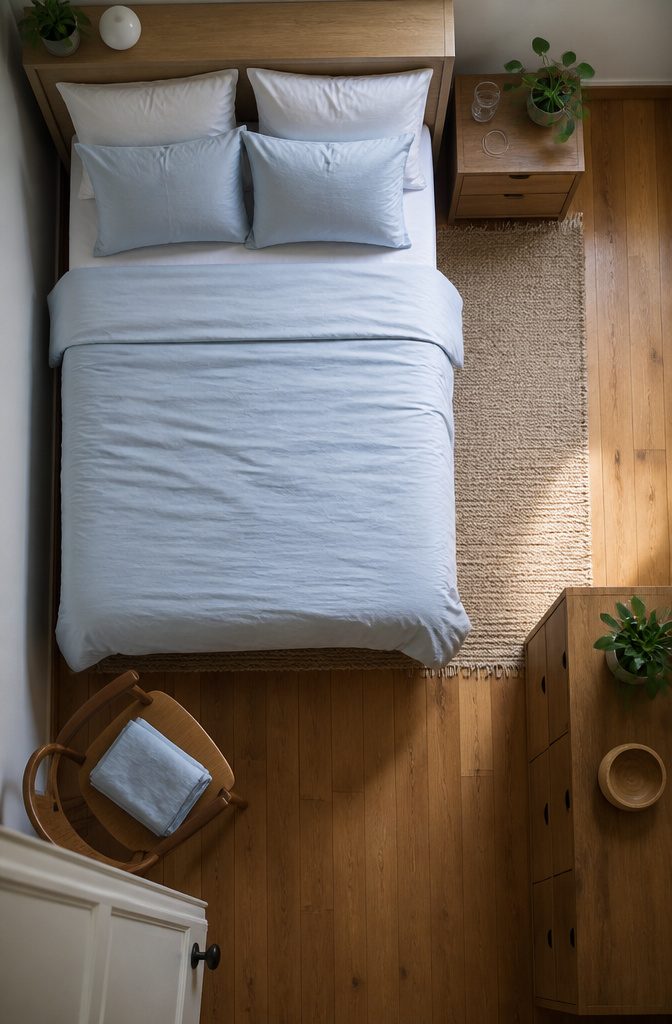
I start by deciding whether the bedding needs washing.
If the sheets smell clean and I changed them recently, I pull the covers smooth and tuck the corners now. A made bed changes how the whole room reads when you walk in, and it takes under two minutes.
If the bedding does need washing, I strip it first thing and start the load so it finishes while I work through the rest of the room.
That way I can remake the bed with fresh sheets at the end, and the room lands properly finished instead of left with a bare mattress.
The choice comes down to timing: a quick visible win now, or clean linens and a complete result later.
6. Gather items that belong elsewhere

I start by collecting misplaced items in one box or bag as I work through the room, then return everything at once when the bedroom is finished.
That approach keeps momentum up, because stopping to walk a coffee mug back to the kitchen every time I spot one breaks the pace.
A woven basket or cardboard box near the door holds strays until the bedroom itself is sorted.
For a deeper clear-out, I pull collection boxes into the room for keep, sell, donate, and throw out. That sorting happens before anything goes back on the shelf.
I gut drawers and surfaces completely, group like items together, and only return what I actually want or need. The rest leaves the house.
Selling through Facebook Marketplace lightens the load while earning a little back, and keeping a thrift store box in the car means donations leave on the next errand run instead of sitting in the hallway for weeks.
7. Clear out and organize the closet
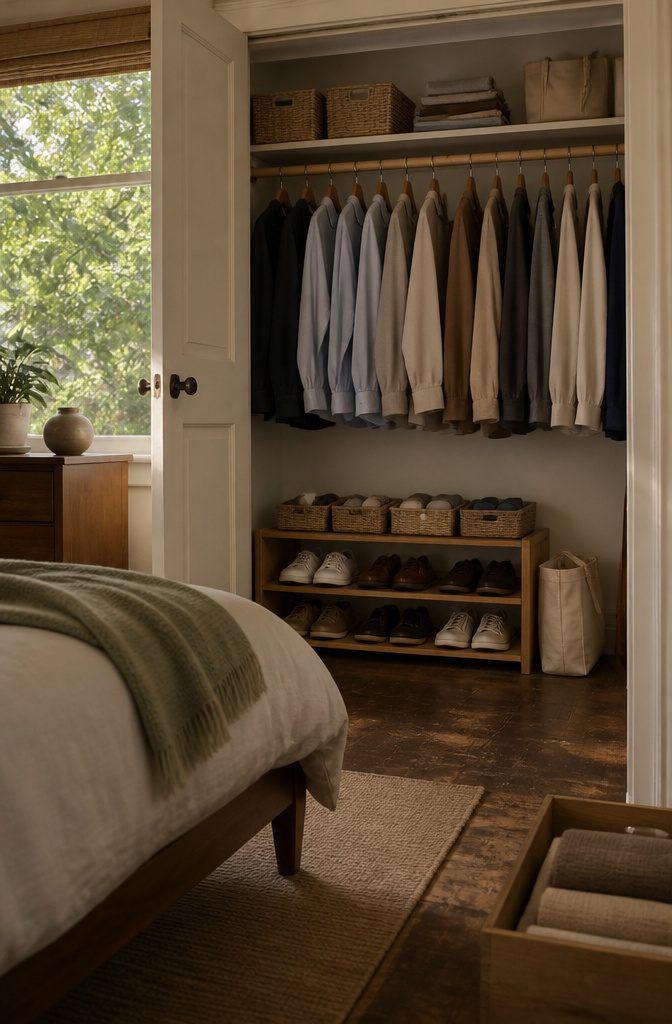
Pull everything out of the closet and sort what you actually wear from what has been sitting untouched.
Anything you haven’t worn in a year goes into a donate or trash pile. I find this step harder than it sounds, because clothes carry intention more than use, but keep only what you reach for.
Once you’ve cleared out the excess, put the keepers back in a way that makes sense.
A shoe rack keeps pairs off the floor and visible. Boxes, bins, or baskets handle smaller items that would otherwise pile up on shelves.
If closet space is tight, under-bed storage works for off-season clothes or extra linens. Give everything a specific place so the room stays tidy longer than a weekend.
8. Dust surfaces and the spots you skip

I start at the ceiling and work down, because dust falls.
Ceiling fans collect more than people expect, and the blade tops are the worst of it — enough that a swipe with a dry microfiber cloth will show you exactly how long it has been.
Light fixtures come next, then window sills, then the horizontal edges most people skip: the top of the bed frame, door tops, anywhere a finger drawn across comes back grey.
A dry microfiber mop makes short work of corners and cobwebs without dragging a step stool around. For marks on the walls themselves, a damp mop does the job faster than a cloth and reaches higher with less effort.
I wipe down door handles, light switches, and any vertical surface that gets touched regularly before moving to furniture tops and behind pieces that sit away from the wall.
Clear every horizontal plane before the vacuum hits the floor, so the dust ends up in one place instead of resettled.
9. Vacuum or mop the floor last

Once everything else is in place, vacuum carpets and rugs, or sweep and mop hard floors.
I do the floor last because all the dusting and decluttering before this knocks debris down, and sweeping or vacuuming too early just means doing it twice.
For carpets, I push the vacuum under the bed and furniture where dust collects heaviest.
Hard floors get swept first, then mopped with a mild soapy solution. The floor is where the whole sequence shows: if you skipped the earlier steps, you’re just pushing clutter around with the vacuum.
Tools and products that make it faster

The right tools make the difference between spending a whole afternoon on your bedroom and having it done in under an hour.
Here’s what actually speeds things up:
- A vacuum with serious suction if you have rugs or carpet. The Dyson V15 pulls embedded pet hair out of rugs that looked permanently dingy, and it’s light enough to carry room to room without hauling a canister.
- A microfiber duster with an extendable arm for ceiling fans, light fixtures, and the tops of tall furniture. The Swiffer-style pads grab dust instead of pushing it around.
- Lint roller for lampshades, curtains, and upholstered headboards. It picks up dust instantly without beating it into the air.
- Wire or plastic bins for drawers and closets, plus flat under-bed bins if you need hidden storage.
- Glass cleaner and antibacterbacterial wipes for mirrors, windows, and hard surfaces. Skip all-purpose cleaner on real wood furniture; it can damage the finish. Use a damp cloth instead.
- A mop with a telescoping handle and wringing basket for hard floors. The triangle head gets into corners without bending over a bucket.
Ways to keep the room tidy after

Once the room is clean, a few daily habits keep it that way:
"The idea is to keep a ‘clutter basket’ in the corner of the room, and anything that makes its way to your bedroom but doesn’t belong there gets put in the basket at the end of the day."
Empty the basket before bed so items go back where they belong instead of migrating through the house.
- Put things away right after you use them. Clothes go straight into the hamper or back in the closet, no chair pile allowed.
- Make the bed every morning. It takes a minute and sets the tone for the rest of the room.
- Wash sheets every week. Fresh linens keep the space from feeling stale.
- Keep the nightstand clear. Use drawers for jewelry and small items instead of letting the surface collect clutter.
- Use storage that fits the room. Boxes, bins and baskets give books and miscellaneous items a place to live instead of spreading across flat surfaces.
Frequently Asked Questions
What are the steps to tidy your room?
Remove trash, collect dirty laundry and start a wash, put away clean clothes, make the bed or strip it to wash, gather items that belong elsewhere, clear out and organize the closet, dust surfaces from ceiling to floor, then vacuum or mop.
Starting with something small like a sock drawer builds momentum before tackling bigger tasks.
How can I keep my room organized?
Put things away right after you use them, make the bed every morning, and keep a clutter basket in the corner for items that belong elsewhere.
Empty the basket before bed so things go back where they belong instead of migrating through the house.
How to motivate yourself to tidy your room?
Walk to the nearest drawer, empty it onto the bed, and now you have no choice but to deal with it.
That forces momentum before your brain has time to argue. Setting a 15-minute timer also helps if the whole job feels overwhelming.
Why is my room always a mess?
Clothes pile up when you skip putting them away right after use, and flat surfaces collect clutter when items lack a designated spot.
A clutter basket for misplaced items and bins for drawers give everything a place to live instead of spreading across the room.
How do I clean my room with ADHD?
Set a 15-minute timer so the task has edges instead of sprawling into the rest of your day.
Start with something small that holds no memories, like a sock drawer, because sentimental items slow you down. Finish one corner completely for a quick win that makes the rest feel possible.