

Setting a table for dinner takes about 10 minutes for a basic weeknight arrangement, closer to 20 for a formal occasion with multiple courses.
The stage people get wrong is placement: utensils in the wrong order, glasses too far from reach, or a centerpiece tall enough to block conversation.
The dinner knife always sits closest to the plate with the blade facing inward, and the water glass goes directly above it.
1. Choose the Setting for the Occasion

The arrangement you use changes with the meal. A weeknight dinner with the family calls for a basic setting: plate, fork, knife, and water glass.
Casual gatherings with friends or a holiday brunch add a layer or two—maybe a salad plate or soup bowl if the menu includes them, placemats or a tablecloth to mark the shift from everyday.
Formal occasions demand the full lineup: multiple courses, layered plates, extra flatware for each dish.
Holiday parties, baby showers, birthday brunches, or other celebratory festivities at home where guests are involved will typically require a casual setting that’s beautiful yet not intimidatingly so.
That middle ground—casual but intentional—suits most gatherings without feeling stiff. One more setting shows up less often: the buffet, where guests serve themselves.
In a formal buffet, you set the table completely and guests take their plate with them to the food line. In an informal one, stack plates and napkins at the start of the buffet and skip the place settings entirely.
Lay out only what the menu requires. Unnecessary pieces confuse guests rather than impressing them.
2. Cover the Table Surface

A tablecloth is required for formal dinners, while everyday meals and casual settings can use placemats or skip the covering entirely.
I usually go with placemats for basic table settings because they protect the surface without the extra weight of fabric, and they’re simpler to clean between uses.
If you do use a tablecloth, it should hang about 10 inches from the table edge on all sides.
That overhang looks intentional rather than too short or pooling on the floor. Polyester and cotton blends hold up better to repeated washing than pure linen, which needs more care.
For a casual dinner that sits somewhere between everyday and formal, a tablecloth adds polish without making the table feel stiff, but placemats work just as well if the table itself is presentable.
The choice comes down to occasion: if guests are celebrating something or the meal has multiple courses, use a tablecloth; if it’s a weeknight dinner or brunch with friends, placemats do the job.
3. Center the Dinner Plate

Place the dinner plate in the center of each setting, measuring from the table edge so every plate sits at the same distance. That consistency matters more than you’d think when six people pull up to a table.
For a casual meal with soup, I layer the salad plate on the dinner plate and set the soup bowl on top.
The stack keeps everything in reach and signals the order of the meal without needing a server. If you’re skipping soup, the salad plate still goes on top of the dinner plate until it’s time to clear it.
Formal layouts add a charger underneath the dinner plate. Some sources place a bread plate at the top left of the dinner setting; others put it directly above the forks.
The difference comes down to how much elbow room you have and whether you’re using a charger, which pushes the bread plate outward. I go top left when the table is tight, straight above the forks when it’s not.
4. Arrange Forks Left and Knives Right

- Place forks to the left of the plate. If you’re setting for multiple courses, the salad fork sits on the outside and the dinner fork goes closer to the plate. The logic is simple: you work from the outside in as the meal progresses, so the first utensil you reach for should be farthest from the plate.
- Put knives and spoons on the right side. The dinner knife sits closest to the plate with the blade facing inward toward the plate, not out toward the guest. If you’re serving soup, the spoon goes to the right of the knife.
- Align the base of each piece 1 inch from the edge of the table. This keeps the setting tidy and gives guests a consistent reference point.
- If you’re using a napkin with the fork on top, place both to the left of the plate. For a very simple setting, the napkin can also rest directly on the plate itself.
5. Place the Water Glass Above the Knife

The water glass sits directly above the dinner knife, close enough to reach without leaning.
If you’re serving wine, the white wine glass goes to the right of the water glass, and the red wine glass sits above the white, forming a small triangle.
Some people flip the red and white positions, placing the white below the red instead. Either works, but the triangle keeps the glasses grouped without spreading too far across the table.
One trick I use to remember the layout: BMW, left to right across the place setting.
Bread plate on the left, meal in the middle, water and wine glasses on the right. It sounds silly, but it stops the mental shuffle when you’re setting six places at once and second-guessing which side gets what.
6. Add a Centerpiece That Stays Below Sightlines
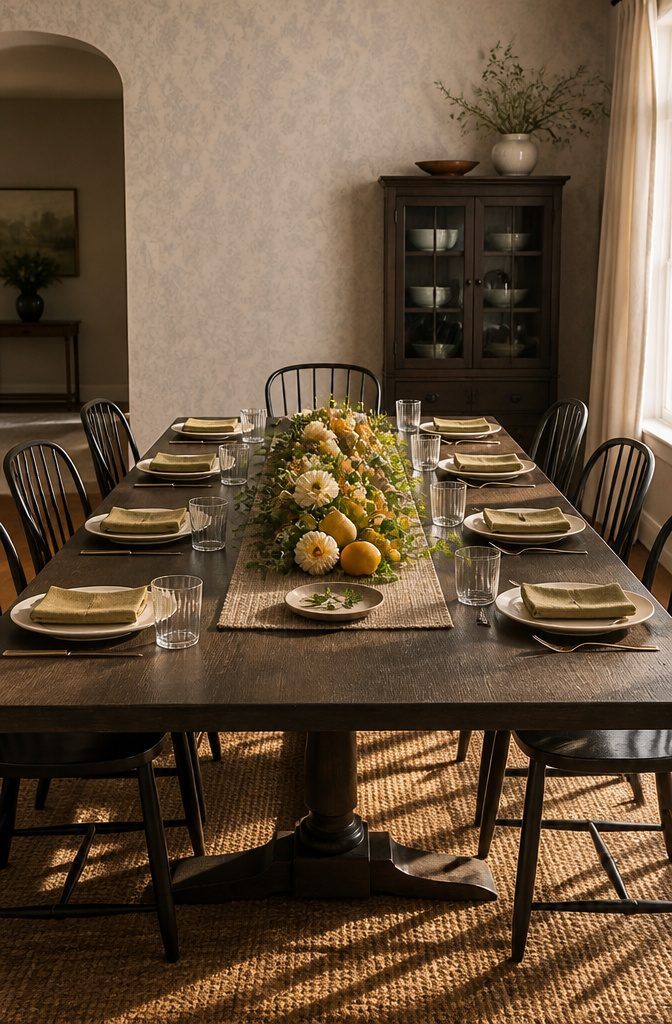
A centerpiece finishes the look, but keep it low enough for guests to see each other across the table.
Fresh flowers, a simple candle, or a decorative bowl all work. The rule is practical: if someone sitting down has to lean left or right to make eye contact with the person opposite, the arrangement is too tall.
I like to coordinate the centerpiece with the occasion. A floral arrangement for a dinner party, tea lights for something more intimate, a ceramic holder with a single candle for everyday meals.
The color should tie into the napkins and plates rather than fight them. For a longer table, go low and long rather than tall and centered—seasonal fruits, flowers, and herbs spread horizontally give you color without blocking sightlines.
If you’re working with a small round table, a single low bowl is usually enough.
7. Check Alignment and Spacing Before Guests Arrive

I walk the table before anyone arrives to check alignment and spacing at each place setting.
A quick lap tells you if forks sit level, if the distance between plates is consistent, and if one setting looks noticeably tighter or more spread out than the rest.
Symmetry matters more than precision. If the centerline of each plate lines up and the gaps feel even, the table reads as deliberate rather than rushed.
Glassware and dishes pick up fingerprints and water spots easily, so I wipe each piece as I set it down.
Smudges show under dining room light, and they are the first thing a guest sees when they sit. A microfiber cloth clears them fast.
If something looks streaky or stained after you polish it, swap it out. The table should feel finished, not staged in a hurry.
What Each Setting Needs

A basic setting needs a placemat, flatware, a dinner plate, a drinking glass, and a napkin.
That covers most weeknight dinners and keeps setup under five minutes. Casual settings add a salad plate and sometimes a soup bowl on top of the dinner plate, plus separate water and wine glasses.
Formal settings layer more: a charger under the dinner plate, separate salad and bread plates, a soup bowl, a cloth napkin, multiple forks and knives, spoons for soup and dessert, and both water and wine glasses.
Buffets change the setup depending on formality. At a formal buffet, each guest has a place setting with a plate, water glass, cup and saucer, and wrapped silverware already on the table.
Guests take the plate with them to the food line. Informal buffets stack plates, napkins, and cutlery at the start of the buffet line, where guests pick them up as they serve themselves.
| Setting Type | Plates | Flatware | Glassware | Napkin |
|---|---|---|---|---|
| Basic | Dinner plate | Fork, knife, spoon | Water glass | Paper or cloth |
| Casual | Dinner plate, salad plate | Fork, knife, spoon | Water and wine glass | Cloth |
| Formal | Charger, dinner plate, salad plate, bread plate, soup bowl | Multiple forks, knives, spoons | Water glass, wine glass | Cloth |
When to Add Place Cards

Place cards work when seating matters.
If you’ve assigned spots to balance conversation or keep two people apart, a card keeps guests from hunting and second-guessing. They also help people learn names at tables where not everyone knows each other yet.
For a formal dinner, place cards add a layer of personalization that signals you thought through who sits where.
The simplest version is card stock folded in half with a name in legible script, positioned facing the guest’s chair. If you want more design, pick something seasonal or keep it minimal—either reads as intentional.
At casual meals where guests choose their own seats, skip the cards. They add formality the rest of the table doesn’t match, and that mismatch is what makes a detail feel forced rather than deliberate.
Where to Put Salt and Pepper
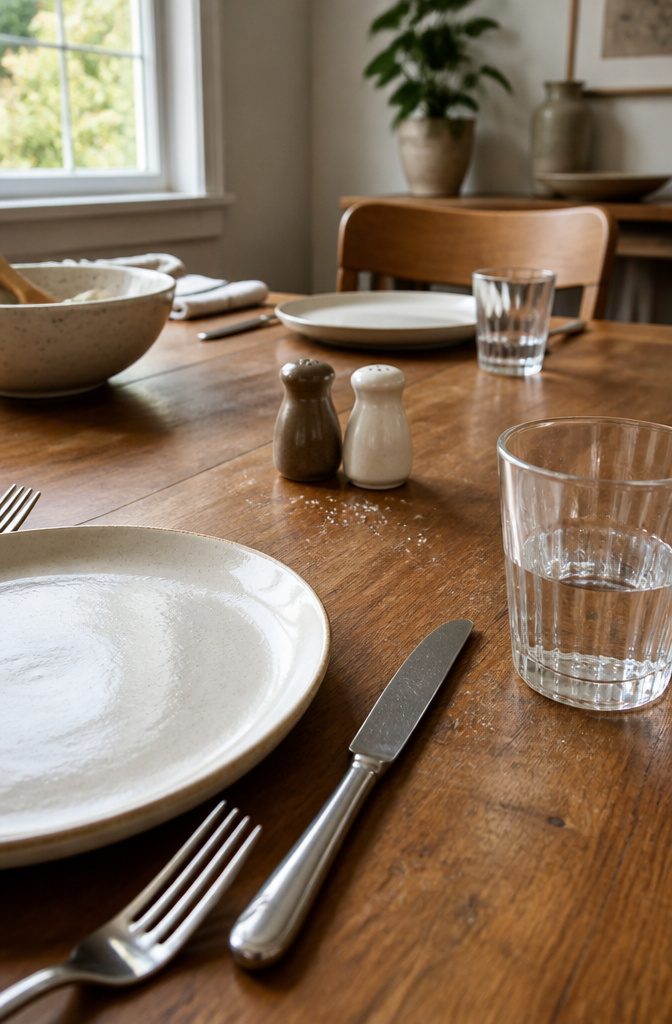
Salt and pepper belong on the table for most dinners, placed together at the center between opposite place settings with salt to the right of pepper.
The reasoning splits between everyday and formal dining. For casual meals, seasonings are expected and stay within reach throughout.
At formal dinners, they’re less common under the old assumption that carefully prepared food shouldn’t need adjustment, but plenty of hosts include them anyway rather than risk a guest wanting them and having to ask.
If someone does ask for salt or pepper, pass both shakers together as a set.
They shouldn’t be separated even if only one was requested. Set them down on the table in front of the person rather than handing them directly, which cuts the risk of a fumble or spill.
Once they travel during the meal, they stay paired wherever they land until the next move.
Frequently Asked Questions
What are the 7 essentials to table setting?
A basic table needs a placemat, flatware (fork, knife, spoon), a dinner plate, a drinking glass, and a napkin.
That covers most weeknight dinners. Casual settings add a salad plate and wine glass, while formal settings include chargers, bread plates, soup bowls, and multiple pieces of silverware for each course.
What side does the knife go on?
The knife goes on the right side of the plate with the blade facing inward toward the plate.
Spoons, if you’re using them, sit to the right of the knife. Forks always go on the left side.
Does the napkin go on the left or right?
The napkin goes on the left of the plate, typically with the fork resting on top of it. For very simple settings, you can also place the napkin directly on the plate itself.
How do I set a semi-formal table?
A semi-formal or casual table uses a dinner plate, salad plate (layered on top if serving soup or salad first), flatware arranged left and right of the plate, and both water and wine glasses.
Add a cloth napkin and either placemats or a tablecloth. This sits between everyday basic settings and full formal setups with chargers and multiple courses.