

Small-space organization methods vary from aggressive decluttering to clever storage hacks, and what works depends on whether you have too much stuff or too little room to put it.
The difference shows in what you do first: if you own ten dinner plates for two people, your problem is volume, not shelving.
A magnetic knife strip costs $16 and opens an entire drawer, bed risers lift the frame high enough for under-bed boxes, and vertical folding lets you see every piece of clothing without digging through stacks.
1. Declutter First and Limit What Comes In
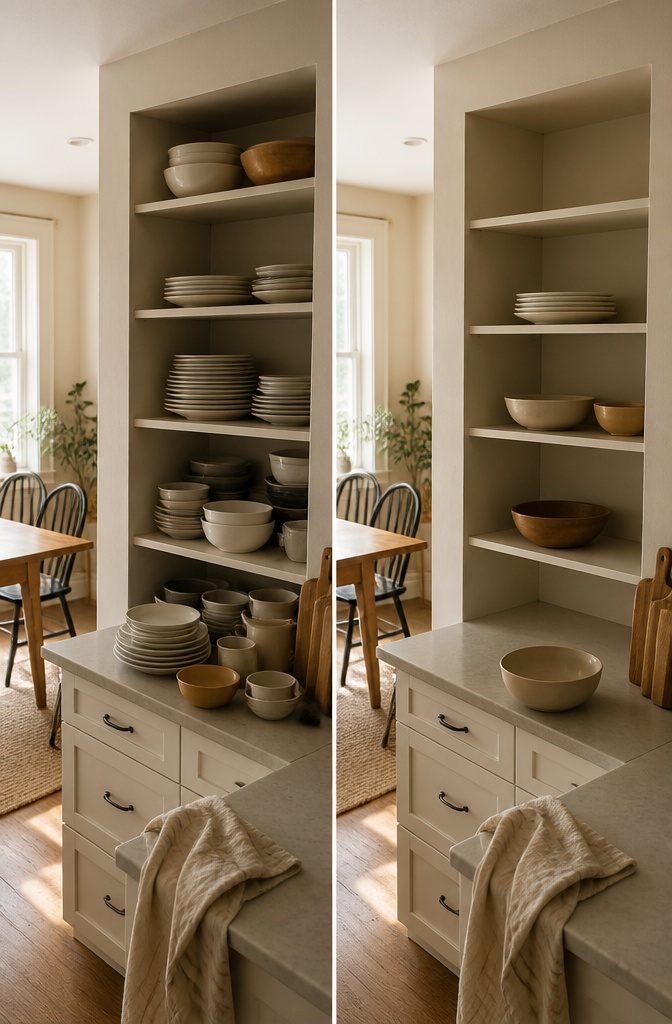
I’ve found that the hardest part of organizing a small space is not the storage system itself — it’s admitting what you actually use.
Before buying bins or rearranging shelves, pull everything out and ask whether you’ve touched it in six months. If the answer is no and it’s not a holiday item, donate it.
A client once showed me a cabinet with ten dinner plates for two people; we kept four and suddenly had room for serving bowls that were stacked on the counter.
The six-month test works because it catches the things you’re keeping out of guilt or a vague sense that you might need them someday.
Once you’ve cleared what doesn’t earn its space, the second step is limiting what comes back in.
The one-in-one-out rule is simple: bring something new home, and something existing goes out the door. It sounds strict, but it’s the only method I’ve seen that prevents clutter from creeping back.
Before buying anything, I ask whether I need it and whether I actually like it. If the answer to both is yes, it comes home.
If it’s no to either, it stays at the store. That filter has saved me from impulse purchases more times than I can count, and it keeps the space from filling up again six months after you organized it.
2. Use Vertical Space With Shelves and Hooks

The moment floor space runs out, the walls become the place to put things.
Shelves that run all the way to the ceiling add storage without crowding the room, and wall-mounted cabinets keep surfaces clear so a small space feels less cluttered.
Floating shelves work the same way in a laundry room, bathroom, or bedroom where a dresser would take up too much floor.
Visualize your apartment from a vertical eye to free up your horizontal real estate.
That shift matters because vertical storage gives back the floor area you need for moving around, and the room reads as larger when you can see more open ground.
Hooks on the back of a door hold bags, hats, and frequently used items without requiring a coat rack. Command Hooks stick to walls or doors without nails, which makes them the practical choice in a rental.
Tall bookcases, open shelving next to a desk, and wall-mounted TV brackets all follow the same principle: when you cannot build out, build up.
3. Choose Furniture That Does More Than One Job

Storage ottomans are the easiest win in a small space because they add seating and hidden storage without taking up more floor area.
I look for ottomans with a hinged lid rather than a removable top, since you’re more likely to use storage that opens in one motion.
They work well for blankets, throw pillows, board games, or anything you want within reach but out of sight.
An oversized coffee table with drawers gives you the same dual function: surface space on top, hidden compartments below, and in some designs, enough room to double as a casual dining table when you need it.
Beds with built-in drawers are worth the investment if you’re short on closet space. The drawers sit low enough that the bed doesn’t look bulky, and they hold seasonal clothing, extra linens, or anything you don’t need daily access to.
If your current bed has clearance underneath, storage bins that slide under work almost as well and cost far less.
Dining tables with built-in storage are less common but useful in studio apartments or small kitchens where cabinet space is limited. Look for models with shelves or drawers that tuck under the tabletop.
4. Use Hidden Storage and Overlooked Spaces
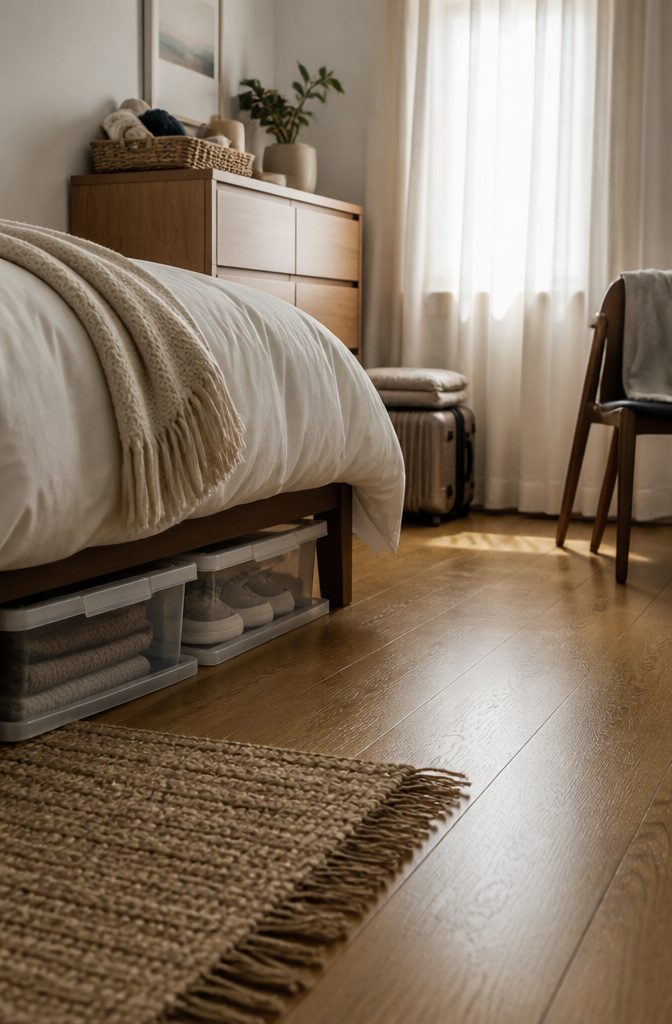
Under-bed space holds more than most people give it credit for. If the bed sits low, simple risers lift it high enough to slide shallow boxes underneath.
The Brightroom Under-Bed Storage Box at $16 fits out-of-season clothes, shoes, or accessories without taking up closet real estate. I measure the clearance first, because a box that scrapes the floor every time you pull it out stops being useful fast.
Luggage you’re not using is storage you already own. Packing suitcases with off-season clothes or extra bedding keeps them compressed and out of the way, and the luggage itself takes up the same space whether it’s empty or full.
I’ve found this works especially well in a hall closet where the suitcase would sit anyway.
The tops of dressers, wardrobes, and storage units are easy to forget, but a low basket or bin up there corrals things like gift wrap, spare light bulbs, or bulky winter accessories. It’s visible, so it has to look deliberate.
Corners and narrow gaps beside furniture often go unused, but a slim rolling cart or vertical file holder can fit into a six-inch slot and hold kitchen supplies, cleaning tools, or bathroom overflow.
5. Give Belongings Designated Homes and Group Them

Give Belongings Designated Homes and Group Them
The difference between a space that stays organized and one that slides back into chaos comes down to whether similar items live together and whether each thing has an actual place to return to.
Assign zones for different activities and make sure every item has a home within those zones.
A silverware organizer is the clearest example: forks go in one slot, knives in another, and you never hunt for a spoon. Apply that logic to the whole house and clutter stops piling up.
Baskets and bins keep groups contained without locking them away. I use them for blankets, stationery, charging cables, anything that needs to stay accessible but not scattered.
Group similar items together so you can find what you need without opening five drawers. A bamboo kitchen drawer organizer works for utensils or loose food, and clear dividers let you build tiny zones throughout the house.
Labeling makes the system stick, especially if you share the space with roommates or a spouse who otherwise guesses where things go.
6. Make Existing Storage Work Harder
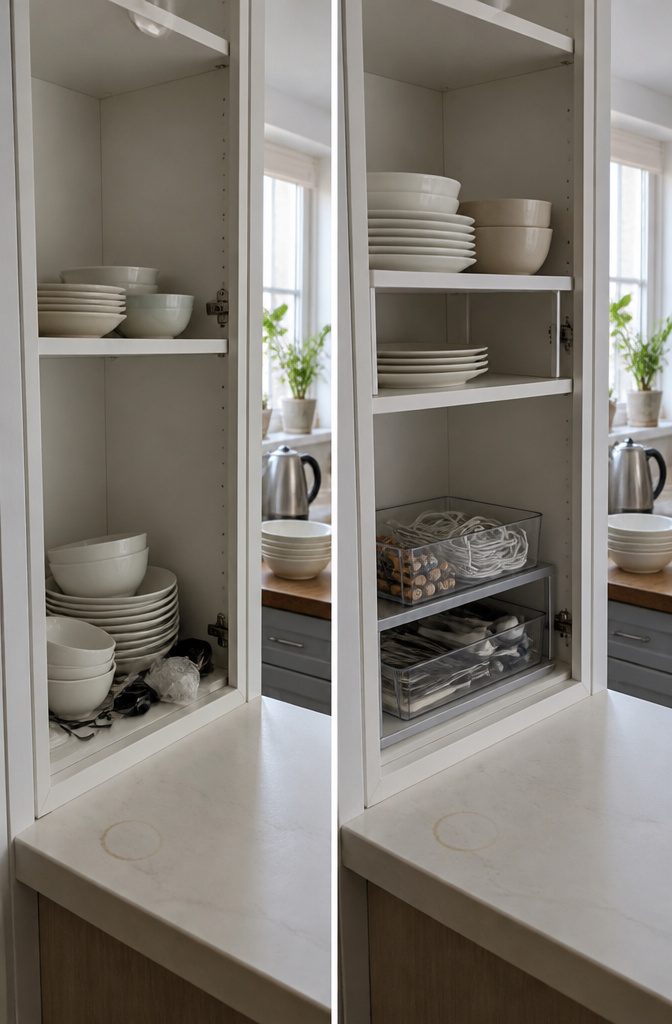
The storage you already have probably holds more than you think. Before you spend another dollar on bins, reorganize closets, drawers, and cupboards with dividers, risers, and shelf tools that let you see and reach what’s there.
A set like the 25 PCS Clear Plastic Drawer Organizers gives you compartments you can arrange however the drawer actually gets used, and clear plastic means you spot the thing you need without pulling everything forward.
Shelf risers double the working height inside a cabinet. Instead of stacking plates until the top one scrapes the shelf above, a riser creates two levels you can pull from without unstacking.
Drawer dividers do the same job sideways: utensils, batteries, cords, and small tools stop migrating into a single jumbled corner.
Over-the-door storage works for pantry overflow, cleaning supplies, or anything you need within arm’s reach that doesn’t fit on a shelf.
I go through existing storage twice. First pass: pull out what shouldn’t be there.
Second pass: add the organizer that fits what stays. That order matters, because a divider set sized for clutter still looks like clutter.
7. Rotate Seasonal and Infrequently Used Belongings
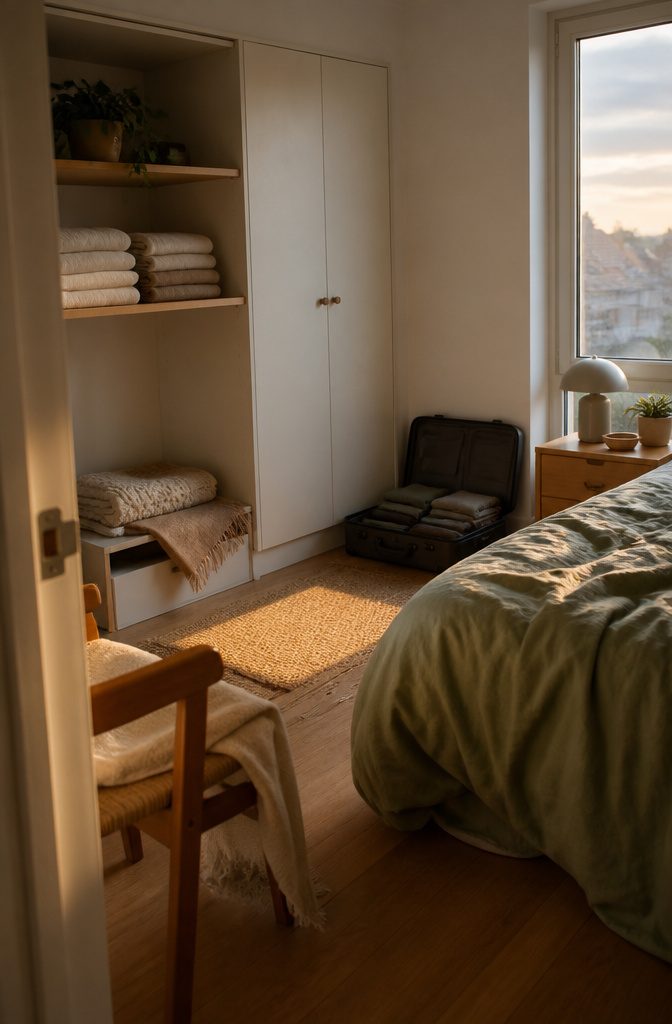
The belongings you reach for a handful of times a year don’t deserve prime real estate.
Box up anything you don’t use more than once or twice a year and move it somewhere harder to reach—the top shelf of a closet, under the bed, or a storage unit if space inside is truly scarce.
Winter coats can sit in storage through summer, and beach gear can disappear when the weather turns.
The method keeps daily storage from feeling crowded, because you’re not shuffling past a parka in July or tripping over pool floats in December.
I rotate by weather and by room. Thick blankets go into under-bed storage boxes when warm weather arrives, then swap places with lighter linens in fall.
Off-season clothes get folded into luggage that’s sitting empty anyway. If you haven’t pulled something out of deep storage in over a year, you probably don’t need it, and that’s when donation makes more sense than rent.
8. Keep Surfaces and Visible Storage Orderly

A clear counter makes a small kitchen feel twice as functional, and keeping surfaces and visible storage orderly changes how spacious any room reads, even when the actual storage hasn’t grown.
I treat this as visual capacity: clutter on display uses up attention the same way a shelf stacked to the front uses up physical space.
When every surface holds mail, keys, random bottles, and yesterday’s project, the eye has nowhere to rest, and the room shrinks.
The win is giving every item a proper home so surfaces stay available for the work they’re meant for—cooking, folding laundry, setting down groceries.
That forces better decisions about what belongs out and what goes away. For open shelves and anything visible, arrangement matters as much as reduction.
I organize by category and use containers to group smaller items so the display reads as a few intentional zones rather than a scatter. Dust often, because a clean shelf always looks more intentional than a crowded one.
9. Maintain the System With Regular Reviews
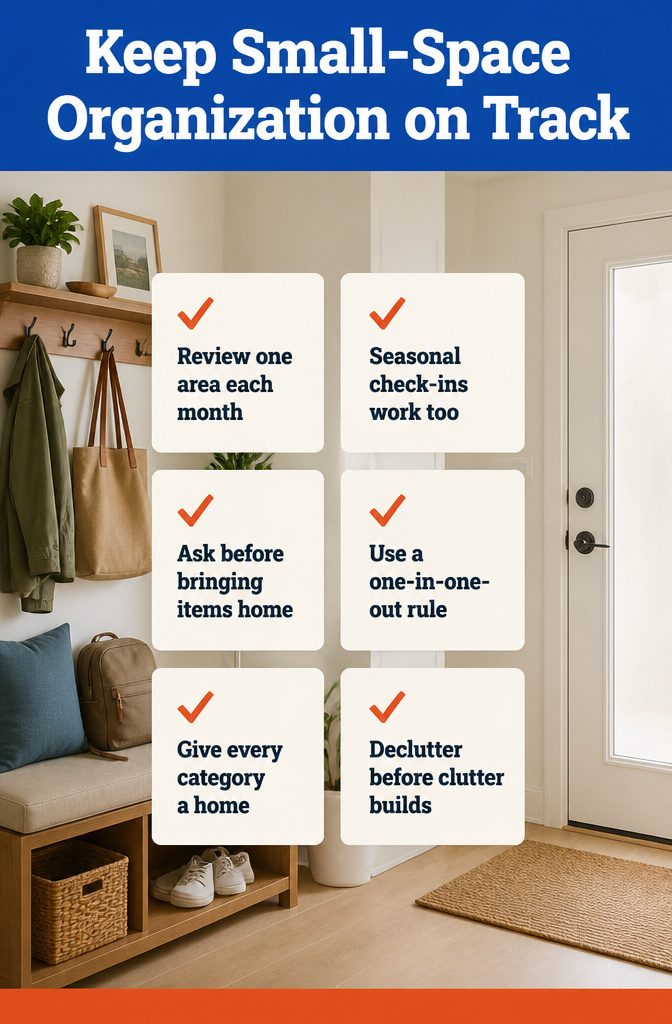
I check belongings every month or so, walking through one area at a time to decide what still earns its place.
A monthly pass catches clutter before it turns into a project, and the smaller scope makes it easier to finish.
Some people prefer a seasonal rhythm instead, timing the review to when they swap out clothes or holiday items. Either cadence works if you stay consistent.
The maintenance question shows up at the door. Before I bring something home, I ask whether I will actually use it or whether it just looked appealing in the moment.
If the answer is no, I leave it behind. A one-in-one-out rule helps too: bringing in a new item means letting go of an existing one I no longer need or like.
That habit keeps the total volume stable and prevents storage from filling back up after the initial pass through.
Once the system is in place, upkeep becomes simpler. Regular decluttering, a clear home for each category, and the monthly or seasonal check-in prevent the need to reorganize from scratch.
Organization is a rhythm, not a single weekend, and the rhythm is what makes a small space stay functional instead of slowly reverting.
10. Use Room Dividers to Separate Activities

In a studio or shared room, curtains, mountable sliding doors, or panel dividers can break the space into zones so sleeping, working, and living feel like separate activities instead of one crowded corner.
I find dividers work best when they go tall, because a low partition reads like furniture clutter rather than a boundary.
Curtains hung from the ceiling are the easiest option for renters, and they double as projection screens if you need them to.
Sliding doors or standing panels give more structure but check your lease before you mount hardware. Apartments often restrict drilling into walls or ceilings, and a security deposit is not worth losing over a room divider.
The separation does not need to be complete. A partial screen between the bed and the desk can add privacy without making either zone feel closed off.
Room-Specific Storage That Works
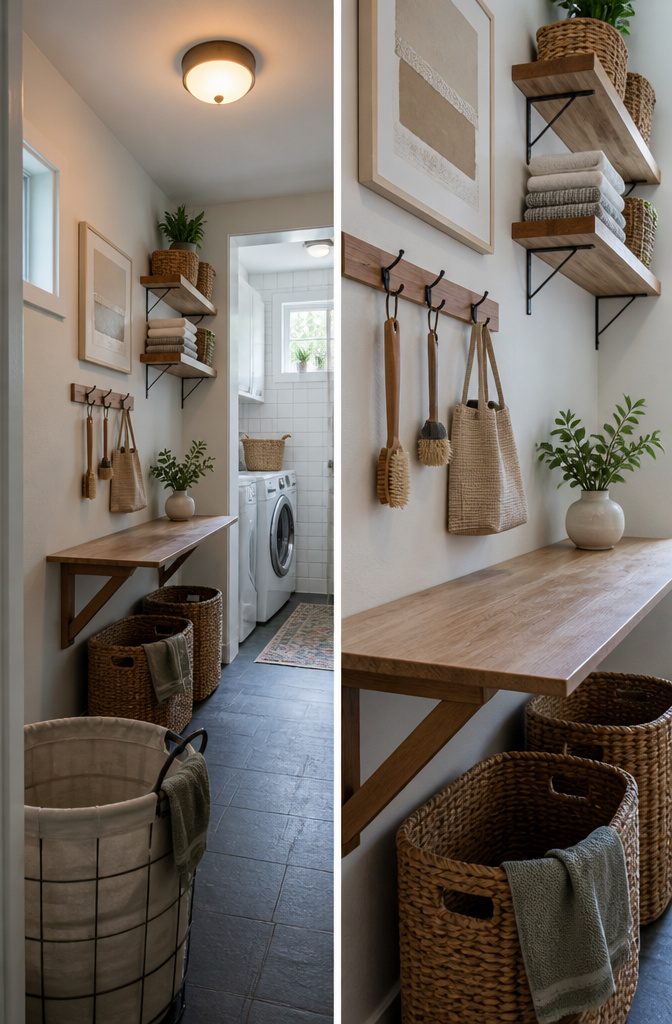
Storage needs vary sharply across rooms, and what works in a bedroom will fail in a kitchen. Here’s where to focus effort:
- Kitchens: Mount a magnetic knife strip to free drawer space, add a pegboard or wall-mounted rail for pots and utensils, and bring in a rolling cart when counter area is tight. Stackable containers in cabinets keep dry goods visible and prevent lost space above short items. Over-the-door pantry holders and drawer dividers turn chaotic zones into organized ones fast.
- Bedrooms: Bed risers lift the frame high enough for under-bed boxes that hold seasonal clothes, shoes, or linens. Narrow sliding racks fit between furniture, and over-the-door organizers claim wall space the closet doesn’t use.
- Bathrooms: Wall shelving and cabinets hold toiletries and cleaning supplies. Keep daily items within reach and push backups or seasonal products to higher shelves where they’re out of the way.
- Laundry areas: Baskets and bins corral small items, hooks hold tools and gear, and a drop-leaf table gives folding space that folds away when not in use.
- Work zones: Wall-mounted shelving and a rolling cart handle supplies and equipment in tight corners. Rolling carts are especially useful when the workspace moves throughout the day.
What to Remove When Downsizing
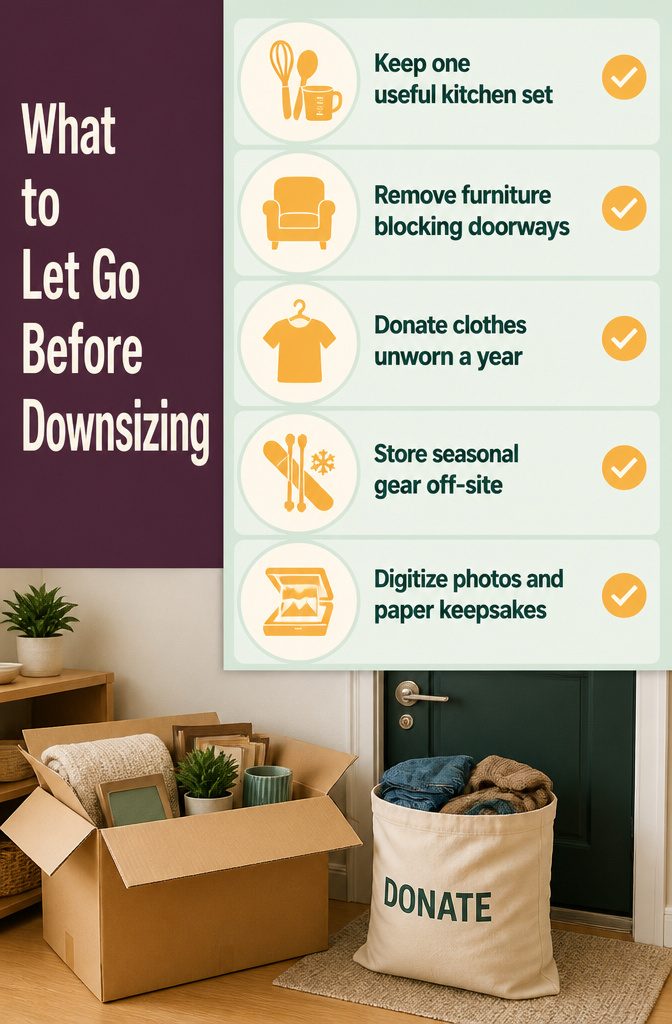
I’ve been asked to write a short section of a home organization article. Let me read the requirements carefully and produce the section in the requested bulleted list format.
Moving to a smaller place means letting go of things you had room for before.
Start by pulling out duplicate kitchen items — the third wooden spoon, the backup can opener, measuring cups you never reach for. Next:
- Furniture that won’t fit the new layout or blocks doorways
- Clothing not worn in the past year
- Seasonal items like holiday decor or winter sports gear that can be stored off-site
- Sentimental items that can be digitized: scan old photos and documents instead of keeping boxes of paper
If you don’t have a car to haul donations, arrange a pickup. Many charities offer free collection for clothes and furniture — you schedule a time that works and they handle the rest.
For anything you’re unsure about, sell it or put it in short-term storage rather than moving it into a space where it won’t have a home.
How the KonMari Method Works in Small Spaces

The KonMari method tackles clutter by category instead of by room: all clothes at once, then books, then papers, documents, miscellaneous items, and sentimental things last.
You keep only what sparks joy, which sounds vague until you hold something in your hands and notice whether it makes you feel lighter or heavier.
The method also calls for folding clothes vertically so they stand upright in drawers rather than stacking flat, which lets you see every piece without digging.
In a small space, the aggressive decluttering phase is what makes the method worth the time.
Cutting possessions by half or more means the storage you already have can finally hold what remains without overflow bins under the bed or coats piling on a chair.
Vertical folding maximizes drawer capacity, and when you can see everything at once, mornings move faster because you stop rummaging. The category approach also prevents the common mistake of shuffling belongings from one closet to another without actually reducing volume.
Frequently Asked Questions
How do you organize a very small space?
Start by decluttering anything you haven’t used in 6 months, then add vertical storage like shelves that run to the ceiling and hooks on doors.
Use furniture with built-in storage like ottomans and beds with drawers, and fit organizers like shelf risers and drawer dividers into existing cabinets to maximize what you already have.
What are the best storage solutions for small apartments?
Beds with built-in drawers handle clothing and linens, storage ottomans add seating plus hidden space for blankets or games, and floating shelves claim wall area without crowding the floor.
Over-door organizers, under-bed boxes, and pegboards in kitchens all pull storage out of spaces that would otherwise sit empty.
How do I make a small bedroom feel bigger and more organized?
Keep surfaces clear so the eye has room to move, use light colors on walls and bedding, and mount the TV instead of adding a stand.
Floating nightstands take up less visual space than bulky furniture, and mirrors reflect light to make the room read larger.
What should I get rid of when downsizing to a smaller home?
Pull out duplicate kitchen items like extra wooden spoons or backup can openers, furniture that won’t fit the new layout, and clothing you haven’t worn in a year.
Seasonal items like holiday decor and sentimental things that can be scanned instead of stored in boxes are the next to go.
How do I organize a small kitchen?
Mount a magnetic knife strip and pegboard or rail for pots to free up drawer and counter space, then bring in a rolling cart when you need extra surface area.
Stackable containers in cabinets keep dry goods visible, and over-door pantry holders plus drawer dividers turn chaotic zones into organized ones fast.
What is the KonMari method and does it work for small spaces?
The method tackles clutter by category instead of by room, keeping only what sparks joy, and folding clothes vertically so they stand upright in drawers.
It works well in small spaces because the aggressive decluttering phase cuts possessions enough that existing storage can finally hold what remains without overflow.
How do you organize a small home without becoming a minimalist?
Declutter what you don’t actually use, then create storage systems for the things you do love. Organization is about giving belongings intentional homes, not restricting how much you keep.
How can I keep a small home organized long-term?
Make simple systems where every item has a designated place, then review belongings monthly or seasonally to catch clutter before it piles up.
A one-in-one-out rule keeps the total volume stable so storage doesn’t fill back up after the initial pass.