

You can clean quarters with distilled water and dish soap in under an hour, but only if the coin has no collector value.
Cleaning a quarter that might be worth grading destroys what dealers pay for, and the damage is permanent.
The method matters less than knowing when to stop: if you can still read the date clearly and the quarter isn’t a common circulation piece, a professional appraisal comes before water touches the surface.
1. Decide Whether Your Quarter Should Be Cleaned
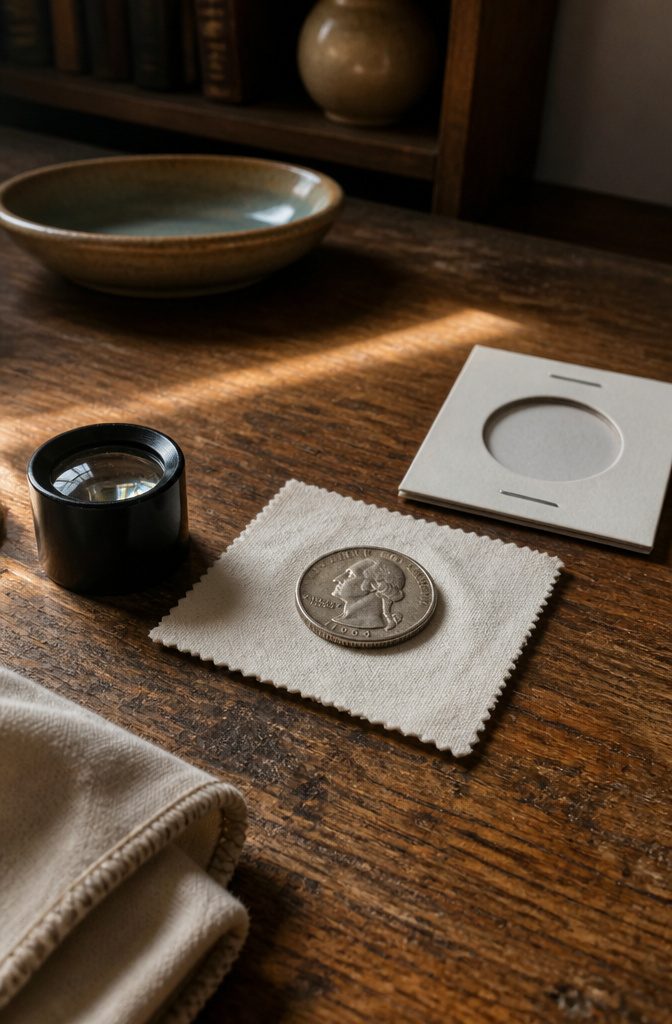
Stop before you clean a quarter that might be collectible. If a coin could have value to collectors, cleaning it yourself will almost always reduce what it’s worth, and the damage can’t be undone.
A professional coin dealer can tell you whether a quarter is worth grading or selling as-is. Get that appraisal before you touch it.
The line between a coin you should leave alone and one you can safely clean comes down to condition and rarity. Collectible quarters that are already in decent shape shouldn’t be cleaned at all.
But quarters in terrible condition, so corroded or worn that you can barely read the date, or coins so common they wouldn’t bring much even if perfect? Those are fair game.
If visible dirt sits on a valuable coin and you want it gone, water alone or water with a very small amount of mild dish soap is the only method I’d consider safe.
Even then, no rubbing. Anything harsher risks scratching the surface or stripping the natural patina that collectors look for.
2. Gather Distilled Water, Soap, and a Soft Surface
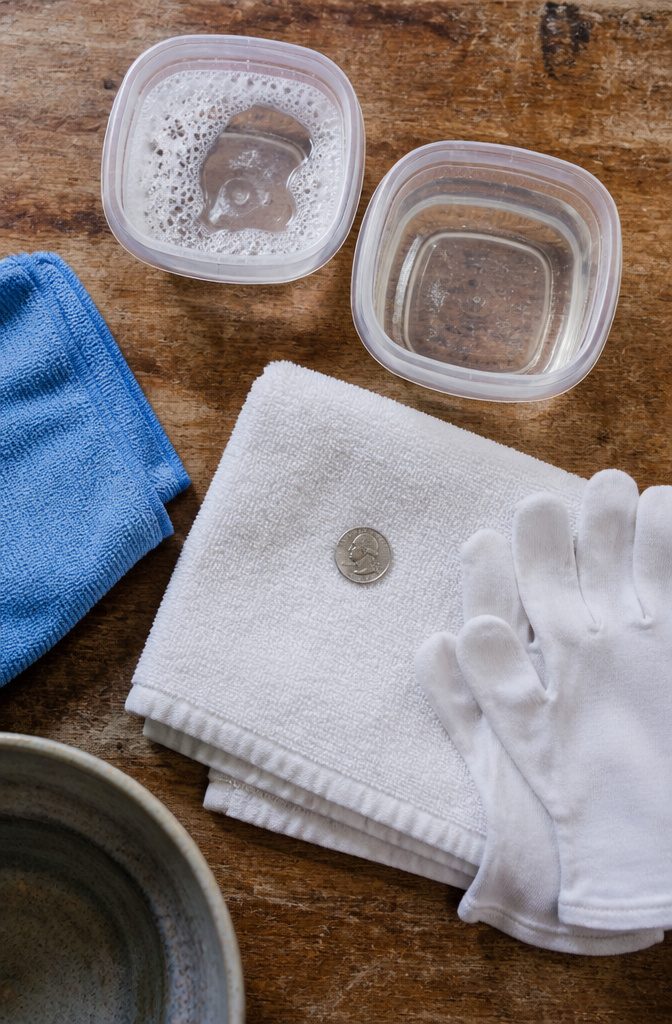
Start by washing your hands and setting up a clean work surface with a soft towel folded twice for cushion. The towel catches a dropped coin and gives you somewhere safe to let pieces dry.
I photograph both sides of every quarter before I touch it — a clear record matters if value turns out to be an issue later, and the shots let a dealer evaluate remotely if you need that down the line.
Fill a small plastic container with warm distilled water, enough to cover a coin completely, and add a few drops of mild phosphate-free dish soap. Let it sud up.
Plastic matters here: glass or metal can scratch. Any disposable food container works.
Prepare a second container with distilled water only for rinsing — tap water leaves minerals behind that speed corrosion. Keep a pair of clean cotton gloves and a soft microfiber cloth within reach.
3. Soak and Rub Gently From Center to Edge

Once the coin is immersed, work from the center outward toward the edges — that direction keeps grime from settling back into the relief.
I hold the quarter between thumb and forefinger and rub gently, using the pad of my thumb to push loosened dirt off the rim.
The motion matters more than pressure. Scrubbing adds scratches, and anything valuable shouldn’t be rubbed at all, only patted.
For coins with surface grime a plain soak won’t shift, a few drops of phosphate-free dish soap in warm distilled water works after a few minutes of contact.
Light swishing or a gentle rub between gloved fingers is enough. Soak time ranges from several hours to overnight for distilled water alone, shorter when soap is involved.
Rinse with distilled water either way and pat dry with microfiber, never paper towel. Air-drying finishes the job without adding lint or new marks.
4. Rinse With Distilled Water and Pat Dry

Once the quarter is clean, swish it in distilled water to rinse off any remaining soap.
Distilled water matters here because tap water carries fluoride and other minerals that can react with the metals in the coin and leave spots or film.
If distilled water isn’t available, hot tap water works, but you’ll need to pat the coin dry immediately to prevent spotting.
After the rinse, air-drying is the safest option. Set the coin on a soft towel and leave it alone.
If you rinsed with tap water, though, you can’t wait for evaporation. Pat gently with a soft microfiber cloth or lint-free tissue.
Do not rub. Rubbing drags grit across the surface and leaves scratches even when the coin looks clean.
For quarters with any collector value, skip paper towels entirely. They’re rougher than they feel and can scuff details you won’t notice until the light hits wrong.
5. Repeat One Quarter at a Time and Store by the Edges
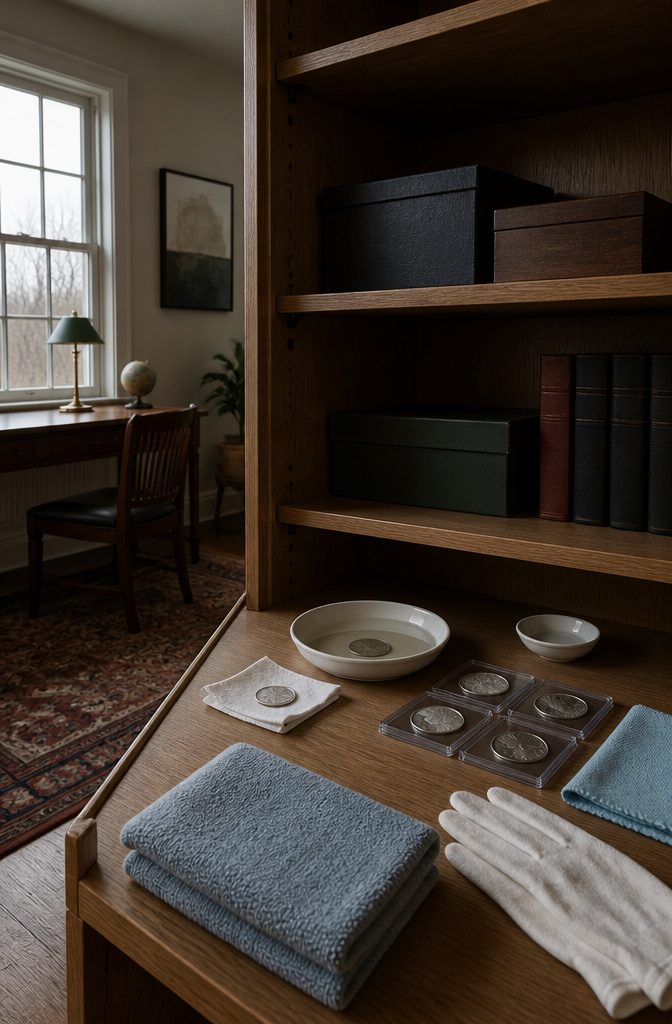
Once you’ve cleaned a quarter, move straight to the next one and repeat the same process.
Don’t rush a whole stack at once. Coins that show stubborn grime after the first pass can sit in a separate shallow dish to soak longer while you work through the rest.
When the final coin is rinsed, the work isn’t finished until every surface is completely dry.
Any water left behind invites spotting or corrosion, and the metal won’t forgive it. Once dry, handle every quarter by its edges only.
Fingerprints carry oils and acids that etch into the surface and can’t be reversed later. If you’re storing anything with potential collector interest, cotton gloves are worth the small trouble.
For long-term storage, use acid-free, PVC-free holders. Soft plastic flips that contain PVC release a green residue over time that attacks the metal.
Keep quarters in a cool, dry location with stable temperature, away from direct light. Attics, garages, and anywhere humidity swings are all bad choices, and light speeds up toning on silver.
Why Cleaning Can Lower a Quarter’s Collector Value
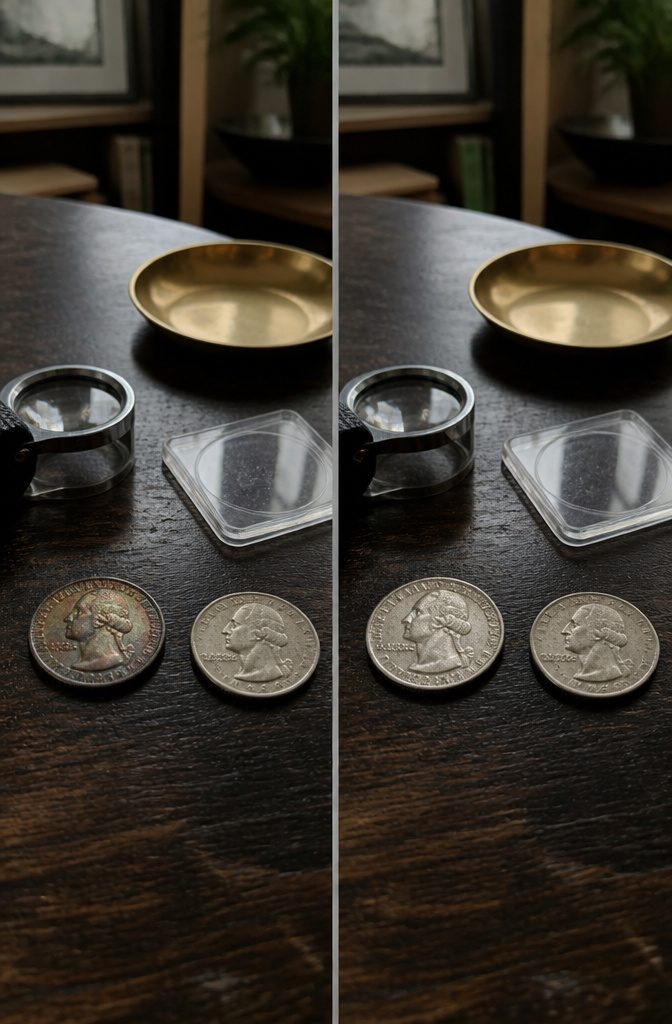
Cleaning removes the natural aging that collectors look for. Patina and toning develop over decades, and scrubbing them off drops a coin’s grade immediately.
Professional grading services like PCGS and NGC assign a Details designation to cleaned coins, which flags the coin as altered and cuts its standing in the market.
The warning matters most for anything with collector value: a rare date, a low-mintage quarter, or one in unusually good condition.
For ordinary circulation quarters with no premium, gentle cleaning does less harm because there was no collector price at risk to begin with. The rule splits cleanly.
If a quarter came from your pocket and isn’t worth more than face value, you can clean it without real consequence. If it might be worth keeping, leave it alone or take it to a dealer first.
When to Use Olive Oil, Acetone, or the Foil Method

Soap and water cover most quarters, but a few problems need a different answer.
Olive oil works on heavy corrosion when the coin has no collector value and you’re willing to soak it for hours or overnight—this is for copper that won’t respond to a soft cloth.
Acetone handles adhesive and residue in thirty seconds to a few minutes; use 100% pure acetone, not nail-polish remover with fragrance or conditioner.
Rubbing alcohol takes off tape gum without soaking. The aluminum-foil method removes tarnish from silver quarters in two to three minutes, but only use it on coins you’ve already confirmed are ordinary spenders.
I don’t recommend acid or abrasives. Vinegar and lemon juice strip patina, change color, and eat into corroded metal.
Baking-paste scrubs leave scratches even when you think you’re being gentle. The trade-off isn’t worth it for a quarter you might spend or save.
What Tested Methods Did to Tarnished Pennies

One website tested 12 widely recommended cleaning methods on heavily tarnished US pennies dated between 1959 and 1970, all made from 95% copper and 5% tin or zinc.
Results varied sharply: some treatments removed tarnish but stripped the coin’s patina, changed its color, left scratches, or caused fresh tarnish to appear within weeks.
The muriatic acid test used about one teaspoon of acid for roughly 20 seconds, then neutralized it with a large tablespoon of baking soda.
That treatment removed all tarnish and left the copper color unchanged, but the coin came out far too bright and obviously cleaned. New tarnish spots formed on some of the acid-treated pennies within weeks.
The findings apply to the tested pennies and methods, not quarters specifically, but they show that aggressive treatments carry real risks even when they appear to work at first.
Frequently Asked Questions
What is the best way to clean old coins?
Do not clean any coin that might have collector value.
For confirmed non-collectible quarters, soak in warm distilled water, add a few drops of phosphate-free dish soap if needed, rinse with distilled water, and pat dry with microfiber. Avoid abrasive scrubbing or harsh chemicals that strip patina and leave scratches.
Does cleaning old coins ruin their value?
Yes, for any quarter with collector significance. Cleaning removes natural patina and leaves hairlines that drop the coin’s grade immediately, and professional services like PCGS and NGC flag cleaned coins with a Details designation.
For ordinary circulation quarters with no premium above face value, gentle cleaning does less harm because there was no collector price at risk.
How do you clean collectible coins?
You don’t. Take the coin to a professional dealer or grading service instead.
Cleaning yourself will almost always reduce what a collectible quarter is worth, and the damage can’t be undone. Get an appraisal before you touch it.
Should I clean coins before selling them?
No.
Leave quarters in their original condition for the buyer to assess. Cleaning removes patina that collectors look for and signals that you might be trying to pass off a worn coin as better than it is.
How can you tell if a coin has been cleaned?
Look for hairlines, broken luster, or absent or uneven toning on the surface. Professional graders identify cleaning immediately, and those signs drop a quarter’s standing in the collector market.
Is soap and water safe for cleaning old coins?
Mild soap with distilled water is among the safer options for confirmed non-collectible quarters.
Use phosphate-free soap, warm distilled water, and pat dry without rubbing. Do not use this method on any quarter with potential collector value without a professional evaluation first.
What is the safest way to clean old copper coins?
Start with a distilled-water soak for several hours or overnight.
For stubborn corrosion on confirmed non-collectible copper, olive oil works after a long soak. Reject vinegar, salt, and abrasive pastes, which strip patina and leave scratches.
What should I do with old coins found in an estate or inheritance?
Do not clean them before professional evaluation.
Inherited quarters may have collector value you can’t see, and cleaning will reduce what they’re worth. A dealer can tell you whether a coin is worth grading or selling as-is.
How do you remove tarnish from a quarter?
For silver quarters with no collector value, the aluminum-foil method removes tarnish in 2 to 3 minutes.
For common quarters, distilled water with a few drops of phosphate-free soap loosens surface grime after a soak. Do not use vinegar, lemon juice, or baking-paste scrubs, which strip patina and change color.
Can Coca-Cola clean old coins?
Coca-Cola contains phosphoric acid that strips tarnish, but it also removes patina, changes the coin’s color, and can lead to fresh tarnish forming within weeks.
Is WD-40 good for cleaning coins?
No.
WD-40 is a petroleum-based lubricant that leaves residue on the metal and can trap dirt or speed corrosion over time. Distilled water with mild soap or acetone for adhesive removal are safer choices for non-collectible quarters.
Is it better to clean old coins or not?
If a quarter might have collector value, leave it alone or take it to a dealer first.
For ordinary circulation quarters in terrible condition or so common they wouldn’t bring much even if perfect, gentle cleaning with distilled water and mild soap is fair game. The line comes down to condition and rarity.