

You clean a new house before you move in to remove construction dust, residue from previous occupants, and allergens embedded in carpet.
Skip it and you’re unpacking into grime. The full checklist runs four to six hours if you work alone, longer if the place needs a steam cleaner for the carpets or mold treatment in the bathrooms.
Clear Out Construction Debris and Open Windows

Remove large debris first — leftover cement, wood shavings, nails, and screws — before you touch a broom or vacuum.
This applies mainly to newly built homes where construction residue still covers the floors. Careful disposal prevents accidents and clears the way for actual cleaning.
Once the big pieces are gone:
- Sweep the entire house, then follow with a vacuum to catch smaller dust particles the broom left behind
- Pay attention to corners, under stairs, and behind appliances where dust and debris settle
- Open all windows and doors to ventilate the space and carry dust particles out while you work
Fresh air also helps dissipate lingering construction odors, and proper ventilation keeps the house comfortable as you move through the rest of the checklist.
Gather Your Supplies and Protective Gear

You will need different cleaners for different materials, and using the wrong one on granite, hardwood, or stainless steel can dull the finish or leave permanent damage.
Read the label on each product before you start so you know you are using it safely and getting the best result without wasting what is in the bottle.
Granite, hardwood, stainless steel, and tile all have different needs. Using the wrong product can dull finishes or cause permanent damage.
That means stocking cleaners that match what you are working with, not guessing with one all-purpose spray.
Gather these basics first:
- Microfiber cloths and dusters
- All-purpose cleaner for general surfaces
- A vacuum with a HEPA filter
- Mop and bucket
- Protective gloves
Add specialty items based on your finishes:
- Glass cleaner for windows and mirrors
- Wood polish for hardwood floors or trim
- Grout cleaner and gentle scrubbing brushes for tile
Open windows while you work. Fresh air moves out construction dust and fumes from cleaners, and a mask helps if the dust is still heavy.
Start High and Work Down
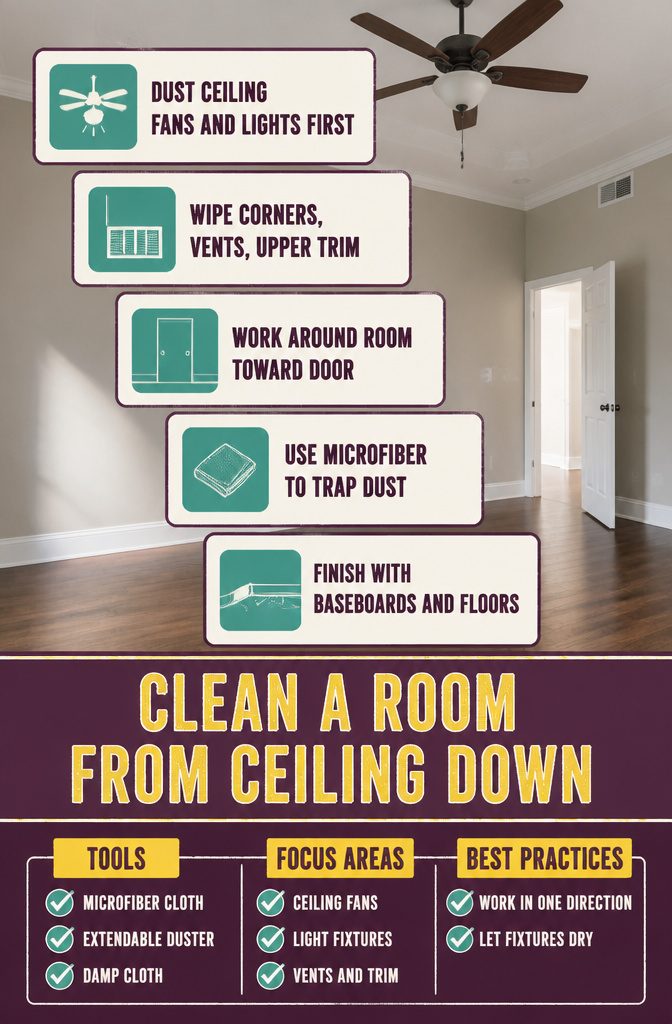
Start from the ceiling and work down. Dust falls as you clean, so anything you wipe first gets dirty again if you’re still working above it.
- Dust ceiling fans and overhead light fixtures first. Globe-shaped fixtures collect dust quickly and need a careful wipe with a microfiber cloth or extendable duster.
- Move to ceiling corners, vents, and upper wall surfaces where dust settles along trim and edges.
- Clean around the room in one direction, working toward the door so you’re not stepping back through areas you already finished.
- Save baseboards and floors for last, after all the dust from above has landed.
A microfiber cloth traps particles instead of pushing them around. If a fixture is particularly dirty, wipe it down with a damp cloth and let it dry completely before turning it back on.
Clean the Kitchen

Start with the fridge and cabinets. Remove shelves that come out and wipe them down in the sink with a vinegar-and-water solution.
Scrub the inside of the cabinets with baking soda and water, top and bottom surfaces, before you put anything away. You’re eating off those plates, and the cabinet surfaces need to be just as clean.
For appliances:
- Run the dishwasher twice: first cycle with a cup of white vinegar in the top rack, hot water if your model has that setting. Then sprinkle a cup of baking soda on the bottom rack and run a second hot cycle. The dishwasher takes 3.5 times less water than washing by hand, so this is the efficient choice for sanitizing it.
- Stovetop paste sits for 10 minutes before scrubbing. Mix baking soda and hydrogen peroxide into a thick paste, spread it over stains, wait, then scrub.
- Wipe down the microwave inside and out, and degrease the oven hood if it looks like the last tenants cooked a lot.
- Disinfect the countertops and sink last, after everything else has been scrubbed and rinsed.
Clean the Bathrooms

Start with the toilet: fill the tank with vinegar and leave it overnight to break down grime that harbors bacteria.
In the morning, flush and wipe down the bowl, seat, and base with disinfectant. For stuck-on stains, apply a paste of baking soda and vinegar, let it sit for 30 minutes to an hour, then scrub.
Bathroom surfaces need attention in this order:
- Scrub sinks, tubs, and showers with baking soda and vinegar for stains. Let the mixture sit 30 minutes to an hour before brushing away residue.
- Treat mold with one part chlorine bleach to three parts warm water. Use an old toothbrush or sponge, then seal the brush in a plastic bag and discard it to prevent spores from spreading.
- Disinfect faucets, handles, towel bars, doorknobs, and light switches. These are high-touch surfaces that carry bacteria from the previous occupants.
- Clean grout lines with a baking soda paste, add a bit of vinegar, wait 30 minutes, then scrub with a toothbrush.
Wipe Down Windows, Doors, and Fixtures
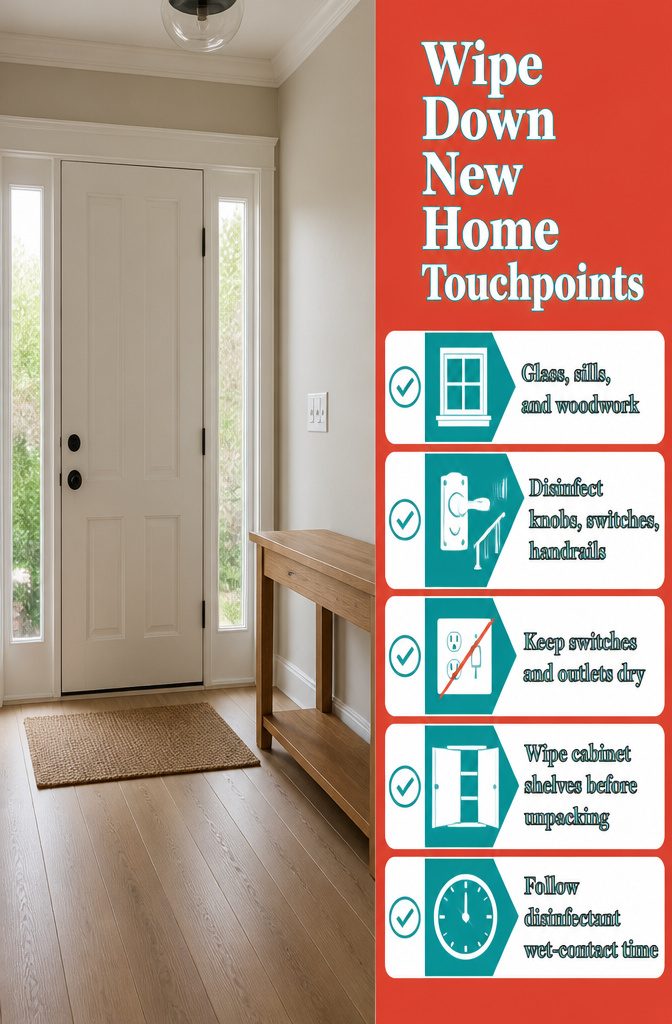
Windows and door frames collect dust and fingerprints from the previous occupants, so wipe down all glass, sills, and woodwork before you unpack.
Use a glass cleaner and microfiber cloth on the windows themselves, working from top to bottom to avoid streaks. Don’t skip the sills or frames, where grime builds up quickly.
- Disinfect every touchpoint: doorknobs, light switches, outlet covers, handrails, and faucet handles. A damp cloth with general-purpose cleaner works for most surfaces, but keep switches and outlets dry to avoid electrical problems.
- Clean cabinet interiors before loading them. Wipe down shelves and drawer bottoms with a damp cloth, and check for leftover crumbs or shelf liner residue.
- Dust light fixtures and switch plates with a microfiber cloth. If the fixtures are grimy, wipe them down with a damp cloth and let them dry completely before turning them back on.
- Follow product instructions on any disinfectant you use. Some need to sit wet on the surface for a set time to actually kill bacteria, so don’t wipe them off too fast.
Finish With the Floors

I vacuum or sweep the entire floor before anything wet touches it, because dragging a mop over loose grit scratches tile and leaves streaks on wood.
Start at the corner farthest from the door and work backward so you don’t walk over what you just cleaned.
How you clean after that depends on the floor:
- Hardwood: Use a specialized hardwood cleaner with a damp mop, not a soaking one. Follow the grain. Skip the vacuum beater bar if you have one; it scratches.
- Tile: Mop with a mild tile cleaner. Scrub grout lines with a brush and grout cleaner if they look dingy.
- Carpet: Rent a steam cleaner from a hardware store or call professionals if the carpet is in rough shape. Vacuuming alone won’t pull allergens out.
Steam mops handle hardwood, laminate, and tile quickly, but on hardwood make sure the floor is sealed first.
When to Hire Professional Cleaners

You do not have to hire anyone to clean a new house, but it saves you hours of labor when you would rather be unpacking or setting up.
I usually recommend hiring when the space needs a deep clean, the timeline is tight, or the carpet is dirty enough that a vacuum will not handle it.
Professional cleaning is particularly useful for carpets because steam cleaning equipment is expensive to buy and awkward to rent if you have never used one.
Molly Maid, which has more than 450 franchises across the United States and performed 1.7 million services last year, is one option that covers most areas.
The appeal of paying someone else is simple: you get to walk into a clean house on move-in day instead of spending your first weekend scrubbing floors and wiping down baseboards.
The downside is cost, and if the previous owners left the place reasonably clean, you can handle it yourself in an afternoon with basic supplies.
Set Up a Regular Cleaning Schedule

Once the deep clean is done, the work shifts from scrubbing to maintaining. Wipe counters daily and vacuum high-traffic areas twice a week.
That rhythm keeps dust and grime from building up again, which means you skip the next heavy session altogether. A small routine beats repeated deep cleaning every time.
As you unpack, wipe down each item before it goes into a drawer or cabinet. Boxes pick up dust in storage and in the truck, and moving that straight onto clean shelves defeats the point of the initial scrub.
I keep disinfectant wipes near the unpacking zone so the step stays quick. Stack the empty boxes in one spot as you go, which makes the final haul to recycling faster and keeps the floor clear while you work.
A physical checklist helps more than a mental one.
Daily tasks, weekly sweeps, and monthly deeper jobs all stay visible, and ticking them off keeps the rhythm from drifting. Build a system light enough that it actually happens, not a plan so thorough it gets abandoned by week three.
Frequently Asked Questions
How to clean properly a house?
Start at the ceiling and work down so dust falls onto surfaces you have not cleaned yet.
Remove construction debris first, then dust high surfaces like fans and fixtures, scrub kitchens and bathrooms with disinfectant, wipe down all touchpoints, and finish with floors. Open windows while you work to ventilate dust and cleaner fumes.
How long should it take to clean a 1500 square foot house?
A deep clean of a new 1500 square foot house takes one full afternoon with basic supplies if the previous owners left it reasonably clean.
More time is needed if construction debris is still present or if carpets require steam cleaning. Hiring professionals shortens the timeline but adds cost.
How clean should an apartment be when you move in?
An apartment should be free of construction debris, dust, and grime before you move in, with all surfaces disinfected and floors cleaned.
If it is not, plan to deep clean kitchens, bathrooms, and high-touch surfaces like doorknobs and light switches yourself, then vacuum or steam clean the floors before unpacking.