
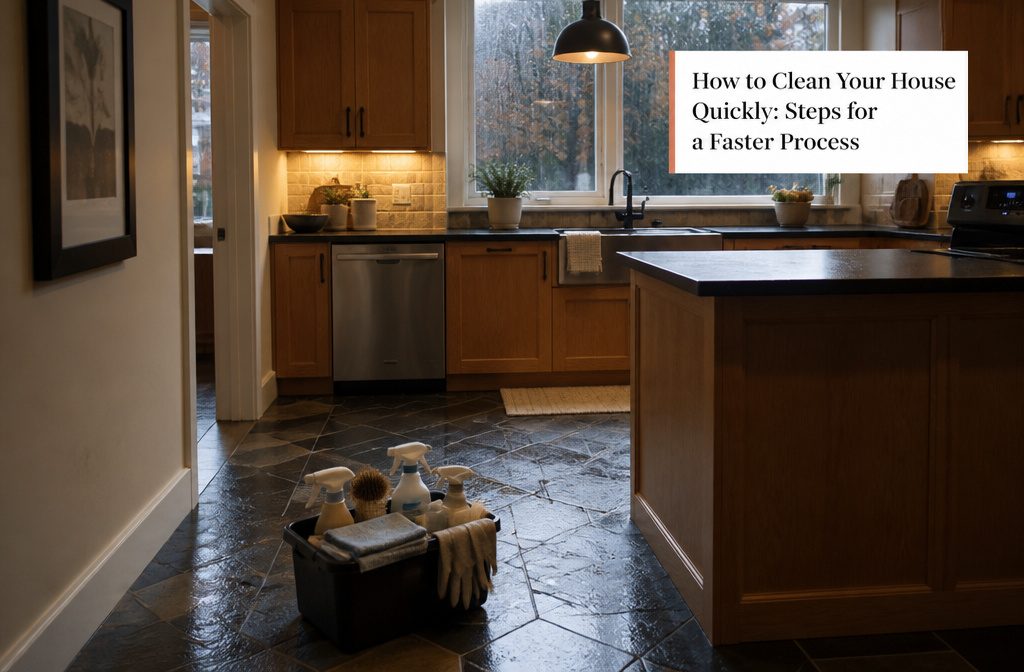
A whole-house clean takes two to three hours if you move room to room without backtracking, but most people lose half that time walking back for supplies or re-cleaning surfaces they already wiped.
The mistake is working in the wrong order: wiping counters before you dust the ceiling fan just means wiping them twice.
Cleaning companies budget fifteen minutes for a kitchen, eight for a bathroom, and they finish an entire 2,300 square foot house in under three hours by carrying everything in one caddy and working high to low so dust falls once.
1. Gather Your Tools and Products Before You Start

Gather Your Tools and Products Before You Start
The fastest way to lose ten minutes during a house clean is walking back and forth to wherever you keep the spray bottles. Collect everything you need in a single caddy or bucket before you touch the first surface.
I keep a Bissell vacuum, a Bona Spray Mop, microfiber cloths, toilet cleaner, all-purpose cleaner, glass cleaner, dusting spray, and disinfecting wipes all in one place so I can move from room to room without backtracking.
A carpenter’s tool belt works if you pour cleaners into small reusable spray bottles.
Otherwise, a bucket does the job. Portability matters: you want the supplies within arm’s reach the entire time, not sitting in the laundry room while you stand in the bathroom holding a dirty cloth.
One thing worth repeating from the product labels: follow the instructions for dilution and dwell time, and store cleaners where children cannot reach them while you work or after you put them away.
2. Pick Up Clutter and Collect Misplaced Items

The laundry basket method is the move that makes everything else faster.
Walk through with a basket in one hand and a trash bag in the other, pulling anything that belongs somewhere else into the basket and tossing actual trash into the bag.
Dishes go straight into the dishwasher, laundry goes into its hamper, and everything else lands in the basket for sorting later.
The disagreement is whether to put those items away immediately or stash the basket out of sight and deal with it after guests leave.
I put away what belongs in the room I’m currently in and keep moving; that keeps me from running back and forth and losing momentum.
The room already looks cleaner once the surfaces are clear, and you’re not working around obstacles when you start dusting or wiping down counters.
3. Clean High to Low So Dust Falls Once

Work from the ceiling down to the floor, and you won’t clean the same surface twice.
Dust from light fixtures and ceiling fans settles onto tables and counters, so wiping those first just means doing them again after you finish the upper level.
The same logic applies to the whole house: if you have a second story, start upstairs and work your way down so dust and debris fall once.
Within each room, follow the same pattern.
Start at the top with fans, light fixtures, or blinds, then move to horizontal surfaces like shelves and counters, and finish with baseboards and floors. A consistent direction helps too.
Moving left to right or back to front keeps you from darting around the room and missing spots. Touch each surface once, not circle back because something fell onto a spot you already cleaned.
Floors come last for the same reason. Mopping or vacuuming before you dust just means you’ll watch debris land on a clean floor.
In a bathroom, wipe the fixtures and counters first, then mop your way out. In a bedroom, dust the nightstands and dresser before you vacuum, then back out of the room as you finish the floor.
4. Start With Bathrooms and the Kitchen
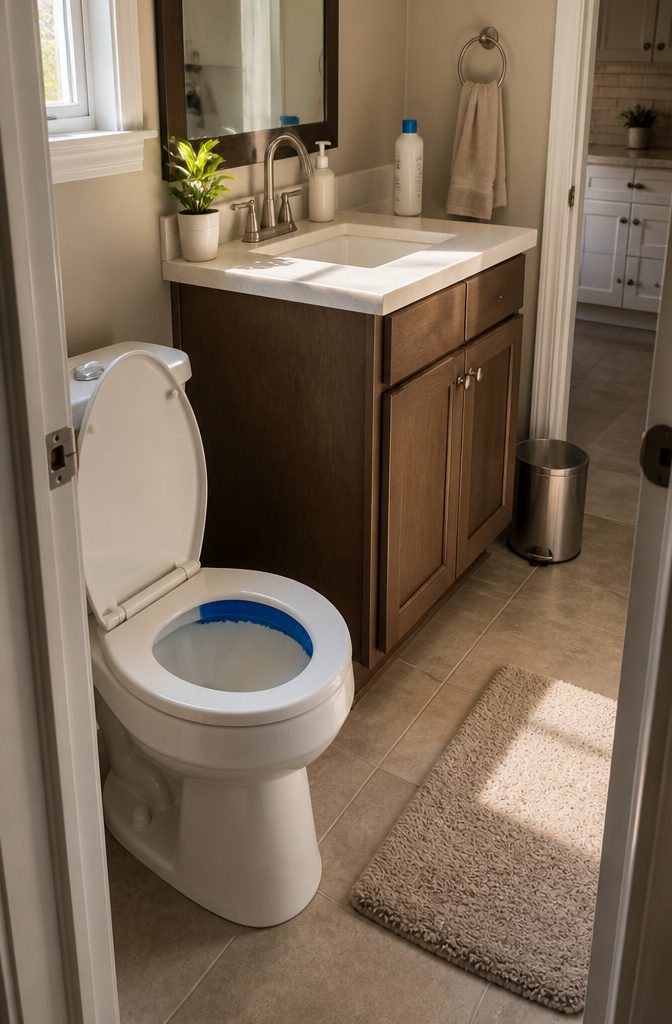
I start with bathrooms and the kitchen because those rooms need chemistry as much as elbow grease.
Spray toilet cleaner under the rim and let it sit while you move on to something else — the dwell time matters more than how hard you scrub later.
The same goes for any degreaser on stovetops or soap scum remover in the shower: apply it, walk away, and give the product time to break things down.
While cleaners are working, I wipe down counters, faucets, and appliance fronts. These are the surfaces guests touch and see first, so they set the tone for the whole house.
A clean kitchen counter and a spotless bathroom mirror do more for perception than a vacuumed back bedroom. Guest bathrooms get priority over the primary bath for the same reason: visibility drives the order, not square footage.
5. Dust and Wipe Every Visible Surface

Dust every flat surface you can see without moving anything, because dusty tables and shelves broadcast neglect faster than most mess.
Skip the ceiling fan blades and the bookshelf trinkets for now. Grab a feather duster—ostrich feather dusters start around $10 and fit in a back pocket, which matters when you’re moving fast—and swipe counters, tabletops, windowsills, and picture frames.
The quills hold up better than cheap synthetics that shed after two rooms.
Wipe mirrors and windows in the living areas and kitchen where guests actually look. Clean glass makes the whole room feel lighter, even if the rest is just tidy.
For stainless steel sinks and appliances, use two microfiber rags: one damp, one dry. The wet pass lifts fingerprints and watermarks, the dry pass kills streaks.
If you want the surface to stay cleaner longer, a thin coat of mineral oil on a cloth helps water and toothpaste bead off instead of sticking, but that’s maintenance for later, not speed cleaning.
6. Save Floors for Last
Save Floors for Last
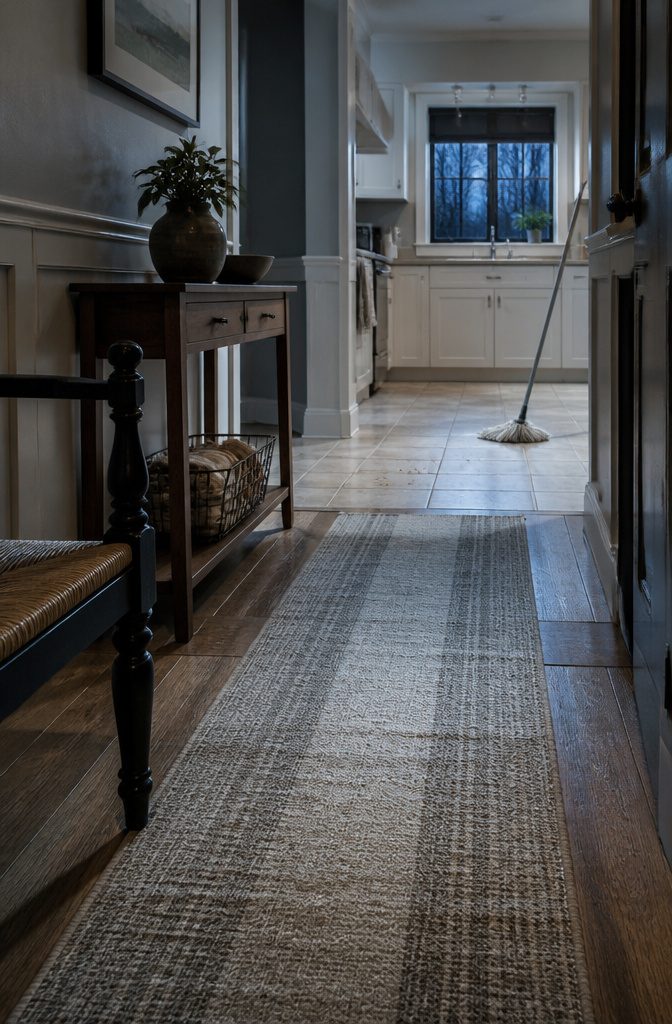
Dust and crumbs fall while you work, so sweep and vacuum only after you finish dusting and wiping surfaces. Otherwise you are back on your hands and knees recleaning floors that looked done twenty minutes ago.
I vacuum the whole house in straight rows down the length of each room, then back out so the cord stays over my shoulder instead of wrapping around furniture.
High-traffic areas get vacuumed weekly, but when you are speed-cleaning before guests show up, one full pass is enough.
After vacuuming, mop hard floors in reverse order so you are not walking back over wet tile.
Start in the room farthest from your exit and work backward toward the door. The kitchen usually gets mopped first, then hallways and any other hard floors, which gives the downstairs time to dry while you finish upstairs.
7. Make a Final Pass and Stop at Good Enough
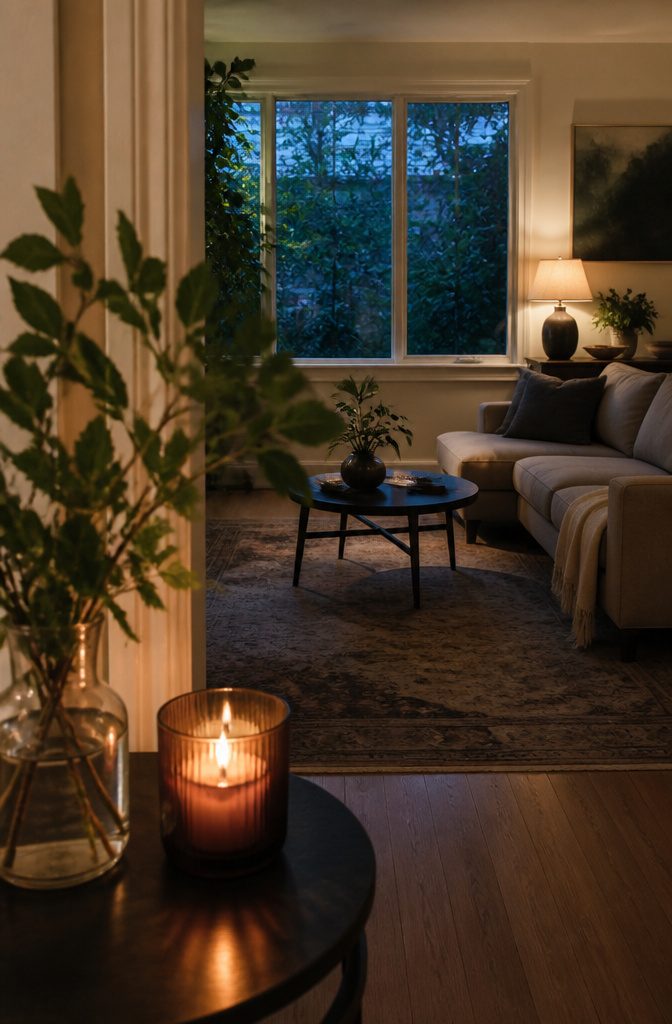
Check the time about five minutes before your hour runs out.
That’s when I stop chasing missed spots and turn toward the details that actually register: a lit candle, lamps switched on instead of overhead light, or a handful of greenery from the yard set where someone will see it first.
These take almost no time and they shift how the room reads when you walk back in.
Done beats perfect here. I’ve cleaned plenty of houses where a bathroom mirror still had a streak or the baseboard in the hallway never got wiped, and no guest mentioned either one.
What they noticed was whether the entry felt picked up, whether the kitchen smelled clean, and whether the main spaces looked intentional. A candle covers a lot of ground on the last point without any real work.
If the vacuum left a few tufts of dog hair under the couch or you skipped dusting the top of the bookshelf, let it go.
You went for the visible areas and hit good enough, which is exactly where you should stop.
Perfectionism here just burns time you already ran out of. Light something that smells decent, turn off the overhead if the room has lamps, and call it.
8. Keep Up With Daily Tidying to Avoid Catch-Up Work
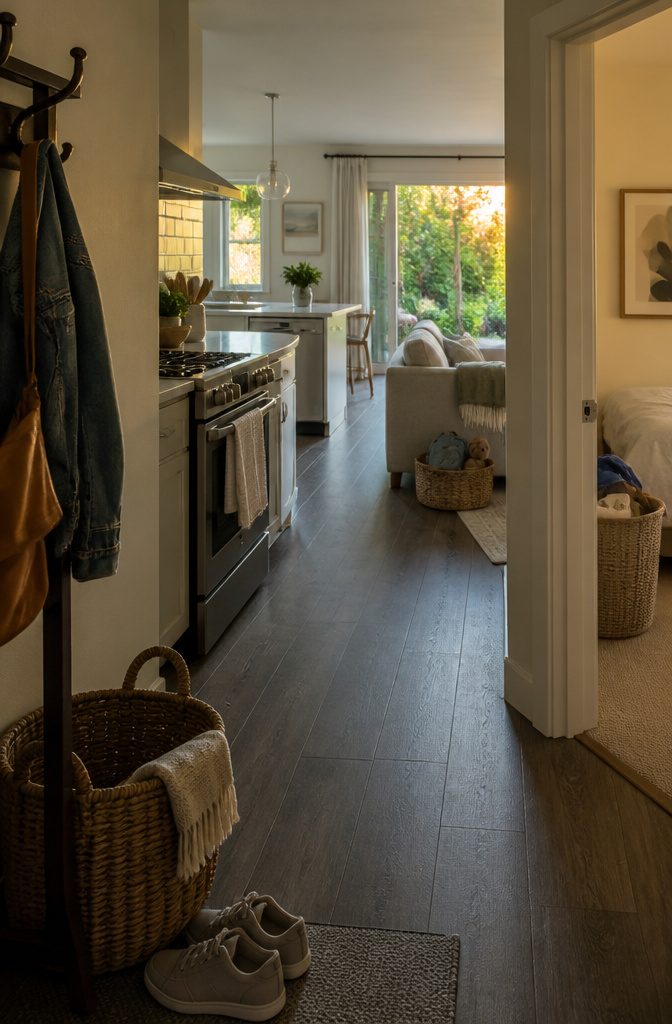
Regular cleaning happens faster when the house stays orderly the rest of the week. Tidying for five or ten minutes each evening keeps surfaces clear and cuts the time a proper clean takes in half.
After dinner, I put away shoes left by the door, gather toys or bags from the living room, and run through the bedroom dropping stray clothes into the hamper.
That small routine means Saturday cleaning starts with wiping and vacuuming instead of clearing piles first.
Laundry works the same way. Running a load every day or every other day means the basket never turns into an afternoon project, and folding ten minutes at a time feels different than facing three loads at once.
Daily tidying sits apart from actual cleaning—it does not disinfect or polish anything—but it removes the clutter that slows real cleaning down.
When counters and floors start clear, wiping and mopping take minutes instead of requiring a sorting phase before the work even begins.
How Long a Whole-House Clean Actually Takes
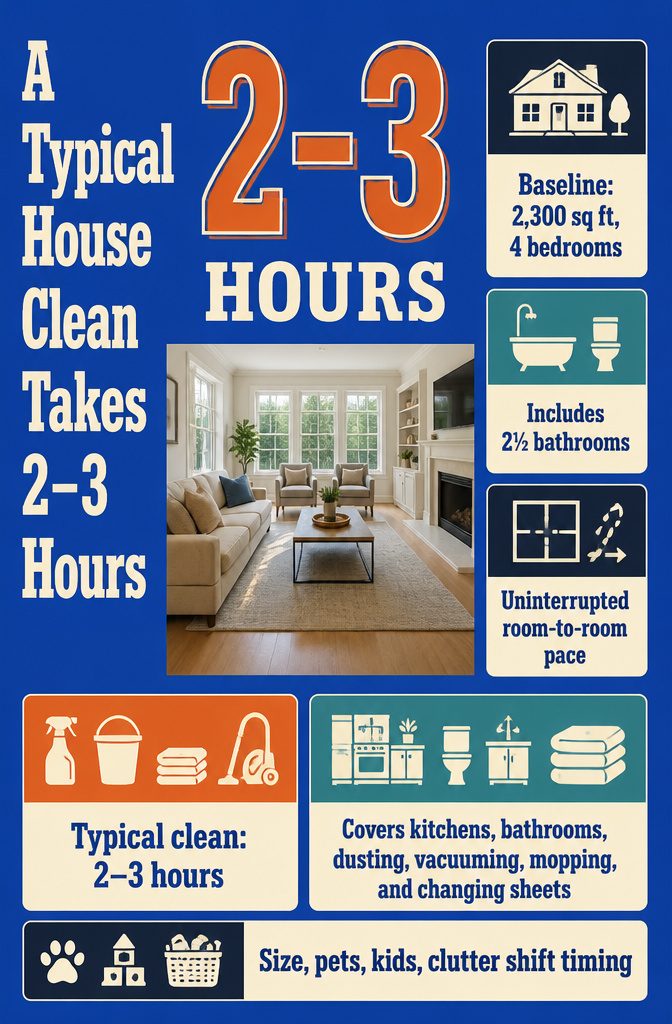
Most cleaning companies budget 2 to 3 hours for a standard house cleaning, and that lines up with what actually works in practice.
A 2,300 square foot home with four bedrooms and two and a half bathrooms takes 2 to 3 hours when you move room to room without interruptions.
The number shifts based on home size, how many bathrooms you have, pets, kids, and how much sits out on surfaces. But 2 to 3 hours is a reasonable baseline for a typical single-family home.
A cleaning professional can finish an entire house in under 3 hours, covering kitchens, bathrooms, dusting, vacuuming, mopping, and changing sheets. That proves the timeline is real if you stay on task.
The difference between a three-hour clean and an all-day one usually comes down to how much tidying happens daily. When clutter piles up between cleanings, sorting through it eats the clock before you ever touch a surface.
When You Only Have 30 Minutes or an Hour

When You Only Have 30 Minutes or an Hour
- Decide which rooms to skip. Your primary bedroom can wait. Guests won’t see it, and a pristine one does nothing for the impression they’ll carry out the door. Focus on common areas and bathrooms instead.
- For 30 minutes, tidy the living areas and the guest bathroom. Spend 10 minutes on dishes and counters, 10 minutes putting items back where they belong, 5 minutes on the bathroom counter and toilet, and 5 minutes emptying trash.
- For one hour, choose the zone that needs it most. If bathrooms are the problem, clean only those. If you spend your day in the kitchen, living room, and dining room, focus there instead. Bedrooms are the third option: dust, vacuum, and if time allows, swap the sheets.
Aim for a clean impression, not perfection. Pick the rooms guests will actually use and let the rest wait.
Room-by-Room Time Estimates

Knowing where your time goes helps you plan around a deadline or decide which rooms to skip when you only have an hour.
- Bedrooms: 7–9 minutes per room. Strip the bed, make it with fresh sheets, dust surfaces from top down, and do a quick pass on the floor.
- Bathrooms: 8–10 minutes per bathroom. For a house with 2.5 bathrooms, a full pass takes about an hour if you tackle them all at once.
- Living and dining rooms: 8–10 minutes. Focus on surfaces people see and use, then vacuum or sweep.
- Kitchen: 12–15 minutes. Wipe counters, clean the sink, deal with the stovetop, and sweep the floor.
- Floors throughout the house: 15–20 minutes. This is separate from spot-cleaning each room and covers a whole-house vacuum or mop run.
If you have four bedrooms and spend 15 minutes in each, that’s an hour for bedrooms alone. Knowing that upfront lets you decide whether to do all of them or just the ones guests will see.
Disinfecting High-Touch Surfaces

I disinfect doorknobs, light switches, and anything hands touch repeatedly when I clean quickly, because those are the surfaces that matter for keeping a household healthy between deeper cleans.
A kitchen faucet handle, bathroom tap, and refrigerator door get wiped down with whatever disinfectant the house already has on hand.
Electronics need more care: I follow what the manufacturer says about screens and keypads, since most disinfectants damage coatings if you spray them directly. A lightly dampened microfiber cloth usually works for phones and remotes without risking the finish.
The whole step takes under five minutes if you move from room to room with the bottle in hand and wipe as you go, rather than gathering supplies separately for each surface.
I skip low-touch areas like baseboards and picture frames when time is short, because the return on effort drops fast once the high-use spots are handled.
The Supplies That Make Cleaning Faster

Keeping everything in one place cuts the time you spend walking between rooms in half.
I use a caddy or bucket that moves with me, loaded before I start so I’m not backtracking for a bottle I left in the bathroom. The setup matters more than the products themselves, though the right ones help.
What goes in:
- All-purpose cleaner — Simple Scrub, Super Citrus or Windex cover most surfaces without switching bottles
- Microfiber cloths — I keep four or five; they pick up dust without streaking glass
- Dish soap — Dawn works on grease anywhere, not just the kitchen
- White vinegar and baking soda — cheap, versatile, and they handle most hard water marks
- Magic Erasers — about $8 for four, and they erase scuff marks faster than scrubbing
- Rubber gloves and a squeegee — gloves for anything harsh, squeegee for shower glass
If you have room, add hydrogen peroxide for bathroom surfaces and mineral oil for wood.
Keep paper towels or cotton rags for the dirtiest jobs. A Swiffer Duster handles high shelves without a step stool, and a spray mop like the Bona moves faster than a bucket and wringer.
Frequently Asked Questions
How long should it take to clean a house?
A standard whole-house clean takes 2 to 3 hours for most single-family homes. The actual time depends on square footage, number of bathrooms, pets, kids, and how much clutter sits on surfaces between cleanings.
A 2,300 square foot home with four bedrooms and two and a half bathrooms falls right in that range when you work room to room without stopping.
Can you really clean your whole house in 2 to 3 hours?
Yes. Cleaning professionals finish entire houses in under 3 hours, covering kitchens, bathrooms, dusting, vacuuming, mopping, and changing sheets.
The difference between a 3-hour clean and an all-day one comes down to daily tidying: when clutter piles up between cleanings, sorting through it eats the clock before you touch a surface.
What is the fastest way to clean an entire house?
Gather all supplies in one caddy before you start, work high to low so dust falls once, and tackle bathrooms and the kitchen first while cleaners sit and break down grime.
Clean each room in the same direction every time, save floors for last, and stop at good enough instead of chasing perfection.
What to clean if I only have 1 hour?
Pick the rooms guests will actually use and skip the rest. If bathrooms need it most, clean only those.
If you spend your day in the kitchen, living room, and dining room, focus there instead. Bedrooms are the third option: dust, vacuum, and swap the sheets if time allows.
What to clean if I only have 30 minutes?
Tidy the living areas and the guest bathroom.
Spend 10 minutes on dishes and counters, 10 minutes putting items back where they belong, 5 minutes on the bathroom counter and toilet, and 5 minutes emptying trash. Your primary bedroom can wait since guests will not see it.