
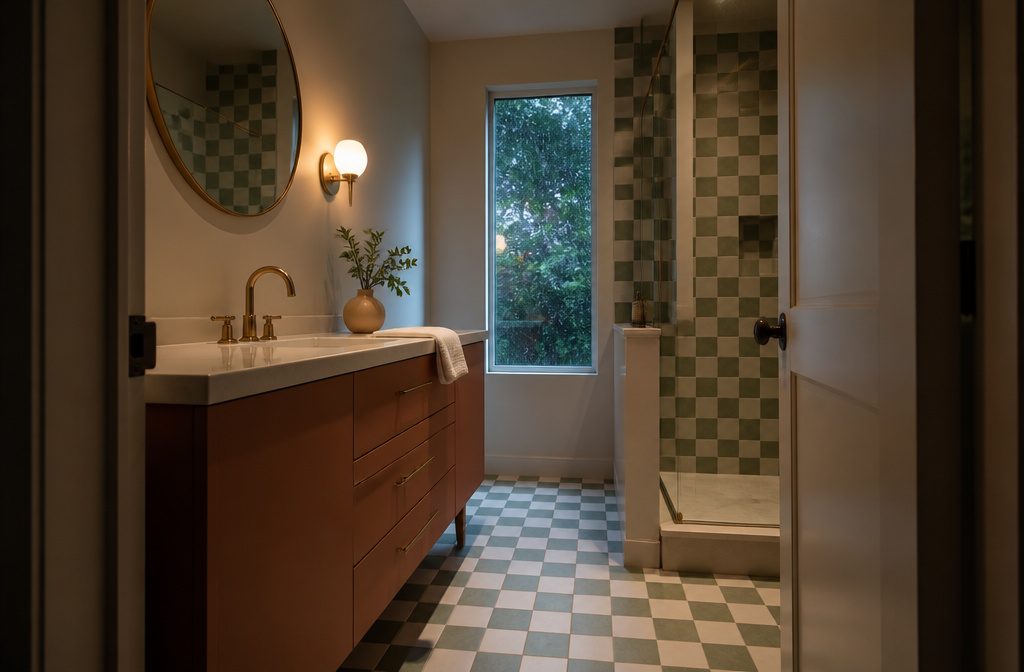
Styling a modern bathroom can mean a $200 mirror swap or a $25,000 gut renovation, and which approach you take depends on whether you’re working around existing tile and plumbing or starting from studs.
The fastest visual shift comes from hardware and lighting: a single finish carried through faucets, cabinet pulls, and towel bars pulls a builder-grade bathroom into something that reads intentional, and layered lighting with dimmers lets the same space shift from bright and functional in the morning to soft at night.
1. Refresh the Mirror

Refresh the Mirror
A wall-to-wall builder mirror is one of the fastest tells of a dated bathroom, and swapping it for an individual shaped mirror changes the whole feel of the room.
Round mirrors work especially well because the soft shape adds character without competing with the grid of tile or fixtures.
I’ve noticed that the moment you introduce a defined mirror rather than a sheet of glass spanning the vanity, the space reads as intentional rather than standard issue.
If the bathroom already has a lot of straight lines and predictable tile work, an irregularly shaped mirror breaks up that structure and draws the eye.
The movement keeps the room from feeling purely utilitarian. For smaller bathrooms or those without much natural light, a backlit mirror does double duty by reflecting light and adding a focal point at the same time.
That approach keeps the design sleek while improving visibility, which matters more in a bathroom than in almost any other room.
2. Upgrade Lighting
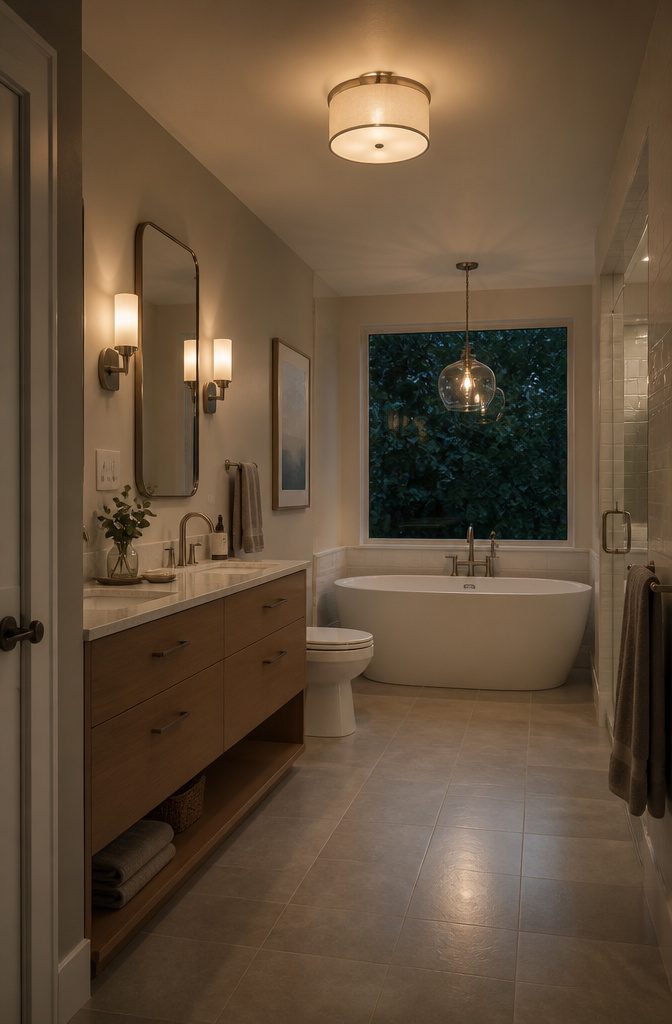
Lighting decides whether a modern bathroom feels clinical or comfortable, and the answer sits in layering fixtures that adapt through the day.
Start with bright, neutral overhead lighting for mornings when you need to see clearly, then add task lighting at mirror level to avoid shadows across your face.
Sconces positioned at eye level work better than a single fixture mounted above the mirror.
Dimmers make the difference at night: they pull the brightness down when you want the space to feel softer, letting the same room shift from functional to atmospheric without changing a single bulb.
A pendant or small chandelier above the tub turns the fixture into a focal point and reinforces the tub as the room’s anchor rather than an appliance.
Choose something rated for damp locations, and keep the finish consistent with the rest of the hardware. Glass and metal read modern; avoid anything fussy.
If your walls are glossy tile, light will bounce and brighten the room naturally. Matte finishes absorb more, so plan for a bit more wattage or an extra fixture to compensate.
3. Add or Improve Storage
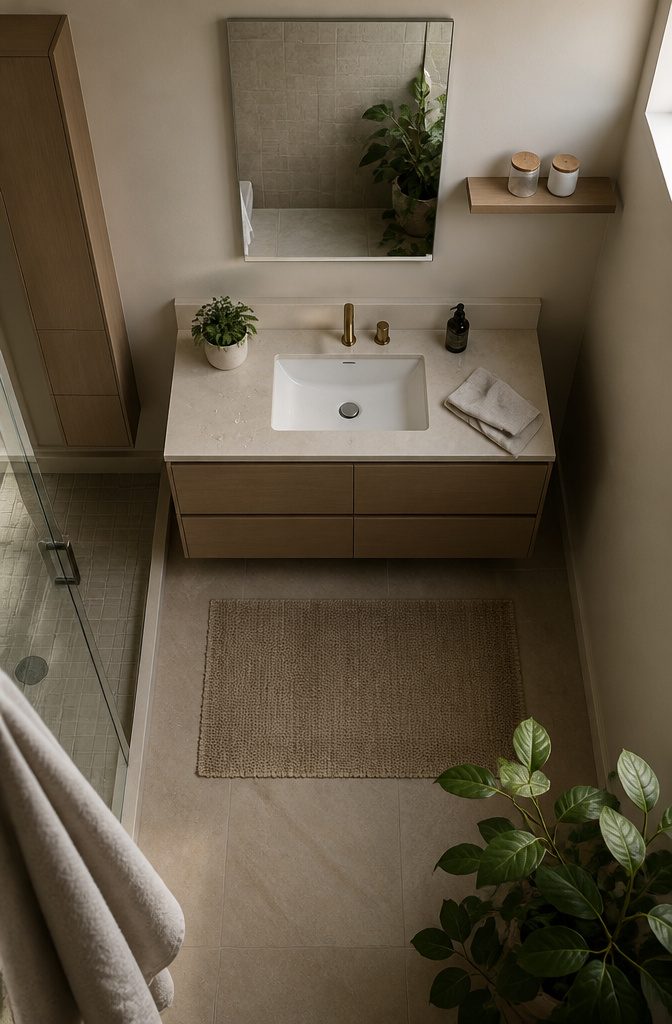
Storage makes or breaks how a modern bathroom functions day to day.
The fastest fix is a medicine cabinet behind the mirror, which hides clutter without eating floor space. Wall-mounted cabinets and recessed designs use vertical room instead of circulation area, so the bathroom feels open even when storage capacity goes up.
For drawers and vanity interiors, organizers from companies like Rev-A-Shelf keep daily items accessible in the top tier and backups below. That separation stops mornings from turning into a scavenger hunt.
While a few open shelves can be beautiful (and functional), too many can quickly turn into visual clutter. I like to use open shelving sparingly, while keeping the rest of the storage behind closed doors — it strikes a nice balance between form and function.
Open shelves work when you limit what sits on them. Floating shelves maintain an airy feel, but only if you resist the urge to fill every inch.
For shared bathrooms, double vanities with separate drawer stacks and flanking towers give each person dedicated storage without crowding the other. Integrated shower benches add another layer of function, holding essentials within reach.
Waterworks storage jars replace the mismatched packaging most supplies arrive in, and a wooden cart or vintage cabinet brings warmth while solving the towel pile problem. Storage that looks intentional reads as part of the design instead of an afterthought.
4. Choose a Walk-In or Open Shower
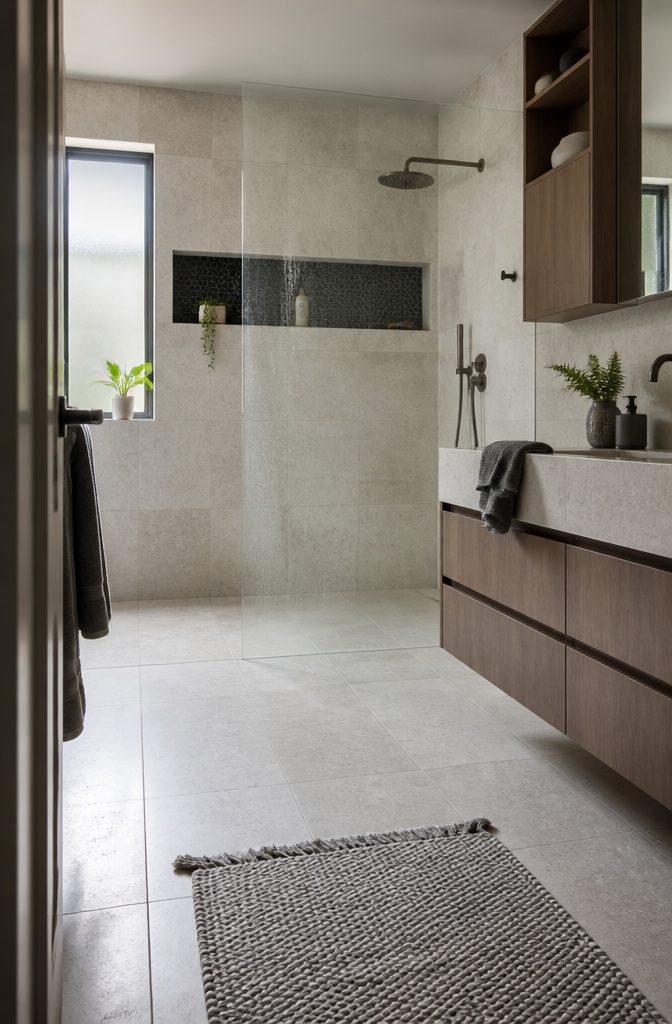
A walk-in shower with no curb or threshold opens up the floor line and makes a small bathroom feel larger than it is.
The difference is immediate: glass (or no barrier at all) lets your eye travel all the way to the back wall instead of stopping at a tub edge or shower door frame.
In larger bathrooms, I’d separate the shower and bath into two distinct zones. That layout lets two people use the space at the same time, which matters more than most floor plans admit.
If you’re working with limited square footage, skip the separate tub and commit the space to a generous walk-in shower.
A well-proportioned shower beats a cramped one shoehorned next to a tub you’ll rarely use. Pair it with a floating vanity and wall-mounted storage to keep the floor clear, and the room reads modern without any other changes.
5. Update Faucets and Hardware

Faucets and hardware are one of the fastest ways to update a bathroom without tearing walls down.
A single finish carried through the room—matte black, brushed nickel, polished nickel, or unlacquered brass—pulls the sink, cabinet pulls, and towel bars into one clear aesthetic instead of the mismatched look that comes from leaving builder-grade fixtures in place.
The Brizo Litze Collection offers solid examples if you want something that reads modern without being trendy, and finishes like honey bronze or copper add warmth in rooms that lean too cool.
The swap itself is straightforward. Most faucets are compression-fit or secured with a single nut underneath, and cabinet hardware is just two screws per pull.
The return is out of proportion to the effort. Matching your hardware finish to the faucet finish creates visual continuity, the kind that makes a bathroom feel considered rather than assembled in stages.
6. Use Tile as a Focal Point

Tile can anchor the room when you choose it for scale, pattern, or contrast rather than treating it as neutral fill.
In the ranch house Ome Dezin renovated, the firm salvaged original equestrian-themed tiles and set them as a small focal point within a larger field of Fireclay Tile.
The result carried the home’s history forward without making the grid feel busy, because the feature stayed contained and the surrounding tile stayed simple.
That balance matters: a patterned or high-contrast tile works when the rest of the surface gives the eye somewhere to rest.
I look for tile that reads as deliberate rather than safe.
Fireclay Tile and Cle Tile both offer options with enough character to hold a wall on their own, and in a modern bathroom the move is often to concentrate that character in one zone—the shower surround, the floor, or a single accent wall—and keep the other surfaces quiet.
The room stays cohesive without flattening into monotone.
7. Paint or Add an Accent Wall

Paint or wallpaper can shift the whole mood. In a basement bathroom, beadboard painted green completely changed the character of the space, giving it depth and texture without any furniture or tile work.
A wood accent wall does something similar, adding warmth in a room that tends to read cold. If moisture isn’t a major concern, wallpaper brings in pattern and personality fast.
One bathroom used wallpaper with birds and palm fronds on a single accent wall, paired with a blue vanity and matching trim, to make a classic Tudor feel like a tropical morning.
That same-color trim trick gave the vanity a built-in look, like it belonged to the original woodwork.
If something feels outdated, paint is almost always the first move. You can refresh walls, repaint a vanity, or even tackle certain tile floors without a full renovation.
These are budget-friendly projects that anyone can handle over a weekend. One color worth looking at is Jungle Canopy by Benjamin Moore, a deep green that reads modern without feeling trendy.
8. Choose a Floating Vanity
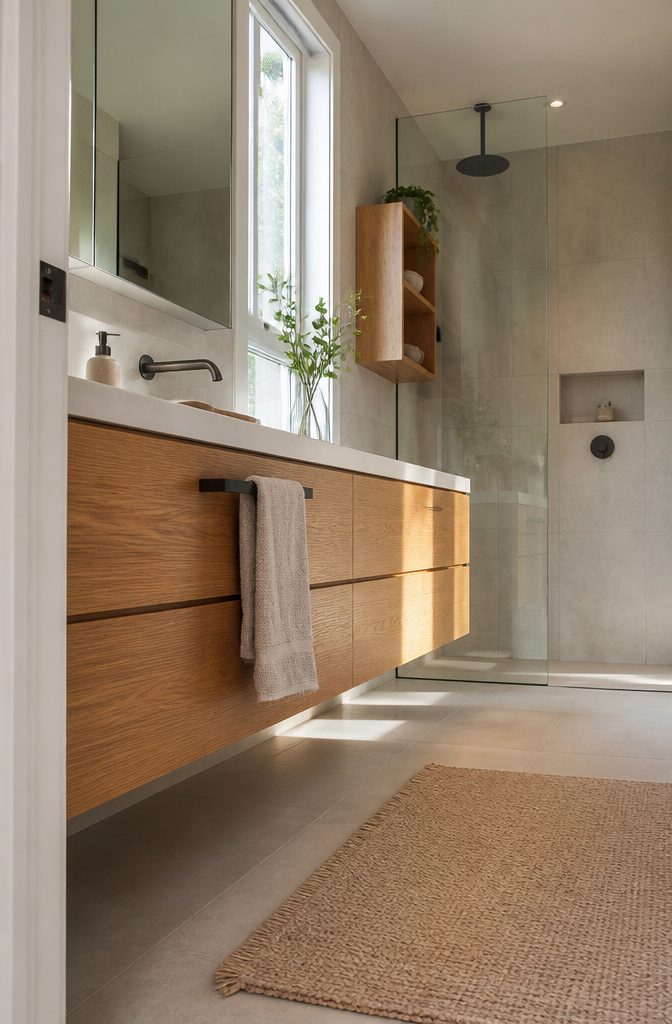
A floating vanity opens up floor space and gives the bathroom a lighter, less cluttered feel. The cabinet mounts directly to the wall instead of sitting on the floor, which creates a visual break between the base and the ground.
That gap makes the room read as larger, especially in a smaller bathroom where every sight line counts.
I’ve seen this work particularly well when paired with custom wood cabinetry.
The warmth of the wood keeps the look from feeling too cold or clinical, and the floating effect lets you show off tile or flooring that would otherwise disappear under a traditional vanity base.
If you’re planning a remodel, this is one of the simplest ways to shift the whole tone toward contemporary without touching the rest of the layout.
You lose storage. You lose the deep lower cabinet that a floor-mounted vanity offers, so plan drawer organization carefully and use wall-mounted cabinets or floating shelves elsewhere if you need to recover the space.
9. Use Natural or Statement Materials
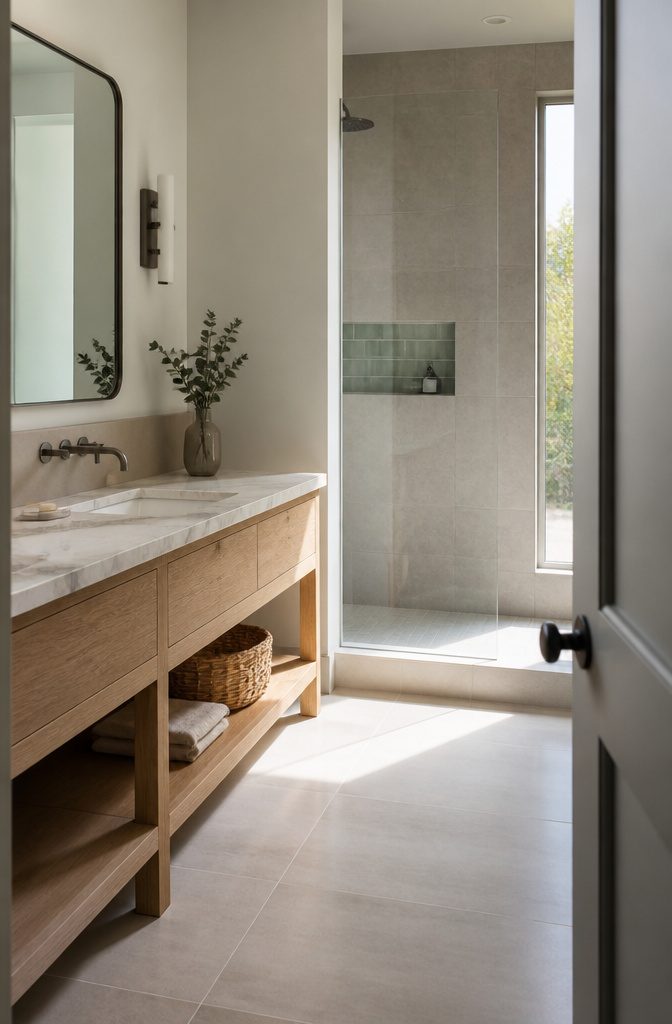
Carrara marble, quartz, and oak bring texture and presence without needing much else around them. I see quartz used most often when durability matters more than visual drama, especially on vanity tops in a household with kids.
Marble reads more formal, and it does require sealing and a bit more care around acidic cleaners. When the budget allows, Arabescato Corchia delivers more movement than standard Carrara, which can look flat in small doses.
Wood shows up as vanity frames, floating shelves, or ceiling treatments, and it softens what would otherwise be a hard, cold box. Oak and timber hold up well in a bathroom if the finish is rated for moisture.
Tadelakt is less common but worth looking at if the design leans Mediterranean or minimalist. It’s a Moroccan lime plaster that goes on smooth, resists water without grout lines, and ages in a way that feels intentional rather than worn.
Recycled glass, bamboo, ceramic, and porcelain fill out the middle ground between statement pieces and everyday surfaces. Bamboo works for accessories and small storage.
Recycled glass tile can anchor a niche or a backsplash. Porcelain is the practical fallback when you want the look of stone or concrete but need something that installs faster and costs less.
10. Keep the Scheme Cohesive and Edited
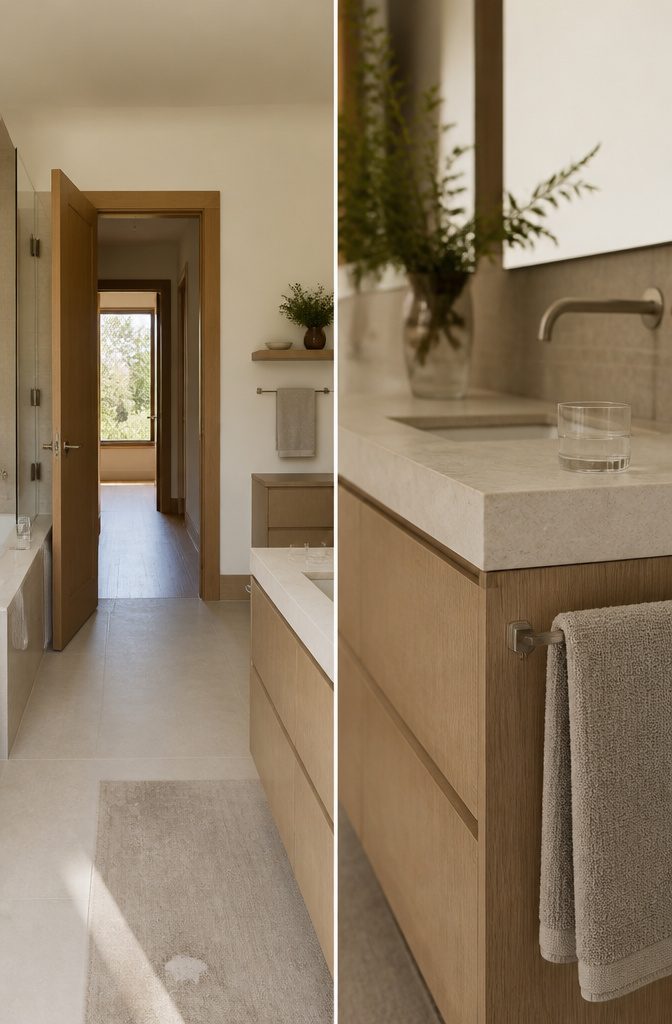
A modern bathroom ties into the rest of the home rather than drifting off in its own direction.
I coordinate hardware finishes, flooring transitions, and the color palette with what already exists in surrounding rooms, so the bathroom feels intentional instead of tacked on.
In one Alabama farmhouse, the designer pulled the palette straight from the view outside and carried it onto walls and cabinetry in Jungle Canopy from Benjamin Moore, keeping the space grounded in its setting without forcing it to look identical to the kitchen or hallway.
The balancing act is continuity without sameness. Repeating trim details, echoing stone or timber textures, and matching fixture finishes helps the bathroom read as part of the whole house, but it still needs to function as its own retreat.
Where continuity matters most is in visual weight and proportion, so the room doesn’t feel grafted on.
Open storage turns into clutter fast. I keep a few visible shelves for items that earn the display, then hide the rest behind closed doors.
Too many open shelves become a maintenance problem, and in a modern bathroom you want edited, not busy. Neutral tones with limited accents hold up better than a color scheme that tries to do too much at once.
11. Add Natural Elements
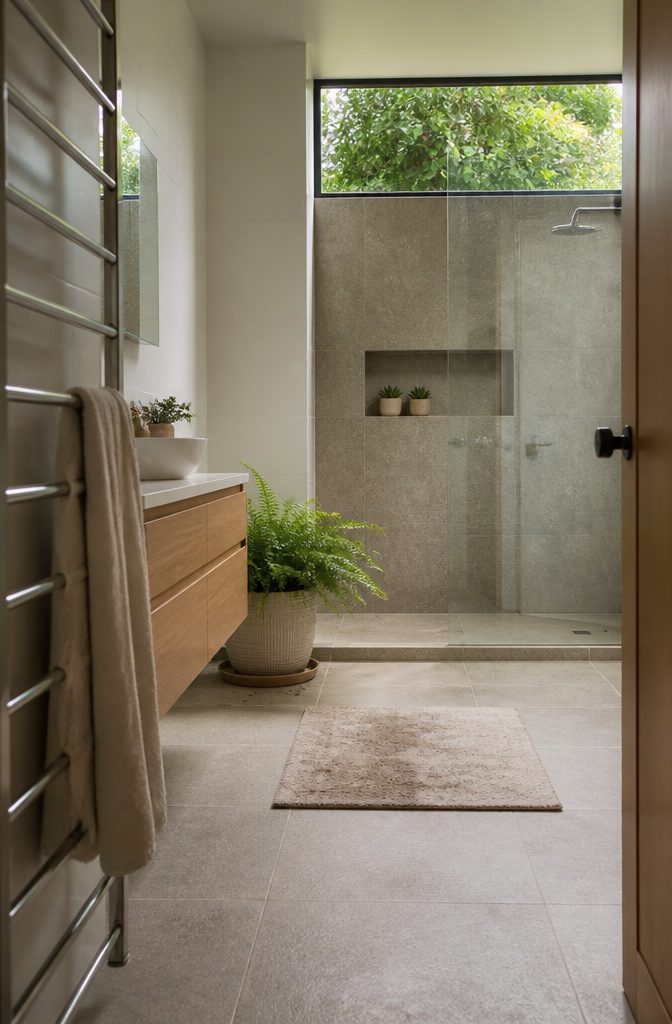
Plants soften modern bathrooms in ways tile and metal cannot. I’ve found that ferns and succulents work especially well because they tolerate humidity without constant fuss, and they fill awkward corners that storage cannot reach.
A potted snake plant on the vanity or a trailing pothos hung near the window adds green without demanding floor space, and both survive inconsistent watering better than most houseplants.
Wood brings warmth where stone and porcelain run cold. A timber vanity in a stain-grade finish introduces contrast against white tile and makes the room feel less clinical.
The material ages well when the bathroom is properly ventilated, and it reads more intentional than painted cabinetry in spaces that skew minimal.
I’ve also seen wood accent walls used to break up expanses of subway tile, and the texture makes a noticeable difference even in small powder rooms.
Earthy color palettes—soft greens, browns, neutral tones—support the calming atmosphere natural elements are supposed to provide.
Beadboard painted green or a stone slab wall can serve as a focal point without overwhelming the rest of the design. You’re not trying to replicate a spa, just keeping the space from feeling too sterile.
12. Add a Freestanding Tub
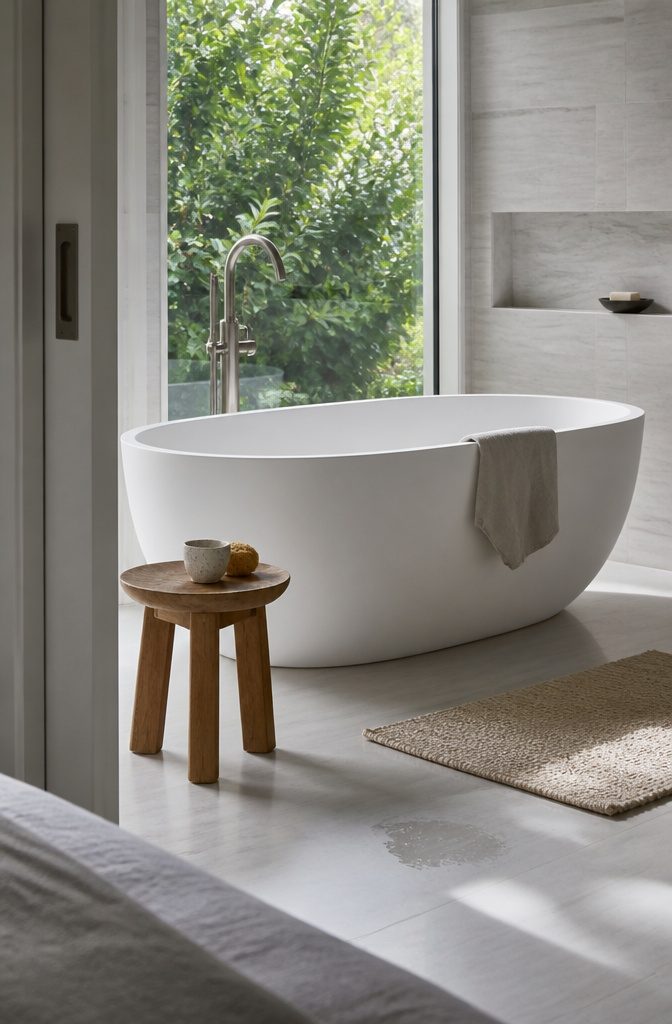
A freestanding tub pulls attention the moment you step into the room, and positioning matters as much as the design itself.
I place the tub where it can benefit from natural light or a view rather than pushing it against a wall out of habit.
In one layout, a clawfoot tub was set directly in line with the bedroom door, with a window flanked by marble tile framing it as the focal point.
The polished nickel feet dressed it up further, and the sightline made the tub feel intentional instead of functional.
For a modern bathroom, a 71-inch or 63-inch freestanding model from ALFI works in most layouts without overwhelming the floor plan, while a 72-inch clawfoot from WatermarkFixtures suits larger rooms where the tub anchors one end.
The mistake I see is treating the tub as leftover space.
If the room allows it, float the tub away from the walls and let it define the zone. Overhead lighting, a pendant or small chandelier rated for damp locations, reinforces the tub as sculptural rather than purely practical.
13. Hang the Shower Curtain High
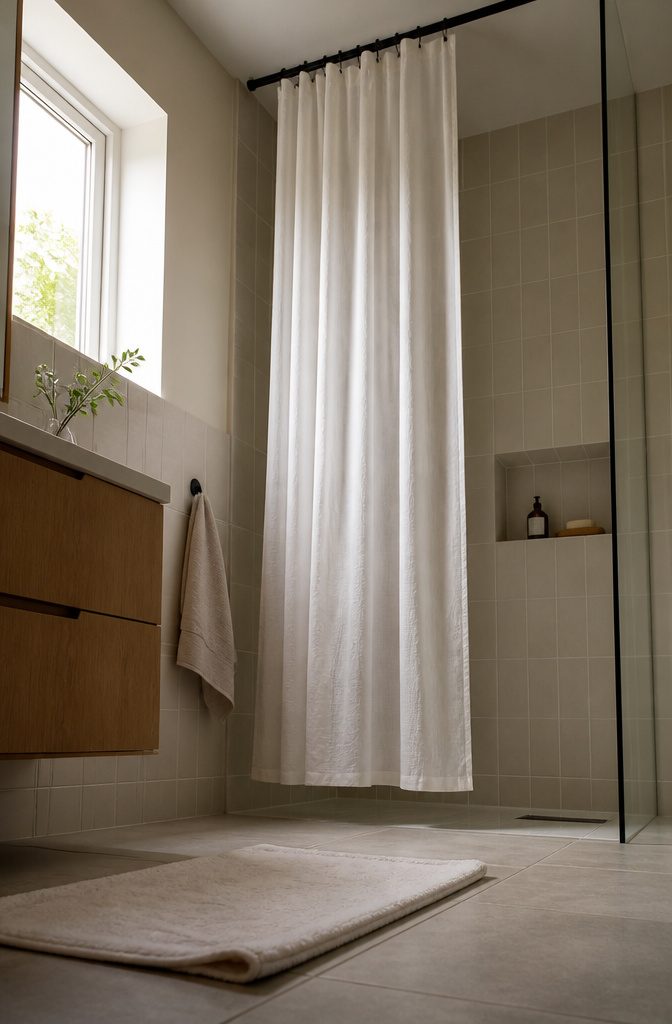
Hanging the curtain rod closer to the ceiling than to the shower frame itself makes the room feel taller, and it’s one of the simplest ways to shift the proportions of a small bathroom without touching the tile or the fixtures.
The trick works because you’re drawing the eye upward along the length of an extra-long curtain instead of stopping it at the usual five- or six-foot mark.
I’d pick a curtain that reaches from ceiling height down to the floor or within an inch of it, which usually means ordering something longer than the standard 72 inches most stores carry.
The ceiling mount only reads right when the curtain is long enough to make the vertical line unbroken.
14. Replace the Toilet Seat
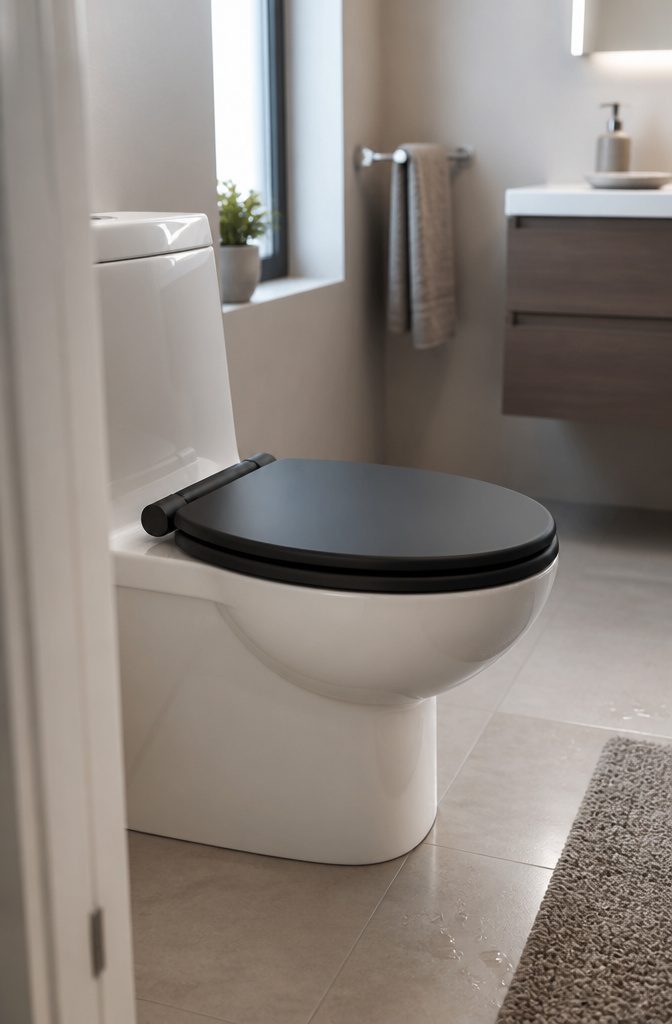
A toilet seat replacement is a five-minute fix that makes the bathroom feel cleaner the moment you finish. The old seat carries years of wear no amount of scrubbing fixes, and swapping it out costs less than most hardware upgrades.
I go straight for a soft-close hinge if the budget allows it, because the quiet drop reads as more polished than the price difference suggests.
The install needs a wrench and nothing else. Unscrew the bolts under the back rim, lift the old seat off, line up the new one and tighten it down.
Most seats use a standard hinge width, so fit is rarely an issue. White stays neutral across styles, but a matte black seat against white porcelain sharpens the whole fixture if the rest of the room can support it.
15. Style Everyday Accessories

The small items you leave out decide whether a bathroom reads finished or just functional.
I keep soap dispensers, a hand towel on a ring, and maybe one tray on the counter—everything else goes in a drawer or under the sink.
Toothbrushes, styling tools, makeup, and skincare pile up fast, and even when clean, that kind of visual load works against the spare look modern bathrooms need.
The tray matters more than it seems. Use it to corral a few bottles or a candle, and suddenly the counter has purpose instead of clutter.
For bottles themselves, swap the drugstore plastic for glass or ceramic if you refill shampoo and conditioner. The material upgrade costs almost nothing and reads immediately.
Storage that doubles as decor buys you room without adding bulk. A Componibili unit tucked beside the vanity holds backup supplies and washcloths without a full renovation, and its clean lines stay true to the aesthetic.
Rugs and towels should match the palette you set elsewhere—white, gray, or a single accent color repeated, not three competing tones that fracture the scheme.
16. Use Window Treatments That Preserve Light and Privacy
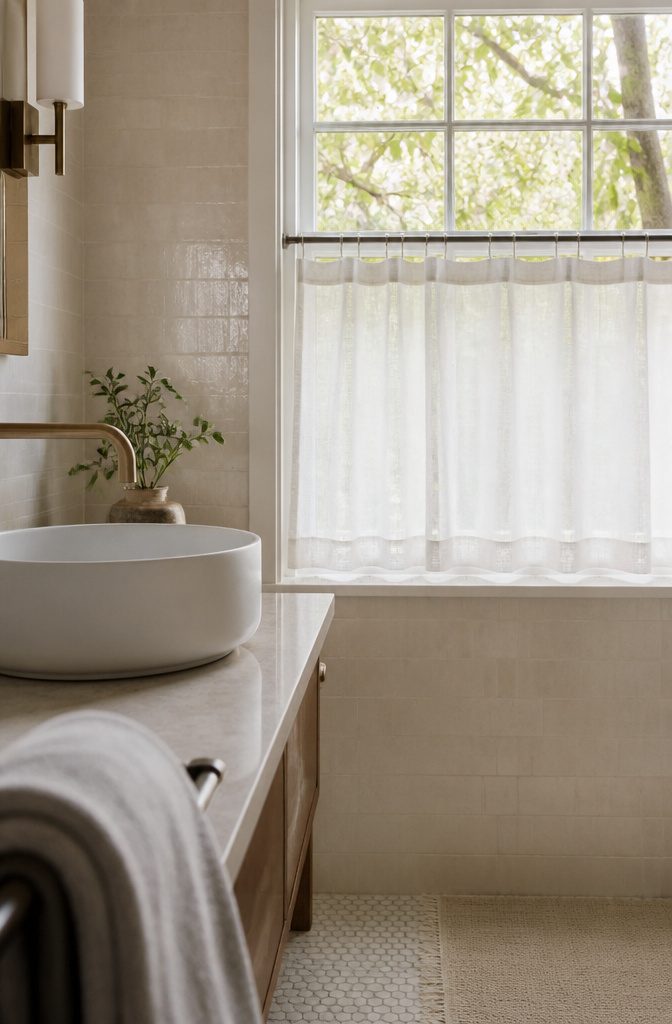
Café curtains strike the balance when the bathroom window needs both natural light and privacy.
They cover the lower half of the window, screening the view from outside while leaving the upper panes open, so the room stays bright without feeling exposed.
Liz Williams Interiors used this approach when a client wanted privacy but refused to block all the daylight.
The café curtains kept the space airy and added a bit of traditional charm that softened the harder finishes elsewhere in the room.
The appeal is practical. You get enough coverage to feel comfortable without the dimness that comes with full-length curtains or blackout shades.
In a modern bathroom, that means you can skip artificial light during the day, which matters more in a small space where every design choice either opens the room up or closes it down.
I’d pick a linen or cotton weave in white or a light neutral so the curtains read clean against tile and glass, not fussy.
17. Add Architectural Details

An archway over the shower or around the doorway brings in the kind of detail that makes the room feel like it belongs to the rest of the house rather than a tacked-on utility box.
A rounded arch at the shower entry reads spa-like without requiring a full gut, and it anchors the space in a way flat angles don’t.
The other move is trim work that mirrors what’s already in the home. I’ve seen Tudor bathrooms where the vanity got painted the same blue as the window trim, which made a freestanding piece look built-in and intentional.
Matching the hardware finish to what’s in the hallway or bedroom does similar work: it ties the room into the whole rather than isolating it.
The best version of this pulls one or two architectural threads through without making the bathroom a clone of every other room.
18. Consider Smart or Sustainable Features

Smart fixtures and sustainable materials both offer ways to make a modern bathroom more functional or more aligned with environmental values, though the first is about convenience and the second is about material sourcing.
A heated bidet seat or washlet, like the Toto Neorest, requires an electrical outlet behind the toilet if you want warm water rather than the shock of cold.
That one outlet changes the installation from simple plumbing to a job that involves the electrician, but the tradeoff in daily comfort shows up immediately.
The same goes for backlit mirrors, which need their own outlet and add task lighting right where your face is. I’d run the circuit for both during any major remodel, because retrofitting them later means opening walls you already finished.
Sustainable materials tend to show up in countertops and shelving: recycled glass and bamboo both read clean and modern without the environmental footprint of stone or hardwood. The aesthetic cost is low if the rest of the room stays simple.
Plan Around Personal Needs and Project Constraints
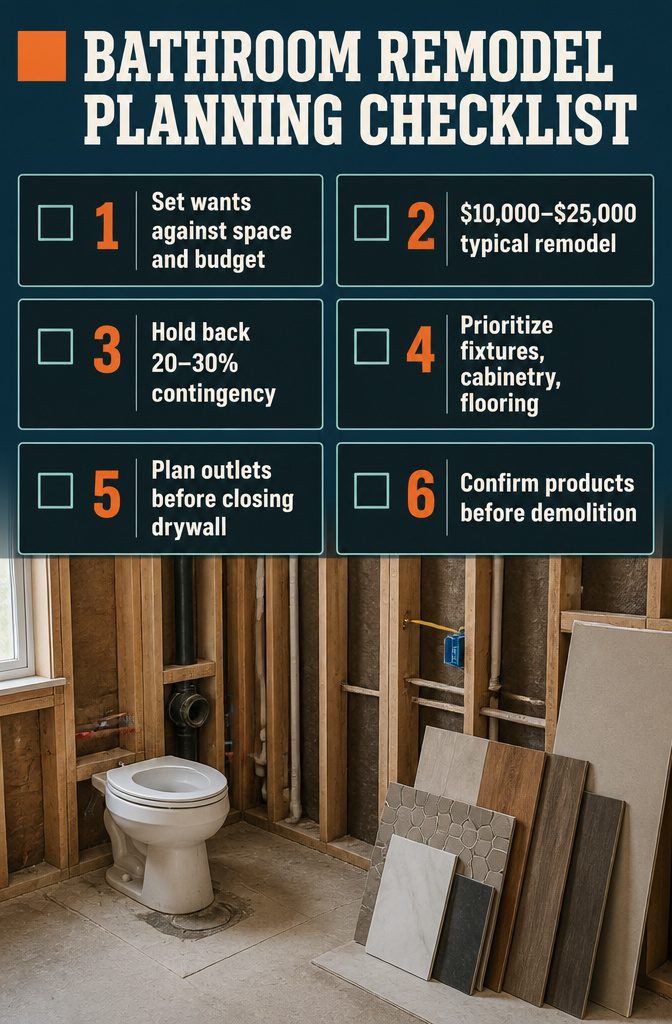
I start by making a wish list of everything I want, then rank those wants against what the space and the money will actually allow.
A typical bathroom remodel runs $10,000 to $25,000, and I hold back 20–30% of that for the problems that show up once the walls are open.
Budget decides most of the rest: I allocate the largest share to fixtures, cabinetry, and flooring, because those set the function and the look more than anything else.
I also think a few years out. If a bidet or washlet is on the list, I run an outlet behind the toilet now—cold water models are miserable.
Same goes for lit mirrors and outlets inside drawers for styling tools. Once the drywall is closed, adding those circuits later costs more than doing them right the first time.
Resale matters if I plan to sell within a few years. A finished bathroom can return 60–70% of what I spend, and some sources claim up to 10% added resale value.
I finalize every design decision and confirm that products are in stock before demolition starts, because changing course mid-job drains the contingency fund faster than anything else.
Improve Ventilation

Ventilation matters more than most people realize when they’re thinking about style. A bathroom that traps moisture will stain paint, warp trim, and show mold no matter how carefully you chose the finishes.
I’ve seen accent walls go cloudy in under a year because the fan wasn’t strong enough to keep up with daily showers.
If the current fan is loud, slow to clear steam, or hasn’t been replaced in a decade, an upgrade changes how the room holds up.
A quiet, properly sized extraction fan protects everything else you do to modernize the space, and it costs far less than repainting or replacing damaged materials later.
Frequently Asked Questions
How do I make my bathroom look modern?
Replace the builder mirror with a round or shaped individual mirror, upgrade to a single cohesive hardware finish like matte black or brushed nickel, and install a floating vanity to open up floor space.
Layer your lighting with dimmers and sconces at eye level instead of a single overhead fixture.
Keep counters clear except for a tray with a few bottles, and swap the shower curtain for a walk-in enclosure or frameless glass if the layout allows.
What are the bathroom trends for 2026?
Modern bathrooms now favor bold geometric tile patterns, colorful backsplashes, and oversized mirrors over conservative layouts.
Smart technology like backlit mirrors and heated bidet seats is becoming standard, while natural elements such as plants, timber vanities, and earthy color palettes soften harder finishes.
Floating vanities, automated lighting, and cafe curtains that preserve both light and privacy reflect the current shift toward functional self-expression.
What makes a bathroom look tacky according to designers?
Too many open shelves that turn into visual clutter, mismatched hardware finishes left over from builder-grade fixtures, and wall-to-wall builder mirrors that span the vanity are immediate tells of a dated or unfinished space.
Counters piled with drugstore plastic bottles, toothbrushes, and styling tools work against a clean aesthetic no matter how expensive the tile.
What are five common mistakes to avoid when designing a bathroom?
Mounting the shower curtain rod at the usual 5 or 6 foot mark instead of near the ceiling, which makes the room feel shorter.
Choosing multiple competing hardware finishes instead of carrying one through the faucet, cabinet pulls, and towel bars. Filling every open shelf instead of using them sparingly and hiding the rest behind closed doors.
Treating the tub as leftover space instead of positioning it where it benefits from natural light or a view. Skipping the 20–30% contingency budget for problems that appear once walls are open during a remodel.
What makes a bathroom timeless rather than trendy?
Timeless bathrooms prioritize proportion, quality materials, and restrained detailing over novelty. Surfaces and fixtures that age gracefully, like Carrara marble, oak, and simple tile work, hold up better than decorative trends that date quickly.
Balance and longevity come from editing the palette to neutral tones with limited accents, not from color schemes that try to do too much at once.