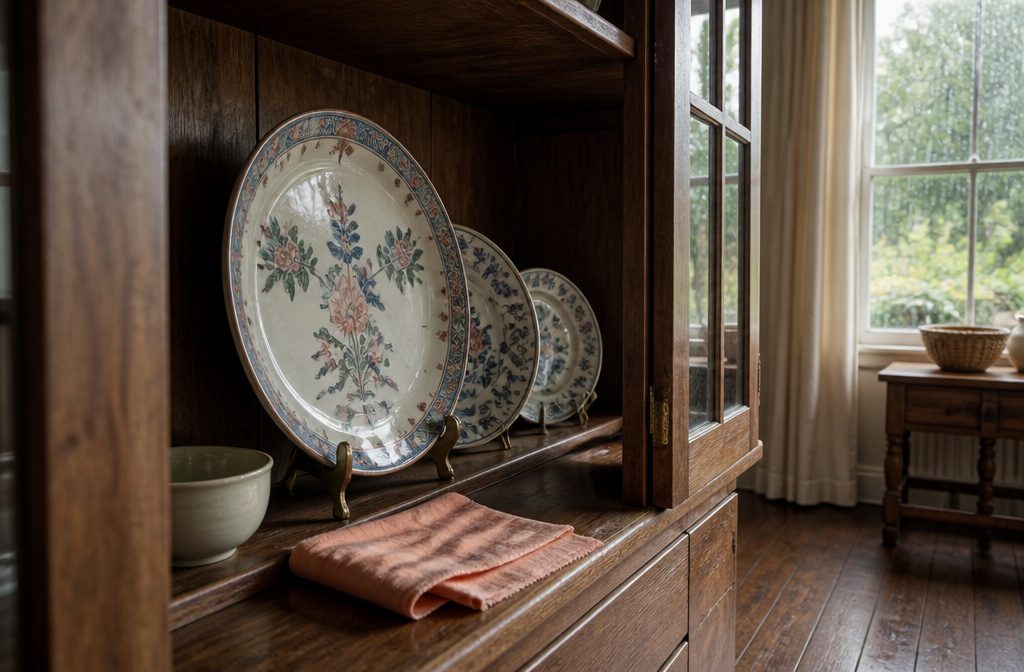
A vertical plate display in a china cabinet makes patterns visible instead of stacking them flat where only the top piece shows.
Most cabinets include a back-shelf groove that holds the bottom edge upright, but plates over ten inches need a stand at least three-quarters their height or they tip forward.
The stage people skip is securing the base—a plate that shifts when the door swings will eventually fall.
1. Use Vertical Display to Show Plate Patterns
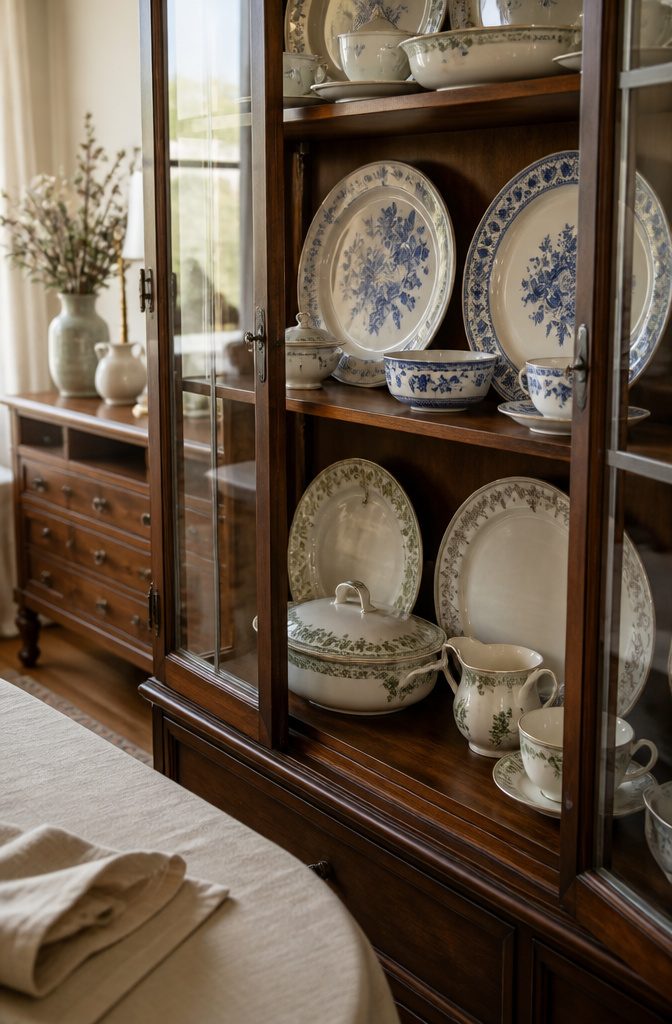
Standing plates upright makes their patterns visible instead of hiding them flat in a stack.
Most china cabinets have a shallow groove running along the back of each shelf that holds the bottom edge of a plate so it stays vertical.
Set larger dinner plates or serving platters into those grooves first, then arrange smaller pieces in front. The backdrop pieces stay visible while the front layer stays accessible.
If the shelf has no built-in groove, individual plate stands give you the same effect.
A stand needs to be at least three-quarters the height of the plate it’s holding—so a twelve-inch plate wants a stand at least nine inches tall.
Wire, acrylic and plastic stands all work. Position the plate’s bottom edge against the front prongs or ridge, then lean the back of the plate against the taller support behind it.
For extra security, press a small ball of museum wax or sticky putty onto the plate’s edge before setting it into the groove.
I’ve also seen felt furniture pads cut into short strips and stuck to the cabinet floor just behind where the plate will sit, which keeps it from sliding without showing once other dishes are in place.
2. Stack Dishes to Save Space
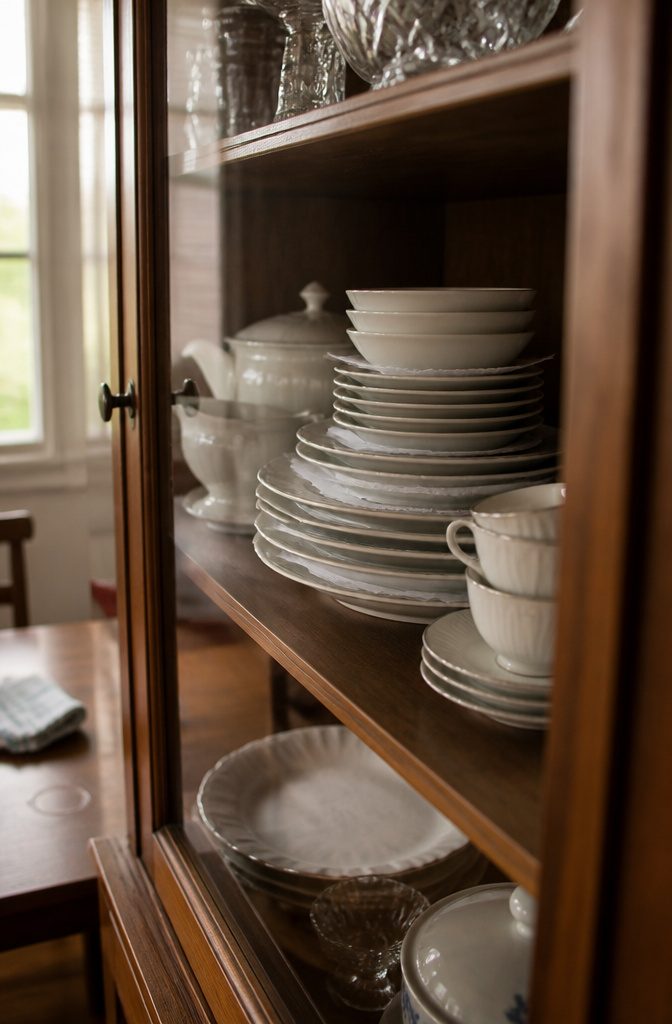
Grouping plates or bowls by size with the largest pieces on the bottom keeps stacks stable and fills the shelf without wasting vertical space.
I start with dinner plates or serving pieces at the base, then work up through salad plates to dessert plates so nothing wobbles. The same logic applies to bowls: largest at the bottom, smallest on top.
Cushioning between each piece prevents chips and cuts down on rattling when you open or close the cabinet door.
Paper coffee filters work well because they’re cheap and disposable, though thin foam or felt does the same job if you want something permanent.
Limit each stack to ten dishes maximum to keep the weight manageable and stop the pile from sliding. Past ten, the friction drops and you’re asking for trouble.
For teacups, I set each one in its saucer first, then stack the pairs. It looks cleaner than hanging them from hooks, and it keeps sets together when you need them.
3. Secure Plates Against Slipping
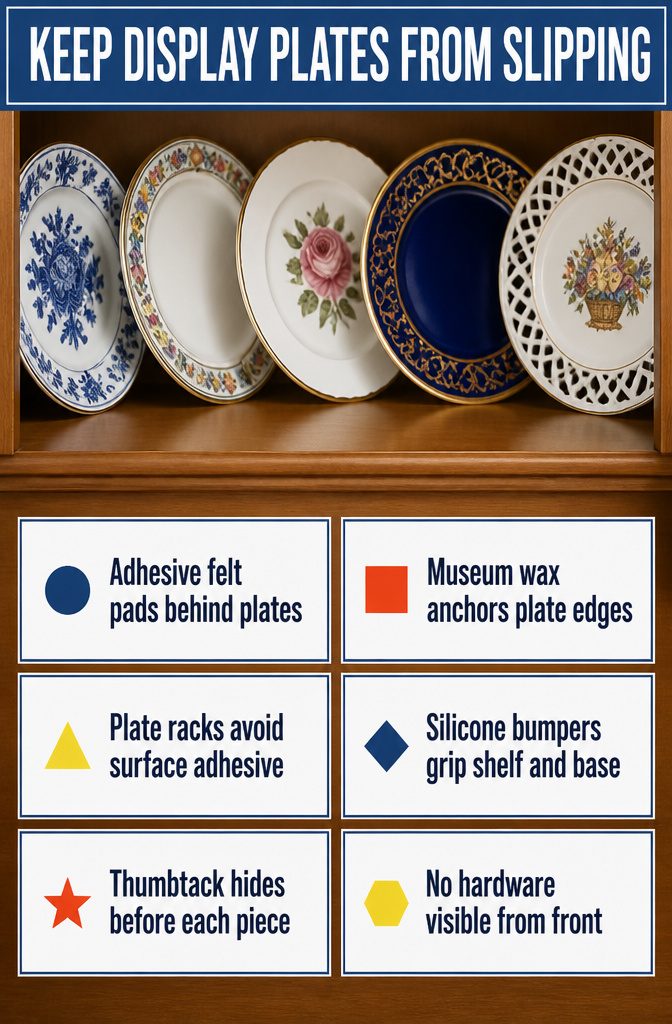
Dishes shift, slide, and occasionally fall when the cabinet door swings open or the floor vibrates. I secure the pieces I stand upright so they stay in place without visible hardware blocking the view.
A short lead-in, then the options I use most:
- Felt pads stick to the cabinet floor in front of each plate or platter. Cut small sections from the adhesive-backed strips sold for furniture legs, press them down, and stand the dish edge against them. The pads stay hidden behind the front row and hold well for years.
- Sticky putty or museum wax attaches to the plate edge itself, then anchors it to the shelf groove or back wall. A small ball on each side keeps the piece from tipping without leaving residue on most finishes.
- Plate stands or racks take up more shelf depth but work when you prefer not to attach anything directly to the dish or the cabinet surface.
- Silicone bumpers grip the shelf and the plate base, invisible from the front and easy to reposition when the arrangement changes.
For everyday sets, I keep a thumbtack in front of each standing piece. Once the rest of the display fills in, the tack disappears from view.
4. Arrange by Size and Height
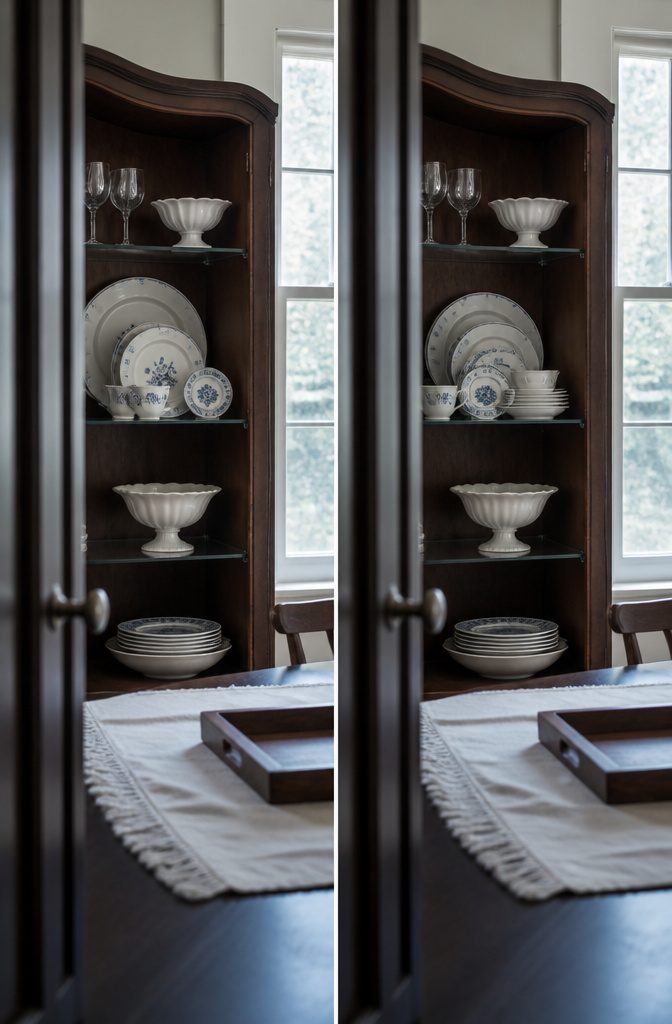
Place larger plates behind smaller ones in vertical displays so nothing gets lost.
Dinner plates or serving platters go into the plate groove at the back of the shelf, leaning against the cabinet wall, because they’re tall enough to show pattern and color even when smaller pieces sit in front.
Dessert plates, teacups, or bowls can layer forward without blocking the view behind them.
The reverse arrangement hides your larger pieces completely, and you end up reaching over smaller items to get anything out, which raises the chance of a knock or a break.
The grooves toward the back of most china cabinet shelves exist specifically to hold plates upright and keep them from sliding.
If your cabinet uses a plate rail instead, the principle holds: bottom edge behind the raised rail, plate leaning back, larger diameter behind smaller. Height differences keep each piece visible rather than stacked flat where only the top one shows.
5. Leave Breathing Room
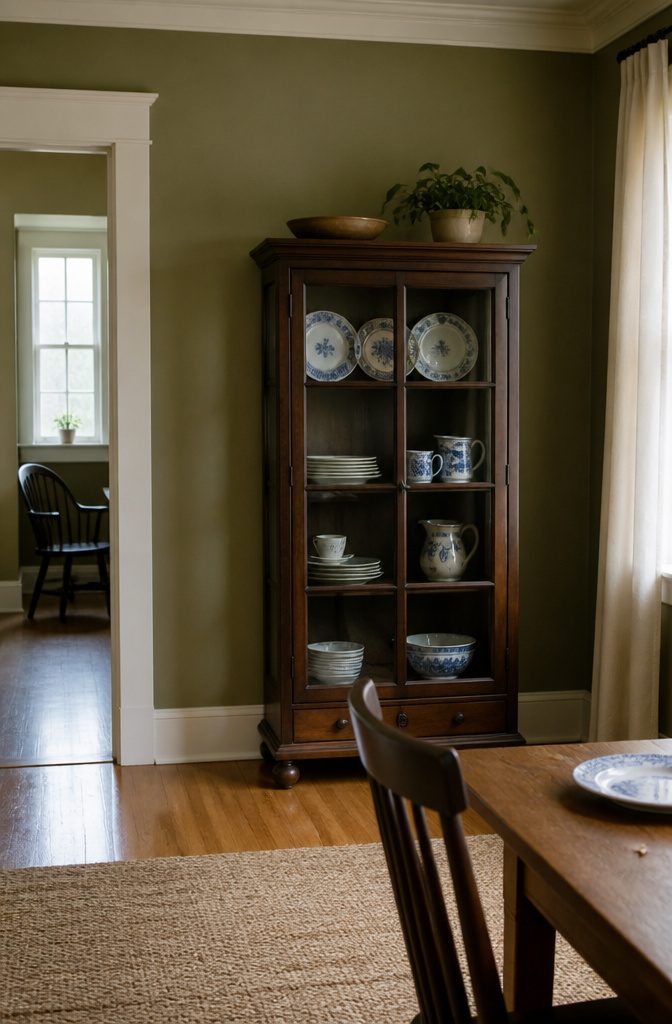
Spacing between pieces keeps your china safe and your display readable. When stacks and individual plates sit too close, they bump against each other during normal reach-ins and create chips along the edges.
Four inches between groups is enough to prevent contact while giving each piece its own visual weight on the shelf.
That separation also lets air move through the cabinet, which matters if you’re storing pieces that see occasional use rather than pure display.
Overcrowding flattens the display into one mass instead of a collection of individual pieces the eye can follow.
When you leave room between a stack of dinner plates and the teacup beside it, each piece registers on its own instead of blurring together.
The same goes for vertical spacing: if every shelf is packed edge to edge, the cabinet reads as storage, not as something arranged. A few well-spaced favorites hold attention better than a full set crammed in.
6. Choose Symmetry or Balanced Alternatives

Symmetry works when the cabinet is meant to feel formal or orderly.
A platter centered on the plate rail with dinner plates on either side creates a clean, anchored look, and the same principle holds when you arrange four plates against the back and build a full place setting in front.
The eye expects the weight to match, and symmetry delivers that without much thought.
When strict symmetry feels too stiff, a diamond arrangement offers structure without rigid mirroring.
One plate at the top, then three close together, then three spaced farther apart, then one at the bottom pulls the eye up and out while still feeling balanced.
A zigzag pattern does something similar: plates stagger across shelves instead of lining up in columns, and the rhythm keeps the display from looking static.
Balance doesn’t always mean matching left to right.
I lean on visual weight instead: heavier items at the bottom keep the cabinet from looking top-heavy, and you can anchor the top and bottom shelves with large pieces like serving trays below and figurines above.
Odd groupings of smaller items, threes or fives, feel more natural than pairs and break up the uniformity without losing control.
7. Place Heavier Items Lower
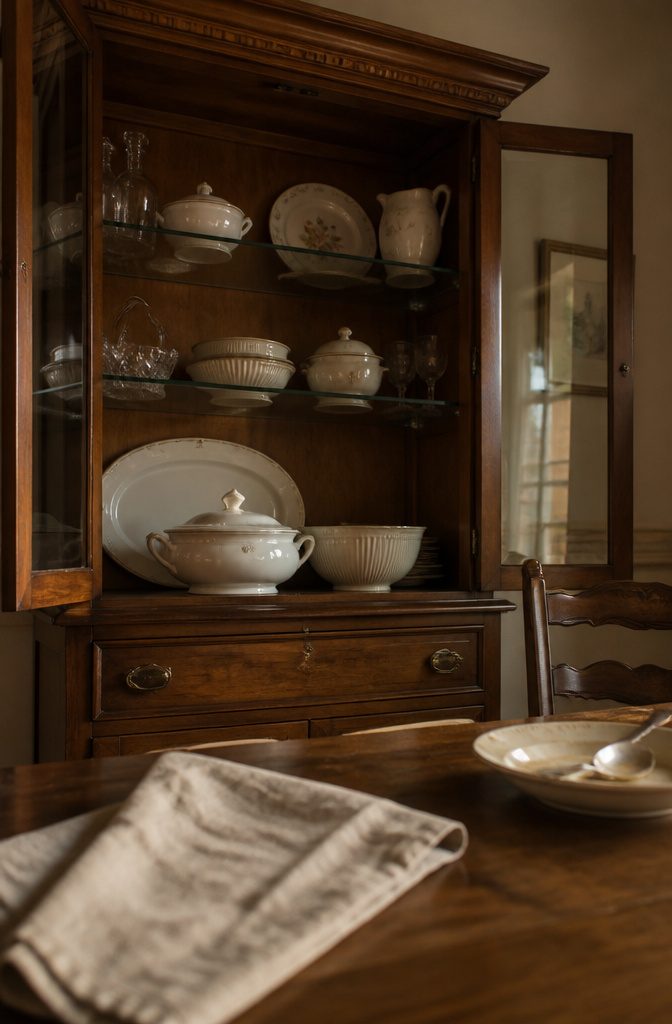
Place larger pieces at the bottom to keep the cabinet balanced and prevent toppling. Serving platters, heavy soup tureens, and bulky bowls belong on the lower shelves where their weight doesn’t strain the structure above.
I’ve found this rule applies twice: first when deciding which shelf to use, and again when stacking on a single surface. If you’re layering plates or bowls, the heaviest ones sit at the base of the stack.
The visual effect matters as much as the physics. A cabinet with all its weight concentrated up high reads as top-heavy, even if nothing has tipped yet.
You can counter that effect by placing a pair of large serving pieces on the bottom shelf and balancing them with decorative items of similar visual mass on the top.
That keeps the shelves from feeling like they’re about to tip forward.
8. Mix Dishware With Decorative Objects
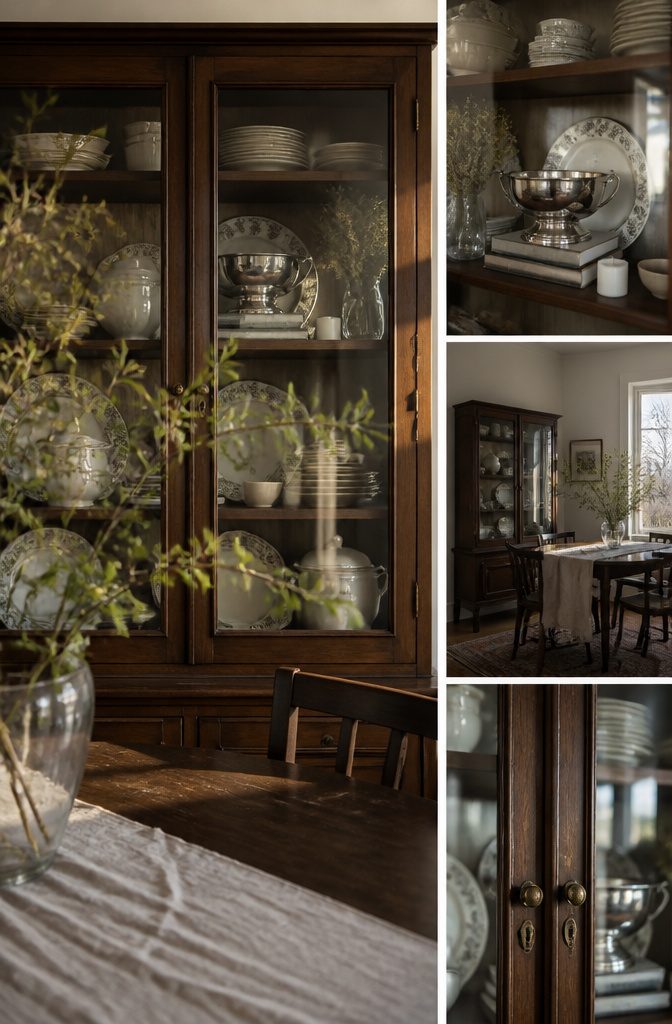
A display that is only dishes can feel like a storage shelf. Adding decorative pieces between the china gives the cabinet color, height, and personality without losing the function that made you open the door in the first place.
- Stack art books horizontally to lift a silver bowl or raise a pitcher up to eye level. Books add color and work as stands when you need to fill vertical space or layer pieces at different heights.
- Place flowers or feathers in a vase or pitcher between stacks of plates. Fresh or dried greenery softens the hard edges of ceramic and glass.
- Use neutral or clear fillers like a glass vase, white candle, or clear bowl to create breathing room between busier pieces. These understated additions tie the display together without competing for attention.
- Include personal keepsakes or photographs on the lower shelves where you can reach them easily. A cabinet that holds a mix of heirloom dishes and personal objects reads as part of the room’s decor, not just a place to store plates.
9. Group Related Patterns or Colors
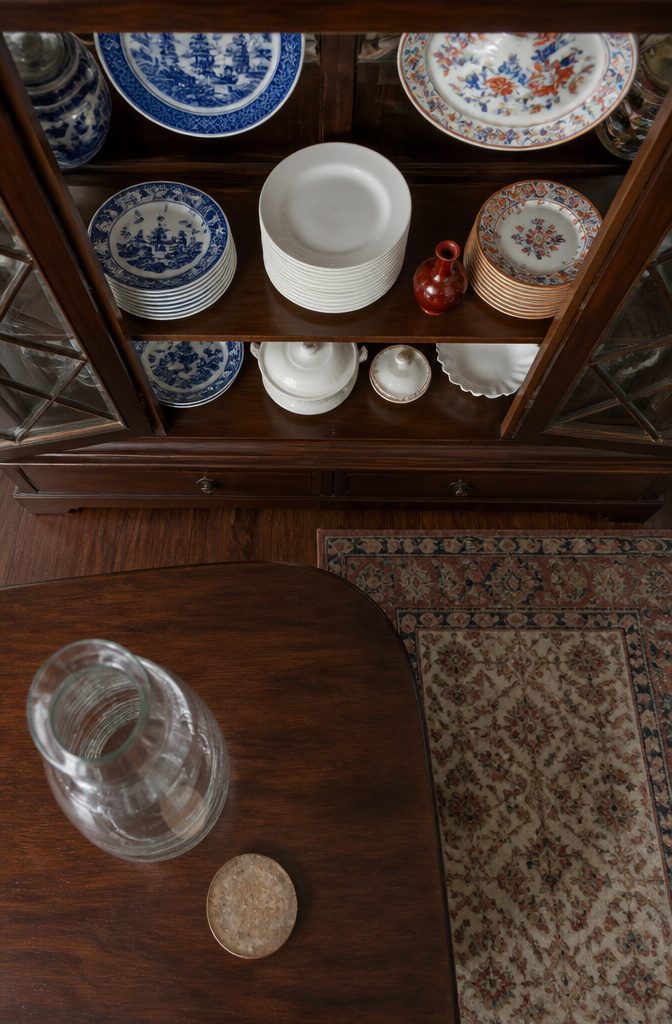
I group dishes by color or pattern so a cabinet full of mismatched pieces reads as a collection instead of leftovers.
White dishes together create visual separation between busier patterns—one writer stacked all her white Big Lots dinnerware in the center cabinet to break up Blue Willow on one side and another colorful pattern on the other.
The white acts as a buffer that lets each pattern hold its own space.
Coordinating works better than strict matching.
I look for pieces that share a color family or design style rather than forcing every dish to be identical. A cabinet filled with blue and white plates in different patterns still feels cohesive because the palette is consistent.
One approach pairs complementary colors: if the dishes are mostly neutral, a pop of red in a vase or candle draws attention without fighting the china.
Another uses the room’s existing colors—pulling a shade from the wall paint or a rug—to tie the display into the space.
10. Keep Daily Dishes Easy to Reach

If you actually use your china, keep at least 8–10 place settings at an accessible level so you’re not climbing or shifting things every time you set the table.
The cabinet can still look styled, but the daily pieces belong on a middle shelf where you can grab a plate without moving three other stacks first.
I treat the waist-high shelves as working storage and save the top and bottom for the decorative or less-used pieces.
Separating everyday dishes from display-only china makes the cabinet feel more practical. The daily stack earns its spot by staying within reach, and the special-occasion pieces can sit higher or deeper without causing frustration.
A glass-fronted cabinet in the dining room makes this split work especially well because you see everything but only touch what you need.
If the cabinet sits too far from the table, access becomes the deciding factor in whether the china actually gets used.
11. Fill the Cabinet’s Center and Shelves Deliberately
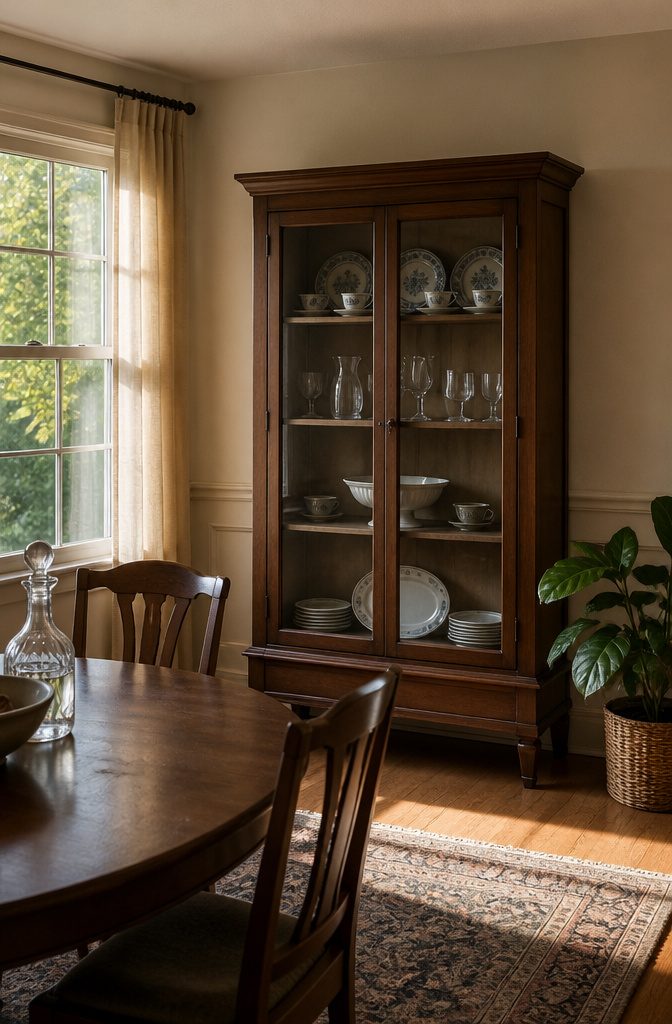
Start with the center of the cabinet, even if doors meet in the middle with a support bar.
That space feels like it will disappear, but most sightlines hit the cabinet at an angle rather than straight on, so a well-placed item in the center stays visible and the shelf reads fuller.
I choose flat pieces with simple geometric shapes that look similar on both sides: a serving bowl on a stand, a square platter, or a shallow dish that won’t get lost when one door swings partway closed.
Top and bottom shelves anchor the whole arrangement.
The top shelf holds three or four place settings if space allows, with teacups and saucers filling gaps. The bottom shelf gets a large serving platter as ballast, then stacked plates or rows of glasses to finish the look.
The middle shelf is where I put tall serving pieces like a pitcher or gravy boat at center, flanked by wine glasses or water glasses for height. That vertical rhythm keeps the cabinet from reading flat.
12. Add Height With Stands and Risers
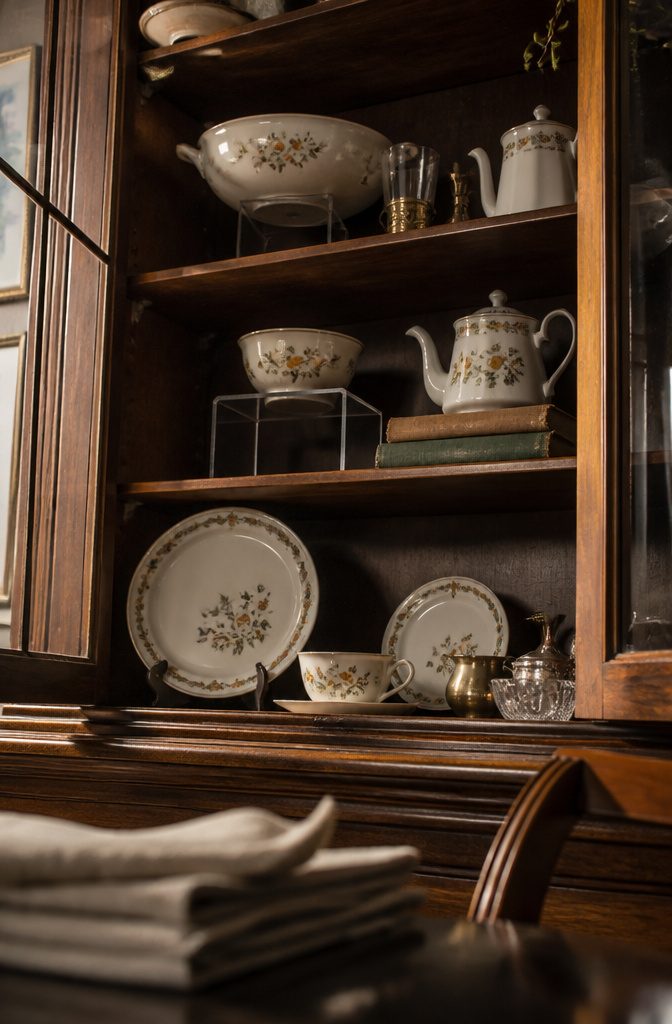
Small pieces vanish on wide shelves, so I bring them forward with stands, risers, or anything stable enough to add a layer.
Plate stands work for more than plates — I set a serving bowl on one in the back of a cabinet to lift it into sight, and suddenly the whole shelf reads as intentional instead of flat.
A stand should be at least three-quarters the plate’s height: for a twelve-inch plate, use a nine-inch stand. That proportion keeps the piece upright without looking propped.
Books do the same work and add color. I stack two or three vintage hardcovers under a teapot or a small bowl, and the extra height fills what would otherwise be dead air at the top of a shelf.
Acrylic risers are cleaner if you want the focus on the object instead of the riser itself, and brass stands suit warmer-toned china.
Wire stands are the lightest option and cost the least, though metal can scratch the glaze if you set a plate down hard — a small square of felt on the prongs solves that.
Stacking plates or bowls in tiers does the same thing without buying anything.
I set a smaller plate on top of a larger one, then add a teacup at the top, which hides less decorative pieces behind the stack and gives the arrangement some vertical movement.
13. Use Color or a Backdrop

A colored cabinet interior makes white or neutral dishes stand out without having to rearrange anything.
Paint the back panel in Chantilly Lace White or Simply White if the room leans farmhouse or you want a brighter, airier look. The contrast works especially well when the cabinet itself is wood or a darker finish.
For something bolder, wallpaper in a coral pink or a subtle pattern gives the display personality and draws attention to the collection. Peel-and-stick versions go up fast and come off cleanly when you’re ready for a change.
If painting or papering the cabinet feels like too much, bring in a contrasting accent object instead. A red vase or glass among neutral dishes pulls the eye in and ties the display to the room’s other colors.
The same works with anything that matches a rug, wall paint, or tablecloth. The pop of color does the work, and you can swap it out by season or mood without committing to a permanent backdrop.
14. Match the Display Style to the Setting

The display style you choose should mirror the formality of the room where the cabinet sits. A formal dining room calls for orderly arrangements: plates spaced evenly, sets matched exactly, the shelves uniform and spare.
A kitchen or breakfast room where the cabinet lives alongside daily use wants something looser—pieces mixed by pattern and size, clusters that feel collected rather than arranged, more color and variety on each shelf.
The formal approach shows restraint.
Each plate gets breathing room, the repetition is deliberate, and the eye moves shelf to shelf without interruption. The relaxed approach layers things closer together and adds character through the variety itself.
If your cabinet holds decorative china with strong patterns, the informal route lets those designs stand out against each other instead of competing for attention in a regimented grid.
I match the style to how the room is used. A space set for occasion dinners stays cleaner with symmetry and order.
A kitchen where people gather and the cabinet is backdrop rather than centerpiece can handle—and often benefits from—a more eclectic display that reflects how the collection grew over time.
15. Use Glass to Protect and Display
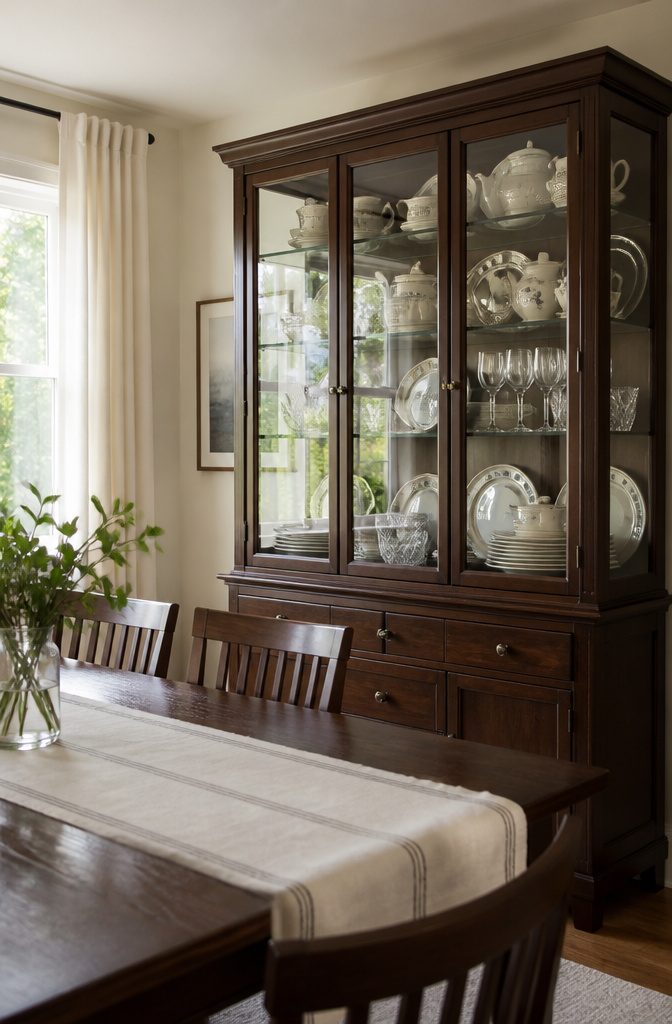
Glass doors turn a cabinet into actual protection. Open shelves leave china vulnerable to dust, accidental bumps, and stacking mistakes that chip edges or send pieces toppling.
A glass-fronted cabinet solves both problems at once: the china stays visible, and the glass keeps it clean and secure between uses.
glass doors will ensure you can still see your china, but prevent it getting dusty or grimy.
That visibility matters more than it sounds like at first. Glass forces you to keep the interior organized, because every plate stack and teacup hook is on display.
A traditional hutch, a bank of built-ins, or a wall-mounted glass cabinet all work. The best choice depends on how much of the collection you want out and how much wall or floor space you have to give it.
If the cabinet is freestanding, pick one that complements the room’s existing style instead of fighting it.
16. Refresh the Display Seasonally

I change my cabinet display every two to three months, and the difference it makes is easy to underestimate until you actually do it.
A spring display might feature lighter colors and florals, while fall brings out deeper tones and heavier serving pieces. The rotation keeps the cabinet from looking like a museum exhibit and gives every piece in your collection regular visibility.
The practical advantage is that rotating forces you to handle and inspect dishes you might otherwise forget about.
I’ve caught small chips and loose plate stand grips during seasonal swaps that would have turned into bigger problems left alone. It also means your grandmother’s tea set gets its moment instead of sitting behind everyday stoneware year-round.
If full seasonal changes feel like too much work, even swapping one or two focal pieces keeps the display from going static.
This month’s bold modern dinnerware becomes next month’s vintage find, and the cabinet stays interesting without a complete teardown.
How I Make a Plate Stand From Wire
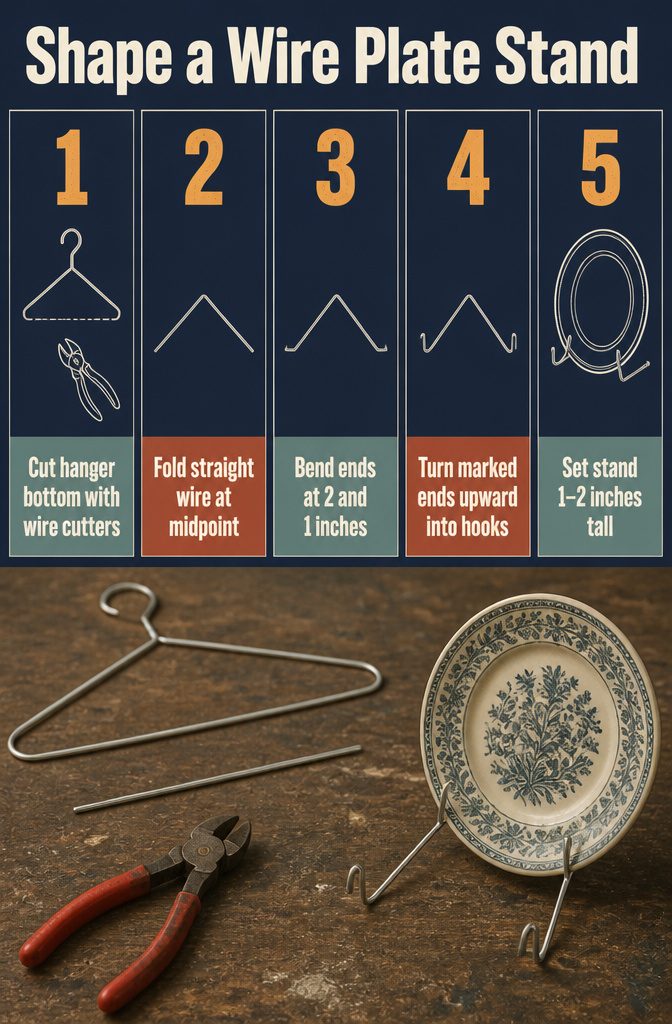
- Cut a wire hanger’s bottom piece off with wire cutters, detaching the straight length you’ll use for the stand.
- Bend that piece in half at its midpoint to form the basic support shape.
- Bend both ends outward 2 inches from one tip and 1 inch from the other tip to create offset prongs — the different measurements give you a front and back support that tilts the plate upward.
- Bend those same ends upward at the marks you just made, forming two small hooks that keep the plate from sliding forward off the stand.
- Check the fit before you load the shelf: on a 12-inch shelf holding a 10-inch plate, the wire stand should sit 1–2 inches tall so the plate clears the shelf above without crowding it.
- Set the plate’s bottom edge against the front prong, then rest its back against the taller rear support — the angle keeps the design visible from the front of the cabinet.
Balancing Function and Appearance
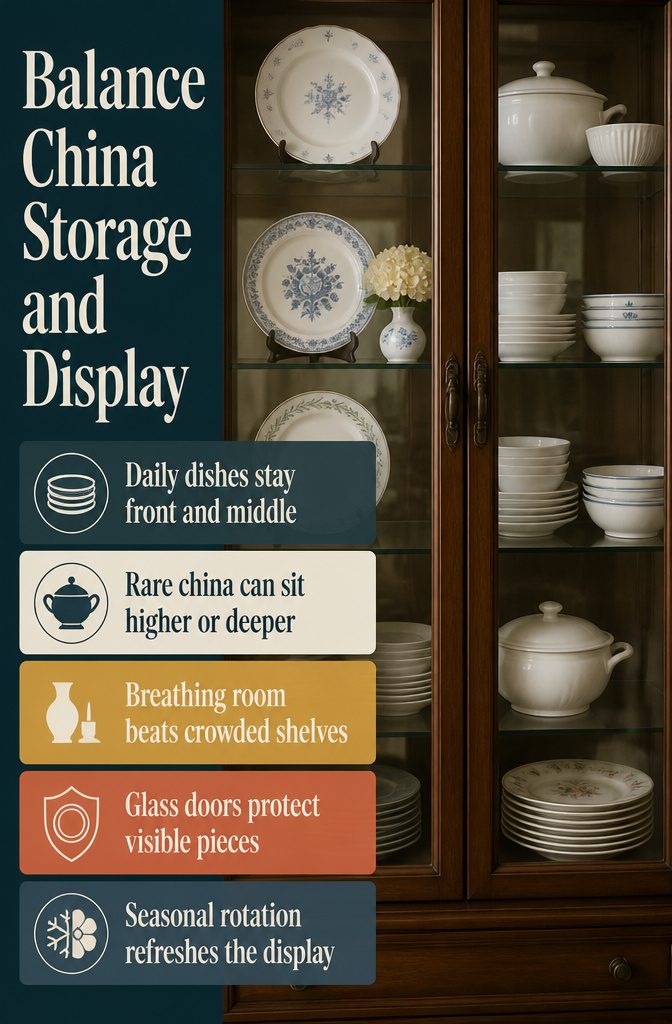
A china cabinet sits where storage meets display, and treating it as both at once means thinking through which dishes you’ll actually use and which are there to be seen.
Keep everyday pieces accessible — middle shelves, front position, nothing stacked so deep you have to move three other things to reach one plate.
If you use a set for Sunday dinner or holiday meals, it belongs where you can grab it without risk.
Rare or inherited china that comes out once a year, or never, can sit higher or deeper, arranged purely for looks.
Balance shows up in how much you put on view versus how much you store elsewhere. If half the collection crowds the rest, leave it out of the cabinet.
Plates displayed with breathing room between them read cleaner than a packed shelf, and mixing in a small vase or candle holder keeps the arrangement from feeling like inventory.
Coffee filters between stacked plates cut down rattling when you do pull them out, a small move that makes the display feel more like working storage.
The cabinet itself decides some of this: glass protects while letting everything stay visible, which is why it works better than closed wood doors for pieces you want to show off.
If the china sits in a separate cabinet instead of mixed with daily dishes, it stays safer and becomes more of a focal point.
Rotating pieces seasonally — snowflake plates in winter, lighter serving bowls in spring — keeps the display from going stale without requiring a full rearrange every time.
When to Display the Full Collection or Curate
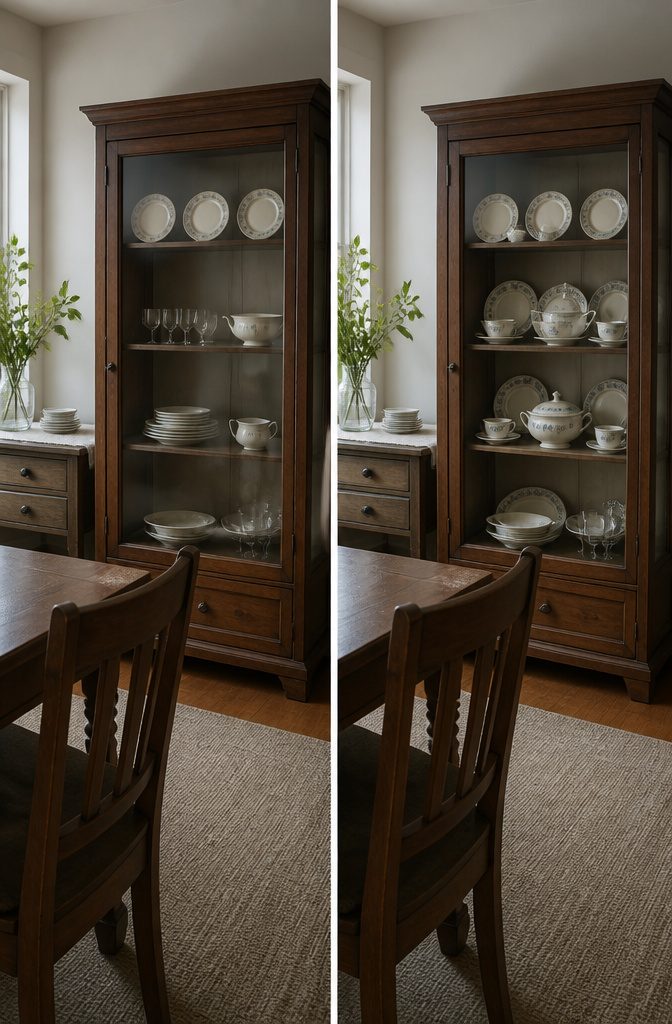
The question is whether to line every shelf or edit down to favorites. I’ve seen both work, and the choice sits with how much you own and whether the cabinet is backdrop or centerpiece.
Six place settings can fill a top shelf end to end, but three of the same plates, spaced with room between, can look just as finished without the crowded feel.
Overcrowding risks chips when pieces bump against each other, and a packed cabinet reads more like storage than display.
If the collection is small or still growing, that’s not a problem to solve. A sparse arrangement with breathing space between pieces shows pattern and shape better than a tight lineup, and you can add as the set fills out.
When the cabinet holds more than the shelves can comfortably show, store extras in drawers or send what you don’t reach for often to another spot. The display stays clean, and what’s out gets the attention it should.
Frequently Asked Questions
Where’s the best place to display china?
A glass-fronted cabinet protects china from dust and damage while keeping it visible. Glass doors let you arrange pieces for display without exposing them to accidental bumps or the need for constant cleaning.
Can you stack plates in a china cabinet?
Yes.
Stack by size with the largest pieces at the bottom, and limit each stack to 10 dishes maximum to prevent sliding. Place coffee filters or thin foam between pieces to cushion them and cut down on rattling.
Should you hang teacups in a china cabinet?
Stacking teacups in their saucers works better than hanging them from hooks. It keeps sets together, looks cleaner, and makes them easier to grab when you need them.
What can you display in a china cabinet?
Fine china, glassware, serving pieces, books, linens, flowers, heirlooms, and seasonal decor all work. A mix of practical and decorative items gives the cabinet personality without losing function.
How do I safely display plates in a china hutch?
Use museum wax, plate stands, or silicone bumpers to keep plates from sliding. Place larger platters behind smaller items so nothing gets hidden, and press felt pads or sticky putty onto the shelf or plate edge for extra grip.
What if your cabinet has a plate rail instead of a groove?
Set the bottom edge of each plate behind the raised rail, then lean the back against the cabinet wall. The rail holds the plate upright the same way a groove does.
Are china cabinets out of style in 2026?
No.
Glass-fronted cabinets remain a practical way to protect and display collections, whether filled with formal china or a mix of everyday dishes and decorative pieces. The arrangement style has shifted toward more relaxed, layered displays rather than rigid symmetry.
How do you arrange dishes in a china cabinet?
Start with larger plates in the back grooves or on stands, then layer smaller pieces in front. Stack dishes by size, leave 4 inches between groups, and place heavier items on lower shelves to keep the cabinet balanced.
What are some creative ways to display dishes?
Mix patterns and colors in coordinating groups rather than matching everything exactly. Add height with plate stands or stacked books, tuck vases or candles between dish stacks, and rotate pieces seasonally to keep the display fresh.