
Farmhouse bathroom style runs from full rustic—reclaimed wood, clawfoot tubs, vintage finds—to modern farmhouse, where clean lines and matte black fixtures sit next to natural materials.
The difference shows up in how much weathering and antique character you bring in versus how much you pull back for a lighter, more refined look.
The material palette stays narrow: white walls, wood tones, neutral tile, and metal finishes in black, brass, or copper.
Shiplap and beadboard add texture without pattern, and the 60-30-10 color rule keeps the room grounded in neutrals while leaving space for one or two accent tones.
1. Start With Neutrals, Then Add a Contrasting Accent
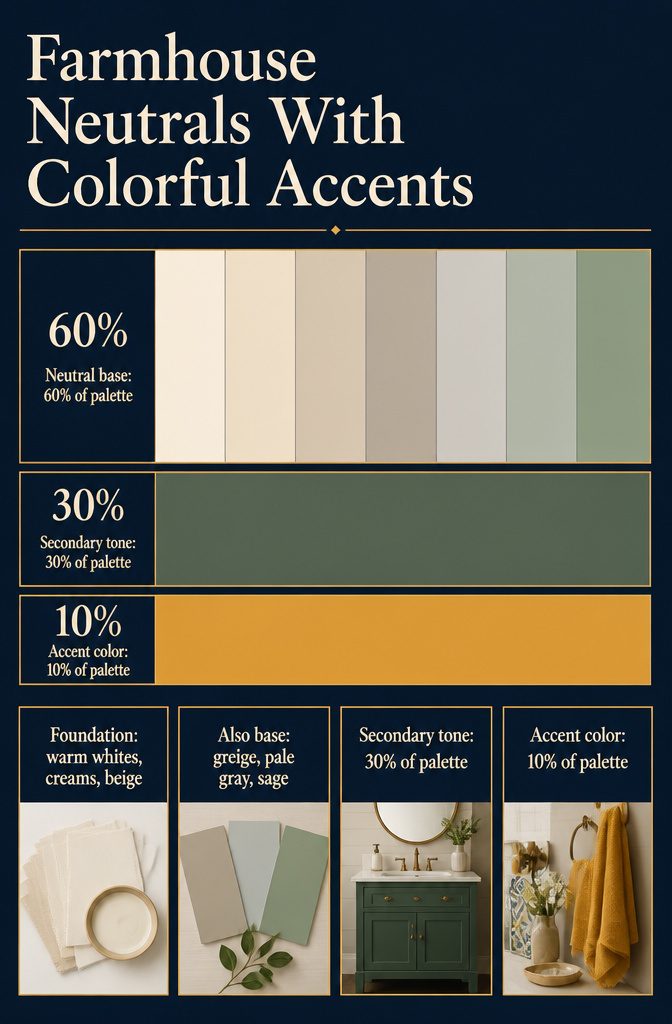
Farmhouse bathrooms work best when you build from a neutral base and then pull in one or two accent colors for contrast.
I start with warm whites, creams, beiges, light greige, pale gray, and sage green as the foundation—walls, trim, and larger surfaces.
These tones keep the room open and calm without looking sterile. Once that backdrop is in place, I bring in darker greens, blues, or other selected colors through smaller elements: towels, a painted vanity, or tile details.
The 60-30-10 rule holds up here: 60% neutral base, 30% secondary tone, 10% accent. That proportion keeps the space grounded in farmhouse simplicity while giving it enough personality to feel intentional rather than safe.
2. Use Wood and Reclaimed Materials for Warmth
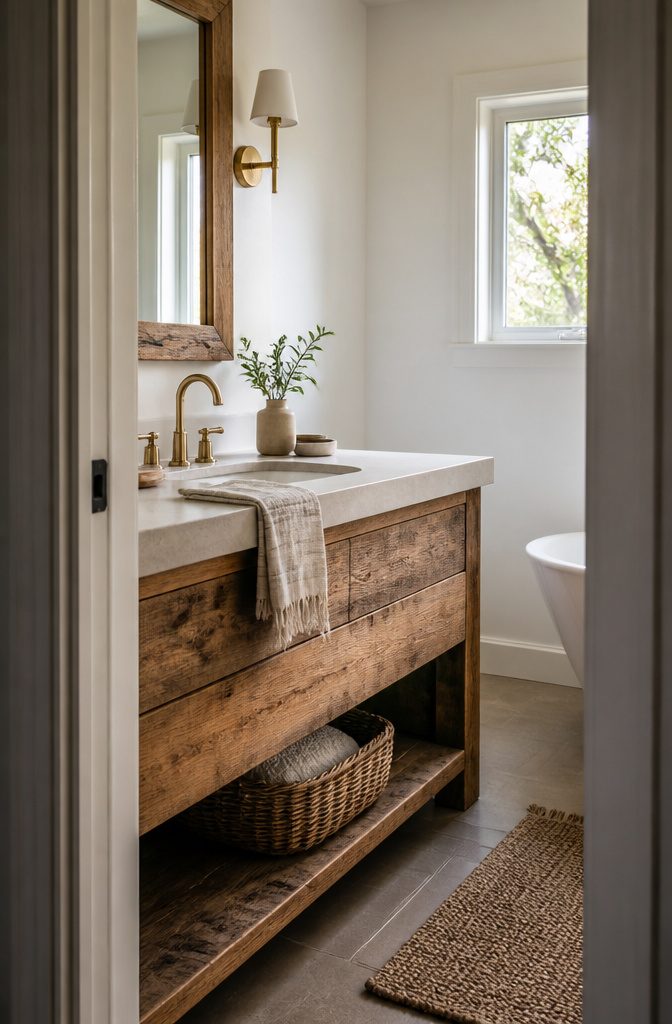
Wood does most of the heavy lifting in a farmhouse bathroom.
Reclaimed barn wood, rough-cut walnut, or fresh pine all bring texture that painted surfaces can’t match, and the grain reads as warmth before you’ve consciously registered why the room feels softer.
I lean toward oak or pine for vanities in smaller spaces—the lighter tone opens things up—and save walnut or cedar for larger rooms where the darker grain adds weight without closing the walls in.
Moisture is the issue. Wood develops character over time, but only if it’s sealed properly and the room has ventilation to handle steam.
I’ve seen too many beautiful reclaimed-wood vanities warp because the exhaust fan was an afterthought. Seal the surface before it goes in, run the fan during showers, and the material ages the way it’s supposed to: richer, not ruined.
Mixing wood with stone and metal is where the layering happens.
Natural wood as the primary texture, then limestone or marble countertops, then unlacquered brass or oil-rubbed bronze fixtures to ground it. That sequence—warm, cool, industrial—keeps the farmhouse look from tipping into cabin territory.
3. Add Shiplap, Beadboard, or Other Wall Texture
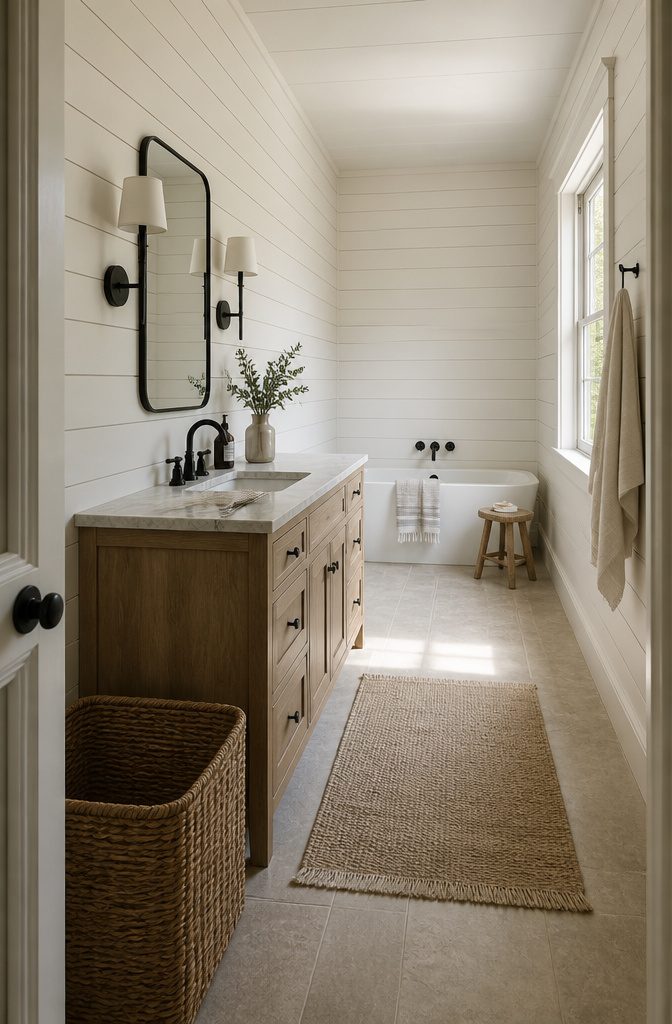
Shiplap is the first wall treatment most people picture, and for good reason: the horizontal lines make a narrow bathroom feel wider while adding depth you don’t get from flat drywall.
I paint it white in most projects, but warm wood tones work when the room has enough light to keep them from reading muddy.
Beadboard is the other reliable option, especially as wainscoting to chair rail height. The vertical lines add perceived height, and the paneling protects walls in high-moisture zones better than paint alone.
Tongue-and-groove gives you a similar look to shiplap with a tighter seam between boards.
Board-and-batten wainscoting is worth considering if you want more pronounced shadow lines. For period-specific farmhouse bathrooms, exposed ceiling beams bring in architectural weight, though that only makes sense if the structure allows it.
Brick or stone on one accent wall can anchor the space, but I use those sparingly because they compete with other textures fast.
The choice often comes down to where you put it.
Shiplap from floor to ceiling maximizes impact in a small room, but an accent wall behind the vanity or tub keeps the treatment from overwhelming the space. If you’re working with standard ceiling height, beadboard to mid-wall is usually enough.
4. Choose Tile That Adds Texture or a Focal Point
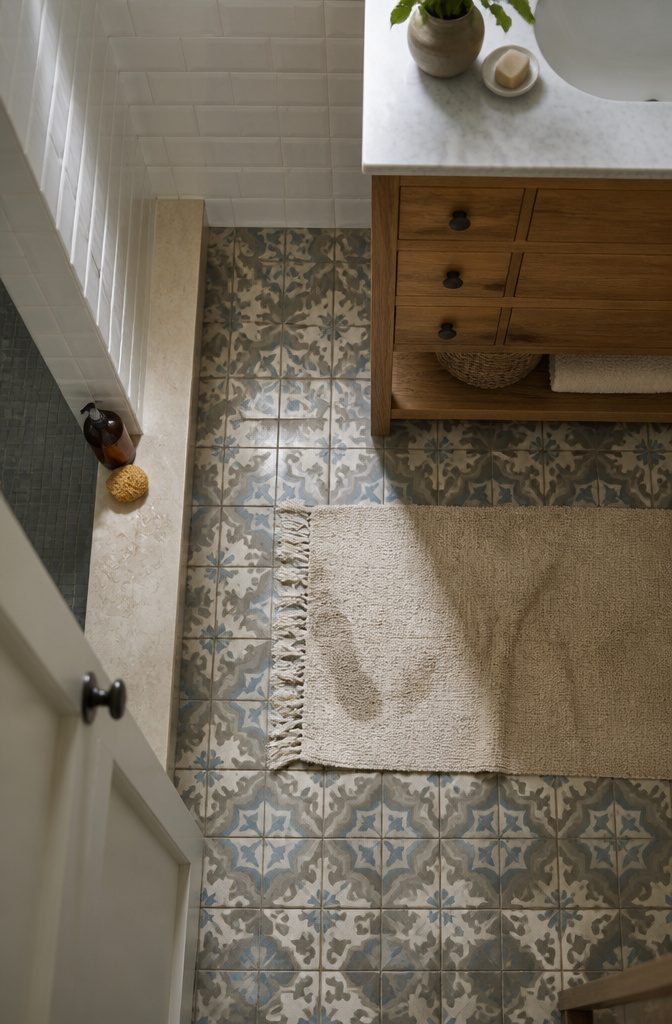
Tile and flooring decide whether a farmhouse bathroom feels intentional or generic.
Subway tile remains the most popular choice for showers and backsplashes because it reads clean without feeling sterile, and the slightly uneven edges on handmade versions add the imperfection that makes the style work.
For floors, patterned cement tile brings instant character to a new build, the kind of worn-in look that takes twenty years to earn otherwise.
Hexagon shapes in matte porcelain deliver a classic farmhouse silhouette with none of the maintenance cement demands.
Natural stone brings texture you cannot fake. Travertine, limestone, and slate age well in humid rooms, and the irregular patterns mean no two installations look identical.
You need to seal them, or water stains show up fast. I lean toward larger tiles when using stone, because fewer grout lines keep the floor looking cleaner longer and cut maintenance time in half.
Wood-look porcelain solves the humidity problem outright if you want wide planks without the sealing schedule real hardwood requires.
5. Pick a Wood or Shaker Vanity, or Repurpose a Dresser
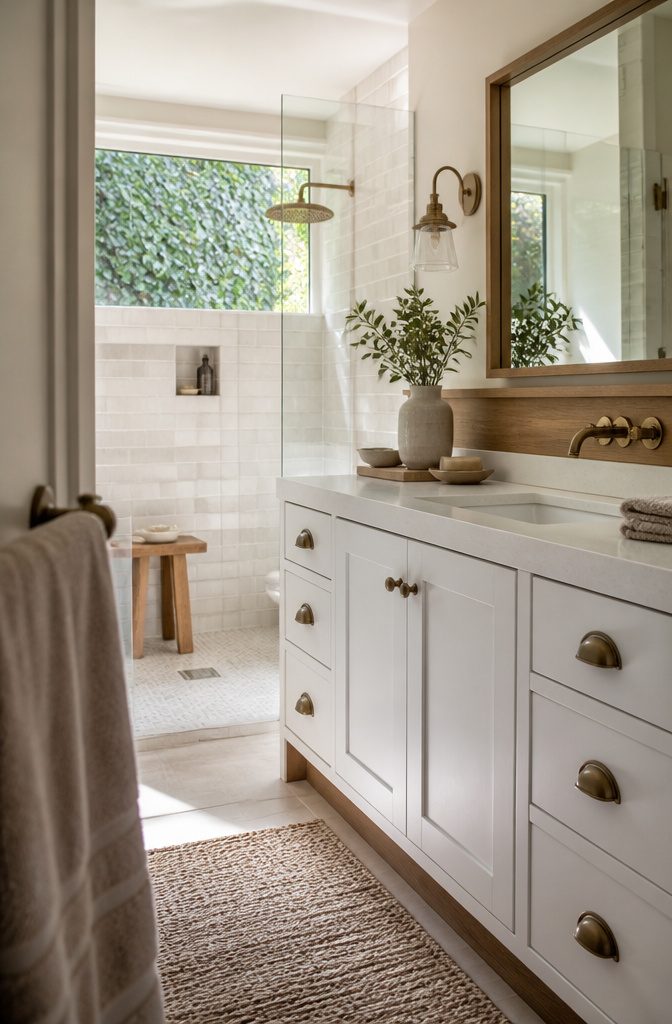
A Shaker-style vanity or natural wood cabinet makes the strongest case in a farmhouse bathroom because the clean lines and visible grain give you warmth without crossing into heavy.
Look for light wood tones like oak or pine if the room is small, or go deeper with walnut or cedar if you want more visual weight.
Shaker cabinetry with panel doors anchors the style without needing much else. Distressed finishes work when the rest of the room is clean, but they fight against anything already busy.
Repurposing a dresser as a vanity adds the vintage character farmhouse style depends on, and an old piece often has better joinery than new stock. Fit it with a stone or quartz top and integrate the plumbing from behind.
An early twentieth-century dresser or English vanity base shows age and detail that manufactured versions try to fake. You lose the shallow drawers to plumbing, so the piece needs enough depth and width to stay useful.
If the vanity you have is sound but reads too modern, paint it. Sage green or soft gray brings it closer to farmhouse without replacing the box.
Pair that with cup pulls or antique brass hardware and the shift is immediate. A white Shaker vanity with chrome handles skews contemporary, which works if the rest of the room leans modern farmhouse rather than full rustic.
6. Consider a Farmhouse, Apron-Front, Pedestal, or Vessel Sink

A farmhouse or apron-front sink mounted flush to the vanity countertop creates a focal point that feels purposeful without overpowering the room.
The rectangular shape works well in bathrooms because it reads modern when the rest of the vanity is simple, rustic when paired with wood or textured finishes.
Soapstone is a material I reach for when the client wants something built-in that still feels crafted.
It resists stains, ages quietly, and has a matte texture that holds up better than polished stone in a bathroom that gets daily use.
Vessel sinks in natural stone, copper, or ceramic sit on top of wood countertops and bring height to the vanity area.
Pair them with wall-mounted faucets to keep the counter clear and the lines clean. Pedestal sinks open up floor space and work best in powder rooms where storage matters less than proportion.
Position them beneath a window when the layout allows it. Natural light shows off the shape, and the exposed plumbing becomes part of the design when finished in oil-rubbed bronze or matte black.
7. Make a Freestanding, Clawfoot, or Copper Tub the Focal Point

A freestanding tub pulls the eye the moment someone steps in, and a clawfoot or slipper shape delivers instant farmhouse character.
Position it near a window so natural light reaches the tub without giving up privacy—cafe curtains solve that neatly. Copper is the other direction: develops patina over time and reads more rustic than porcelain, though it costs more upfront.
If the bathroom is tight, a freestanding tub still works better than you’d expect. The gap around the base keeps sightlines open instead of boxing in the floor, which makes a small room feel less crowded.
In a larger space, I’d use the tub to anchor one end and let it sit alone rather than pushing it against cabinetry.
Pedestal styles give you cleaner lines if the rest of the room leans modern farmhouse. Pair whichever shape you pick with brass or copper faucets to tie the fixture into the broader material palette.
8. Use Black, Brass, Gold, or Copper Hardware and Fixtures
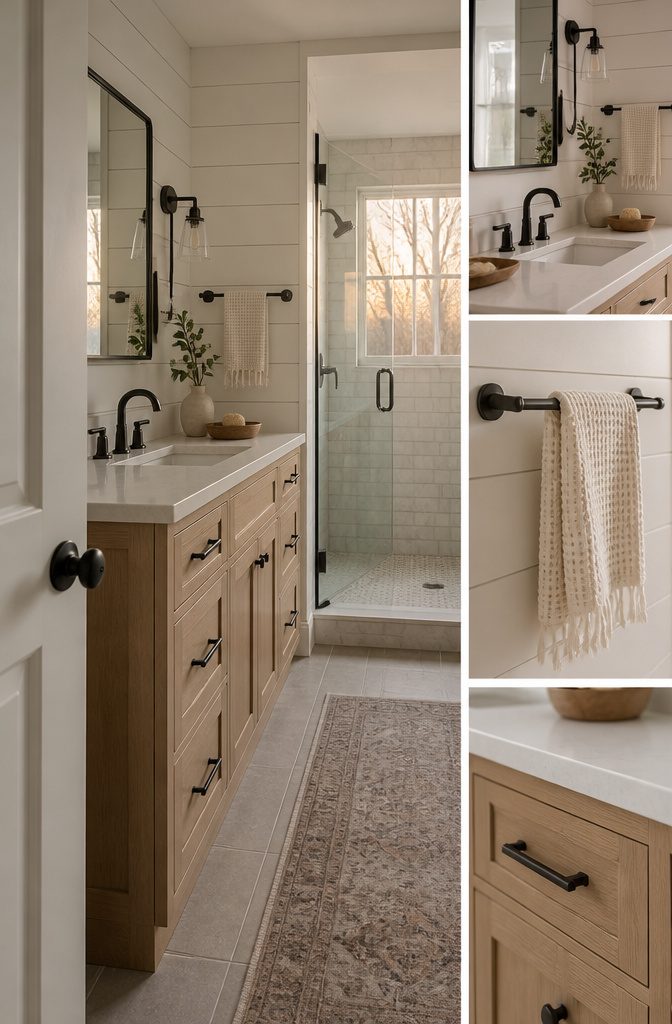
Metal finishes matter more than you’d think, because the right ones add contrast where farmhouse bathrooms tend to go soft.
Matte black hardware and fixtures are the most common choice when you want sharp edges against white shiplap or neutral tile.
I’ve seen it used on everything from faucets and mirror frames to cabinet handles and towel bars, and it works because it introduces boldness without fighting the rest of the room.
Antique brass, gold, and copper bring warmth instead of contrast. Brass and gold pair well with wood tones and beige or cream walls, and they read as elegant rather than industrial.
Copper towel bars and brass fittings show up often in farmhouse bathrooms that lean a little more refined. Oil-rubbed bronze is another option that sits between the two, darker than brass but warmer than matte black.
Chrome and silver are less common in farmhouse spaces but still appear when the look tilts modern. They feel cooler and less rustic, so they work better when paired with concrete, marble, or glass rather than reclaimed wood.
Consistency in finish makes the room feel intentional.
Pick one metal and carry it through faucets, cabinet hardware, light fixtures, and towel bars. Switching finishes mid-bathroom reads as indecision unless you’re deliberately mixing black and brass, which some designers do to balance modern and traditional.
9. Choose Farmhouse Sconces, Pendants, or Warm Bulbs
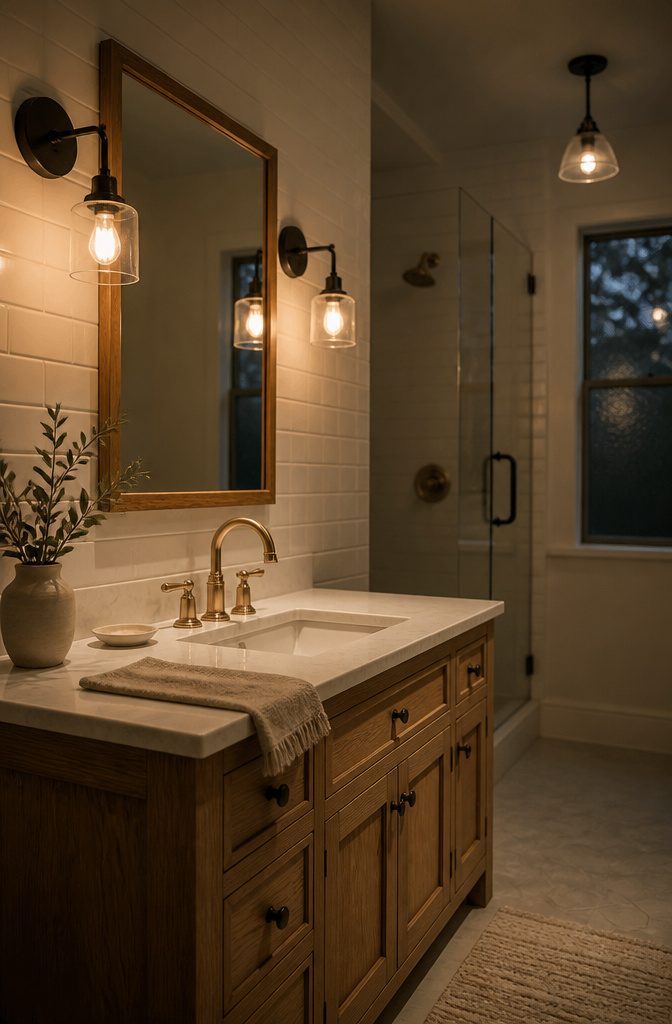
Farmhouse sconces and pendants bring both function and vintage character to the space. Black metal sconces flanking the vanity mirror provide even task lighting without shadows, and they pair cleanly with rustic wood or matte finishes elsewhere in the room.
Lantern-style fixtures or caged pendant lights work over a freestanding tub, adding a focal point without competing with other details.
For authentic farmhouse appeal, I look for fixtures with Edison bulbs or clear glass shades—they read vintage without feeling forced.
The bulb temperature matters more than most people realize.
Warm white bulbs at 2700K to 3000K give the room an inviting glow that makes white subway tile and natural wood look warmer, while cool white flattens the same surfaces and turns cozy into clinical.
Gold or brass sconces add warmth through the metal itself, and dimmer switches let you adjust the light for morning routines or evening baths.
Layering ambient ceiling fixtures with task lighting at the mirror covers both bright prep work and low-light relaxation in the same room.
10. Hang Mirrors to Reflect Light and Add Character
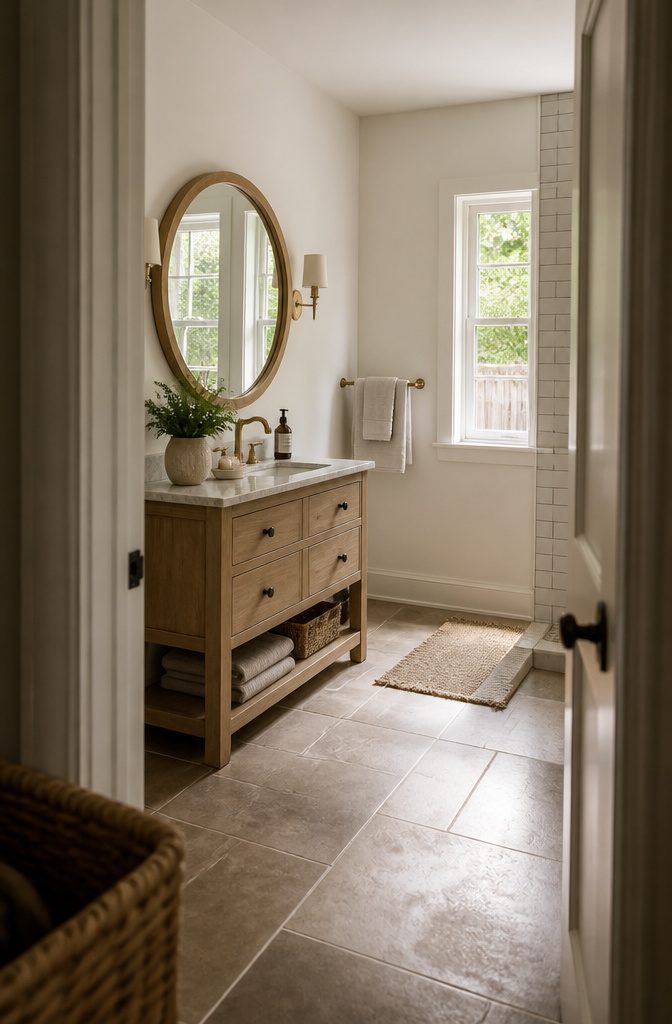
A large mirror makes the room feel bigger by reflecting light back into the space, and in a farmhouse bathroom that matters twice: once for the function, once for the look.
Round wood-framed mirrors soften a small powder room without taking up visual weight. Arched mirrors and vintage windowpane styles work when the walls can handle something with presence.
Black metal frames hold up in a bathroom with other dark fixtures; distressed wood ties back to a vanity or open shelving in the same finish.
The mirror doesn’t have to sit above the vanity. In a bathroom where the sink backs onto a window, small wall-mounted mirrors or shelf-set ones replace the single large piece, and the room keeps its natural light.
If you’re working with very little square footage, a round mirror opens up the space better than a rectangular one that emphasizes the narrow walls.
Where the ceiling height allows it, an oversized mirror above a tub can add a sense of scale without requiring floor space.
11. Add Open Shelves, Baskets, or Practical Storage
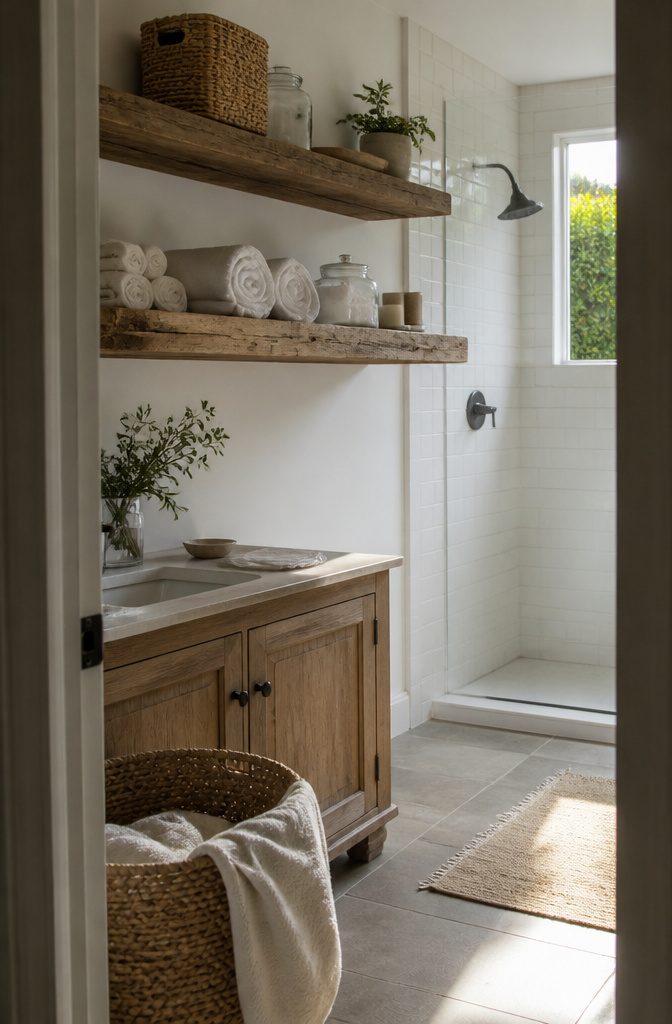
Open shelves made from reclaimed wood turn functional storage into visible character. Floating shelves carry rolled towels, woven baskets, glass jars, and candles without the bulk of closed cabinets, and in a small bathroom that difference matters.
The reclaimed material itself reads farmhouse immediately, especially when the wood shows age or an uneven surface.
Baskets pull double duty. Seagrass, water hyacinth, rattan, and jute all fit the style, and each one hides toiletries or spare linens while softening the harder surfaces around them.
I lean toward seagrass or jute in bathrooms because they handle moisture better than paper rope or wicker, and they cost less than rattan.
One approach I see work repeatedly: install open shelves on one wall, then style them sparingly.
A vintage shelf from the 1930s anchors the look better than new pine stained dark, and a few carefully chosen objects beat a crowded arrangement every time.
You want practical storage that also looks intentional, not a display shelf that happens to hold a towel.
12. Layer in Towels, Curtains, Rugs, or Other Textiles
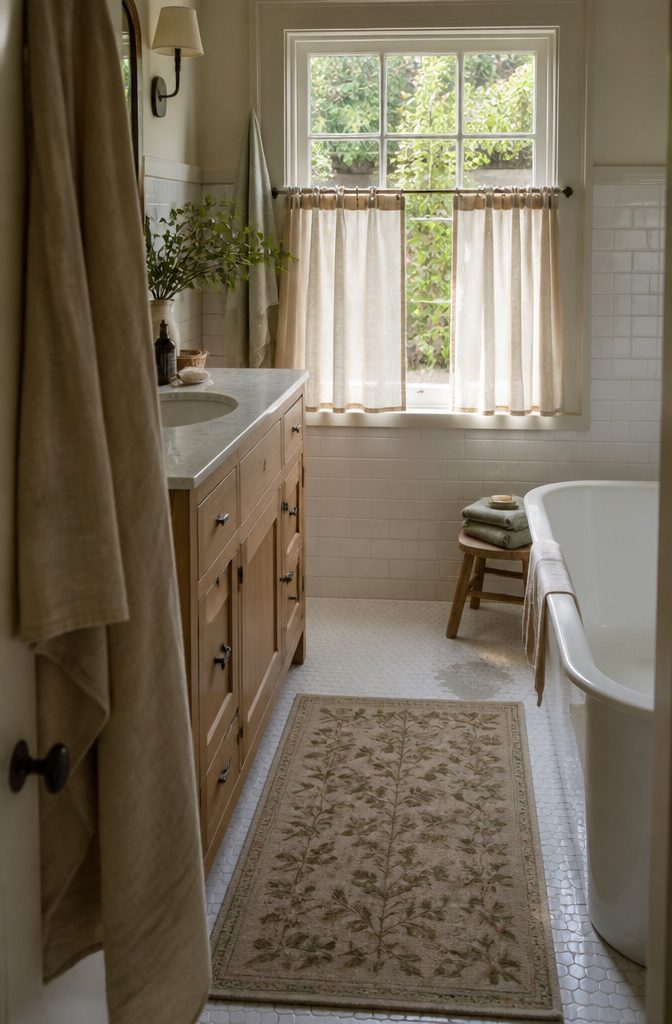
Textiles soften all the hard surfaces a bathroom collects, and farmhouse style pulls from a narrow band of materials that stay practical in a damp room.
Linen and cotton towels hold up well, dry fast, and come in the neutral palette most of these spaces lean on.
For curtains, linen panels or simple cafe styles filter light without blocking it, and a lot of sources mention gingham or floral patterns when the room can take more color.
Rugs deserve more care than they usually get. Anastasia Casey of The Interior Collective has a point worth borrowing:
A true wool rug is naturally water-repellent. Opting for a low-pile or shaved rug will allow it to dry without attracting bacteria.
That pushes back on the usual advice to skip rugs entirely.
Jute works outside wet zones, but wool placed right brings warmth and color into a room that often has neither. I’d stick with low-pile or shaved styles and keep the rug away from direct splash.
13. Bring in Vintage Finds and Antique Details
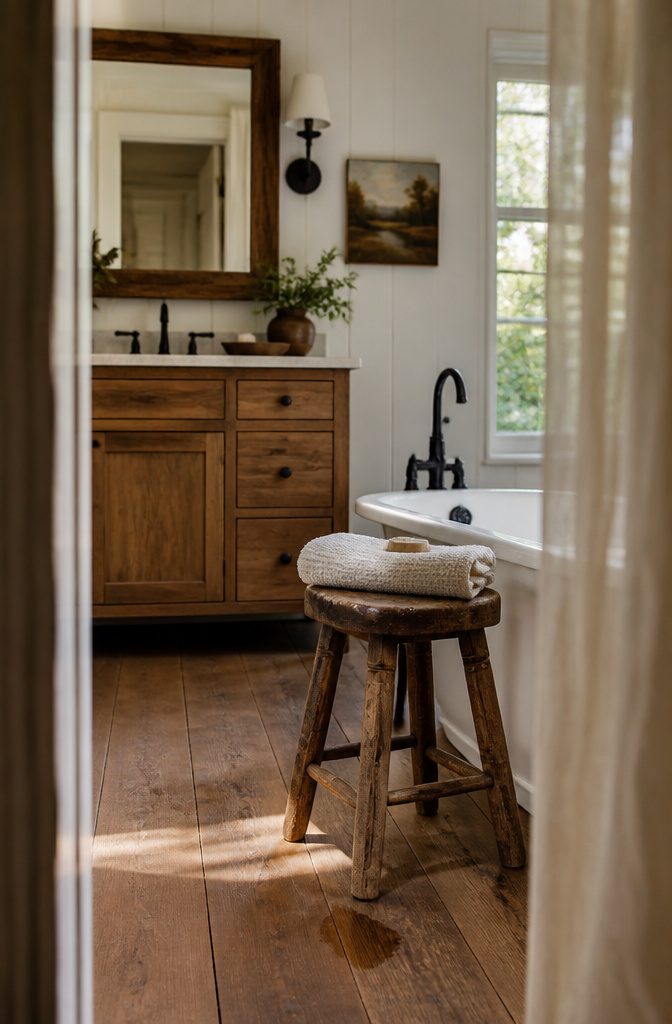
Antiques and secondhand finds add character that new pieces can’t fake.
An old dresser turned vanity, a wood stool parked near the tub, or a distressed mirror frame brings texture and a sense of history without the cost of designer fixtures.
I look for vintage spindle-back chairs, oil paintings, and antique mirrors when I want warmth in a bathroom that otherwise feels too clean.
The balance matters more than the age of any single piece. In one Southern Montana bathroom, a vintage chair and oil painting sat next to fresh white finishes, and the contrast gave the room soul.
Repurposed furniture works especially well in smaller powder rooms, where one strong piece can carry the whole space. A 1930s mirror or an early 20th-century side table pairs beautifully with matte black fixtures and keeps the room from reading flat.
14. Add Plants, Botanical Prints, or Nature Motifs
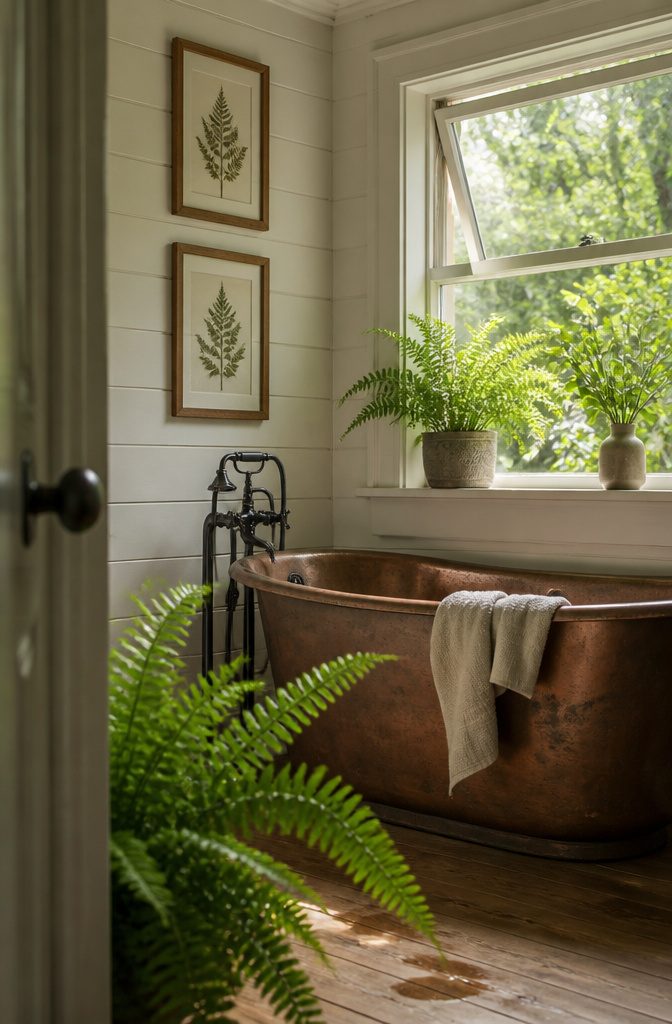
A large branch or a potted fern works where a stiff arrangement would look out of place.
Greenery brings life into a room that otherwise leans hard on neutrals, and live plants soften the edges of shiplap, tile, and iron fixtures without pulling the space away from the farmhouse look.
A copper tub under a window is the classic setup, and a tilting sash lets a plant soak up direct sun while the room stays warm.
Botanical prints run quieter but cover more wall.
Vintage pressed botanicals in simple frames add pattern to a bathroom that might otherwise read as too plain, and framed floral sketches or line drawings in neutral tones sit easily above a toilet or near towel hooks.
I prefer matte black or natural wood frames over anything that competes with the print itself.
A clawfoot tub flanked by pressed leaves or watercolor botanicals fills wall space without needing coordination across the room, and that matters when the finishes are already doing the work.
Nature motifs show up in vintage oil paintings, low-pile rugs with leaf patterns, and even in the proportions of a piece of reclaimed wood used as a shelf.
Rolling hills, fields, and floral imagery all point back to the same root idea, and they read as farmhouse because they reference what a farmhouse would have seen outside its windows.
15. Use Light Colors, Mirrors, and Compact Fixtures in Small Spaces
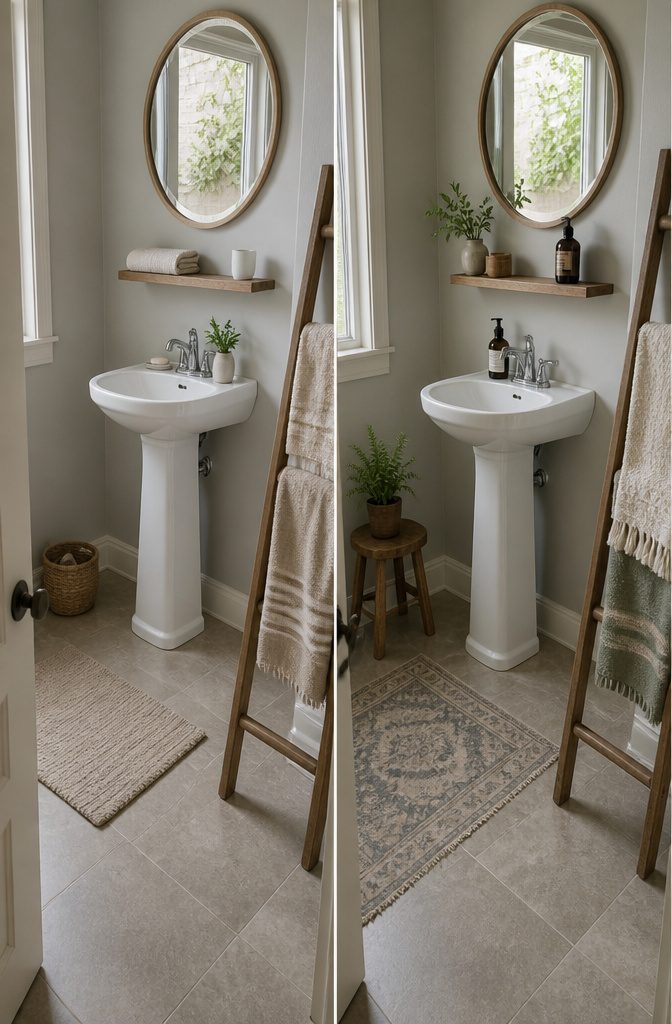
Light wall colors open up a small farmhouse bathroom faster than any other single choice.
White or warm gray paint reflects light and makes tight quarters feel breathable. I pair white walls with natural wood accents to keep the space from reading as sterile, and the contrast gives you visual interest without crowding the room.
Mirrors magnify that effect.
Round wood-framed or arched mirrors soften the space and bounce light into corners that would otherwise go dark. A well-placed mirror above a pedestal sink turns a cramped powder room into something that feels deliberate rather than squeezed.
Compact fixtures matter more than decoration in a small bathroom. A pedestal sink opens up floor space and keeps the lines clean, especially when you don’t need much storage.
Floating shelves hold what you need without the bulk of cabinets. Neutral textiles and a small decorative ladder for towels add warmth vertically, which keeps the floor clear and the room from feeling cluttered.
16. Pair Rustic Materials With Cleaner Lines or Modern Amenities

The modern farmhouse bathroom sits somewhere between weathered barn salvage and the clean simplicity of contemporary design, and the balance matters more than either side alone.
Pair rustic materials with cleaner lines or modern conveniences so the room feels current without losing its warmth.
White walls and lighter wood finishes keep the space bright, while a frameless glass shower or rain showerhead brings function that works with how you actually use the bathroom.
Matte black faucets offer contemporary function but fit seamlessly into the farmhouse palette, bridging the gap without compromise.
Traditional farmhouse leans on weathered materials, genuine antiques, and darker wood tones that reflect authentic rural life.
Modern farmhouse pulls back from that heaviness. Natural wood vanities soften sleek black hardware and white tile, adding texture without the distressed finish.
Neutral tones like off-white, warm beige, and soft gray ground the room, and minimal décor keeps the look from feeling cluttered. The result is refined but still warm, functional but never cold.
Mix Farmhouse With Other Styles When It Fits Your Space
Farmhouse doesn’t have to follow one formula, and the style often looks better when you let another influence soften or sharpen the edges.
I’ve seen bathrooms that lean Scandinavian with white oak, soft grays, and clean lines, and others that pull in Japandi restraint through natural linen, black steel frames, and a few ceramic pieces on open shelves.
Both kept the warmth and texture farmhouse depends on, but neither felt like a rural mood board.
If the space already has stone or timber from a mountain build, leaning into those materials instead of fighting them makes the room feel intentional.
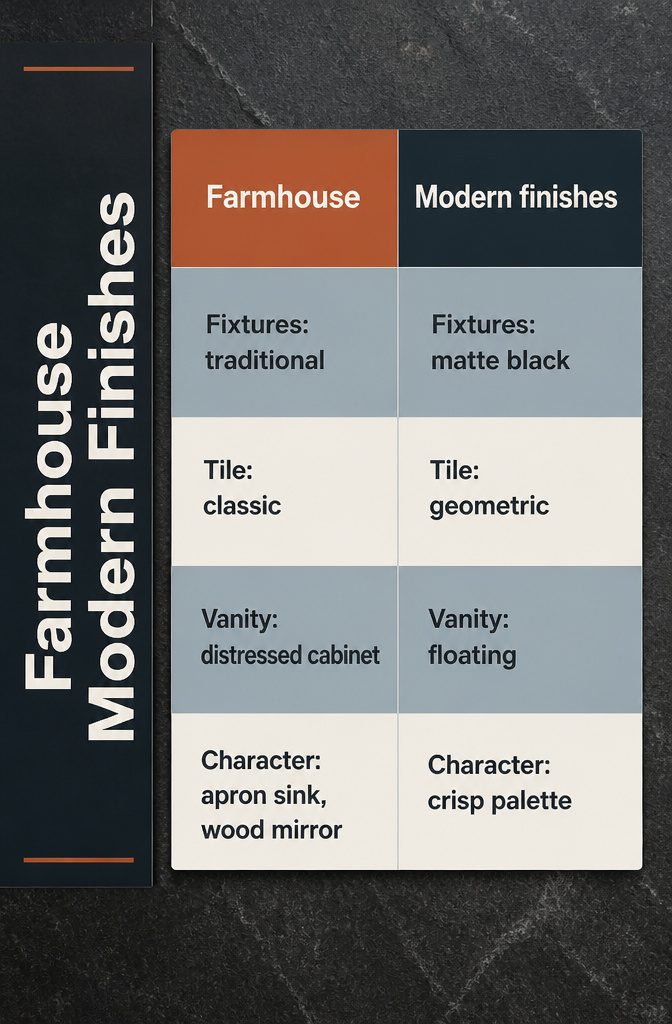
I’ve also worked with clients who wanted farmhouse function but modern finishes, so we used matte black fixtures, geometric tile, and a floating vanity instead of a distressed cabinet.
The apron sink and wood mirror kept it recognizable, but the palette stayed crisp.
Farmhouse works as a base, not a rigid template. You can add industrial metal, polished marble, or even sleeker hardware without losing the character, as long as the materials still feel grounded.
Budget Updates That Make the Biggest Difference
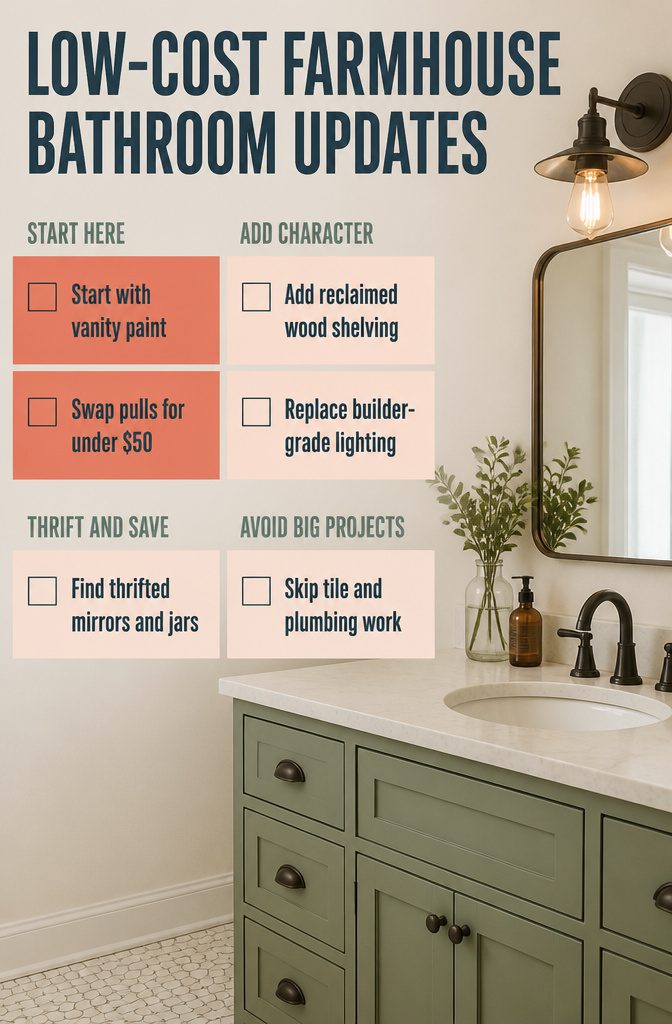
Paint and hardware upgrades deliver the most visible change for the least money.
An existing vanity takes on a completely different character in sage green or soft gray, and swapping drawer pulls for cup pulls or vintage-inspired knobs costs under $50 for a bathroom but reads like deliberate style.
I’d do those two before buying anything new.
After that:
- Reclaimed wood shelving with old brackets adds storage and texture without the cost of built-in cabinetry.
- Edison bulb sconces or industrial-style fixtures replace builder-grade lighting and shift the whole mood of the room.
- Thrifted and antique accessories — mirrors, jars, small stools — bring in the worn character farmhouse style depends on, and they cost a fraction of new décor.
None of this requires tearing out tile or moving plumbing. Start with paint and hardware, then add the rest only if the room still needs it.
Frequently Asked Questions
What elements should a farmhouse bathroom have?
Core elements include natural wood (vanities, shelves, or reclaimed accents), shiplap or beadboard walls, neutral base colors with one or two accent tones, vintage or antique details, textured tile like subway or cement patterns, and mixed metal finishes in black, brass, or copper.
A freestanding or clawfoot tub, apron-front sink, and open shelving complete the look while keeping the space functional.
What is the best color for a farmhouse-style bathroom?
Warm whites, creams, beiges, light greige, pale gray, and sage green work best as foundation colors.
These neutrals keep the room open and calm, then you bring in darker greens, blues, or other accent colors through towels, a painted vanity, or tile details.
The 60-30-10 proportion (60% neutral, 30% secondary tone, 10% accent) keeps the space grounded without looking flat.
What colors are good for a modern farmhouse bathroom?
Soft neutrals like off-white, warm beige, and soft gray form the base, often paired with wood accents and matte black hardware.
Light blues and greens work as secondary or accent colors. Modern farmhouse uses lighter, brighter tones than traditional farmhouse, which leans on darker wood and weathered finishes.
What does modern farmhouse decor look like?
Modern farmhouse mixes warm, natural materials with clean lines and contemporary finishes.
Expect neutral tones, natural wood vanities or shelves, matte black or brass hardware, white or light gray walls, and minimal decoration. The style stays functional and bright rather than rustic or heavy, blending farmhouse warmth with modern simplicity.
How do I make my bathroom look farmhouse?
Start with wood, stone, or shiplap for texture, then add traditional faucets in aged brass, copper, or matte black.
Install a farmhouse sink or freestanding tub if the layout allows, hang a wood-framed or vintage mirror, and bring in open shelving with baskets or rolled towels. Antique finds and botanical prints finish the room without added cost.
Can you mix modern and farmhouse in a bathroom?
Yes. Pair rustic materials like natural wood vanities with sleeker elements like frameless glass showers, matte black faucets, or geometric tile.
Neutral colors ground the room while modern conveniences (rain showerheads, floating shelves) keep it functional. The balance works as long as the materials still feel warm rather than cold.
What’s the difference between traditional and modern farmhouse bathroom styles?
Traditional farmhouse uses weathered materials, genuine antiques, and darker wood tones that reflect authentic rural life.
Modern farmhouse brightens the space with white or light gray walls, lighter wood finishes like oak or pine, and contemporary conveniences like frameless showers or floating vanities, while still keeping rustic warmth through natural materials and vintage touches.
What are the best flooring options for a farmhouse bathroom?
Patterned cement tile brings instant character to new builds, while hexagon porcelain offers a classic shape with low maintenance.
Natural stone like travertine, limestone, or slate ages well in humid rooms but requires sealing. Wood-look porcelain solves the humidity problem if you want wide planks without the sealing schedule real hardwood demands.
How can I create farmhouse style on a budget?
Paint an existing vanity in sage green or soft gray, then swap drawer pulls for cup pulls or vintage-inspired knobs (under $50 for a bathroom).
Add reclaimed wood shelving with old brackets for storage and texture, install Edison bulb sconces or industrial fixtures, and shop secondhand for vintage mirrors, stools, or botanical prints.
These changes cost less than replacing cabinets or tile but shift the room immediately.