

Side-of-house storage runs from a $35 repurposed dresser to a weather-rated wall cabinet, and the choice depends on how often you need the thing inside. Daily access means a deck box lid that flips toward open space, not a wall; anything less frequent can sit in a foldable box that collapses to two inches thick by October.
1. Deck Boxes

A deck box along the side of your house earns its footprint by doing at least two jobs. Most large ones hold up to 135 gallons, which is enough for a folded patio umbrella, a hose, and the stack of cushions that otherwise live in a garbage bag in the garage. The flat lid turns the whole unit into a bench or a place to set a drink while you wrestle with the latch on your gate.
Weather-resistant resin in a two-tone charcoal and grey, or a wood-grain finish, reads as furniture first and storage second. That matters on a narrow side yard where the box sits in profile against your siding or a planting bed. Recessed side handles keep the lines clean, and a low horizontal plank profile hugs the ground instead of looming.
The catch is access. A deck box needs lid clearance, so measure your walkway before you buy. If the path is under three feet wide, the lid will bump the wall or fence every time you open it. In that spot, a box that opens from the front instead of the top, or one narrow enough to turn perpendicular, saves the geometry.

LARGE OUTDOOR STORAGE BOX: Fashionably store your outdoor furniture cushions, pool floats, and more. This outdoor storage bench offers lots of convenient, lockable storage space and has enough room to seat 2 adults.

DIMENSIONS – Compact Yet Spacious for Small Spaces: Exterior: 45.9" W x 17.4" D x 22.2" H / Interior: 44.6" W x 15.6" D x 20" H — a perfect fit for balconies, patios, porches, and small outdoor areas.
2. Sheds

A 12×16 foot shed swallows most of what clutters a garage: the mower, the string trimmer, the bags of potting soil you bought on sale in March. That footprint is common for a reason. It fits a riding mower with room to walk around it, yet most city lots still allow it.
The trouble is the side yard. A 12-foot width needs more than 12 feet of dirt. You need clearance to swing a door, space to lean a rake without scratching siding, and a path to roll the mower out. Measure your strip at its narrowest point, not where it looks generous near the front porch. If the shed wall sits closer than three feet from the house, you will fight mold, you will fight mice, and you will hate every trip for a trowel.
Gravel or concrete pavers handle the foundation on a narrow strip better than a full slab. Water runs sideways off a side yard; a raised bed of compacted gravel keeps the floor dry without the excavation crew. I have seen people pour a strip slab that trapped runoff against their foundation for years. The gravel moves with the ground, which matters where frost heave visits in winter.

Reinforced Crossbar Assembly & Multifunctional Lid Design: This 310 gallon outdoor deck box is fitted with reinforced crossbar assembly and connecting rod structure, paired with hydraulic support rods to deliver stable, pinch-free lid opening and closing. The reinforced structure prevents lid warping and deformation during long-term outdoor use. The sturdy thickened lid can serve as extra temporary seating or a side table to utilize idle outdoor space for daily practical use

LARGE OUTDOOR STORAGE BOX: Fashionably store your outdoor furniture cushions, pool gear, and more. This outdoor storage bench offers lots of convenient, lockable storage space and has enough room to seat 2 adults.

DIMENSIONS: Compact Yet Spacious. Exterior: 22.75" L x 17.3" W x 21.7" H / Interior: 22.71" L x 16.3" W x 20.3" H — the perfect size for patios, balconies, and small outdoor spaces.
3. Vertical Shelving Units

Powder-coated steel or cedar shelving lets you store upward instead of outward, which matters when the side of your house is maybe four feet of gravel and a downspout. I lean toward freestanding units that straddle the narrow strip between foundation and fence line; wall-leaning styles work too, but only if the house wall is flat enough and you check that nothing traps moisture against the siding.
What fits on these shelves are the smaller items that clutter a patio: cushions folded flat, outdoor games in lidded bins, the potting supplies you reach for weekly. Baskets or semi-transparent totes keep loose pieces from walking off in a storm. The sources describe setups against painted timber or tucked beside ceramic planters, and that narrow profile, around the depth of a standard tote, is what makes the arrangement readable rather than piled.
Wall-mounted cabinets share the same logic but need drilling and anchors; freestanding vertical units skip the landlord conversation entirely. For renters, that difference is usually the deciding factor. Either way, powder-coated steel resists the salt and humidity that rust standard shelving in two seasons, and cedar weathers to gray without rotting if you are buying for the longer haul.

SPACIOUS & PRACTICAL: 12x16 FT storage shed, the large capacity easily stores large tools, lawn equipment, bikes, and even compact vehicles, declutter your yard for a tidy, organized space.

Withstands 70 mph Winds & 20" of Snow: Built from heavy-duty galvanized steel with a rust-resistant gray coating. Sloped roof sheds rain and melting snow — no pooling, no leaks. Your gear stays protected in every season.

🛠 [Upgraded Framework Structure] The AirWire storage metal shed utilizes an improved frame construction. It has been thoroughly tested by 700+ and has averaged a 30% improvement in ease of installation and overall stability. Our outdoor tool sheds are built with the user experience in mind.
4. Storage Benches

A storage bench turns a tight side passage from a corridor you hurry through into a spot where you actually pause. The lid lifts on a cavity that swallows patio cushions, potting soil bags, or the garden hose you are tired of tripping over, and the larger ones hold up to 70 gallons without looking like a utility box from the curb.
I have seen these work best where the passage is at least four feet wide, enough for the bench depth plus your shoulders as you walk past. Tuck it against the house wall, not the fence, so the lid opens toward open space and you are not wrestling it while squeezed against a boundary. A slatted or sloped top sheds rain better than a flat cushion, though the flat ones look softer if the bench sits under a narrow eave.
The tradeoff is access speed. A deck box flips open in one motion; a bench with a hinged lid and a backrest takes an extra step. For a side yard used daily, that friction adds up. But for a passage you walk twice a week with mulch bags or pool toys, the seating payoff is real. Someone sets down groceries, someone ties a shoe, and the space earns its keep beyond storage alone.
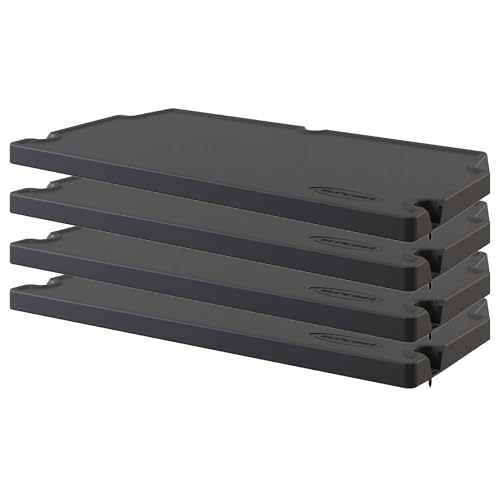
Shelf Organizer: Adds extra storage inside Suncast Vertical Sheds to increase usable space for gear, tools, and bins

Shelf Organizers: Add extra storage inside Suncast Horizontal or XL Vertical Sheds to increase usable space for gear, tools, and bins

Versatile Organization: Easily customize your storage with optional dividers (not included) to keep your tools and equipment neatly arranged in our spacious YITAHOME outdoor storage shed
5. Hose Reels

A hose reel keeps the mess off the ground without eating the narrow strip between house and fence. Wall-mounted versions screw directly to siding or brick and stay put for the season; portable ones roll where you need them and tuck against the foundation when the watering’s done. Either way, mount or park it within arm’s reach of the spigot so you’re not stretching across the path every time the tomatoes need water. I leave about 24 inches of clearance on the reel side so the crank doesn’t whack a shoulder when I’m hauling compost past, and I angle the whole unit so the hose pays out toward the bed, not across the walkway. A reel that sits too far from the faucet just becomes a tripping hazard you walk around for six months.

Versatile Storage Space:30.1’’H x 28.9’’W x 13.3”D outdoor cabinet with 1 adjustable shelf,offer huge space for wall storage needs, and keep all contents organized.
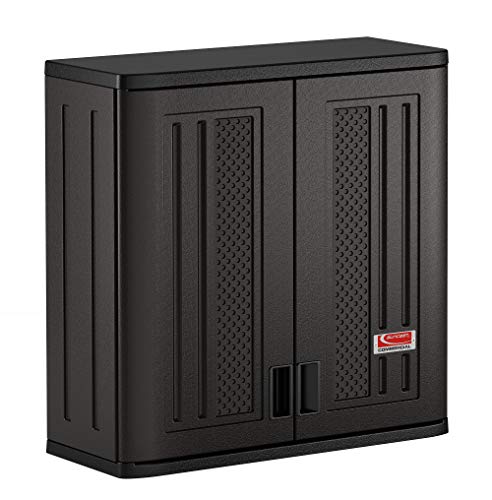
WALL MOUNT GARAGE CABINET: Ideal for garages, workshops, or utility rooms, this cabinet offers secure and organized storage for tools, cleaning supplies, and other materials

KEEP LONG-HANDLED TOOLS UPRIGHT AND EASY TO REACH. This vertical resin storage shed or tall outdoor storage cabinet fits long-handled tools, patio umbrellas, and gardening supplies, so yard gear stays organized and off the ground.
6. Waterproof Storage Bags

Waterproof storage bags work best for the cushions and smaller items that always seem to end up soggy otherwise. The durable materials keep moisture out and stop mold and mildew from setting in, which matters more than you’d think when a bag sits against the house for months. Seal them tight and tuck them along the narrow side of the house where a box or cabinet won’t fit, or slide them under a deck if the gap is there. Size depends on what you’re storing. A standard lounge cushion needs a bag that closes without forcing the zipper, while throw pillows and outdoor dishes compress down smaller than you’d expect. I find the bags that work year after year are the ones sized with a little slack, not stuffed to bursting.

All-Weather Resistant Durable Material: Constructed from high-density resin, this YITAHOME deck box is built to withstand sun, rain, and frost without fading, cracking, or warping. UV-protected and waterproof, it provides reliable long-term storage for all your outdoor essentials

50‑Gallon Storage Capacity for Small Outdoor Spaces: Perfect compact storage solution for balconies, patios, porches, and garage areas, offering 50 gallons of space for everyday outdoor essentials.

𝟲𝟬 𝗚𝗮𝗹𝗹𝗼𝗻 𝗦𝘁𝗼𝗿𝗮𝗴𝗲 𝗖𝗮𝗽𝗮𝗰𝗶𝘁𝘆: EAST OAK outdoor storage box measures 42.1"L x 17"W x 21.6"H and is perfect for indoor and outdoor storage. It offers plenty of space to store all your belongings, perfect for cushions, tools, pool supplies, etc.
7. Wall-Mounted Cabinets

Wall-mounted cabinets turn the narrow strip along a house into usable storage without eating the walking path. The ones worth buying are weather-rated, with seals that actually keep rain out of the seams and hardware that does not rust shut after one season. Mounting into siding takes care; you need to hit studs or use toggle bolts that spread the load so the cabinet does not sag. Masonry is more forgiving in some ways, since you anchor anywhere, but a hammer drill and the right anchors are non-negotiable unless you want the whole box pulling out in a wind gust.
What goes inside matters as much as how it hangs. I keep the things I grab often: the small hand tools, the grill brushes, the outdoor dishes we use on the patio table. Adjustable shelves help, because a propane canister and a stack of folded cushions do not share the same height. Cushions themselves are a judgment call. Sources say they fit, and they do, but only if the cabinet is truly dry inside. Mine has held up for garden gloves and seed packets, things I would rather not trek to the shed for.

Large Capacity: A 80-gallon hidden storage compartment under the seat allows you to store a variety of items, helps you keep your environment neat and increase space utilisation.

FIT WELL: This cover fits deck box size up to 52"(L)x28"(W)x26”(H).

DIMENSIONS: Exterior: 22.75 in. L x 17.3 in. W x 21.7 in. H / Interior: 22.71 in. L x 16.3 in. W x 20.3 in. H
8. Decorative Baskets

Baskets look harmless enough sitting on a shelf, but the wrong material turns into a sagging mess after one rainy season. Resin wicker and powder-coated wire hold their shape outside; anything paper-based or raw seagrass belongs indoors no matter how tightly it’s woven. A narrow side yard calls for low profiles, something you can slide under a bench or stack two-deep against the house without blocking the walkway. I keep mine under 12 inches high for that reason, and I leave a finger-width gap behind each one so air moves through.
The sources differ on what deserves basket storage versus harder protection. Open baskets suit the things you grab often: folded throws, outdoor games, a lantern you move around for evening light. Anything with a cord, a battery, or a fabric cushion needs the cabinet the sources describe, the slim graphite one with a door that actually closes. I have learned to be honest about which category my stuff falls into. Two of my baskets now hold nothing but garden gloves and twine because I kept pretending a Bluetooth speaker was fine in open air. It was not.

【Ample Storage Space】The interior offers generous space (192.91"D × 117.32"W × 81.1"H) for storing bicycles, inflatable paddleboards, lawnmowers, gardening tools, children’s toy cars and more. The garden shed can also serve as a fully-equipped small workshop to meet DIY or gardening needs.

2-in-1 Gazebo & Metal Shed Combo: One side is a 10'x12' hardtop gazebo for outdoor dining, entertaining, or vehicle shelter. The other is a fully enclosed 6'x12' metal shed for secure tool and gear storage. Together they deliver 180 Sq.Ft of covered space—two structures, one seamless design.

【Enhanced Structural Integrity】Polar Aurora outdoor shed boasts a reinforced structure, methodically tested to facilitate a 29% easier and more stable assembly, aligning with practicality and durability.
9. Repurposed Furniture

Not every old dresser belongs in the rain. The ones that survive a side yard are the solid-wood pieces with drawers that already slide smoothly, not the particleboard builds that swell and jam after two wet weeks. A filing cabinet laid on its back handles garden tools better than it ever handled tax returns, and casters underneath turn it into something you can roll out when the hedge trimmer is buried in the back.
I learned the hard way that paint is not sealant. A bookshelf I hauled outside looked charming for about a month before the shelves started to bow. Sheltered placement under an eave buys time, but it does not make a piece waterproof. Baskets or bins inside help organize smaller items, yet they do nothing to stop the frame from soaking up ground moisture.
The piece that actually worked was a short wooden dresser, the kind with three deep drawers and dovetail joints, picked up for $35 at a neighborhood sale. Two hours of sanding, a coat of exterior primer, and a gallon of leftover porch paint ran another $28. It sits against the narrow side of my house now, drawers holding potting soil and hand tools, with a scrap of pegboard screwed to one side for the trowels. Total time was a Saturday morning. The top drawer sticks a little in August humidity, which tells me the wood is still breathing, but three seasons in it is holding together better than the plastic bin it replaced.

ORGANIZED STORAGE: Built-in shelves offer structured vertical space to store garden tools and outdoor equipment, keeping your yard neat and clutter-free.

Shelf Organizers: Add extra storage inside Suncast Horizontal or XL Vertical Sheds to increase usable space for gear, tools, and bins

【6.8x4 Ft Tall Vertical Storage – More Space, Smaller Footprint】 Standing at 81.9" tall with a compact 47.6" x 26.8" footprint, this vertical storage shed offers a massive 61 cu.ft of interior capacity (44.7" x 24.0" x 79.1"). Perfect for storing long-handled tools, upright trash cans, lawn equipment, garden supplies, and bulky seasonal items. The tall, slim design maximizes vertical space while taking up minimal floor area—ideal for patios, narrow side yards, or garages where space is limited.
10. Foldable Storage Boxes

Foldable storage boxes earn their keep on the narrow side of a house because they only take up space when you actually need them. I set mine out in late April for patio cushions and outdoor toys, then break them down flat once the season turns. The fabric sides pop off the wire frame and the whole thing collapses to maybe two inches thick.
What fits depends on the size you grab, but the standard ones I have seen swallow two lounge chair cushions or a bin’s worth of pool noodles and goggles with the lid still closing. The trick is buying enough that you are not forcing a zipper; a cramped box loses its shape by August.
The rest of the year they live stacked behind my water heater, which is dead space anyway. Four of them slide into a gap maybe six inches deep. If you are renting, that matters more than the box itself; no landlord objects to something that disappears completely.

BUILT TOUGH WITHOUT THE METAL. Multi-wall resin panels are engineered for strength and durability and resist dents, rust, and rot. This base storage cabinet is a low-maintenance, easy-to-clean plastic storage cabinet for garage organization and more.

Effortless Installation: Setting up this cabinet is a breeze, thanks to its clear instructions, helpful guides, and comprehensive manual. Our technical team is also on standby for remote assistance, ensuring a hassle-free installation process

GARAGE STORAGE: Wall storage cabinet to contain toys, tools, and equipment with 27-1/4 in. W x 9-3/4 in. D x 27-1/2 in. H interior dimensions
Weather Resistance

Rain runs straight down a house wall, and the strip beside it catches every drop that misses the gutter plus whatever the roof kicks back during a hard wind. That wall also blocks morning or afternoon sun, so anything stored there bakes from one angle while staying damp on the other. UV damage cracks plastic and bleaches fabric in a single season, and once water gets inside a cushion or a tool bag, mold follows in days.
A deck box rated for outdoor use handles this better than it looks, because the lid overlaps the seam and the resin flexes instead of splitting when temperature swings hit. Wall-mounted cabinets need the same overlap detail on the door, or rain will find the gap and pool on the shelf below. For anything fabric, the sources point toward airtight plastic bins inside whatever box or shed you choose, especially if snow sits against the wall for weeks. The resin or steel shell buys you time; the seal on the inner container buys you the item.
Aesthetic Appeal

A storage cabinet pressed against siding it ignores looks like what it is: an afterthought. The compact resin units with cream panels and dark trim now on the market read as intentional because their proportions borrow from garden doors rather than garage shelving. I noticed this first in a photo where the cabinet sat below a spill of petunias; the watering can beside it was staged, but the relationship was real. The piece belonged because its vertical lines repeated the fence boards.
Matching the siding exactly risks a flat, apologetic look. One shade lighter or darker, or a deliberate contrast in finish, gives the eye a reason to stop. The line between useful and cluttered sits at about six inches of visible clearance on all sides. Crowd the unit against the house and it becomes a junk pile with doors; pull it out even that small distance and air circulates, and the shadow beneath turns it into an object with presence.
What convinced me, looking through setups that worked, was the difference between hidden and merely concealed. A cabinet whose top holds a terra cotta pot and a trowel reads as garden infrastructure. The same cabinet with nothing on top reads as hiding something. Display a little of the utility, and the storage stops fighting the design.
DIY Solutions

The most useful custom storage I have built for a narrow side yard started as a scrap wood organizer, the kind meant for a shed but sized down to fit a 22-inch gap between the house and the fence. Two 2x4s and a handful of PVC pipes cut to 18 inches made a tool tower that holds rakes, a broom, and the long-handled shears that otherwise fall over and wedge themselves against the siding. The pipes keep handles upright and separated so nothing rusts where the metal touches.
I borrowed the miter saw for the angled cuts on the 2×4 base. A cordless drill I already owned did the rest. Buy the drill if you do not own one; borrow the miter saw unless you already have three projects queued that need it. The plan came from a tutorial on HomeTalk that walks through the PVC-and-2×4 build with measured cuts, though I dropped the height by six inches to clear my gutter downspout.
The whole thing took a Saturday morning, about three and a half hours including the trip to borrow the saw. Scrap 2x4s from a previous deck box build kept the material cost under eight dollars for the PVC and screws. The organizer has been there two seasons now. The only mistake was forgetting to angle the PVC slightly outward; handles sit fine but a heavy shovel wants to tip the whole unit if the ground is soft after rain. A single screw through the back 2×4 into the fence rail fixed that.
Frequently Asked Questions
What are some clever outdoor storage solutions for tight spaces?
Deck boxes, vertical shelving units, storage benches, hose reels, waterproof bags, wall-mounted cabinets, decorative baskets, foldable boxes, and DIY tool towers all work well along a narrow house wall. The best choice depends on your width: under three feet favors front-opening boxes or wall-mounted options, while four feet or more fits a bench you can actually sit on.
How do I organize a shed in a small side yard?
Start by listing what functions the shed must serve and what problems you need to solve, then work through that list in priority order. On a narrow strip, keep the shed wall at least three feet from the house to avoid mold and mice, and use compacted gravel rather than a slab so water runs off instead of pooling against your foundation.
What materials are best for outdoor storage in narrow spaces?
Powder-coated steel, weather-resistant resin, cedar, and resin wicker hold up against the rain and sun exposure that narrow side yards intensify. Avoid particleboard, raw seagrass, and standard steel that rusts within two seasons; UV alone cracks plastic and bleaches fabric in a single year if the shell is not rated for outdoor use.