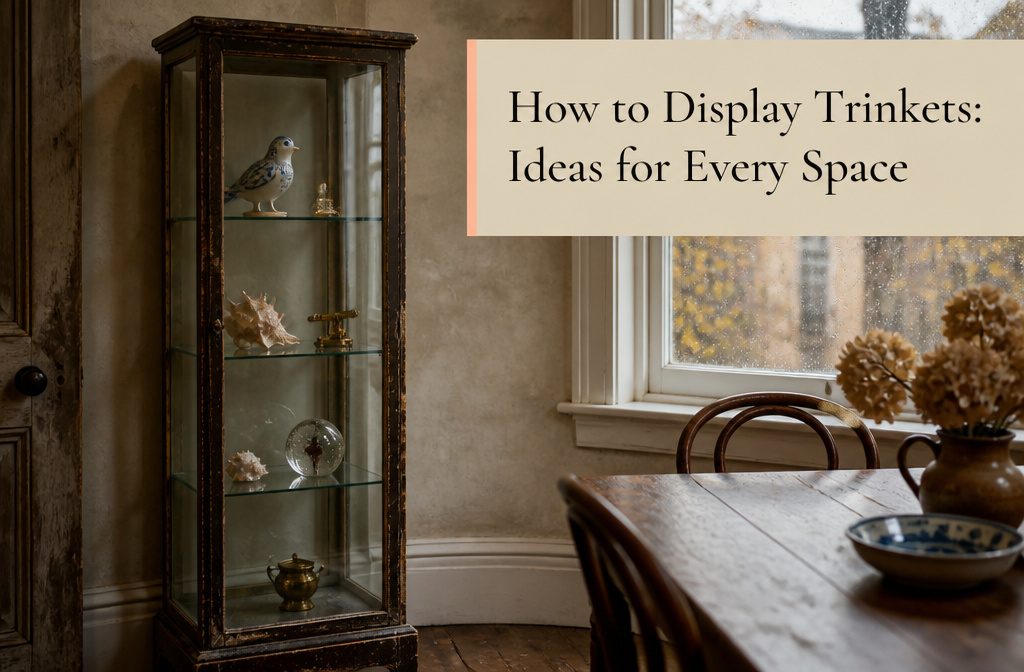
Trinkets on open shelves collect dust, lose detail behind other objects, and end up looking like clutter instead of a collection.
The fix depends on what you own and where you have room: a curio cabinet at $126.99 works for travel souvenirs, while compartmented shelving at $35 keeps miniatures from sliding into a visual pile.
1. Curio Cabinets and Glass-Front Cases
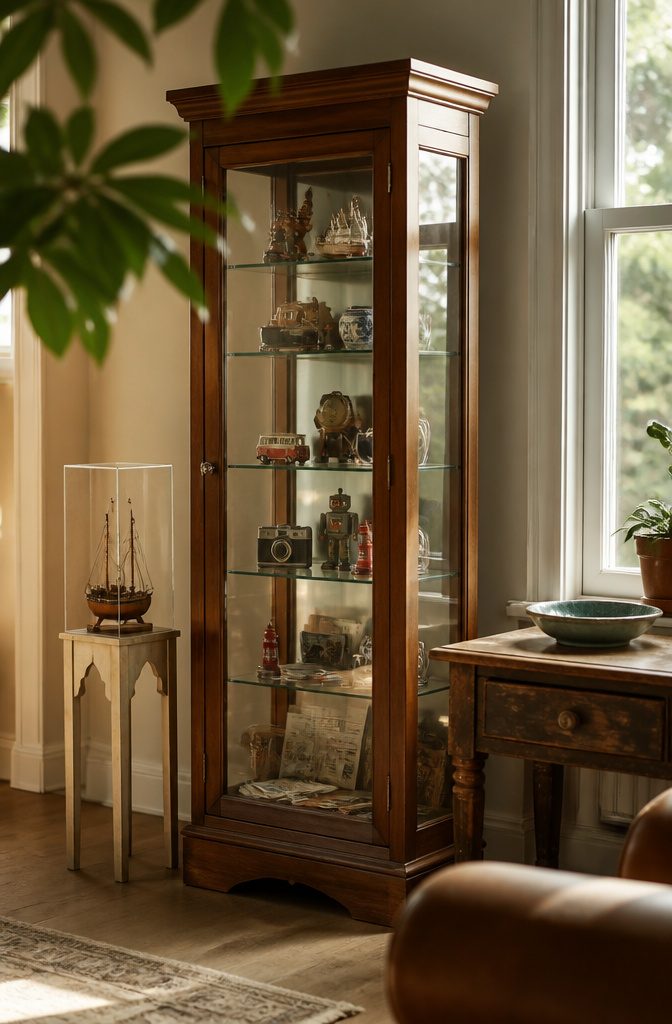
A curio cabinet lets you keep a full collection visible and protected in one place instead of spreading it across surfaces that collect dust.
The Amazon glass-front cabinet at $126.99 gives you enclosed shelves behind a clear door, which works well for travel souvenirs, concert tickets, vintage toys, or anything small enough to get lost on open shelves.
The wooden frame keeps the structure solid, and the glass panels on the front and sides mean the contents stay visible from multiple angles without you having to open anything.
For smaller or especially valuable pieces, a standalone acrylic display case offers tighter protection. These cases come sized for single objects like signed sneakers, action figures, or completed LEGO sets, and the clear acrylic blocks dust without adding bulk.
I’d use the curio cabinet when I want to gather a themed collection in one spot, and the acrylic case when a single item matters enough to isolate and protect on its own.
2. Shelves and Compartmented Organizers
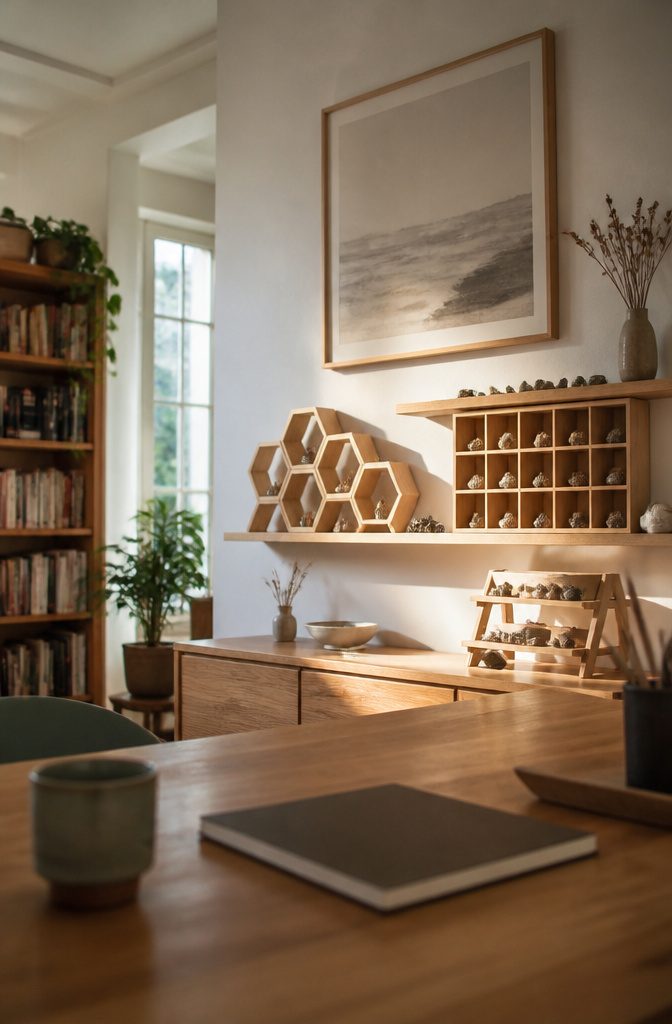
Open shelving gives trinkets room to breathe, and the format matters more than most people expect.
A grid works better than a single long shelf because compartments keep small objects from sliding into one visual clump. The Target 6-Cube Organizer at $35 is straightforward and stable, good for heavier pieces or books mixed with collectibles.
I find the Crate and Barrel honeycomb shelving at $69 more interesting when the collection itself is geometric or you want the display to read as intentional rather than accidental. The hexagons break up sightlines in a way that flatters miniatures.
For miniature collectors specifically, the Lovely Little House Nordic shelf offers eight compartments in four neutral colors, scaled to fit Calico Critters or Sonny Angels without wasting vertical space.
IKEA’s Lustigt wall shelf brings three small ladders into the arrangement, which sounds gimmicky until you see how much movement it gives static figures. The light wood finish takes paint well if you need it to match existing trim.
3. Pinboards for Paper Keepsakes

Cards, postcards, stickers, and buttons pile up fast, and pinboards let you see them without committing to frames.
I reach for a framed board when someone has a drawer full of paper keepsakes they want visible but contained. The frame gives it structure, and the board lets you swap things in and out without damaging them.
A framed pinboard from Pottery Barn runs $249, which is high but accounts for finished edges and hardware that sits flat on the wall.
It works best where the collection changes often, because pinning and unpinning is part of the point. If the items stay the same for months, a shadow box or poster frame usually makes more sense.
4. Magnets on the Refrigerator

A fridge door puts favorite items right where you walk past them all day.
Magnets hold postcards, ticket stubs, kids’ drawings, instant photos — anything light and flat that you want visible instead of filed away in a box. The surface is already there in the highest-traffic spot in the house, so nothing needs installing.
I use a set of 45 magnets from Amazon at $10.99, which gives enough to change out what’s displayed without running out.
Small round magnets disappear behind the paper, and stronger ones hold several layers at once if you want to overlap. The look stays casual, which fits a kitchen better than trying to make the fridge door into formal wall art.
Swap things out when you’re tired of seeing them, and the display never gets stale the way a framed collage does.
5. Poster Frames
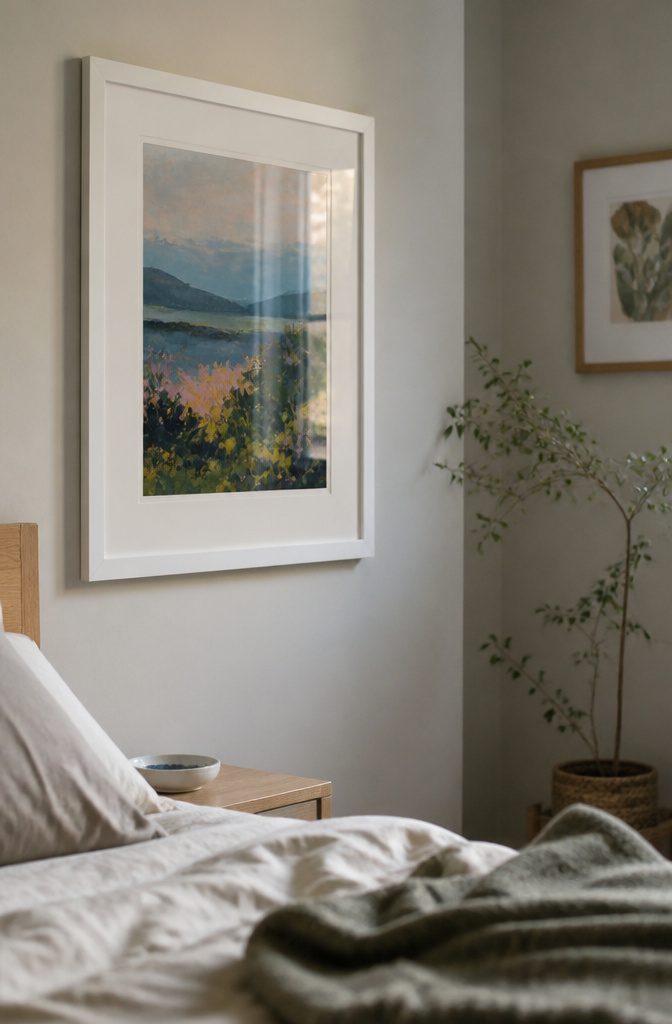
I still remember taping posters to dorm walls with masking tape, corners curling by October.
A poster frame changes that completely—even a cheap print looks intentional once it’s behind glass with a mat border. The difference is finish: tape says temporary, a frame says you meant to put it there.
The Amazon white wood poster frame at $25.99 hits the price point where framing stops feeling like a splurge.
White wood works in most rooms without competing with what’s inside it, and the frame itself is thick enough to read as furniture rather than an afterthought.
I’d pick it for anything you want on the wall longer than a season: a concert poster, a map, art prints you collected on a trip. If the poster matters enough to keep, it matters enough to frame.
6. Shadow Boxes for Objects and Mementos
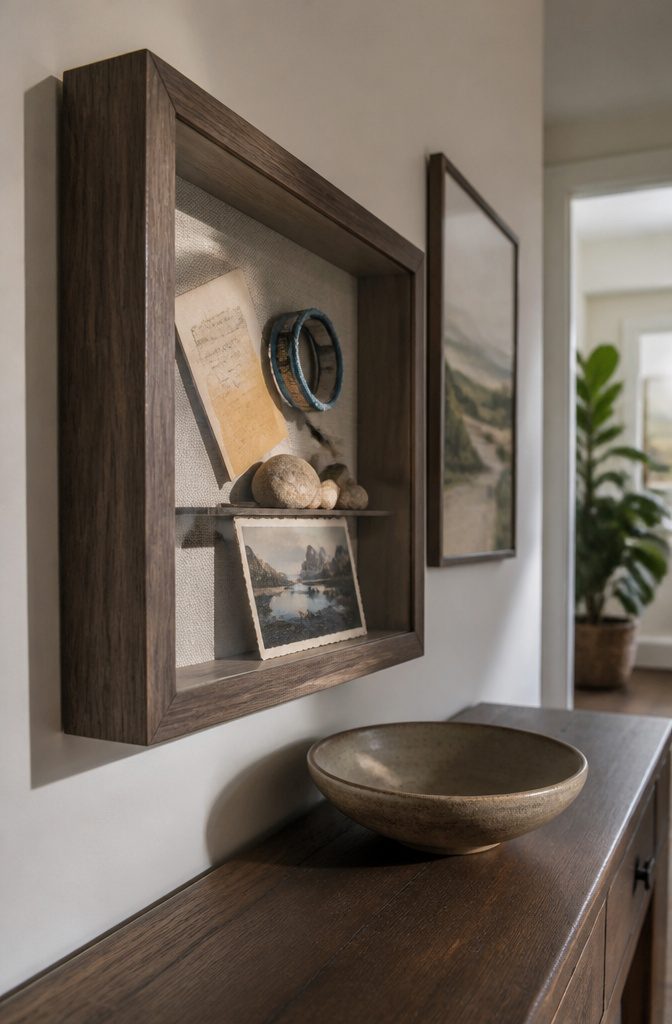
Shadow boxes give you depth a picture frame can’t, usually an inch or two that lets you fit dimensional objects behind the glass instead of just a flat photo.
I use them for anything that has actual thickness: concert tickets layered with a wristband, a small shell collection, or pins and patches that would otherwise sit in a drawer.
The Amazon 8" × 10" shadow box frame at $17.99 is a solid starting size for testing the idea without spending much.
The depth matters most when you want to combine objects from the same memory.
A few rocks from a trip, a photo printed at 4" × 6", and a postcard all fit in one frame when you have that extra room to arrange them without flattening everything.
I look for boxes with at least one inch of depth if the objects are small and flat, closer to two inches if anything has real bulk.
Different shapes and colors are available, so you can match what’s already on the wall or choose something that stands out on purpose.
7. Scrapbooks on the Coffee Table
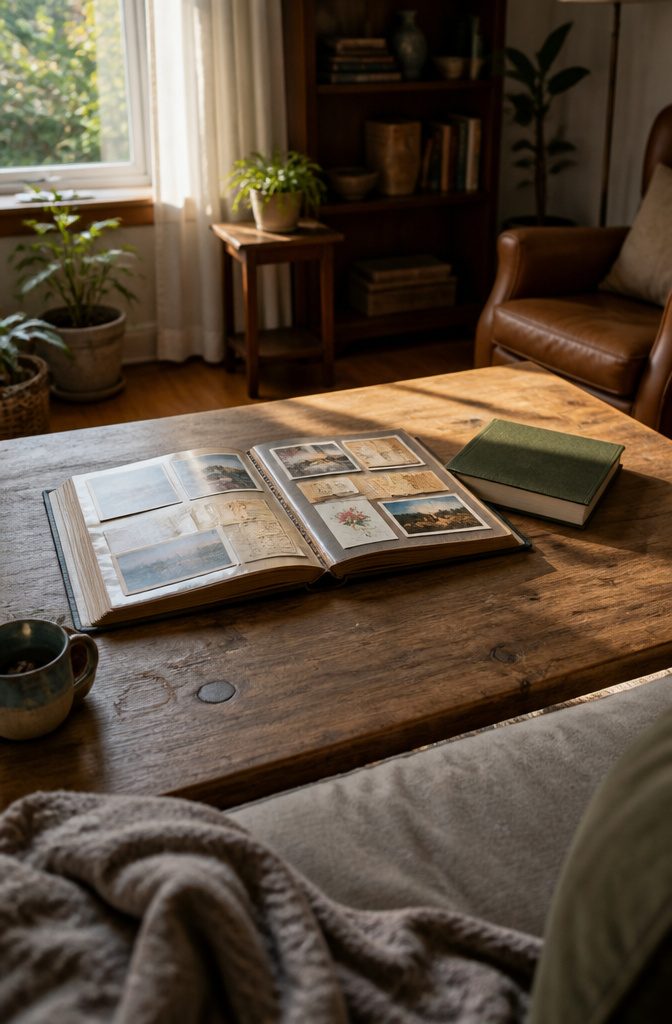
Scrapbooks turn a stack of greeting cards and keepsakes into a coffee table book you can actually look at.
When trinkets include paper collectibles like postcards, ticket stubs, or cards from an event, a scrapbook keeps them in one place instead of piled in a drawer or pinned all over the wall.
The format works because it holds more than a frame can and stays portable enough to move when someone needs the surface.
I like scrapbooks best when the collection is still growing. You can add pages over time without redoing the whole display, and the book stays out where visitors notice it without needing dedicated wall space.
The scrapbook on Amazon runs $18.99 and gives you enough room to organize cards chronologically or by theme.
It sits flat on a coffee table or ottoman, and you get to revisit the collection without unpinning anything or clearing a bulletin board.
8. Hanging Baskets for Vertical Space

Hanging baskets take vertical space other storage leaves behind.
I use mine for fruit on the kitchen counter, but the same rattan basket works just as well holding scarves near the bedroom door or a roll of fabric you intend to use someday.
The World Market rattan hanging basket at $49.99 is the one I keep coming back to when a client needs something that looks finished but doesn’t require mounting hardware heavier than a ceiling hook.
The win is surface space. A basket hanging overhead clears the counter or the dresser top completely, and in a small apartment that difference shows up fast.
You can layer two or three baskets on the same hook if ceiling height allows it, which gives you more capacity without losing floor plan. But remember reach: anything you need daily should stay on a lower shelf.
9. Jewelry Displays
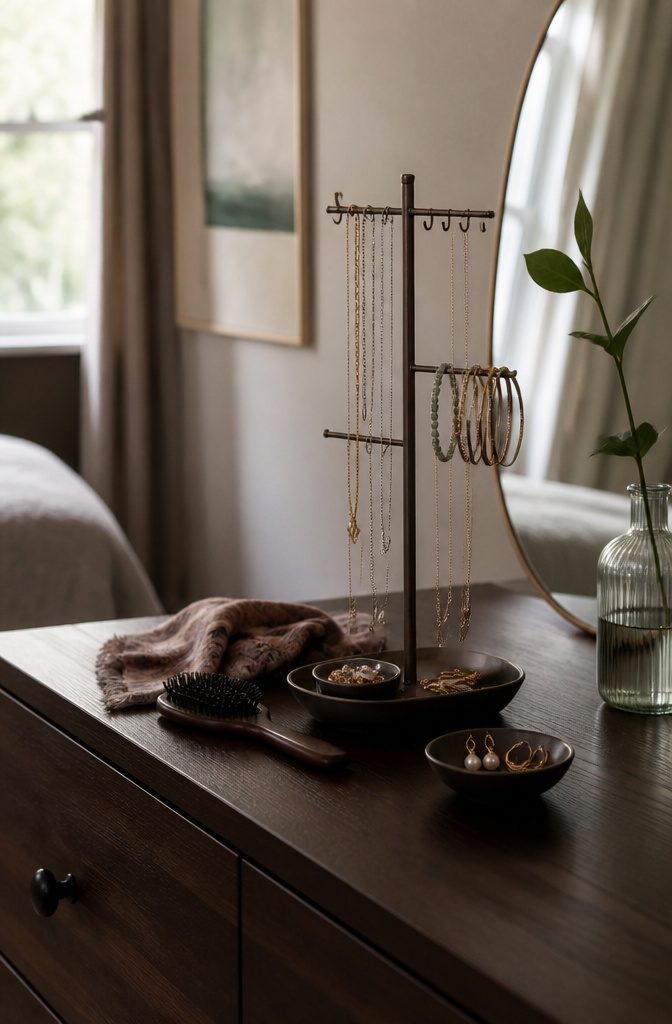
Jewelry scattered in a drawer gets tangled, scratched, and ignored.
When I keep necklaces and rings on display instead, I choose pieces faster in the morning and they last longer because nothing is digging into a clasp or bending a post.
A stand puts everything at eye level, so the bracelet you forgot about gets worn again instead of buried under scarves.
The Urban Outfitters recycled jewelry stand at $49 works well for renters who can’t drill into walls or don’t want to commit to a permanent setup.
It holds enough for daily rotation without taking up counter space a small bathroom can’t spare. I like that it keeps earrings separated and necklaces hanging long enough that chains don’t knot overnight.
If you wear jewelry regularly, a display pays off in time saved and fewer replacements for things that got lost or damaged out of sight.
10. Storage Benches and Ottomans

Storage benches and ottomans solve the problem of where to put things you’re keeping but don’t need to see every day. They give you furniture and storage in one piece, which matters when floor space is tight.
I like them for trinkets that aren’t seasonal rotation material but also aren’t display-worthy all the time—the kind of thing that ends up in a box under the bed otherwise.
The Overstock storage bench at $208.99 is built for this: flip the lid and the whole seat becomes storage.
It works in an entryway for shoes and winter accessories, at the foot of a bed for extra blankets, or along a wall in a living room where you need seating more than you need another shelf.
Access is harder. You can’t grab one item without lifting the whole lid, so this is better for things you use once a week or once a season than for daily rotation.
11. Gallery Walls with Mixed Elements
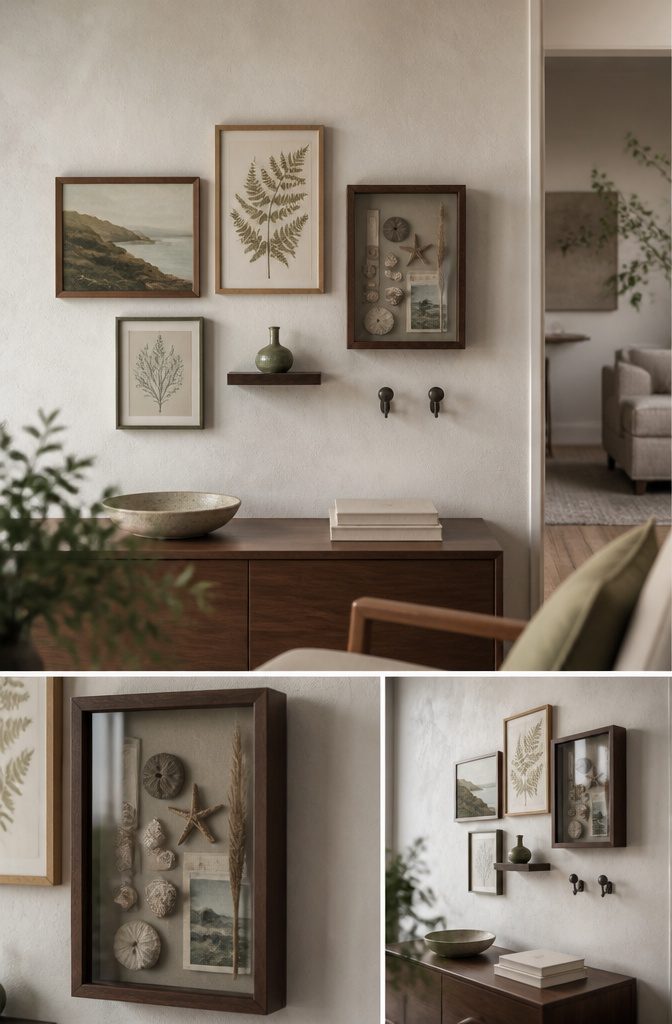
A gallery wall lets you turn a blank stretch into a cohesive display that mixes frames, shadow boxes, small shelves, and hooks.
Instead of scattering trinkets across different rooms, you group related items on one surface where they read as a collection rather than clutter.
The approach works especially well for things that tell a story together: concert tickets in a shadow box next to framed photos from the same trip, a vintage postcard pinned beside a small shelf holding a souvenir magnet.
Before you commit to hanging anything, lay the arrangement on the floor. Match the overall footprint to the wall space you have, and stop adding before the composition feels crowded.
Too many pieces jammed into a small area loses the visual breathing room that makes each item worth noticing. Once the layout works on the ground, transfer it to the wall using painter’s tape as a guide for placement.
The wall itself should have enough room to hold the collection without spilling into adjacent zones or competing with furniture below.
12. Trays and Decorative Dishes

Trays and decorative dishes work when you want to gather small objects into a grouping rather than scatter them around a surface.
A tray sets a boundary, which is what makes four loose items read as a collection instead of clutter.
I use them on coffee tables, dresser tops, and nightstands—anywhere flat enough to hold the tray steady and visible enough that the display does the work you need it to.
The tray itself adds something: color, texture, a frame. They come in enough sizes and finishes that picking one becomes part of the styling, not just the container.
Set a larger upright piece in the middle—a candle, a small vase, a stack of coasters—and arrange the smaller trinkets around it.
That gives the eye somewhere to land first. What kills the effect is overstuffing the tray with too many things, which brings back the clutter you were trying to avoid.
13. Glass Jars for Small Items

Glass jars let you collect small items in one place without losing sight of them. I use them for seashells, marbles, coins, anything small enough to pile up on counters when it has nowhere else to go.
The jar holds the collection together while keeping each piece visible, so you get the containment of a box without burying what you wanted to see in the first place.
You can layer small trinkets by color inside the jar to build a gradient effect, or keep them loose if the shapes matter more than the arrangement.
A ribbon or twine wrapped around the neck adds a finished look without much effort. Sand, beads, or small stones work as fill between larger items if the jar needs more weight or texture.
The best jars for this are clear glass with wide mouths, which make it easier to add and rearrange pieces. Set them on shelves, counters, or side tables where light can reach them.
14. Thematic Groupings

Grouping trinkets by theme keeps a collection from looking random.
Nautical, bohemian, rustic, and cottage core are the themes I see most often, but the idea works with anything consistent enough to read as intentional—vintage travel souvenirs on one shelf, ceramic animals on another, pressed botanicals near a window.
The grouping tells the room what the objects are doing there.
I arrange thematic displays the same way I would a gallery wall: similar pieces close together, with enough breathing room that each one still registers.
A nautical grouping might hold driftwood, shells, a small ship model, and a framed nautical chart. Cottage core leans on lace, dried flowers, enamelware, and anything that looks like it came from a garden shed.
Rustic pulls in wood, metal, stone, anything with visible grain or patina. Bohemian is looser but still needs a thread—color, texture, or a repeated motif like woven baskets or beaded textiles.
The mistake is mixing themes on the same surface.
A rustic wood tray holding seashells and a bohemian macramé piece next to a sleek ceramic vase reads as clutter, not curation. One theme per zone makes the collection look like a choice.
15. Rotation to Keep Displays Fresh

Rotating which pieces are on display lets you enjoy more of a collection over time without crowding every surface at once.
If you have seasonal trinkets, pull those out when the time of year fits and store the rest until they make sense again. A fall display might feature pumpkins and pressed leaves, while summer pieces stay boxed until next year.
The same principle works outside of seasons. When a display cabinet starts feeling too full, swap a few pieces for others you have not looked at in months.
The rotation adds variety to the room and keeps you from losing track of what you own. A minimal approach wins here.
Pick the pieces that matter most right now, and switch them out when you want the display to feel different. You can always bring something back later.
16. Vertical Wall Displays and Printers’ Trays

Wall-mounted displays pull trinkets up off every flat surface in the house, and printers’ trays are the version I reach for most often because the compartments are already built in.
The original ones were typesetting equipment, so each slot sized for a different letter or character, and that irregular grid keeps small objects from looking like they were arranged on purpose.
You can find vintage wooden trays or new reproductions in craft stores, then hang them as-is or paint the frame to match the room.
For anything more delicate or valuable, a vertical acrylic case keeps dust off without the visual weight of wood.
The Scobo Design five-tiered case uses UV-blocking acrylic and aluminum connectors that mount directly to the wall, so you get the floating look without needing a shelf below it.
I like this option when the trinkets themselves are colorful or detailed enough to carry the display, because the clear material disappears and the focus stays on what is inside.
17. Wooden Stands and Boards

Wooden Stands and Boards
A wooden stand gives a single trinket its own small stage, which works when the object itself deserves the attention.
The Japanese Kadai display method is built for this: individual wooden tables or boards that come in a variety of shapes, sizes, and finishes, from natural wood grain to colored lacquer.
You can find them as flat boards or as miniature stands with legs.
Each one lifts one item off the surface it sits on, so a vase or small sculpture reads as a deliberate choice instead of something that wandered onto the shelf.
I lean on these when a bookshelf or console table already holds other objects and I need one piece to separate visually without boxing it behind glass.
The stand creates a buffer. Place it anywhere, but it earns its keep best on a wide surface where the elevation registers at a glance.
18. DIY Box Shelves

Small boxes glued together make customizable shelves that free up counter space without a trip to the hardware store.
You need several small boxes, a strong adhesive, and paint. Arrange the boxes in different layouts before you commit, then glue them together once you settle on a design.
Clamps or chip clips hold them in place while the adhesive sets. Let the glue dry completely before you paint, and let the paint dry before you mount the finished shelf.
Color matters here.
Bright shades make the shelf pop against the wall, but neutral paint works just as well if the trinkets themselves carry the color. The shelf is the frame; the collection is what people should notice first.
If the first shelf works, alternatives multiply fast.
IKEA frames and old desk drawers both convert into shadow-box shelves with minimal effort. The cheapest route is a DIY foam-board and poster-frame case that costs about $10, and it mounts just as easily as anything store-bought.
Keep Displays From Feeling Cluttered
Lead-in:
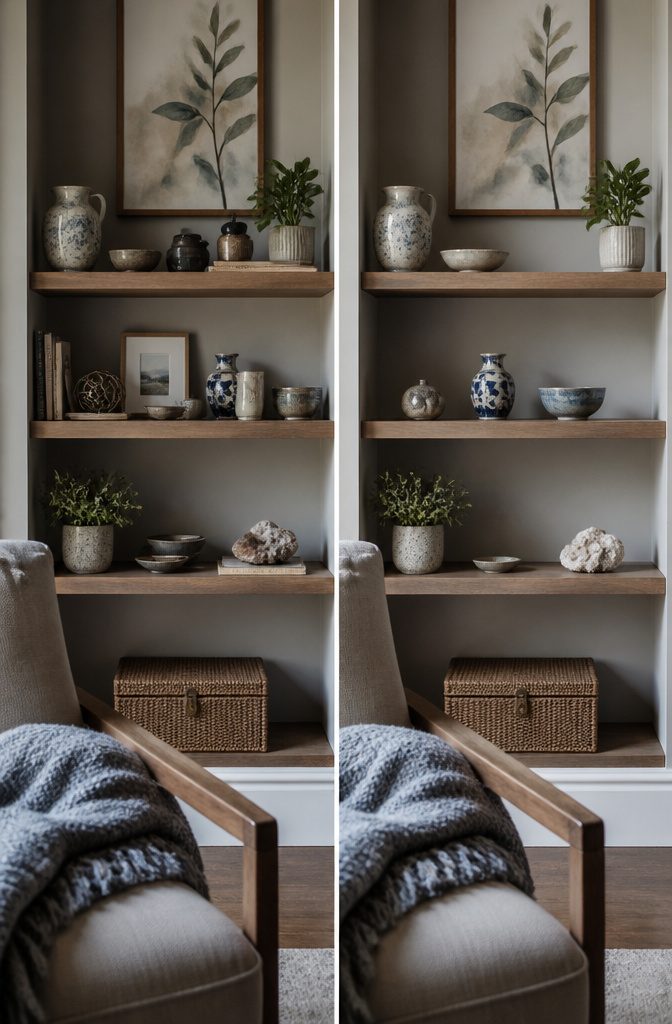
A shelf full of trinkets can tip from personal to cluttered fast. The difference usually comes down to a few deliberate choices about what stays visible and how much room you give it.
Bulleted list:
- Rotate pieces instead of showing everything at once. If you have two dozen small items, display eight and swap them every few months. The ones you see stay interesting, and the shelf doesn’t look packed.
- Leave breathing room around each item or group. Crowded trays and shelves read as clutter even when the items themselves are beautiful. I aim for at least a few inches of empty space between groupings so each one registers on its own.
- Group related items together by color, size, or origin. If you collected keepsakes through travel, cluster them by country. If not, grouping by color or type brings order without making the display feel random or hastily assembled.
- Keep a running inventory of what you have and where it sits. Knowing what you own prevents duplicate displays and makes rotation easier. A quick list on your phone works fine.
Declutter Before You Display
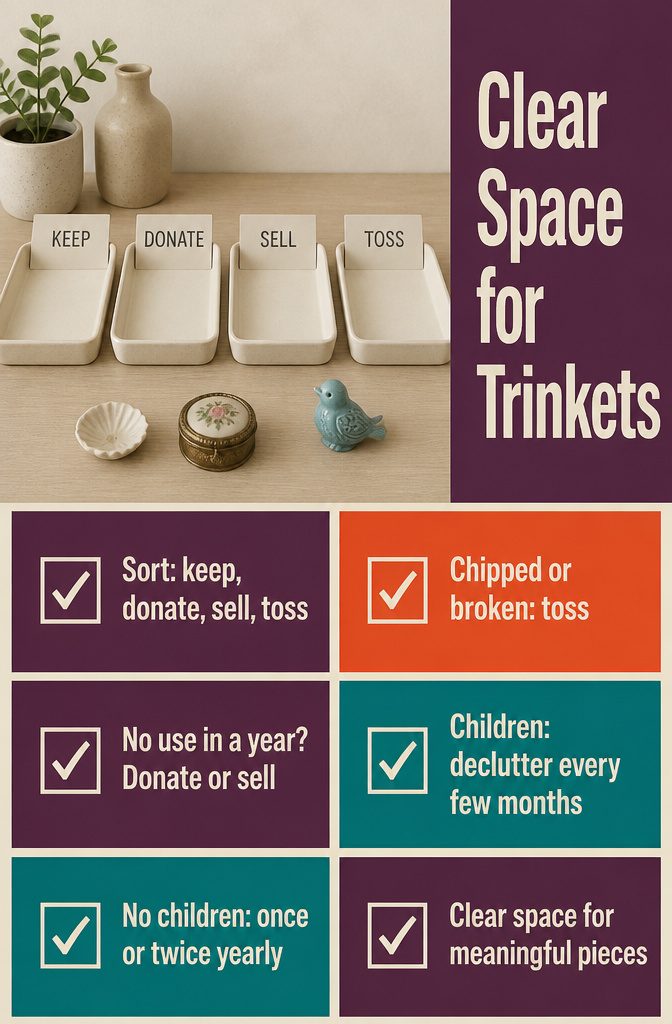
I sort trinkets into four piles before any of them go on display: keep, donate, sell, and toss.
Anything chipped, broken, or missing pieces goes straight into the toss pile, no matter how much I liked it when it was intact. That step alone clears out about a quarter of what I thought I wanted to keep.
From there, I look at what is left and ask whether I have used it, worn it, or even noticed it in the past year.
If the answer is no three times in a row, it moves to donate or sell.
Decluttering frequency depends on how often new things come in. Homes with children tend to need a pass every few months, since school projects, party favors, and small toys accumulate fast.
Homes without children can usually get by with once or twice a year, though that changes if someone shops frequently or collects actively.
You’re not trying to own less for its own sake. It is to clear space so the pieces that matter actually get seen.
Add Accent Lighting to Displays

Accent lighting makes trinkets stand out instead of sitting in shadow, and it’s one of the simplest upgrades for shelves, library walls, or any display surface.
Battery-operated sconces solve the problem renters and anyone without wiring constantly face: you can mount them exactly where the light needs to fall without cutting into drywall or hiring an electrician.
Seed IQ Lighting makes a version that’s dimmable, rechargeable, and adjustable in light temperature, so you can dial in warm light for a cozy shelf of souvenirs or cooler light if the display shares space with artwork.
The adjustability matters more than it sounds like it would. A fixed warm sconce might feel wrong next to a white-walled bookcase, and a cool one can make wood shelves look clinical.
I reach for these when a client has a collection that deserves attention but the room layout puts it away from windows or overhead fixtures.
Protect Valuable and Breakable Pieces

Pieces you cannot replace deserve protection from dust, damage, and curious hands. An acrylic or glass case keeps a signed collectible, a fragile figurine, or a completed LEGO set visible while shielding it from accidents.
Acrylic display cases from iDisplayit use premium panels thick enough to stop dust from settling and some models add vinyl backgrounds for depth.
If UV fading is a concern, Scobo Design’s 5-tiered wall-mount case uses UV-blocking acrylic and aluminum connectors that hold up better than snap-fit plastic.
The real win with cases is keeping valuable items out of reach when you have children or pets in the house. A breakable piece on an open shelf is an invitation for disaster.
A closed case lets you enjoy the item daily without the low-grade worry that it will end up in pieces on the floor. For smaller collections, single-item cases work better than trying to crowd multiple pieces into one box.
Frequently Asked Questions
What are some creative ways to display memorabilia?
Shadow boxes work well for dimensional items like concert tickets, wristbands, and pins that would otherwise sit in a drawer.
The depth lets you combine objects from the same memory behind glass without flattening everything. For paper keepsakes, a framed pinboard keeps postcards and cards visible while letting you swap them out without damage.
How do I display ornaments on a shelf?
Use compartmented shelving instead of single long shelves so small objects stay visually separated.
A grid format like the Target 6-Cube Organizer or IKEA’s Lustigt ladder shelf keeps pieces from sliding into one clump. Leave breathing room around each grouping and group related items by theme, color, or origin rather than scattering them randomly.
What do I do with trinkets?
Sort them into keep, donate, sell, and toss piles before displaying anything. Toss items that are chipped, broken, or missing pieces, then evaluate what remains by whether you have used, worn, or noticed it in the past year.
Display keepers using curio cabinets, shadow boxes, trays, or glass jars depending on size and value, and rotate pieces every few months so the display stays interesting.
What is the rule of three for shelves?
Instead, it recommends using compartmented organizers like grid shelving to keep small objects visually separated, leaving breathing room between groupings, and rotating which pieces stay on display rather than showing everything at once.