
The bathroom organizing ideas that actually survive past March are the ones you choose after you have already pulled everything out and counted what is expired, not before.
A $30 IKEA Råskog cart outlasts the bin set bought to fit a cabinet no one had measured; the difference is whether you declutter first and let the real volume pick the container.
1. Declutter Before You Store
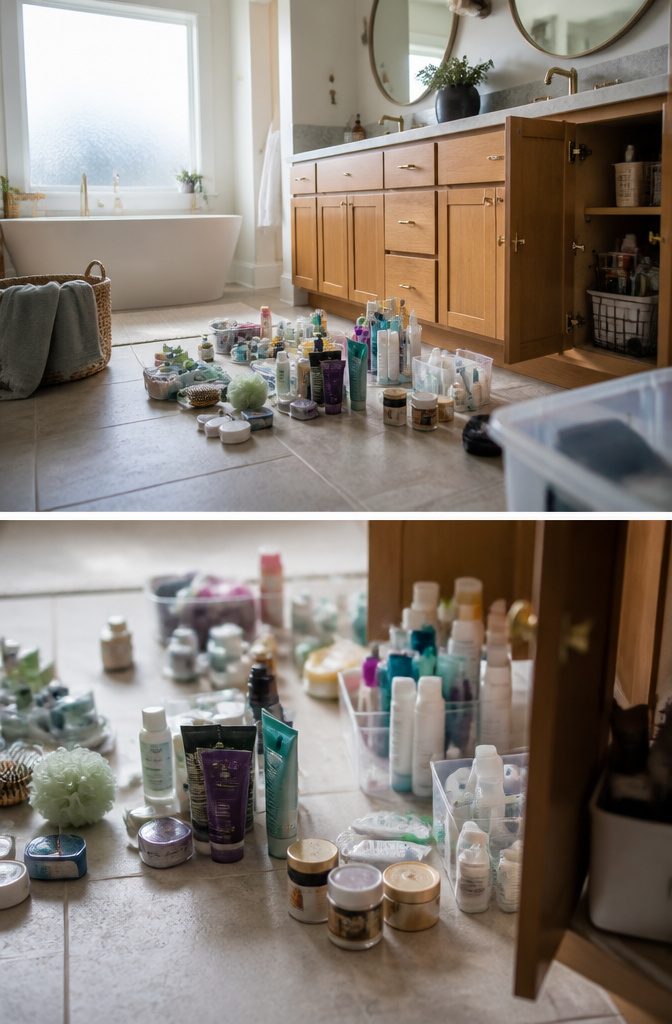
In 2019 I bought three matching bins for under the sink before I’d pulled a single thing out of the cabinet.
The bins looked great in the cart, but once home they sat half-empty while the real clutter, the stuff I hadn’t seen in two years, just got shuffled around.
Three trash bags later I had the real count: expired sunscreen from 2017, a dozen hotel shampoos with labels worn off, sample bottles I’d saved "just in case" that had gone cloudy.
The math changed completely. What I actually needed was one narrow bin for daily bottles, not the wide lidded set I’d already opened and couldn’t return.
Now I empty the whole space first. Every tube, every backup, every "maybe later" gets pulled onto the floor.
Expired or dried up goes straight out. Duplicates get checked: one open, one backup, anything extra goes to a guest basket or the trash.
Only after I’ve sorted into groups, toothpaste with toothbrush, hair ties with clips, do I measure what remains and figure out what, if anything, needs to hold it.
Most of the time the cabinet itself handles more than I thought once the dead weight is gone.

ESSENTIALS STORAGE PREFERRED: The multi-purpose organizer storage is a good helper to keep your vanity or bathroom countertop tidy. It can also be used as under sink organizer, kitchen organization, pantry organizer, refrigerator storage, cabinet storage. Suitable for storing cosmetics, toiletries, perfumes, cleaning supplies, snacks, bottles, spice jars

2 Pack 3 Tier Adjustable Height Design: L-shaped design maximizes vertical space through a small top and wider bottom, accommodating pipes while easily storing tall bottles (up to 10'') and cleaning supplies. Adjustable height desgin meets more efficient space utilization needs, saying goodbye to cluttered space

【Sliding Drawer Design】The bottom drawer features a pull-out design, providing a convenient way to access items in a limited space.
2. Bins and Baskets for Open Storage

Open storage only works when the bins earn their spot. A basket that slips every time you open the drawer ends up ignored, then empty, then gone.
A 12-by-6 inch bin holds roughly six rolled hand towels or a family’s worth of travel toiletries, which is the size that actually fits most vanity drawers without wasting half the depth.
A dot of Museum Gel on each bottom corner keeps a bin from sliding without commitment. It peels off clean when you rearrange, and it costs less than replacing the whole organizer because the first one drifted into the plumbing.
I keep a tube in the junk drawer now and reapply it every time I swap categories around.
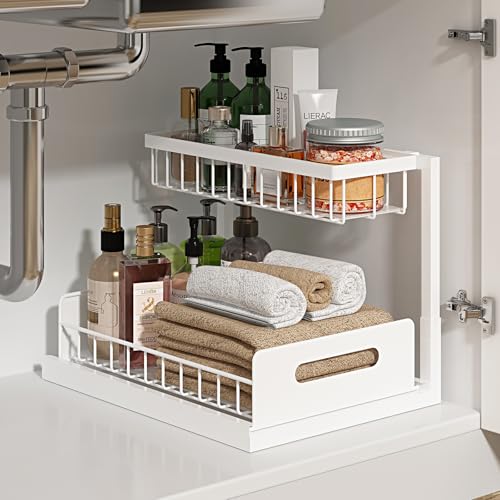
L Shaped Design: L-shaped design with narrow top and wide bottom, leaves space for plumbing and garbage disposal, maximizing the vertical space of the sink. And the bottom tier leaves a suitable space for your tall bottles, which can solve your cabinet storage troubles

MORE REPLACEMENT OPTIONS : We will provide 4 adhesive stickers(more than normal), with 2 as replacements for backup, this allows you to quickly replace the adhesive sticker when it loses its adhesive force or when you need to change the installation location

【L-SHAPED DESIGN FITS AROUND PIPES AND GARBAGE DISPOSALS】 The narrow top basket mounts left or right to clear your plumbing. The wide lower tier reclaims full vertical space under the sink, turning a blocked corner into organized, easy-to-use cabinet storage
3. Shelves and Cabinets You Actually Install
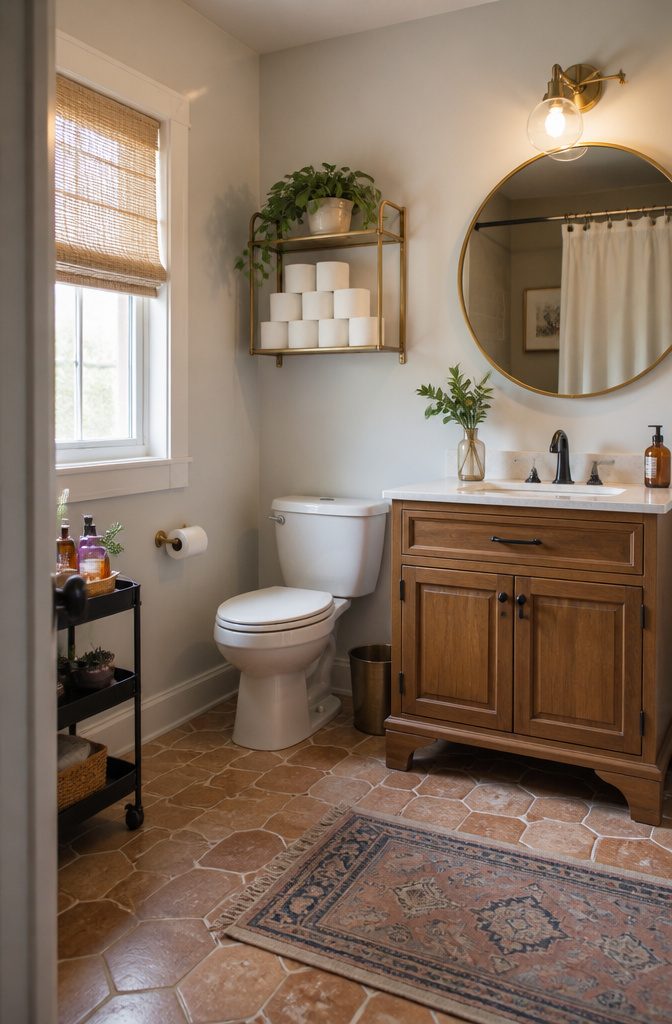
Wall-mounted shelves above the toilet turn dead space into storage you actually reach for.
In my last rental, a brass wall unit held extra TP and a small planter without crowding the room, and the install took one afternoon with a drill and anchors.
Floating oak shelves work the same way if you prefer the look, though you will need to check stud placement or use heavy-duty toggles, since a gallon glass canister full of cotton balls weighs more than it looks.
Fixed shelving is not the only play. The IKEA Råskog Utility Cart runs about $30 and moves where you need it: beside the tub for bath toys, against the wall for cleaning supplies, rolled away when company comes.
The slotted steel trays drain water through, which matters more than I expected with wet toys or just-washed bottles. Lockable wheels keep it from sliding on tile.
The catch with open shelves, fixed or rolling, is what sits underneath. A trash can that is too tall blocks the bottom shelf from use.
The Simplehuman 4.5L Round Step Can, roughly a foot tall and 10 inches across, slides under most standard open shelving without eating the clearance you need for baskets or spare rolls.

【Multi-Functional】The closet drawer are convenient to store your lightweight items such as shoes, clothes, toys, snacks, books, file etc. Suitable for bedroom, bathroom, kitchen, living room, office or study areas. Stylish neutral style, suitable for any place

VERSATILE ORGANIZER BINS - Effortlessly organize drawers, cabinets, and shelves. Use as nursery drawer organizers, pantry storage for spices and snacks, and bathroom baskets for toiletries.
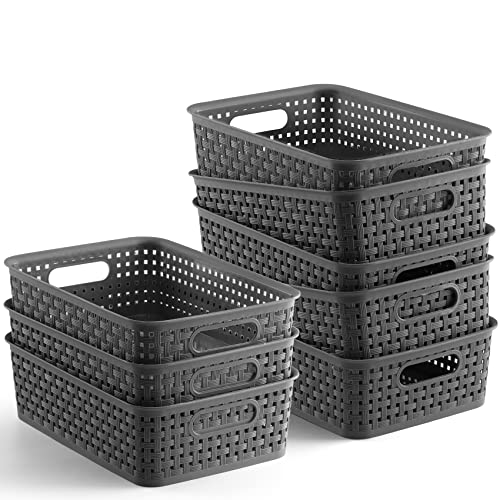
PRODUCT CONFIGURATION: 8 woven pattern plastic baskets, gray. Dimensions:10.6” L x 7.2” W x 3.2” H, basket use small holes design helping ventilation, better organization and storage items.
4. Vertical Space Most People Skip
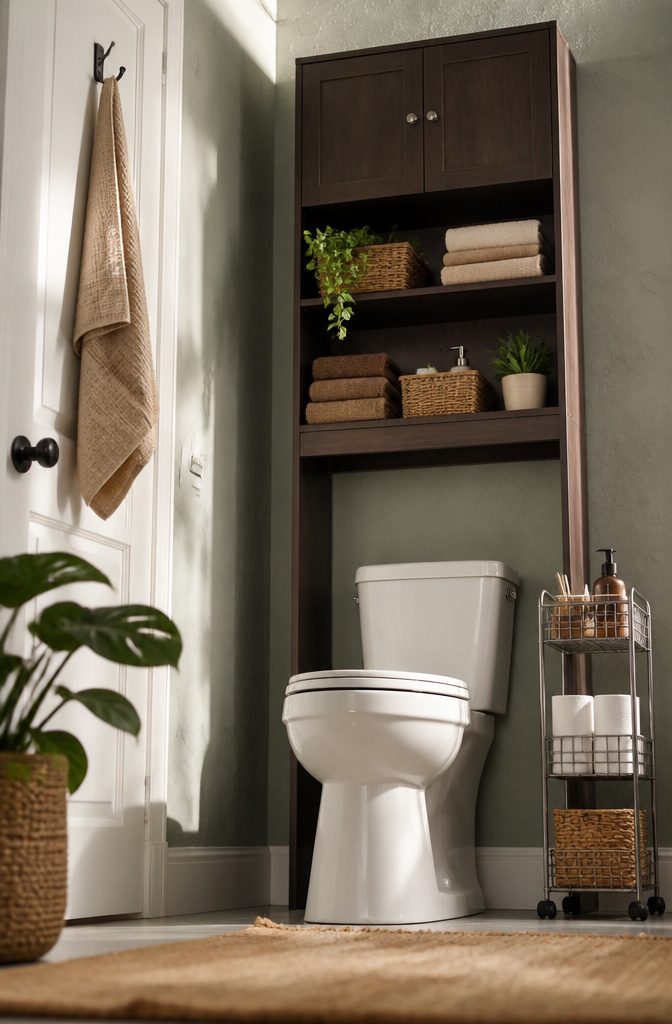
The wall above a toilet or behind a door is usually the last place people look for storage, which is exactly why it stays empty while cabinets overflow.
An over-the-toilet cabinet or etagere turns that dead zone into shelf space without eating a single inch of floor, and for renters, an over-the-door rack hangs on existing hardware with no holes to patch later.
I learned the hard way that adhesive hooks on textured paint are a waste of time and a waste of the hook.
Textured paint breaks the seal within days, and whatever you hung ends up on the tile at 2 a.m. If the door itself is smooth, an over-the-door unit with hinge-pin mounting or a simple hook bracket is the zero-footprint fix.
For laundry in a tight bathroom, the Yamazaki Rolling Wire Basket stands 24 inches high and runs slim enough to park beside a vanity or in the sliver between fixtures.
The open wire frame keeps air moving so clothes do not sour, and two of the four wheels lock so it stays put until you roll it to the washer.
At around $145 it is not cheap, but it carries about two loads and moves with you, which matters when the alternative is a hamper blocking the only path to the shower.
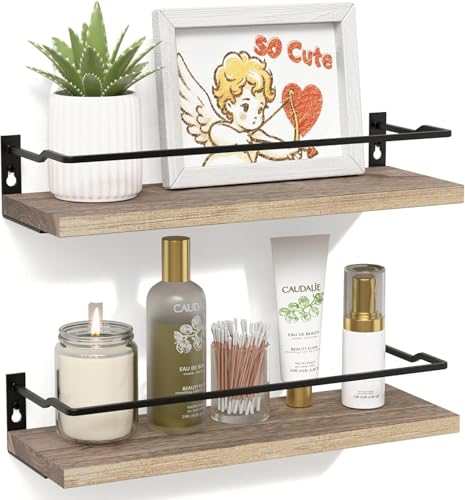
Unleash Possibilities -Fall decor, maximize your wall space by transforming empty areas into functional storage and stylish displays. Whether you're seeking to declutter your bedroom with a chic sideboard, tidy up your bathroom with a convenient bathroom storage wall shelf, or enhance the ambiance of your dining room with an eye-catching display, our solution covers all your needs.

This bathroom storage shelf is designed to solve your bathroom clutter woes without creating new problems. Its space-saving design maximizes your bathroom's potential, providing ample storage for towels, toilet paper, and other essentials while keeping everything organized and within reach. Perfect for small spaces, it seamlessly integrates into your bathroom without taking up extra room, ensuring a clean and tidy environment.

Solid Paulownia Wood: Our floating shelves are crafted from 100% paulownia wood with a fine wood grain and attractive finish. Paulownia wood is naturally resistant to decay, warping, and pests, making these bathroom shelves perfect for wall decor in any living space.
5. Labels That Hold

A label only works if you can still read it six months later.
I learned that the hard way after two humid summers, when the masking tape curled off my acrylic bins and the Sharpie bled into gray smudges no one could decipher.
The bathroom looked organized, but every morning brought the same guessing game about which bin held hair ties and which held backup toothpaste.
The Brother P-touch label maker runs about eight dollars, and the thermal tape actually survives steam. I bought mine after that second summer of tape failure.
The labels stay flat, the text stays black, and the small size fits drawer fronts and bin lids without shouting. Battery life is long enough that I have not replaced them in two years of regular use.
For renters, the labels peel off clean when it is time to move. No residue fights you, which matters more than I expected when I was stripping old painter’s tape off everything else in that bathroom.

【Perfect for Makeup Drawer Storage】Versatile 10pcs drawer organizer can be combined in 9*12 and 9*18 inch drawer in vanity, they are perfect for organizing cosmetics like lipstick, hair accessories, eye shadow, makeup brush, beauty products, jewelry and more, keep your vanity drawer well organized.
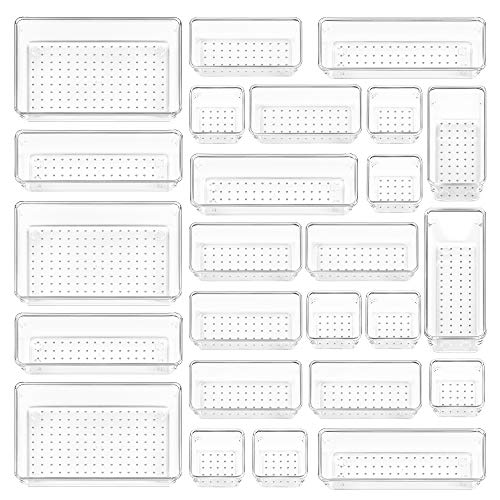
✔Make Everything Organized -- These clear versatile drawer dividers trays are perfect for any place in your home. Fit all kinds of drawers, such as vanity / bathroom / kitchen / office drawers/ craft room, ideal for organizing cosmetics, makeup tools, hair accessories, jewelry, pins, office supply, craft supplies, utensils, etc.

Premium Material:The drawer organizer is made of non-toxic plastic which may be safely used. The transparent design makes it easy to find what you need quickly
6. Drawer Dividers That Fit

The iDesign Linus Shallow Drawer Organizers sit at just 2 inches deep, which makes them low enough for most vanity drawers without eating usable height.
I like them for sorting the small stuff: one 6-by-6-inch square for headbands, a 3.3-by-9.6-inch rectangle for two hair brushes, a 3-by-3-inch corner for sample creams and elastics.
The rubber feet actually grip, so nothing slides when you grab and go.
A standard 18-inch bathroom drawer leaves about a half-inch gap once these are lined up.
That sliver becomes its own problem: hair ties migrate, a comb turns sideways, and you’re fishing for things again. Two fixes work.
Buy an extra 3-by-3-inch to fill the dead space, or accept the gap and use it for a flat item like a travel mirror. I lean toward filling it.
A drawer with no wiggle room stays sorted longer. The bins run about $4 per piece at The Container Store, size depending, or roughly $12 for a two-pack on Amazon.
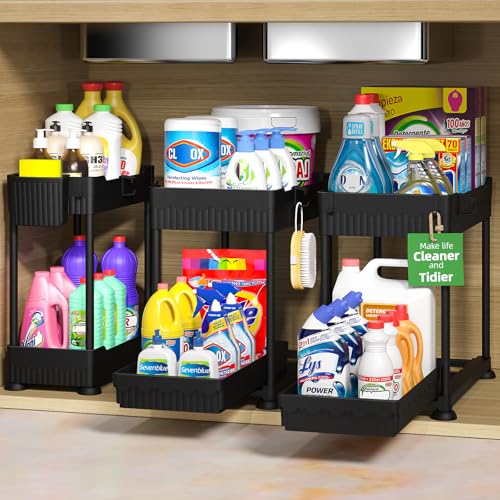
[Extra Accessories, Endless Uses]: Say goodbye to messy cabinets and cluttered counters. Sevenblue under-sink organizers are a fan favorite—and for good reason. We’ve taken your feedback and made them even better with handy add-ons like hanging cup, C-hooks, and non-slip feet. And they’re not just for under the sink! Use them in the kitchen, bathroom, laundry room, cabinets—you name it. Wherever you need a little extra organization, these shelves have your back
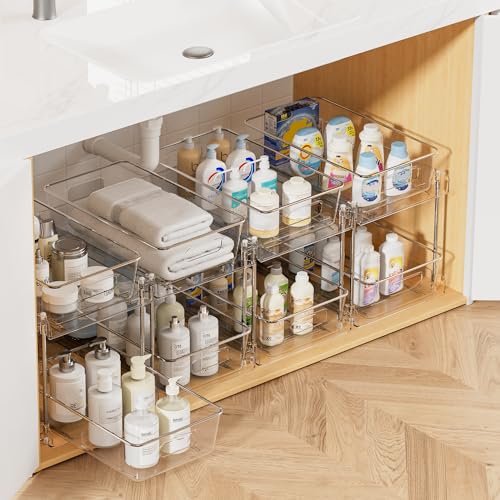
ESSENTIALS STORAGE PREFERRED: The multi-purpose organizer storage is a good helper to keep your vanity or bathroom countertop tidy. It can also be used as under sink organizer, kitchen organization, pantry organizer, refrigerator storage, cabinet storage. Perfect for storing cosmetics, toiletries, perfumes, cleaning supplies, snacks, bottles, spice jars.

Stackable Storage Bins: The top of the drawer has groove design ensures stacking. Use these stackable drawers to save space, which is also keep organized
7. Rolling Cart for Daily Items

The Råskog runs $30 at IKEA and assembles in about fifteen minutes, which matters more than it should on a Saturday afternoon with other plans.
Three 11-by-15-inch trays hold enough for daily rotation: the top for whatever lands on your counter by default, middle for backup bottles, bottom for the stuff you reach for weekly.
The slotted steel drains water through, so wet washcloths or bath toys do not sit in their own mildew.
I have rolled mine through three apartments. It started in a six-inch gap between a pedestal sink and the wall, held toilet paper and the hair dryer I refused to mount.
When that bathroom got a proper vanity with drawers, the cart rolled to the hallway linen closet and now carries overflow sheets and the backup shampoo supply.
The lockable wheels keep it from drifting on tile. Steel with an epoxy coat has held up fine in humid air, though I would not park it inside a shower enclosure.
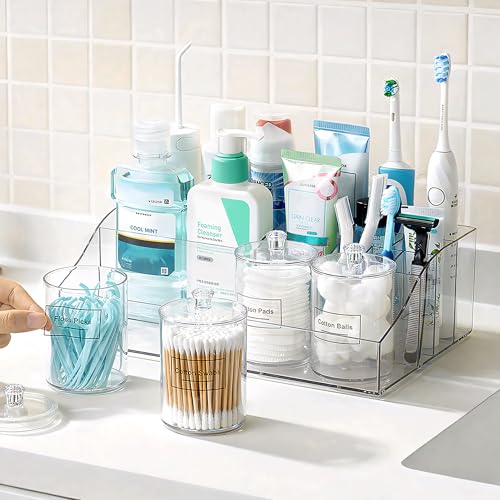
Family-Sized Countertop Organizer: 11 divided sections keep electric toothbrushes, toothpaste, skincare bottles, mouthwash, floss, and razors neatly separated, providing ample space for each family member and reducing countertop clutter

Sturdy Construction. Made of high quality metal, this 2 Tier bathroom counter organizer can support heavy objects without breaking. Perfect way to declutter a small counter
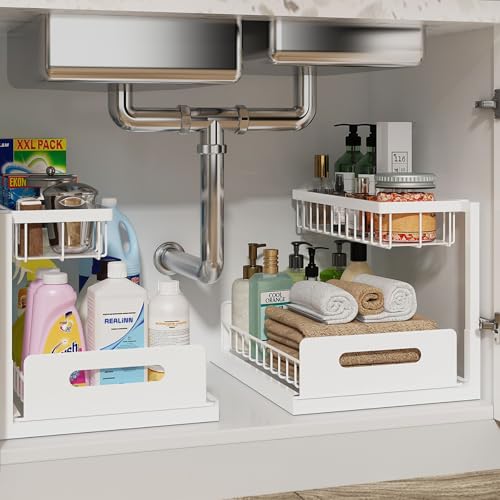
【L-SHAPED DESIGN FITS AROUND PIPES AND GARBAGE DISPOSALS】 The narrow top basket mounts left or right to clear your plumbing. The wide lower tier reclaims full vertical space under the sink, turning a blocked corner into organized, easy-to-use cabinet storage.
8. Hooks Where You Would Not Expect Them
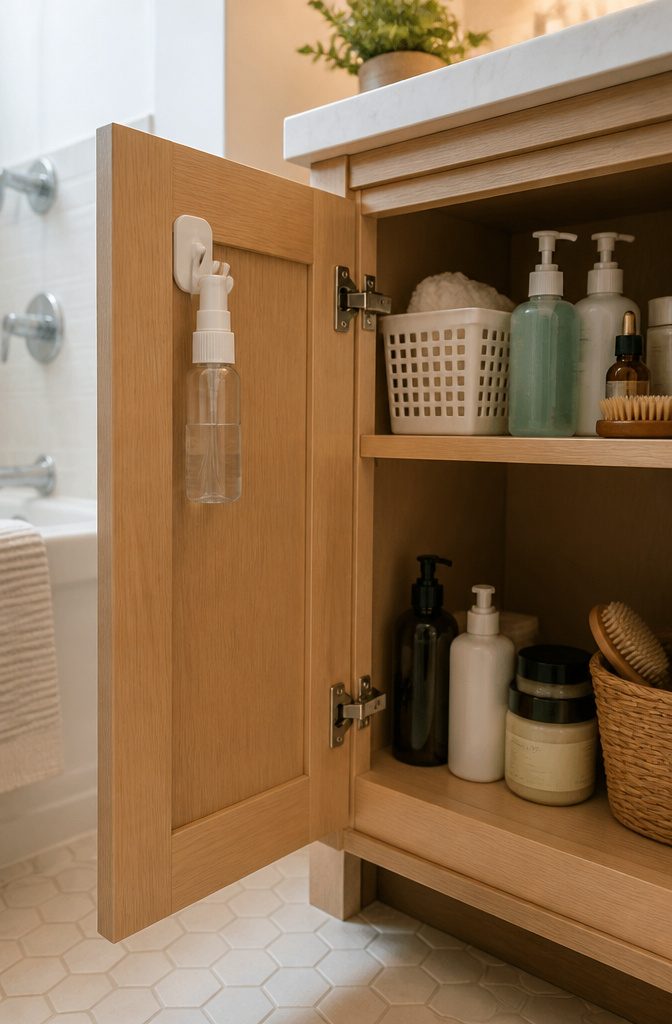
The inside of a cabinet door is dead space until it isn’t.
A waterproof adhesive hook, the kind that peels off without taking paint with it, turns that blank panel into storage for a hair dryer or a spray bottle you want hidden but quick to grab.
I like the large 3M Command strips for this: rated at 5 lb, which sounds generous until you hang a heavy ceramic brush and feel the hook sag over a humid week.
Weight limits on the package are real numbers, not suggestions, and steam softens adhesive faster than dry air does.
For anything that pulls at the hook, a basket hung from two points beats one, since the load spreads and the door still closes flat.

【Multi-Functional】The closet drawer are convenient to store your lightweight items such as shoes, clothes, toys, snacks, books, file etc. Suitable for bedroom, bathroom, kitchen, living room, office or study areas. Stylish neutral style, suitable for any place

2-Tier Mesh Sliding Drawers: The under sink organizer feature upgraded round rails with plastic pads for a smooth, quiet sliding experience—no metal-on-metal noise. Both upper and lower drawers slide out effortlessly, making it easy to access items stored deep in your lower cabinet

[ Compact Size ]: With dimensions of 11.5 x 7.5 x 4.7 inches, this rectangular basket is designed to accommodate most small household items. Each set of 3 pieces can be sorted to store cosmetics, jewelry, baby diapers, towels, remote controls, keys, credit cards, wallets, charging cables, toys, snacks, paper towels, and more
9. Lazy Susan for Cabinet Depth

Deep bathroom cabinets swallow things whole. A turntable pulls them back within reach with a quarter-turn, no crouching or shuffling bottles required.
I learned the hard way that diameter matters more than I expected. The 12-inch iDesign Linus I tried first knocked against the hinges of my 14-inch-deep medicine cabinet and refused to spin.
The 9-inch size spun freely, and that inch of clearance made the difference between useful and useless. On that smaller turntable I keep daily skincare: a vitamin C serum, moisturizer, and the small sunscreen tube I reapply most mornings.
The failed 12-inch moved to the under-sink cabinet where depth is generous and it now holds taller bottles: shampoo, conditioner, a spray bottle for plant misting that lives there because the bathroom is where I remember to use it.
A lip around the edge keeps small jars from sliding off when the spin stops suddenly.
Taller bottles belong in the center or at the edges so sightlines stay open to everything at once rather than hiding one product behind another.

RUSTIC WOOD SHELVES: Made of real solid wood and metal, the industrial look is simple and modern. Make use of the vertical space on the wall, not only increase storage space but also add decoration and beauty. When these shelves make the messy picture clean and tidy, it will make you happy.

Material: Medium Density Fiberboard, outlasts wood in damp bathroom environments
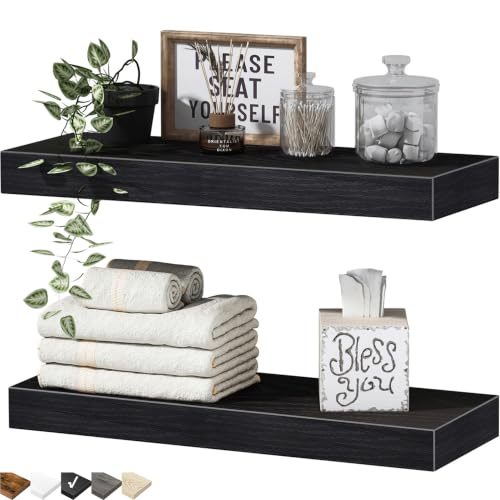
Maximize Your Space: 6.7"D x 15.7"W x 1.5"H. 6.7" depth, ideal for books, baskets, toilet paper, or towels. Includes 2 shelves for optimal use of space
10. Clear Containers for Visual Inventory

Clear plastic beats pretty ceramic the second you open the cabinet and wonder whether you already bought more cotton rounds.
I learned that in 2017, standing in Target with a fresh box of Q-tips and the nagging sense I had done this before.
Back home, four half-empty boxes were wedged behind a stack of hand towels. The $4.99 IKEA SAMLA box ended that particular cycle because I could see the inventory without unstacking anything.
The SAMLA line comes in enough sizes that one fits a Costco-sized dental floss haul and another sits flat in a medicine cabinet.
I line them up under the sink, same orientation every time, and run a six-month check-in when the seasons change: anything dusty or unopened since the last rotation goes to the guest bath or the trash.
The container does not fix itself, but at least now the problem is visible.

【Holds 177 Items】 ---- Organize up to 177 everyday items in one set! These Clear plastic drawer organizers fit effortlessly into bathroom drawer organizer, vanity organizer, office drawer organizer, bedroom, closet, or garage desk drawers.

【LARGER SIZES】With 3 different sizes, our 6 pack clear drawer organizers could hold more gadgets, large and long enough to hold kitchen utensils, silverware, household tools and more. Includes: XL-12x6x2 inches(2pcs), L-9x6x2 inches(2pcs), M-6x3x2 inches(2pcs), Non-slip silicone pads(24pcs).

Premium Long-Lasting Material: ElegantArray drawer organizers are made of premium, sturdy plastic which is non-scratch and shatter-resistant, making them safe to use. The clear exterior allows for easy visibility of stored items, so you don’t need to rummage through drawers searching for what you need
DIY Storage From Unexpected Aisles
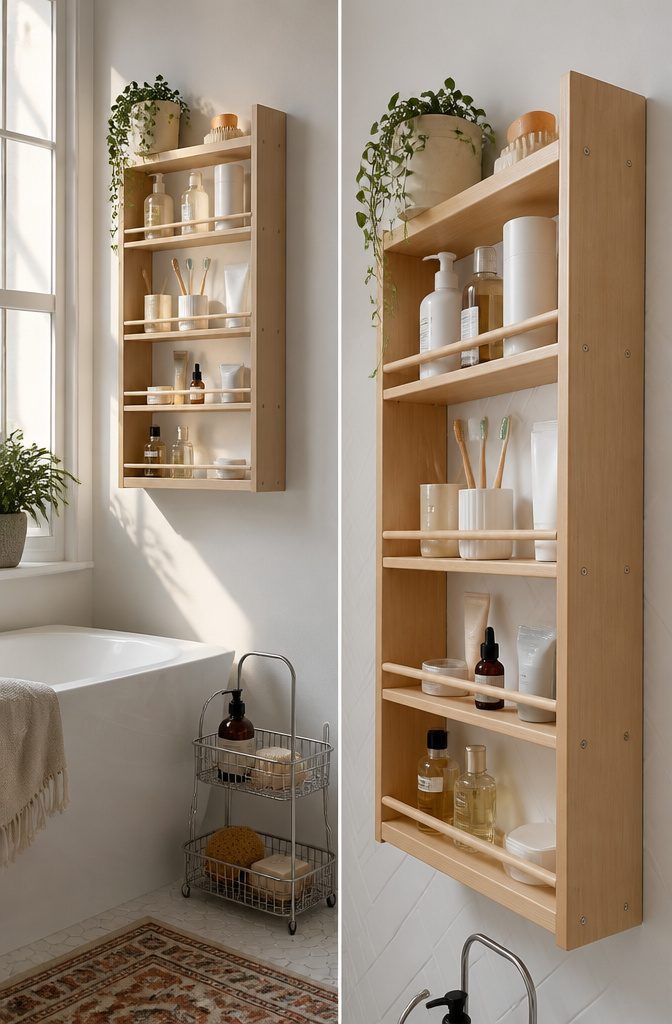
The best bathroom organizing ideas sometimes start two aisles over from the bath section. A $6.99 IKEA BEKVÄM spice rack hangs flat against the wall and holds toothbrushes, lotions, or daily skincare without swallowing counter space.
The shallow depth keeps bottles from creeping forward, and the unfinished birch takes paint if you want it to disappear into white tile.
A shower caddy meant for shampoo bottles can anchor on the wall outside the shower instead.
The three-tier aluminum styles hold enough weight for a hair dryer, flat iron, and spray bottles if you add a couple of S-hooks or small bins to keep cords from tangling.
What convinced me, reading through a dozen of these setups, is that renters skip the tension-rod caddies that slip and rust and go straight for the wall-mounted version they can take with them.
The OXO 3-Tier runs about $42 on sale and installs with suction cups, no drilling needed if your landlord is particular.
Containers That Look Good Enough to Leave Out

Visible storage only works if the container earns its spot on the counter. The toothbrush holder is the easiest test: a plastic cup collects water spots and looks like a dorm leftover, while a ceramic one reads as intentional.
I spent $14.99 on an H&M Home ceramic holder last spring after the old cup started cracking at the rim.
The weight alone keeps it from tipping when I drop a brush in half-asleep, and the glaze wipes clean instead of staining.
Toilet paper is harder because you need volume and you need it close. A rattan basket solves both: it holds a three-roll tower beside the toilet without turning the space into a public restroom stall.
The weave adds texture against tile, and the lid keeps the top roll clean. The basket cost me less than the ceramic holder, and it did more for the room’s look than a wall-mounted dispenser I priced out and abandoned.
Open storage fails when the container looks like a temporary fix. Spend the small amount on materials that match the room’s tone, and the clutter you cannot eliminate becomes part of the design instead of noise against it.
What I Check Every Six Months

The calendar alerts hit in March and September because those months still feel like turnover, even years out of school.
I set two on my phone, and when the chime goes off I walk in with a timer running for fifteen minutes.
The audit is simple: anything that shifted out of its zone goes back, anything empty gets tossed, and anything that arrived since the last check without a clear job gets flagged.
The one-in-one-out rule never stuck here. Samples, hotel bottles, and gift-with-purchase tubes multiplied faster than I could finish the full-size versions.
One-in-two-out for anything under two ounces finally broke the cycle; the smaller the item, the easier it is to justify keeping, so the math has to be stricter.
I keep a paper bag under the sink for outs, and when it holds two small items the newer one of the pair goes in.
Small Bathroom Layouts That Work

A 24-inch-wide guest bath with no linen closet forces every decision.
Mine had a toilet, a pedestal sink, and 38 square feet total. The wall above the tank carried the whole storage load.
An over-toilet cabinet in that spot needs at least six inches of clearance from the tank lid to open its doors without hitting the flush handle.
I measured twice because the first cabinet I considered was 22 inches deep and would have blocked the doorway swing. A 12-inch depth fit, but only just.
Vertical space above that cabinet goes mostly unused.
A ladder shelf with basket storage, or a wall-mounted etagere, buys another 18 to 24 inches of height without claiming more floor. The freestanding ladder option works when you cannot drill into tile or landlord-grade walls.
Wasted floor space in a corner, even a slim triangle, holds a narrow storage cabinet or a tray-topped piece. The mango wood cabinet style keeps toiletries from reading as clutter when the door stays open during a rushed morning.
In bathrooms under 40 square feet, the measurement that matters most is the swing radius: door, cabinet, and your own knees at the sink. Anything that lives in the room must clear all three.
Drawer Systems for Shared Bathrooms

Shared bathroom drawers usually fail because nobody agrees on whose system is running the show. I tried sorting by function first: one zone for dental, one for hair, one for skincare.
Three months later everything had drifted back into the same jumbled pile, because nobody wanted to sort someone else’s tube of half-used product from their own.
Dividing the drawer by person, not by function, is what actually held.
Each of us got a long organizer with our name on it. The trick was picking shallow trays that sit side by side without gaps wide enough for things to slide underneath.
Custom dividers that adjust to the drawer width keep the trays from shifting when you yank the drawer open before coffee.
Label each divider with a name, not with what goes inside.
"Sarah" reminds her to put her things back; "hair ties" invites everyone else to dump whatever small item they are holding. I learned that the hard way when the dental tray became the junk drawer by week two.
Deeper drawers work better for larger items pushed toward the back, but only if nothing in front blocks them from sliding shut.
Test the full open before you commit to a layout: a free-standing cabinet too close to the vanity stops the drawer at half extension, and half an open drawer is where organization goes to die.
Frequently Asked Questions
How do I organize a small bathroom?
Start by emptying the entire space and sorting into groups before buying any storage.
Use vertical areas like the wall above the toilet and behind the door, and measure swing radius for door, cabinet, and knees at the sink so nothing blocks movement.
An over-toilet cabinet with at least six inches of clearance from the tank lid, a rolling cart like the IKEA Råskog at $30, or a narrow floor piece in an unused corner all add storage without crowding the room.
What are some tips for organizing bathroom drawers?
Use shallow dividers like the iDesign Linus at 2 inches deep, and assign trays by person rather than by function so items actually get put back.
Label each divider with a name, not a category, to keep shared drawers from becoming junk piles. Fill any half-inch gaps with an extra small bin so nothing can slide and migrate.
How can I maximize storage in a small bathroom?
Think vertically first: over-the-toilet shelving, behind-the-door racks, and the wall above fixtures turn dead space into usable square footage. Under 40 square feet, the swing radius of door, cabinet, and your own knees matters more than total floor area.
A rolling cart moves where needed and locks in place, while adhesive Museum Gel on bin corners keeps open storage from drifting into plumbing.