
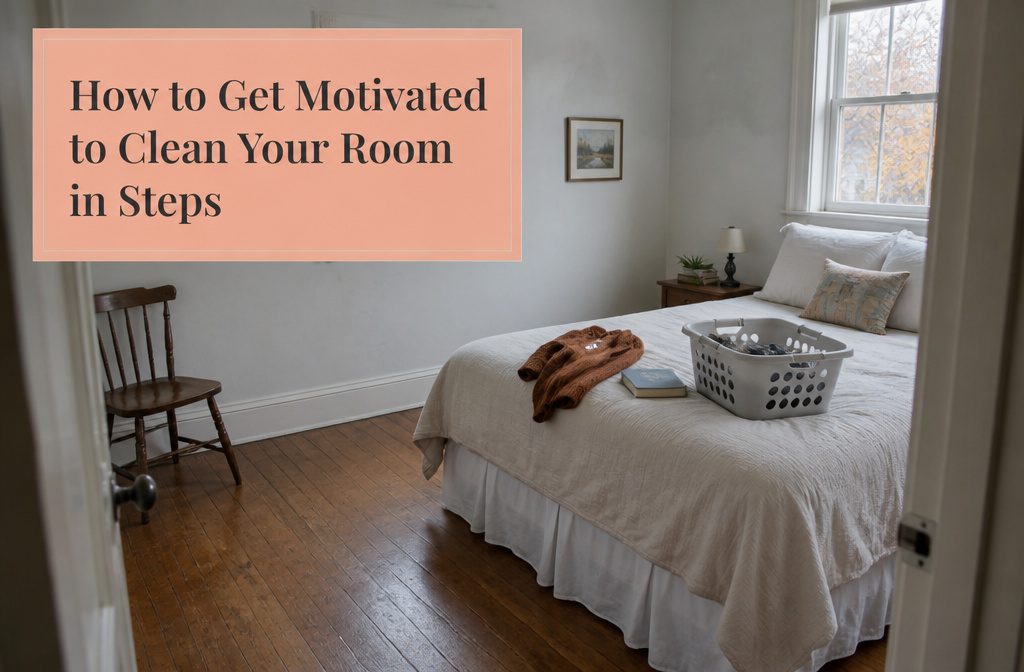
A clean room in under an hour costs you one strategic move: using the bed as a deadline you cannot ignore.
Most people stall because they try to organize and clean at the same time, which turns a simple task into an all-day project.
The bed method from Apartment Therapy fixes that by piling everything onto the made bed first, clearing the rest of the room in one pass, then forcing you to finish before you can sleep.
1. Make the Bed First
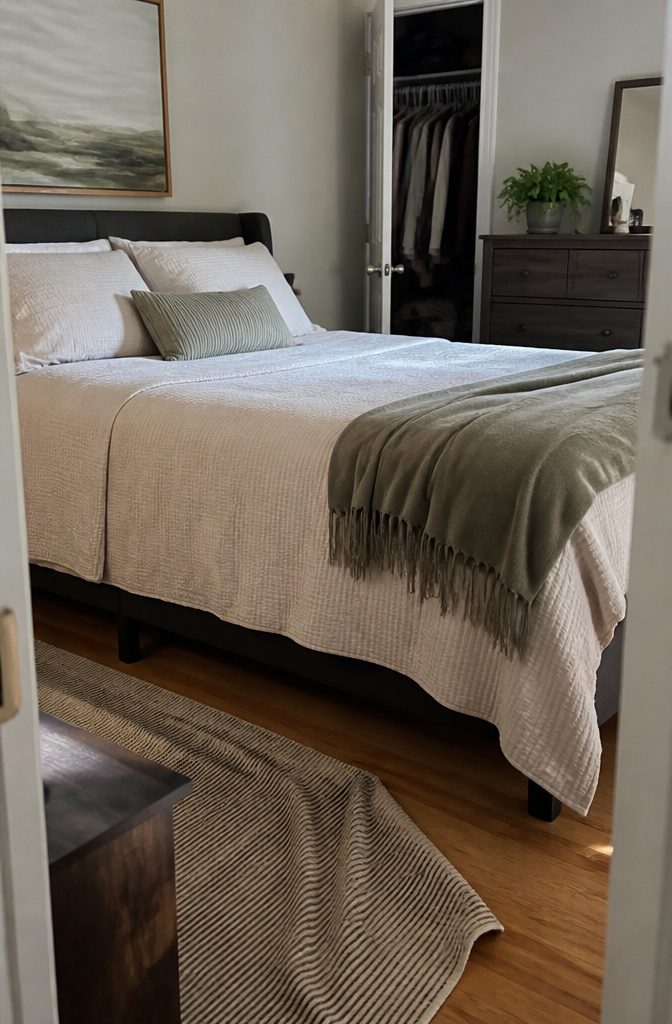
Tighten the sheets, smooth the coverlet, and fluff the pillows. That finished bed becomes the first visible win in a room that probably feels overwhelming, and it gives you a clean surface to work from when the next step arrives.
This is the eye of the storm, your oasis, your tiny snowball of motivation. And it’s going to grow.
I think of it as building momentum before a single item gets put away. A made bed takes up the most floor space in the room, so finishing it first shifts the visual weight fast.
The rest of the mess is still there, but now you have one anchored zone that reads as done rather than in progress.
That momentum is what carries you into the next task without stopping to think about whether you feel like continuing.
2. Move Everything That Does Not Belong Onto the Bed

Pick up every book, dish, mug, stray sock, and piece of paper that has wandered into the wrong corner and place it all on the made bed.
The technique borrows from the laundry basket method, but instead of hunting for a basket or bin, you use the bed itself as your holding zone.
Everything that does not belong in the room or is not currently where it lives gets tossed onto that surface.
Clear every other horizontal surface in one pass. Dresser tops, desk surfaces, the chair in the corner, the floor beside the nightstand.
Once the bed is piled high and the rest of the room is empty, you have created two things at once: a visually recovered space that no longer feels like chaos, and a single concentrated mess that cannot be ignored.
That pile has to be dealt with before you can sleep, which means you have built yourself a deadline that actually works.
3. Dust and Vacuum the Cleared Room

Start at the ceiling and dust every surface before you touch the floor.
Shelves, windowsills, the top of the dresser, then the baseboards. Work down so the dust settles where you’re about to vacuum anyway, and don’t skip corners where it builds up along the wall.
Once the surfaces are clean, vacuum the floor in overlapping passes. Get under the bed if you can move it, and use the crevice tool along edges where the brush head won’t reach.
The contrast hits harder than you expect. A room that’s picked up and dusted, with clean floors and nothing out of place except that pile still sitting on the bed, makes finishing feel obvious.
The rest of the room looks like it belongs to someone else, and the pile suddenly looks like the only thing standing between you and done.
That gap gives you a reason to keep going when the momentum starts to fade.
4. Return Every Item to Its Proper Place

Sort what you piled on the bed into groups—laundry, books, things that wandered in from other rooms—or work through the pile item by item.
Put each thing straight where it belongs, not onto another surface. This part drags, but stopping means you end up sleeping on a corner of the mattress while the pile shifts around you for three more nights.
If you already assigned homes to your belongings, this step goes faster because you are not deciding where things go while holding them.
You just return them. The bed method saves this tedious work for last, when the rest of the room is already clean and the finish line is close enough to pull you through.
Break the Work Into Small Tasks You Can Finish

Facing the entire room at once is where most people stall. Pick one manageable chunk — the desk surface, the floor by the bed, a single drawer — and finish it before you move on.
Here’s how to break it down:
- Set a timer for 15 minutes and work on one area. When it goes off, you have a clean corner and the choice to stop or keep going.
- Change tasks every 10 to 15 minutes if you start losing steam. Fold clothes for a stretch, then switch to clearing surfaces.
- Cross items off a list as you go. Each checkmark gives you a small hit of momentum that carries you into the next task.
- Don’t tell yourself you need to clean the whole room today. Tell yourself you’ll tackle the laundry this afternoon, and if you feel up for it, you’ll vacuum after.
When you freeze up, it’s usually because the job looks bigger than it is. One completed task breaks that freeze.
Give Cleaning a Reason You Can See
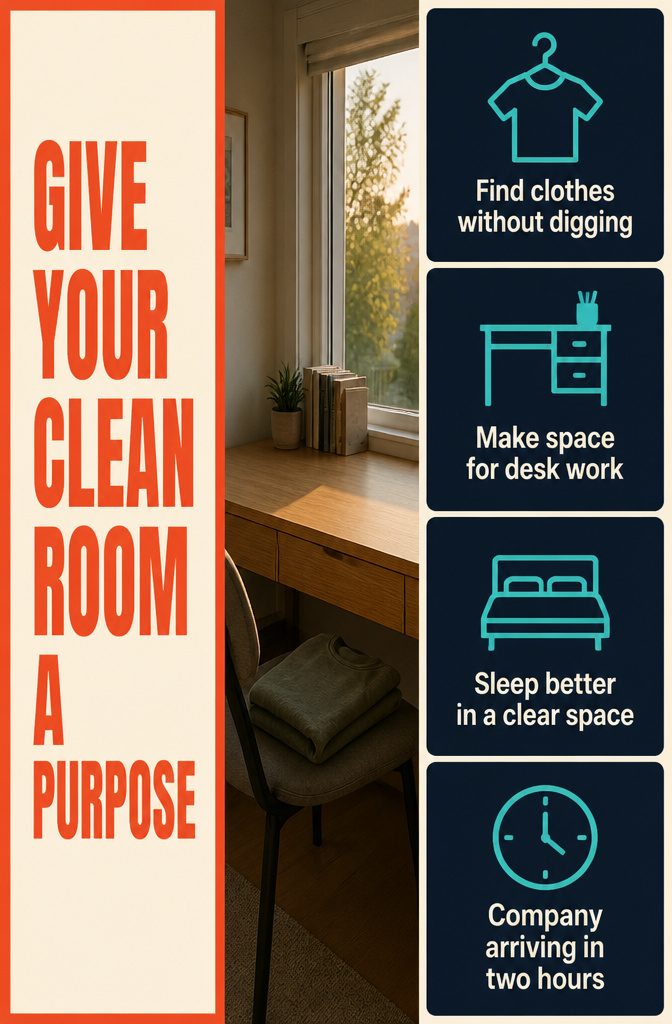
Cleaning feels less pointless when you can picture what the room will do for you once it’s finished.
I tie the work to something specific: being able to find clothes without digging through piles, sleeping better in a space that doesn’t remind me of everything I’m putting off, or using the desk for the thing I actually want to do.
The room is a tool, not a display piece. When I lose momentum halfway through, it helps to remember that the clean surface isn’t the finish line; it’s what makes the next thing easier.
One move that creates instant urgency is inviting someone over.
A deadline makes the task feel less abstract. If a formal invitation feels like too much, try what one source calls The Judgment Game: imagine company arriving in two hours and do only what you would normally do to prepare.
That constraint cuts through the part where you try to organize the entire room at once and never start.
Reward Yourself and Skip the Shame
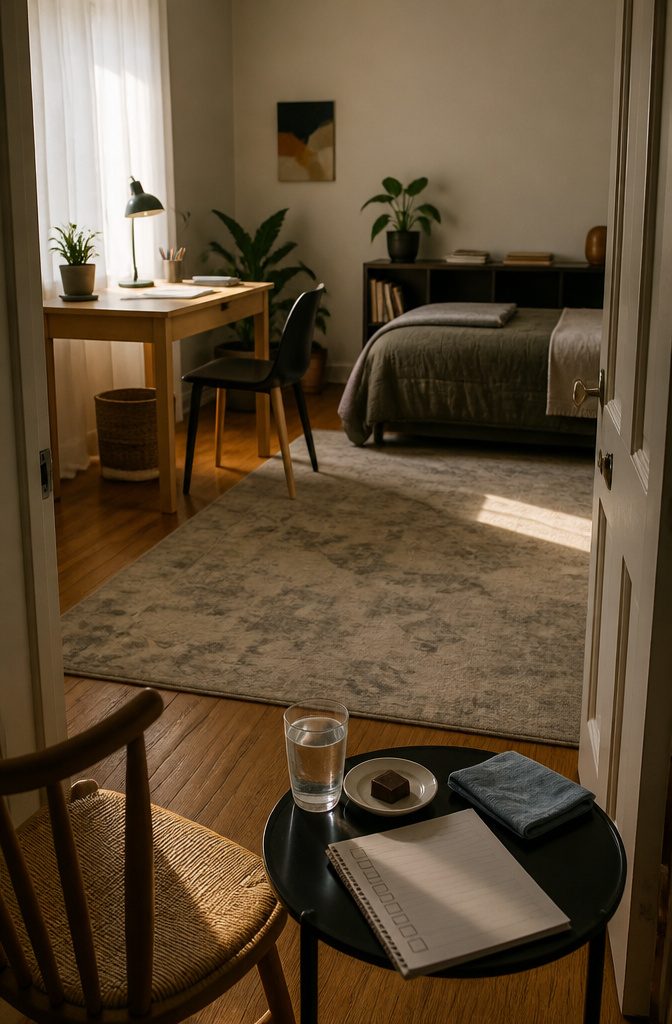
Progress feels better when you mark it instead of rushing past. Checking tasks off a list delivers a hit of dopamine each time, which keeps you moving when the room still looks half-done.
I break cleaning into small enough steps that crossing one off feels earned: vacuum the floor, wipe the desk, sort the drawer.
The reward can be a piece of chocolate, fifteen minutes on the couch, or just five seconds standing still to notice the clear surface you made. That pause matters more than it sounds like it should.
Shame kills momentum faster than mess does. If you wash one cup and then sit on the floor because it felt like too much, that’s the depression talking, not a personal failing.
Remind yourself you’ll try again when you’re ready, and don’t push if cleaning still feels impossible. That time will come.
Make Routines You Can Repeat
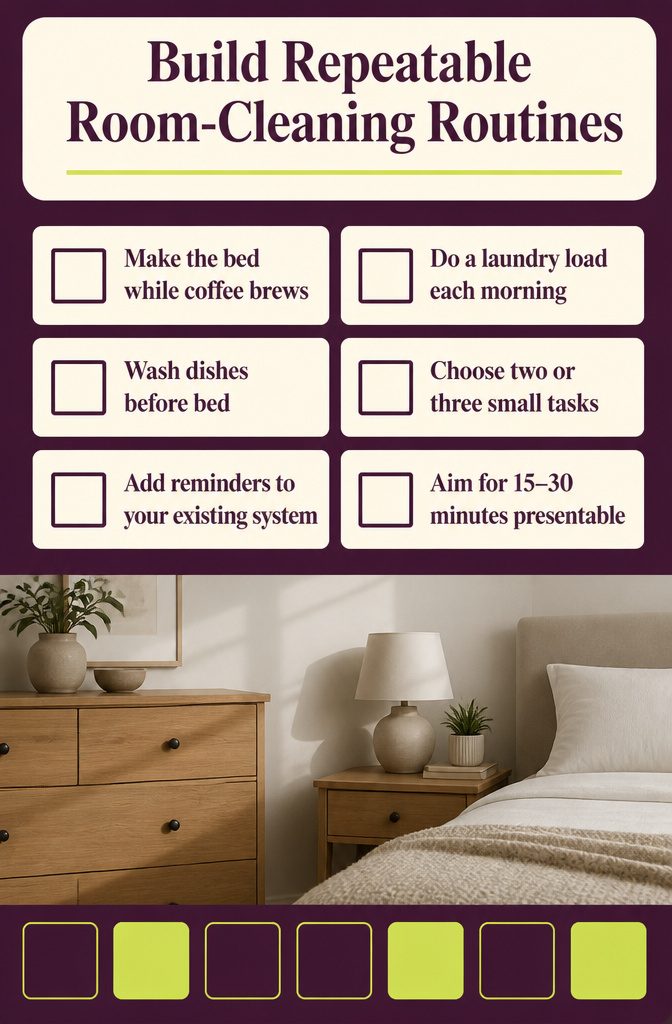
Cleaning stays manageable when you build small regular tasks into your week instead of letting three hours of chaos pile up for Saturday.
I’ve watched people burn out trying to overhaul a messy room in one heroic push, then let it slide right back because the system underneath never changed.
A load of dishes before bed, a load of laundry every morning, bed made while the coffee brews — none of that takes more than a few minutes, but done consistently it keeps the bedroom from crossing into overwhelm territory.
One writer describes keeping a home 15–30 minutes from presentable once routines were in place, which is about right: you’re not chasing perfect, just functional enough that the next cleanup doesn’t feel overwhelming.
If you keep skipping the small stuff, nothing in the room actually shifts.
Pick two or three tasks that match when you already have momentum, add them to whatever system you already use for reminders, and let repetition turn them automatic.
Use Music or Podcasts to Make the Time Pass

Playing upbeat music or a podcast makes cleaning time move faster and keeps your mind from dwelling on the work itself.
A playlist of favorite songs keeps energy high, while an audiobook or podcast lets you focus on something engaging instead of how much is left to clean.
TED Talks, Pandora stations, and stand-up comedy all work if you can listen without needing to watch.
The balance matters. You want enough distraction to forget you’re scrubbing baseboards, but not so much that you stop moving or lose track of what you were doing.
A portable speaker works better than earbuds if you’re moving between tasks, and it keeps your phone out of reach so notifications don’t pull you off course.
If you have a hands-free setup, calling a friend while you work hits both at once.
Invite Someone to Help or Keep You Company

Invite Someone to Help or Keep You Company
Ask a friend, family member, or roommate to clean alongside you or just sit nearby while you work. When four people each spend ten minutes cleaning, that adds up to forty minutes of work done in the same short window.
The shared effort cuts the time you carry alone, and it tends to feel less repetitive when someone else is moving through the room with you.
A visitor coming over shifts the focus immediately. Common areas move to the top of the list, and the deadline gives the work a shape it didn’t have before.
Even knowing one person will see the room can be enough to get you started. The company matters more than the help in most cases.
A friend doesn’t need to fold laundry or organize shelves. Having someone present while you tidy keeps the momentum going and breaks up the stretch of time that makes cleaning feel longer than it is.
Reduce Clutter and Assign Homes to Belongings

Items stored near where they’re used take less thought to return, and that’s what turns occasional tidying into a default action.
When you paint at a craft table, the supplies sit below the surface. When you’re done, everything goes back without standing up.
When your phone charger lives on the nightstand where you set your phone down anyway, it gets plugged in. The effort drops to nothing once the location makes sense.
Decluttering is separate from organizing.
If something doesn’t have a home and you don’t need it, let it go. Donate, sell, or trash it rather than letting it take up space.
The Life-changing Magic of Tidying Up by Marie Kondo is worth reading if you need a motivational push to cut the volume down. Fewer items means less to assign, less to clean around, and a room that stays clear longer.
Try New Cleaning Products or Rearrange the Room

A rearranged room or a good scent can make the work feel less like work.
Moving the bed to a different wall or swapping where the dresser sits changes what you notice when you walk in, and that shift in perspective often makes it easier to start.
I’ve found that even a small change—turning a desk ninety degrees or clearing one surface completely—can break the mental association between the space and the mess that’s been sitting there.
New cleaning supplies that smell good help more than they should. An all-purpose spray with a scent you actually like, or a candle burning while you work, makes the task feel better than just getting the floor clear.
Lavender is both uplifting and relaxing, spruce is motivating, peppermint works as a stimulant, and rosemary sharpens focus.
Keep all your cleaning products together in a caddy so you can grab them without hunting through three different cabinets. When the tools are easy to reach and the room smells better as you go, finishing feels more likely.
When Depression Makes Cleaning Feel Impossible

Depression shuts down the part of your brain that makes chores feel possible to start. That is different from ordinary reluctance or burnout.
When garbage begins to pile up and even trash feels too heavy to move, don’t try to clean the whole room in one push. Start with the trash alone.
Grab a bag, toss wrappers and bottles, and stop. That single task clears visual clutter fast and takes almost no decision-making, which matters when your brain will not cooperate with a longer plan.
Research links messy environments to more stress and depression, which means leaving it alone makes the problem feed itself.
But shaming yourself for the mess only adds weight. Take one task at a time, let that be enough for the day, and accept that momentum builds slower when depression is in the room.
Frequently Asked Questions
How do I get motivated to clean?
Set a timer for 15 minutes and tackle one small area, play music or a podcast while you work, and reward yourself after finishing each task.
Breaking the work into chunks you can complete quickly builds momentum without the overwhelm of facing the entire room at once.
What is the 20 minute rule in cleaning?
Set a timer for 20 minutes and work on one area until it goes off, then decide whether to stop or continue.
This technique makes starting easier because you know the commitment has a limit, and often the momentum carries you past the timer.
What are 7 common cleaning mistakes?
Common mistakes include trying to clean the whole room at once instead of breaking it into tasks, skipping dusting before vacuuming so dust settles back onto clean floors, and leaving items without assigned homes so they pile up again.
Working without a system or deadline, cleaning around clutter instead of clearing surfaces first, and stopping halfway through also keep rooms from staying clean.
What is the 5 5 5 rule for decluttering?
The 5 5 5 rule has you find 5 things to throw away, 5 things to donate, and 5 things to return to their proper place. This quick sorting method helps cut down clutter without requiring you to tackle an entire room in one session.