

A finished bedroom design takes between one afternoon for furniture placement and several weeks if you’re painting, shopping for new pieces, and adding custom window treatments.
Most people skip the furniture layout stage and buy before they measure, which means a bed frame that looked perfect online blocks the closet door or leaves no room for nightstands.
Place the bed on graph paper first, check that you can reach three sides of the mattress with 24 to 30 inches of clearance, then shop for what actually fits.
1. Measure the Room and Its Constraints
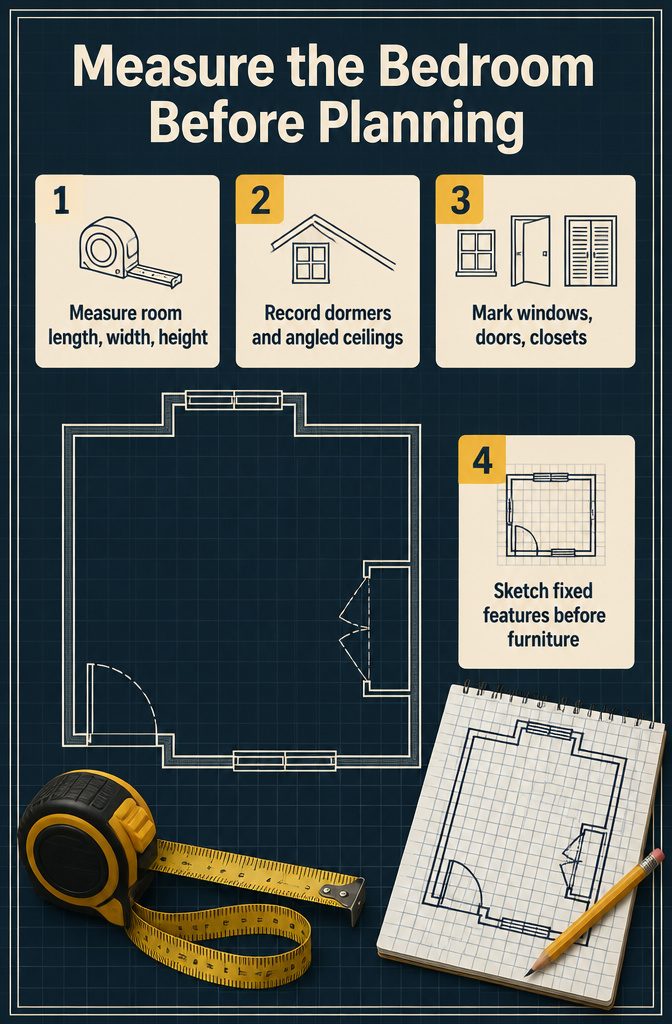
Pull out a tape measure and record the length, width, and ceiling height of the room before you touch anything else.
The numbers tell you what can physically fit and whether the scale will land right. I also measure any odd features that change how the space works: a dormer bump-out, a window seat, an angled ceiling line.
Those quirks matter when you start arranging furniture, because a bed that looks fine on paper might not clear a sloped wall or might block the only good window.
Mark down where the windows, doors, and closets sit.
A door swings into the room and claims floor space even when it’s open. A closet door that opens outward can dictate where a dresser or chair can go without creating a jam every morning.
I sketch the room on graph paper with those fixed elements in place first, then test furniture layouts around them.
You want to avoid both extremes: too much furniture creates visual clutter, and too little leaves the room cold and impersonal. Measure now, and you’ll know exactly what fits and what dimensions to shop for later.
2. Set Priorities, Needs, and Budget

Before you commit to paint swatches or furniture shopping, decide how the room should feel and what absolutely has to fit inside it.
Start with adjectives: warm, minimal, restful, sophisticated, whatever list describes the mood you want when you walk in at the end of the day.
Those words guide every choice after this point. Then ask what the room is actually for beyond sleeping.
If you work from home and need a desk that fits a second monitor, that desk is not negotiable. If the room is a getaway and you never turn on a screen, a reading chair might matter more.
Rank the furniture by function: bed first, then the pieces tied to your primary use, then everything else. Write down what you already own that stays and what leaves.
Finally, set a realistic budget before you start browsing. You cannot have cheap, fast, and exactly what you pictured all at once, so the budget decides which two win.
3. Find a Style and Visual Direction
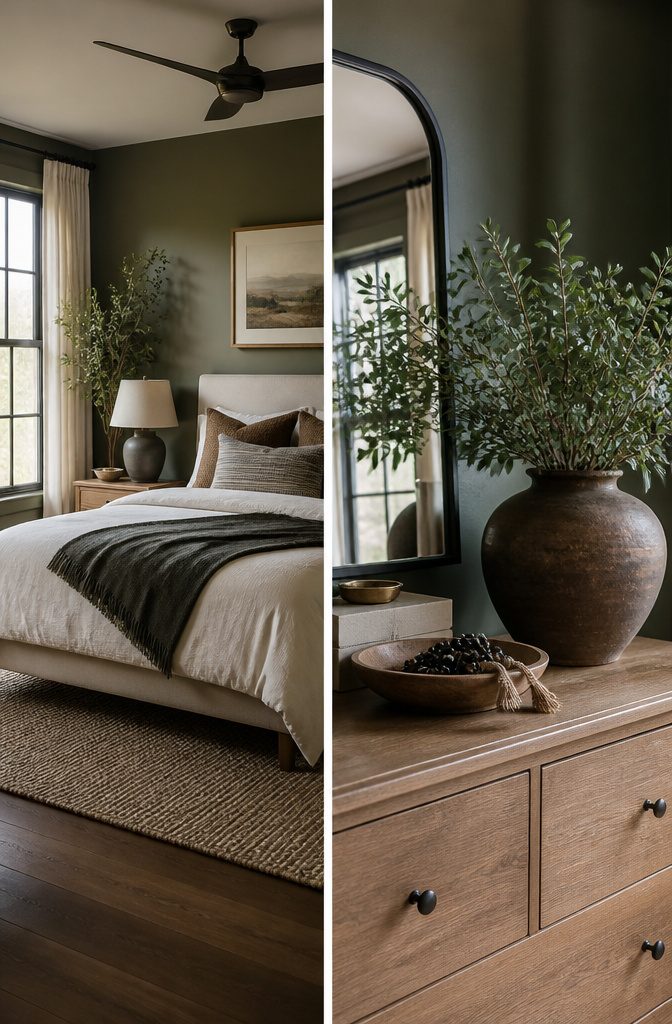
Start with a Pinterest board or physical mood board to collect bedroom images that catch your eye. Pin colors, bedding patterns, furniture shapes, and room layouts without filtering yet.
After twenty or thirty images, patterns emerge: maybe you’ve saved mostly warm neutrals and wood tones, or coastal blues with white trim, or dark moody walls with brass fixtures.
Those patterns are your visual direction, more reliable than deciding a style name upfront.
Once you see what you’re drawn to, test it against the actual room. Stand in the space with your phone open to the board and check whether the ideas still work.
A deep green accent wall reads differently in a north-facing room with little natural light than it does in the inspiration photo flooded with sun.
A king bed centered under a statement wall hanging might appear in every image you saved, but if your room is ten by twelve, the proportions fall apart.
I adjust inspiration constantly at this stage, keeping what fits the real dimensions and light, letting go of what doesn’t translate.
4. Plan the Furniture Layout Before Shopping

The bed goes down first, because everything else in the room responds to where it sits. Start with the bed on graph paper or in room-planning software like RoomSketcher or HomeByMe, blocking out the footprint and the clearance around it.
I sketch the bed against the wall that makes the most sense for sightlines and flow, then add bedside tables on either side.
Once the bed is placed, the route from the door to the far side of the bed becomes visible.
A layout that forces you around two corners or past the foot of the bed rarely feels natural, even if it fits on paper.
After the bed and nightstands, position the dresser where it stays accessible but out of the main path. If the room is large enough, mark space for a desk or reading chair.
Check the plan in three dimensions, not just as a flat drawing, because a layout that looks tidy overhead can block sightlines or trap furniture against walls you cannot reach.
In an ideal bedroom, you should be able to access three sides of the mattress with ease.
5. Choose or Arrange the Main Furniture

Choose or Arrange the Main Furniture
If the pieces you already have fit the style you landed on, you can design around them instead of buying everything new.
I work outward from items worth keeping and let those decide which gaps need filling. A bed frame you care about can anchor the color and proportion choices for everything that follows.
Items that don’t fit and aren’t treasured end up blocking the style you’re trying to build, so those go into storage or out of the room.
Start with the largest pieces first rather than buying a lamp or wall art before you know where the bed and dresser will land. The major furniture sets the layout, and the rest fills in around it.
When everything arrives, test scale in the actual space before you commit to placement. A floor plan drawn flat can feel awkward once you walk the room, especially around door swings and closet access.
You need to reach three sides of the bed comfortably, and a chair positioned in a 2D sketch sometimes blocks the closet in real use.
6. Add Finishing Details and Comfort Features

Finishing details come last because they need the larger decisions settled first.
Once the furniture is placed and the lighting works, rugs anchor the room visually and soften the floor where you step out of bed. I start there, then move to art that balances the wall space without crowding it.
Window treatments deserve two layers if the room gets morning sun or faces a street.
A sheer filters daylight and keeps the room from feeling closed off, while a blackout shade or lined curtain blocks light when you need to sleep past dawn. Both on one window gives you control without bulk.
Clutter works against rest, so storage has to be easy to use.
A nightstand with a drawer keeps paperwork and charging cables out of sight instead of piled on top. A bench at the foot of the bed with interior storage holds extra blankets without taking closet space.
Textiles matter more than most decorative choices because they touch skin.
Velvet or linen pillows, a cotton or wool throw, and a soft rug under bare feet all support comfort in ways a framed print cannot. Avoid anything scratchy or stiff.
A small plant adds life to a corner, and if the room allows it, a chair near the window with good light turns that spot into a place to read or sit quietly before the day starts.
Why Comfort and Rest Drive Every Choice

Every choice I recommend for a bedroom starts from the same question: does this help someone sleep, or does it get in the way?
The 30% of adults experiencing short-term insomnia and 10% with chronic insomnia aren’t fighting a decoration problem. They’re fighting light spill, surface clutter, hard floors that amplify every footstep, and rooms that feel more like showrooms than places built for rest.
I start with blackout curtains or blinds, because light is the most direct sabotage. A full moon through thin curtains can keep someone awake for hours.
After that, soft lighting becomes the baseline: overhead fixtures with dimmers or lamps that don’t flood the room. Calming colors on the walls matter less than most sources claim, but they do set a quieter tone than high-contrast patterns.
Rugs reduce noise, especially in apartments where sound travels through floors. Ceiling fans and sound machines handle temperature and ambient noise without adding visual noise.
Comfortable furniture is the other anchor.
If the bed itself isn’t supportive, nothing else compensates. Controlling clutter and stimulation means giving every object a place to go, so surfaces stay clear and the room doesn’t ask for attention.
Furniture and Storage That Fit the Space

I always start with the bed, because once it’s placed, every other furniture decision narrows down fast.
The bed dictates how much room you have left, which walls can handle a dresser, and where nightstands make sense. If the closet is spacious, I put the dresser inside it.
That opens up floor space in the bedroom itself for a reading chair or a small desk, and it keeps the room from feeling crowded. When there’s no built-in closet at all, an armoire comes next, even before nightstands.
Nightstands with storage win over open tables. Charging cables, books, and small items all need a place to go, and a drawer or shelf keeps the surface from becoming a pile.
Under-bed storage handles out-of-season clothes and extra bedding, and rolling drawers work just as well if the bed frame doesn’t include built-in compartments.
Floating shelves above the bed can replace a nightstand in tight rooms, freeing up floor space while still holding a lamp and an alarm clock.
Multi-purpose furniture works best when it stays away from swinging doors and high-traffic paths.
A bench with storage at the foot of the bed holds blankets without taking up closet space, but only if the door and the walking route leave it clear.
Color Choice and How It Affects the Room
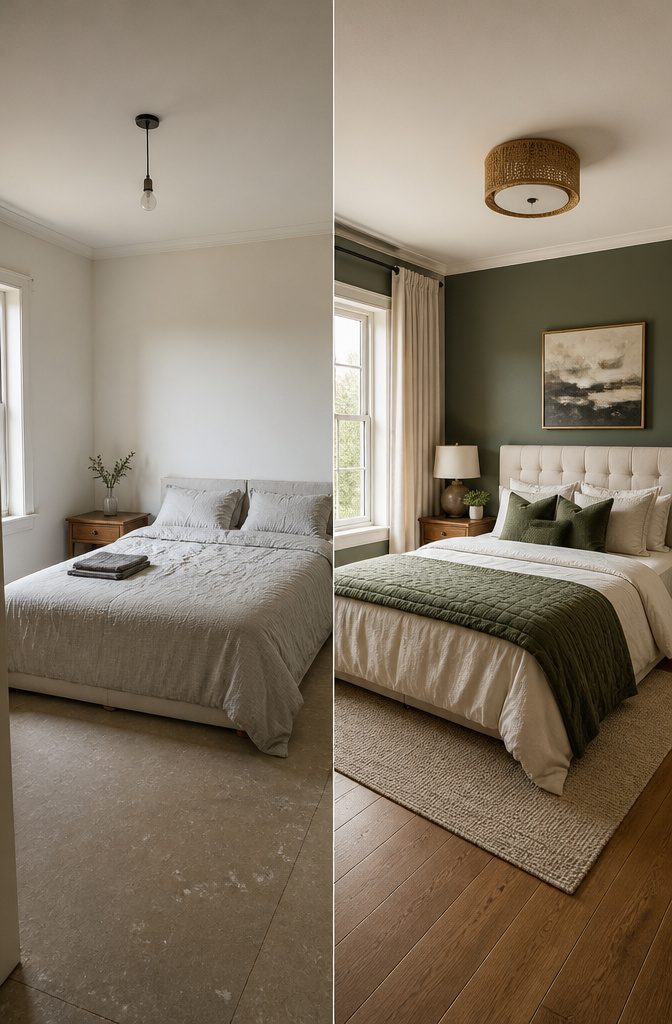
Calming hues like soft blue, lavender, pale pink and gray, or warm gray work well in a bedroom because they support rest without fighting for attention.
Deep blue or green can create a sense of peace, especially when used on a single feature wall or across the entire room in spaces with high ceilings.
I keep floors and ceilings light when the walls go dark to avoid losing the sense of space.
Matching paint undertones to your furnishings matters more than most people realize.
White paint is rarely pure white. It often carries subtle undertones of pink, blue, yellow, or brown, and if those don’t align with your bedding, carpet, or furniture, the room can feel slightly off.
A cool gray with warm, cozy furnishings looks unbalanced, so I match the temperature: warm gray for warm textiles, cool tones for cooler palettes.
Light colors, particularly cool ones, make a small bedroom feel larger.
Dark colors, especially warm ones, convey intimacy and pull the space in, which works when you want that fire-crackling, music-playing environment. The color changes not just the mood but the perceived size of the room itself.
Translating Measurements Into a Final Furniture Plan
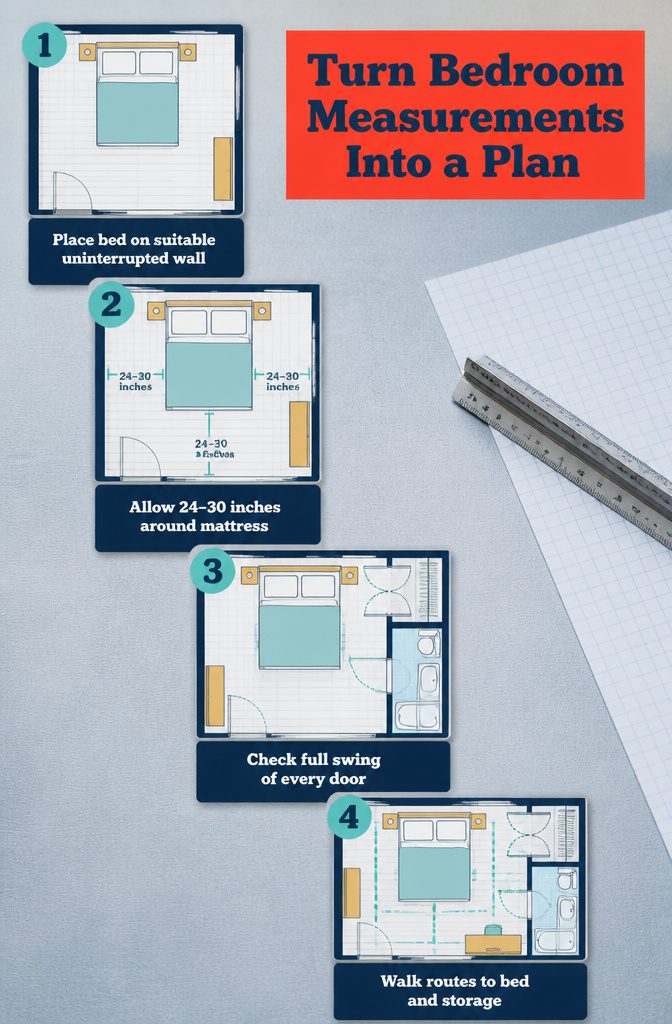
- Place the bed first, since it sets the clearance for everything else. I put it on the wall opposite the door when that wall is large enough, or along the longest uninterrupted wall if the door placement makes the opposite wall awkward. Avoid walls with windows if drafts are a concern in winter.
- Check that you can reach three sides of the mattress easily. In practice that means 24 to 30 inches on the sides you walk past and at the foot, enough to change sheets and walk around without turning sideways.
- Open every door in the room on paper before you commit. Bedroom doors, closet doors, and bathroom doors all need their full swing, and I have seen beds block a closet more than once because the layout looked fine until someone tried to hang a coat.
- Walk the path from the entry to each side of the bed, then from the bed to the closet, the bathroom, and any desk or dresser. If any of those routes force you to squeeze past furniture or step over something, the layout needs adjustment.
Frequently Asked Questions
How do you design a master bedroom?
Position the bed away from windows to avoid drafts and distractions, then build the layout around it with clearance on three sides.
Keep decor minimal so the room supports rest rather than competing for attention. Choose furniture by function first, then fill gaps with pieces that fit the proportions and style you mapped out.
Where should you put the bed?
Place the bed on the wall opposite the door or along the longest uninterrupted wall, whichever gives you access to three sides of the mattress.
Avoid putting it directly under windows if drafts are a concern in winter. Make sure the placement leaves door swings clear and doesn’t force you to squeeze past furniture to reach either side.
How can I make my bedroom luxurious?
Add a plush rug underfoot and layer velvet or silk pillows with a soft throw on the bed, keeping pillows to less than a quarter of the bed’s surface.
Metallic or mirrored accents finish the look without adding clutter. Textures that touch skin matter more than decorative objects that only sit on display.
What are the 2026 bedroom trends?
Calming colors, multi-purpose storage furniture, layered window treatments, and comfort-driven layouts remain solid choices regardless of shifting styles. Start with what helps you rest, not what’s popular this year.
How to make a bedroom look classy?
Keep surfaces clear by giving every object a place to go, so the room doesn’t ask for attention.
Use soft, intentional lighting from lamps with dimmers instead of overhead floods. Choose a cohesive color palette with matching undertones across walls, textiles, and furniture, and let quality materials in fewer pieces outweigh quantity.