
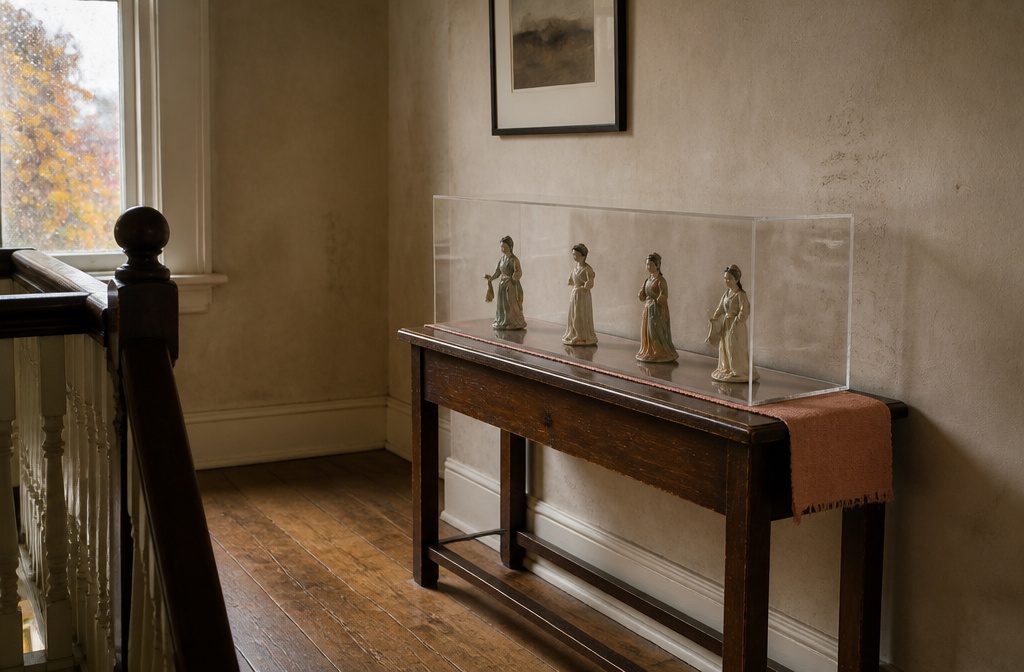
A figurine display worth photographing costs $100–$3,000 and takes an afternoon to set up, but most people skip the one thing that keeps the whole shelf from looking like a toy store clearance bin: leaving space between the figures.
Crowding hides detail, flattens depth, and makes cleaning impossible without knocking something over. Glass curio cabinets like the IKEA DETOLF keep dust off completely, while acrylic cases weigh less and resist shattering better for households with kids or pets.
1. Choose Display Furniture or a Case

The display location decides whether the collection stays clean, whether smaller figures stay visible, and whether the setup can grow.
Glass curio cabinets run $100–$400 and give the clearest view of paint detail while keeping dust completely off the figures. The IKEA DETOLF is the cabinet that comes up most often for collectors who want protection without custom furniture prices.
Glass is scratch-resistant and substantial, but it shatters if knocked and weighs enough that moving a loaded cabinet becomes a two-person job.
Acrylic display boxes cost $20–$100, weigh far less, and resist shattering better than glass. High-quality acrylic can match or exceed glass for optical clarity and often includes UV protection that keeps paint from fading.
Acrylic scratches more easily and attracts static that pulls dust toward the surface. For figures you handle often or a household with children or pets, acrylic is the safer choice.
Bookshelves like IKEA BILLY or KALLAX run $50–$200 and work when the collection outgrows a single case or when you want easy access without opening a door.
The figures sit exposed, so dust builds faster and you lose the finished look of a closed display.
Wall-mounted shelves cost $30–$150 and save floor space, but capacity is limited and the figures still need regular cleaning. I lean toward closed cases when the collection is stable and bookshelves when the arrangement changes frequently.
2. Group Figures by Theme, Series, or Character

Group Figures by Theme, Series, or Character
Arranging figures by a unifying category keeps the display from reading as a random pile and lets you build something that feels deliberate.
Grouping by series is the most straightforward approach: all your Dragon Ball figures together, your One Piece figures together, your Star Wars figures together.
The method works because the characters already share a visual language, and you can recreate scenes or sagas that matter to the story.
Grouping by character takes the same logic smaller. If you collect multiple versions of Hatsune Miku or a single protagonist across different scales and manufacturers, dedicating a shelf to that character shows the evolution of the design.
You can mix figures from different series when something else ties them together. A shelf of villains, magical girls, or swordsmen tells a story by archetype.
A display organized by a shared color palette or the work of a single sculptor feels more like a gallery than a random collection. The thread matters more than the franchise.
3. Create Height and Depth with Risers or Tiers
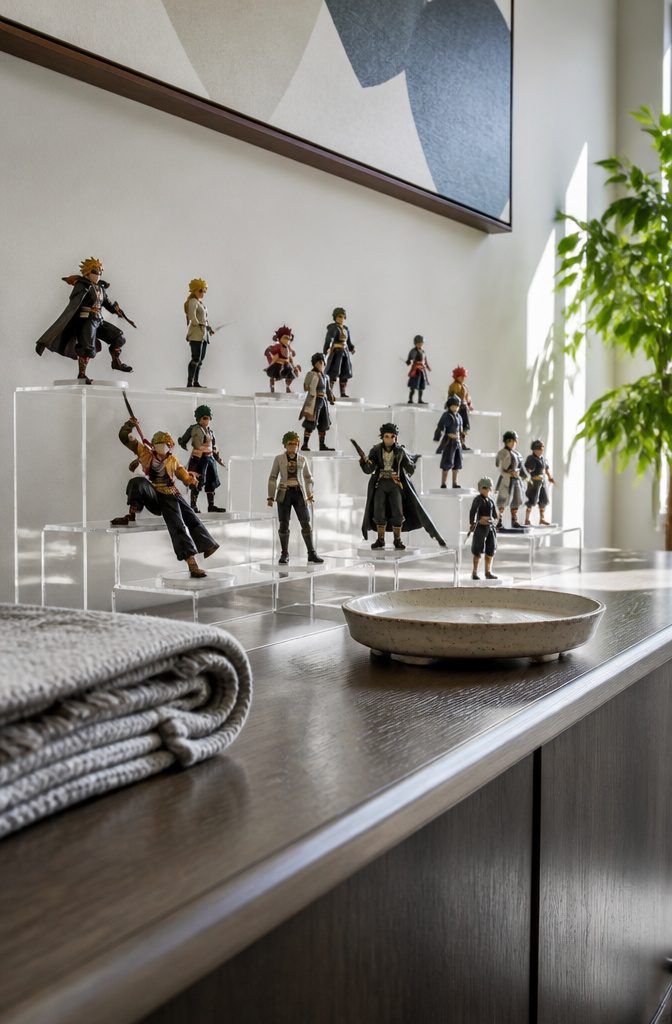
A straight line of figures flattens the entire display and buries anything sitting behind the front row.
Acrylic risers and tiered platforms solve both problems at once by lifting the back rows high enough to stay visible and adding vertical dimension to what would otherwise read as a crowded lineup.
I place taller figures or those on risers toward the back, shorter figures in front. That tiered arrangement keeps every character in view and prevents the shelf from looking like a police lineup.
Stair-step risers work well for group shots where you want multiple figures visible at a glance. Individual acrylic blocks let you spotlight a single piece or adjust heights figure by figure until the composition feels right.
The difference shows up immediately.
A flat display hides half your collection and looks amateur. A tiered one guides the eye across the entire scene, makes the shelf feel larger, and gives dynamic poses the space they need to stand out.
For Funko Pop figures, risers pull back-row boxes into view. For anime action figures, the height variation mimics a battle scene instead of a static row.
4. Pose Figures and Arrange Them in Scenes

A dynamic pose turns a shelf from a straight lineup into something worth stopping for. Moving a figure past its out-of-the-box stance brings character personality forward: a stoic swordsman holds a composed posture, a high-energy hero leans into action.
Even small adjustments matter. A slight head tilt, a different arm angle, or a shifted leg position makes the pose read as natural instead of static.
Posing gets more interesting when figures interact.
Arranging a hero and villain in a standoff creates a focal point that fans recognize immediately. A clash between two Saiyans, for example, holds attention in a way that separated figures never will.
Team formations work the same way: grouping the Straw Hat Pirates or Class 1-A as if they are preparing for battle adds weight to the display.
Not every scene needs action. Slice-of-life figures arranged as if they are mid-conversation bring personality without drama.
S.H.Figuarts and similar poseable lines give you control over battle poses, jumping stances, and action angles, but they also introduce risk.
Always support the figure at the torso when moving it, never lift by limbs or accessories. Fragile joints and small pegs break under stress, and one falling figure can damage itself and knock over others nearby.
5. Leave Space Between Figures

Leave adequate space between each figure so you can see the character details without strain. Overcrowding makes a display look messy, and it becomes much harder to clean dust from the edges and base of each piece.
I find that giving every figure room to breathe improves visibility immediately and reduces the risk of knocking one over when you reach for another.
Good spacing also makes photography easier if you want to share the collection online.
A clean, uncluttered shelf reads as more premium than one packed edge to edge. If you own more figures than your shelves can hold comfortably, rotate them monthly instead of forcing everything out at once.
That rotation keeps the display fresh and gives each figure a turn in the spotlight without sacrificing the clarity that makes a collection worth looking at in the first place.
6. Add Lighting to Draw Attention to Details

Lighting changes figurines from static objects to something worth stopping for, and LEDs are the only choice that makes sense long-term.
Unlike incandescent or halogen bulbs, LEDs produce minimal heat, which matters when you’re pointing light at painted plastic for hours a day.
Heat from older bulbs warps PVC and degrades paint over time, so skipping LEDs is gambling with pieces you probably paid too much for in the first place.
Color temperature decides the mood.
Warm white at 2700K–3000K leans cozy but can make reds look muddy and blues flat. Cool white in the 4000K–5000K range keeps colors closer to accurate without feeling clinical.
I’d stay in the 3000K–5000K general range for most displays and test it first if the figures have metallic finishes, because those respond differently than matte surfaces.
Placement matters as much as the bulbs themselves. LED strips work best at the bottom of each shelf and just above it, layering light from multiple angles so you don’t get harsh shadows under outstretched arms or raised weapons.
A single overhead source flattens detail; two or three angles bring it back.
7. Protect the Display from Sunlight and Heat

Sunlight and heat both speed up fading and can warp plastic or resin over time.
I avoid placing figurines on windowsills or in direct sun, even for part of the day. If the display sits near a window, UV-filtering window film blocks up to 99% of UV rays and still lets natural light through.
Curtains or blinds work when you can close them during the brightest hours, though I find film easier since it stays in place year-round.
Temperature matters as much as light. I keep display rooms between 65 and 70°F when possible, because swings above that range can soften adhesives or distort joints on articulated figures.
Heat from spotlights or track lighting adds up fast, so I stick with LED bulbs that run cool and space them far enough that no figure sits directly under a hot fixture.
A figure that feels warm to the touch when you walk past is already too close to the source.
8. Keep Figures Clean and Dust-Free

Dust settles quickly on figurines, and every two to four weeks is the cadence that keeps buildup from turning into a chore.
I let mine go a full month sometimes, but anything longer and you’re working harder with less to show for it.
A soft-bristled brush handles most of the work. Makeup brushes are ideal because the bristles are gentle enough for painted details and small enough to reach clothing folds or hair strands without snagging.
Compressed air gets into crevices where a brush won’t fit, but keep the nozzle a few inches back so the force doesn’t knock anything over or chip fragile parts.
For grime that won’t dust off, a damp cotton swab or a wet toothbrush works on tight spots. If the whole figure needs washing, soap and water are fine as long as you dry it completely afterward.
Skip anything harsher. Chemical cleaners strip paint and degrade PVC over time, and even plain water can lift delicate decals if you scrub directly over them.
9. Use Stands or Supports for Stability

Figures in dynamic poses or with narrow bases tip easily, especially on anything less than level. Museum putty or museum wax gives removable grip beneath the base without leaving residue, and it works on almost any surface.
The display surface itself needs to be level, sturdy, and away from high-traffic zones where a bump can send things over.
For shelving that holds the collection, anchoring hardware matters more than the shelf itself. Drywall anchors hold screws securely when there is no stud behind the wall.
A nylon strap anchor connects the shelf to the wall and keeps it from tipping forward. Brackets mounted to the back of the shelf and the wall, then linked with a cable line, will catch the shelf if it shifts.
I use cable anchors on anything holding more than a few pounds, because the bracket alone is not enough if someone leans on it or the wall flexes.
Some figures will not stand on their own no matter what the surface is like.
Support stands with built-in brackets wrap around the waist and hold the figure upright. The bracket keeps the toy from leaning out of position, which matters more for articulated figures than static ones.
10. Display Boxed and Open Figures in Different Ways

The choice between keeping figures in their original packaging or displaying them loose depends on what you want from the collection. Investment pieces stay packaged to preserve maximum value and protect against damage, dust, and UV exposure.
Figures you plan to handle, pose, or appreciate up close work better out of the box, where you can see intricate details, articulation, and accessories.
If you collect boxed figures, arrange them the way a toy store would.
Pegboards let you mount carded figures or boxed collections upright, which works especially well for Funko Pop figures organized by series, number, or character type. Shelves and stacked display arrangements also keep packaging clean and visible.
For loose figures, you gain the ability to pose them and group them in ways that show off what makes each one worth owning. Many collectors keep both approaches going at once, boxing the rare pieces and opening the rest.
11. Use a Diorama or Backdrop

A diorama turns a shelf into a setting.
I pair Dragon Ball Z figures with a printed battle arena floor or set One Piece characters against a pirate ship backdrop, and the display stops looking like toys on a ledge and starts reading as a scene someone arranged on purpose.
The background does not need depth or expense. A brick wall pattern, a city skyline, or a fantasy landscape printed on cardstock and mounted behind the figures gives context without taking up floor space.
The surrounding wall matters as much as the case. I hang related posters or framed art prints near floating shelves so the display feels deliberate instead of accidental.
A well-placed poster or fabric panel ties the shelf to the room, and the figurines sit inside a larger theme rather than floating in isolation. Aim for immersion without clutter: one strong backdrop, not five competing images.
12. Adapt the Display to Your Space
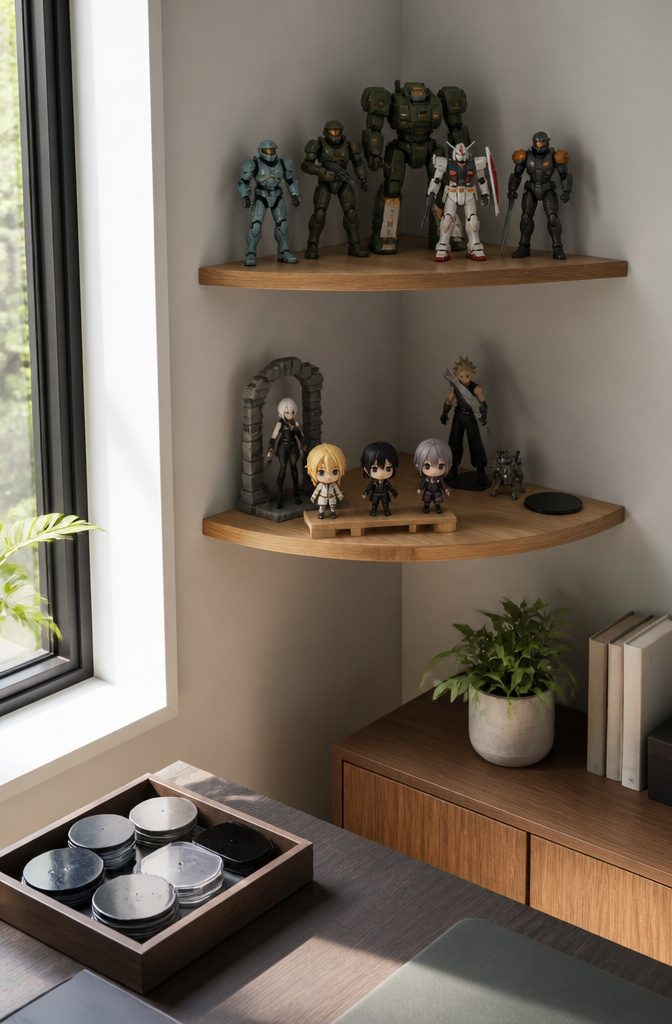
Space dictates which display method wins. Wall-mounted floating shelves work when floor space is tight but wall real estate is open, and they keep figures at eye level where details stay visible.
Desk setups usually hold one or two figures beside a monitor without crowding the work surface. Corner shelves pull wasted space into use, especially in rooms where standard furniture leaves gaps.
Rotating the display every few weeks solves the problem when the collection outgrows the display area. Pull down half the current lineup, swap in figures that have been waiting in storage, and the setup stays fresh without buying more shelves.
Monthly rotation makes sense when the collection is large enough that keeping everything out would mean overcrowding and dust buildup on pieces you never really look at.
Some gamers repurpose their PC case with RGB lighting to display mini figures or small action figures inside the case itself, which puts the figures right at desk level during sessions.
Heat and dust are the trade-offs. Airflow needs monitoring to prevent heat buildup near components, and PC cases pull in dust constantly, so maintenance goes up.
Separating by size prevents visual chaos. Mini figures and Funko Pop figures sit forward or on risers.
6-inch action figures and 1/10 scale statues belong in the middle ground or premium cabinet sections. Large figures anchor the back or center as focal pieces, where they will not block smaller ones.
13. Organize and Catalog the Collection

Keeping records makes a collection manageable once it grows past a couple of dozen pieces. Document each figure’s manufacturer, series, condition, and storage location in a spreadsheet or a dedicated collection app.
I find assigning unique identification numbers to each piece keeps things clearer than relying on descriptions alone, especially when multiple figures share similar appearances. Photograph each one from multiple angles so you can confirm condition without unpacking every box.
Group figures logically by franchise, manufacturer, or scale rather than scattering them at random. Label storage containers clearly with waterproof markers, including contents and the date stored, and create a master map showing which boxes hold specific collections.
The system only works if you update the catalog immediately when you acquire new figures or move existing ones to a different location.
Budget and Plan in Phases

Planning a figurine display means matching what you want to show with what you have room for and what you’re willing to spend.
Start by measuring the wall, shelf, or corner where the display will go. Width, depth, and ceiling height all matter, because a case that doesn’t fit is money you can’t get back.
Once you know the dimensions, decide whether you’re displaying one series, mixing characters from different lines, or grouping by color or scale. That decision shapes what kind of furniture or shelving you need.
A realistic setup budget runs $500 to $3,000, depending on whether you’re buying a single glass case or outfitting an entire wall.
Cases with built-in LED lighting and adjustable shelves start around $200 for a basic Detolf clone and climb past $1,000 for tempered glass units with locking doors. Modular shelving, risers, and standalone lights add another $100 to $500.
If the full plan costs more than you can spend now, build it in phases. Buy the case first, add risers and backdrop panels in month two, and install LED strips once the figures are arranged.
The anime figure market is projected to reach $3.5 billion by 2033, which tells you the gear to display them properly is only getting more available and more competitive on price.
Environmental Controls and Handling

Temperature and humidity matter more than most collectors realize. I keep my figures in a room that stays between 65 and 70°F, and I monitor humidity with a hygrometer to hold it around 40 to 55 percent.
Outside that range, plastic expands and contracts with temperature swings, paint lifts, and joints loosen over time.
Too much moisture grows mold. Too little makes older figures brittle.
I use a small dehumidifier in summer and silica gel packets inside closed cases year-round. Both work, but the dehumidifier handles the whole room while packets need replacing every few months.
I also keep figures away from heating vents, direct sunlight, and any basement corner that feels damp. UV fades paint slowly enough that you miss it until the damage is done.
When I move a figure, I lift it by the torso, never by an arm or accessory.
Fragile parts snap under their own weight. I wash my hands first to keep oil off the paint, and I never force a joint that resists.
Storage Materials for Long-Term Protection

Protecting figures in storage requires materials that won’t accelerate degradation. Poor storage reduces resale value through fading, joint deterioration, and plastic breakdown that collectors spot immediately.
The materials worth using:
- Acid-free materials for any surface touching the figure directly. Comic book backing boards work well for carded figures and provide rigid support without chemical transfer.
- UV-resistant acrylic containers shield stored figures from light exposure that fades paint and yellows plastic over time.
- Polyethylene sleeves for individual figures or blister packs. They prevent dust accumulation and minor abrasion without trapping moisture the way some plastics do.
- Clear acrylic boxes with secure closures for loose figures. You can identify what’s inside without opening the container, and the seal keeps out dust and humidity.
Temperature-stable environments matter as much as the container itself. Plastic degrades faster in spaces with wide temperature swings, so avoid attics and uninsulated garages for long-term storage.
Insurance and Valuation for Valuable Collections
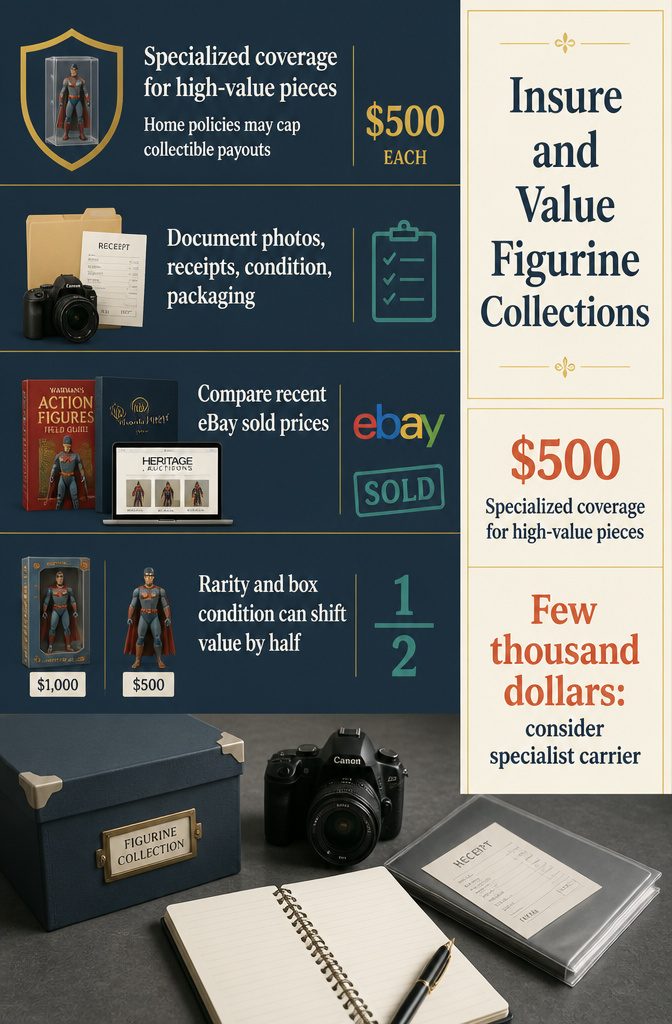
If the pieces run more than a few hundred dollars each, specialized collectible coverage makes more sense than hoping your homeowner’s policy will stretch.
Standard policies often cap collectibles at a fraction of what the collection is actually worth, and if you file a claim without documentation, you’ll spend weeks arguing over values.
I ask for a rider on my homeowner’s policy for mid-range collections, but once the total crosses a few thousand dollars, I move to a carrier that understands the category.
Collectibles Insurance Services is the name that comes up in forums, and the reason is simple: they know packaging matters, they know condition grades, and they won’t fight you on what a mint-in-box figure is worth.
Documentation starts with photos of each piece, receipts if you still have them, and a running list that notes condition and packaging status.
Market value takes more work. Warman’s Action Figures and databases like WorthPoint or Heritage Auctions give you a baseline, but the number that matters is what recently sold on eBay, not what someone is asking.
Condition, rarity, and whether the box is intact all shift the figure, sometimes by half.
Collector forums fill in the gaps when a piece is uncommon enough that sold listings are thin. The research feels slow, but it pays off twice: once when you insure, and again if you ever sell.
Frequently Asked Questions
How do you prevent figures from falling over?
Place figures on a level, sturdy surface away from high-traffic areas. Museum putty or museum wax applied beneath the base gives removable grip without leaving residue, and it works especially well for figures in dynamic poses or with narrow bases.
How do I mix and match figures from different series?
Mix figures when something ties them together: a shared color palette, character archetype like villains or magical girls, or the work of a single sculptor. The thread matters more than the franchise.
How much does a professional-grade action figure display setup cost?
A realistic setup budget runs $500 to $3,000, depending on whether you’re buying a single glass case or outfitting an entire wall.
Cases with built-in LED lighting and adjustable shelves start around $200 for a basic Detolf clone and climb past $1,000 for tempered glass units with locking doors.
Should I remove figures from original packaging before displaying them?
Investment pieces stay packaged to preserve maximum value and protect against damage, dust, and UV exposure.
Figures you plan to handle, pose, or appreciate up close work better out of the box, where you can see intricate details, articulation, and accessories.
What insurance options exist for protecting valuable action figure collections?
Specialized collectible coverage makes more sense than hoping your homeowner’s policy will stretch once the total crosses a few thousand dollars.
Ask for a rider on your homeowner’s policy for mid-range collections, and document each piece with photos, receipts, and a running list that notes condition and packaging status.
How do I determine the current market value of my figures?
Check Warman’s Action Figures, WorthPoint, or Heritage Auctions for a baseline, but the number that matters is what recently sold on eBay, not what someone is asking.
Condition, rarity, and whether the box is intact all shift the figure, sometimes by half.
Can storing figures long-term affect their resale value negatively?
Poor storage reduces resale value through fading, joint deterioration, and plastic breakdown that collectors spot immediately. Use acid-free materials, UV-resistant acrylic containers, and temperature-stable environments to prevent degradation.
Is it worth keeping action figure boxes?
Keeping boxes preserves maximum resale value and protects investment pieces from damage, dust, and UV exposure. If you plan to sell later or own rare figures, the box can shift value by half or more depending on condition.
Does dust ruin figures?
Dust builds quickly on exposed figures and requires cleaning every 2 to 4 weeks to prevent buildup from turning into a chore. A soft-bristled brush handles most of the work, and compressed air gets into crevices where a brush won’t fit.