
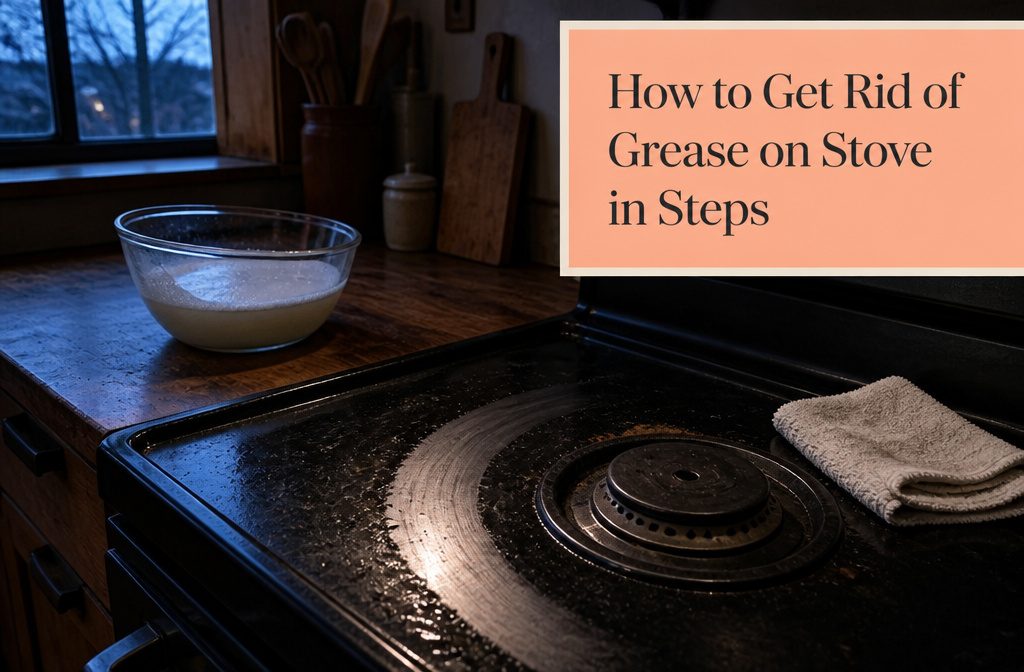
Dish soap and hot water clear most stovetop grease in one or two passes, and the whole job takes fifteen minutes if you wipe loose debris first and rinse afterward.
The stage people skip is that first wipe with plain water, which lifts the surface layer so the cleaner can actually reach the stovetop instead of floating on oil.
1. Clear Loose Grease and Debris First
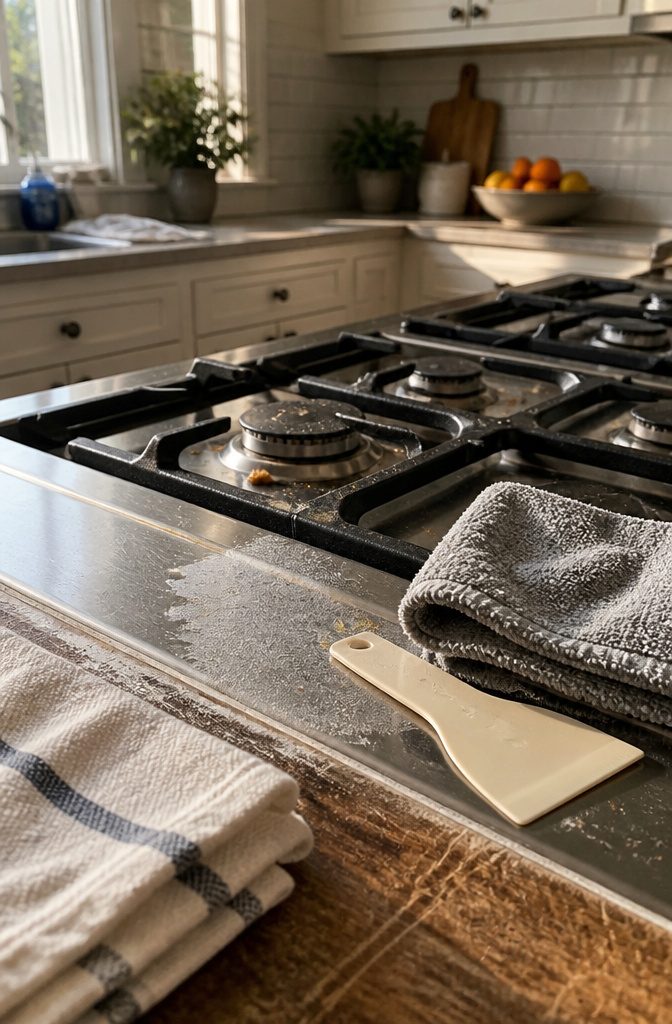
Before any cleaner goes on, wipe the stove with a damp cloth or paper towel to pull off the loose film and food particles sitting on top.
That first pass clears away enough surface grease that the cleaner you apply afterward can actually reach the stovetop instead of just floating on a layer of oil.
I start with plain water on a rag, no soap yet, because all I’m after at this stage is anything that lifts without resistance.
When grease has built up thick enough to scrape, a paint scraper or the edge of a plastic card will take it off without scratching most surfaces.
You’re removing the layer that would otherwise smear when you start scrubbing, not stripping the stove bare. Gas grates and drip pans lift out, and wiping those separately keeps you from pushing grease around the burner openings.
2. Apply Dish Soap and Hot Water

Dish soap mixed with hot water breaks down oil molecules fast, and I keep coming back to it because it handles the majority of stovetop grease without needing anything harsher.
Dampen a microfiber cloth with water as hot as your hands can stand, add a few drops of dish soap — preferably a brand known for cutting grease — and wipe the surface.
If the first pass leaves streaks or sticky spots, that’s normal with heavy buildup; go over it again with a fresh cloth rather than scrubbing harder on the first round.
Replace the cloth once it starts looking dingy, because you’re trying to lift grease off the stove, not redistribute it.
For surfaces that still feel tacky after a second wipe, the grease layer is thicker than soap and water alone will handle in one session, and that’s when I move to something with more grip.
3. Treat Baked-On Spots With Baking Soda Paste

When grease has hardened onto the stovetop, baking soda and a few drops of water get it off without scratching the surface.
I use about two tablespoons of baking soda with just enough water to form a thick paste, though a quarter cup with a teaspoon of water works if the area is larger.
Spread the paste over the baked-on spot, let it sit for ten to fifteen minutes, then scrub with a damp cloth or non-scratch sponge.
The mild alkali breaks down the grease without needing harsh chemicals. For glass stovetops, spraying vinegar over the baking soda before you scrub gives you a little more lift on stubborn spots.
I’ve had the best results when I don’t rush the sitting time, because the paste needs a few minutes to soften what’s stuck. Rinse with a clean damp cloth until no powder remains.
4. Rinse Away Cleaner and Residue

Once the cleaner has done its work and the grease is gone, wipe down every surface you touched with a clean, damp cloth or sponge. This step matters more than it looks like it should.
Any cleaner strong enough to lift baked-on grease leaves a residue behind, and that residue sits right where your next meal will cook. A single pass with plain water on a cloth takes care of it.
For burner grates, drip pans, and anything else you pulled off the stove, rinse them under running water or wipe them down the same way.
The surfaces that touch food directly need this step every time, not just when you remember.
I rinse removable parts in the sink because it’s faster than wiping, but either one works as long as the water runs clear and you can’t feel any slick film left behind.
Once everything is dry, the stove is ready to use.
5. Dry and Replace Removable Parts

Once everything is rinsed, the next job is getting the stovetop completely dry.
Water left standing on any surface invites streaks, and on a gas stovetop it can sit in the burner wells and cause problems the next time you light it.
I wipe down the whole surface with a dry microfiber cloth, then go back over the grates, burner caps, and drip pans individually to catch any moisture hiding in the crevices.
Knobs need to be fully dry before you put them back on, otherwise you trap water against the stove body and end up with grime building up behind them.
Wipe down any surfaces you have touched with a clean, wet rag or sponge. This will keep your surfaces food-safe and ready for your next meal.
That final wipe matters more than it seems, because any cleaner residue left on the cooktop ends up in your next meal.
Once the parts are dry, I replace the grates, burner caps, and knobs, checking that everything seats properly. A burner cap that sits crooked burns unevenly, and a loose knob turns into a cleaning problem all over again.
Electric, Gas, and Glass Stovetops Need Different Treatment
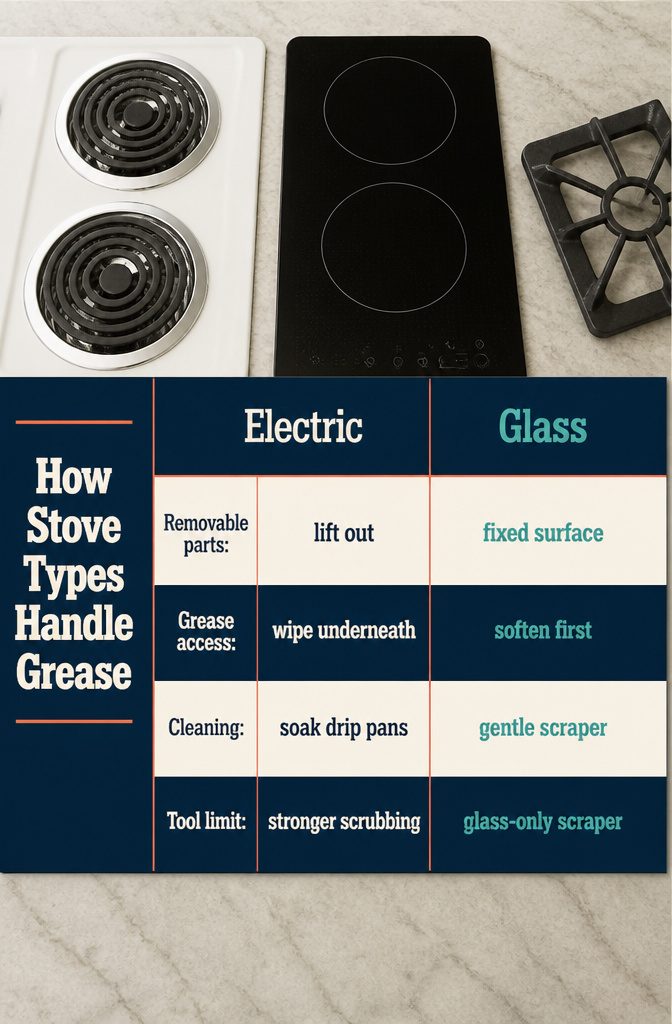
Electric coils and drip pans lift right out once the stove is cool, and gas grates and burner covers come off the same way.
I pull those parts first because grease sitting underneath never gets clean if you just wipe the surface.
Electric coils usually unplug from a small socket, though some older models hook in and need a slight tilt to release. Drip pans on electric stoves trap most of the spatter, so those go straight into hot soapy water.
Gas grates are heavy and hold onto grease in the cast iron, which means they need soaking or scrubbing separately rather than a quick rinse.
Glass stovetops need more caution because the surface scratches easily under the wrong pressure. A razor scraper works, but only held at a 45-degree angle and pushed gently in one direction.
I would not use it on anything else, but glass responds well to that motion when baking soda paste or dish soap has softened the grease first.
Dragging the blade flat or applying too much force leaves permanent marks. Gas and electric stoves tolerate more aggressive scrubbing once the removable parts are out, so the scraper stays a glass-only tool.
Cleaning Products and Tools That Work

Cleaning Products and Tools That Work
Start with what you already have: dish soap and hot water handle most fresh grease, and a scrubby sponge gives you the friction you need without scratching enamel.
If that doesn’t cut it, Formula 409 or a similar all-purpose cleaner works with a few passes.
For grease that’s been there a while, these get better results:
- Dishwasher gel (the thick kind like Cascade) contains sodium carbonate, which breaks down fats. Put it on the grease, leave it overnight, and wipe it off in the morning.
- Baking soda paste works on baked-on spots when you let it sit for a couple of hours, especially if you spray it with equal parts vinegar and water.
- Krud Kutter is what I reach for when the grease has carbonized and turned into a polymer.
- Oven cleaner (liquid or spray) cuts through the toughest buildup, but wear gloves and keep it off burner rings, where it can damage the finish.
- Magic Eraser Kitchen With Dawn combines the abrasive foam with degreaser in one step.
Heavy or Carbonized Grease Takes More

Grease that has been sitting on a stove for years changes into something harder to deal with.
The residue may have polymerized, turning into a substance closer to the seasoning on a cast-iron pan than the grease it started as. Dish soap and a scrubby sponge won’t touch it.
I’ve found that dishwasher gel works well for this kind of buildup because it contains sodium carbonate, which breaks down fats without scratching enamel. Put the gel on the grease and leave it overnight.
In the morning, you can wipe it off without much effort. If that doesn’t work, oven cleaner is the stronger option.
Any brand will do the job, though liquid formulas are easier to control than sprays. Wear gloves, keep it off burner rings where it may damage the surface, and leave it overnight for one pass.
Avoiding Surface Damage and Cleaner Residue
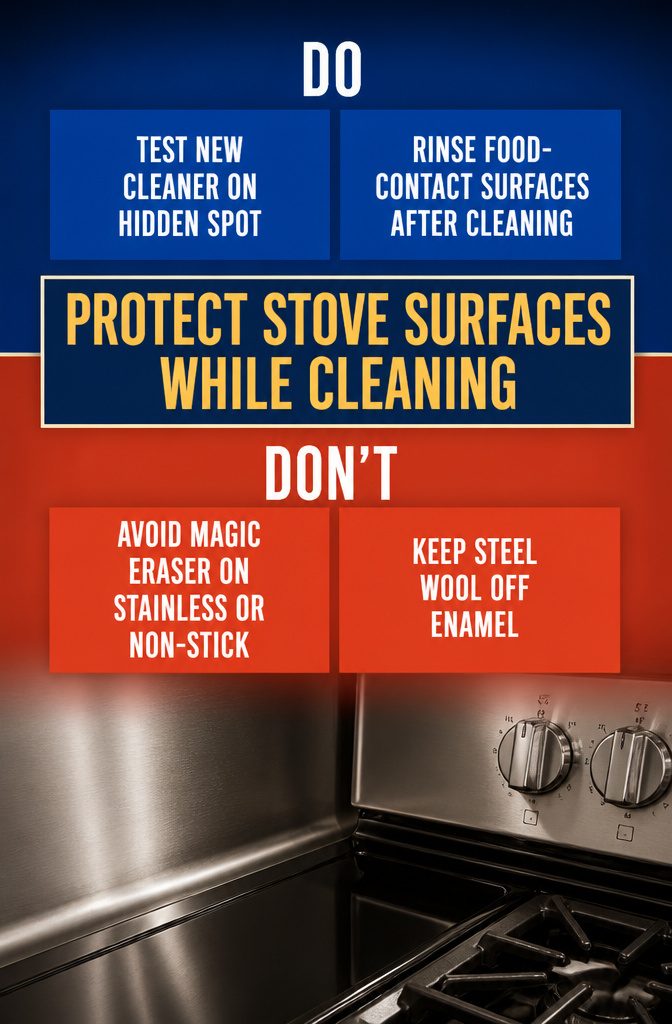
Wrong cleaner or tool on the wrong surface can scratch stainless, strip enamel, or leave residue that lands in your next meal. Here’s what to skip:
- Don’t use Magic Eraser on stainless steel appliances or non-stick coatings. It abrades finishes you want to keep smooth.
- Skip steel wool on enamel. It scratches through the glaze and leaves marks you can’t undo.
- Test any new cleaner on a hidden spot first, especially on polished, satin, or dark surfaces where damage shows.
- Rinse any surface that touches food after cleaning. Cleaner left behind carries into cooking, and the film attracts new grease faster.
I rinse even when the label says it’s optional, because the slick feel under my hand after wiping tells me there’s still something there. One pass with a clean damp cloth takes care of it.
Prevention and Daily Care
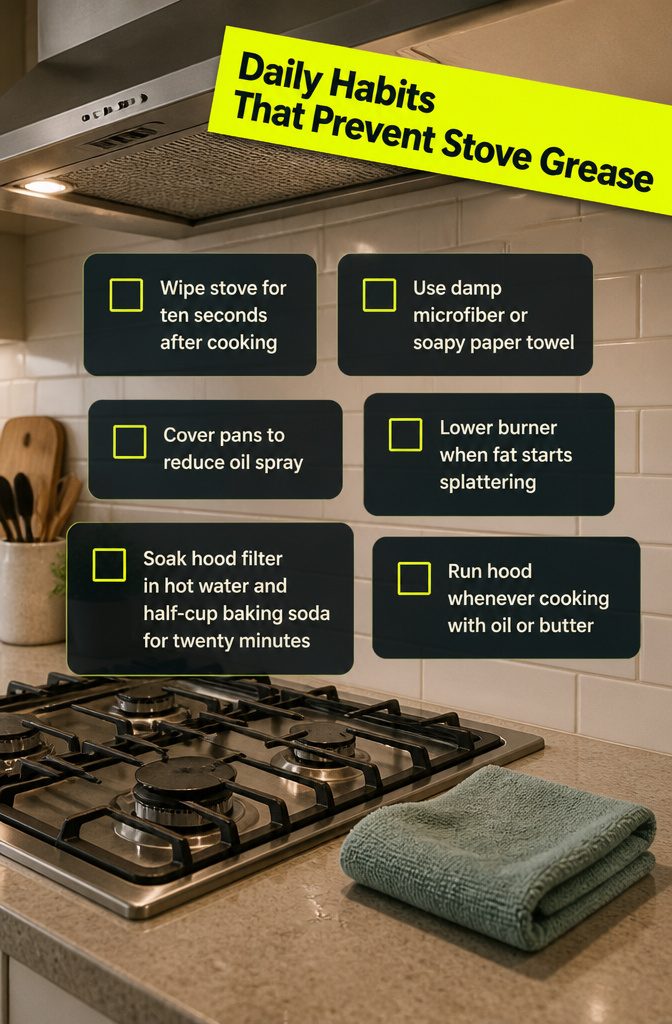
The grease that builds up over weeks comes from the grease you didn’t wipe yesterday.
A ten-second wipe after each cooking session keeps the film from hardening into something that needs scraping, and it costs almost no time when the stove is still warm.
I reach for a damp microfiber cloth or a paper towel with a drop of dish soap, run it across the burners and the surface around them, and the job is done before the pan cools.
Stove covers work if you actually use them, but they only help between cooking sessions. They do nothing for splatter while you’re at the range, so the real win is controlling mess at the source.
Lids cut down on oil spray, and turning the burner down a notch when fat starts to spatter makes a difference you’ll see on the backsplash and the hood.
Range-hood filters trap grease before it settles on the walls and cabinets, but only if you clean them.
A soak in very hot water with half a cup of baking soda for twenty minutes loosens the buildup, then air-dry them a couple of hours before snapping them back in.
Better ventilation pulls more of the grease out of the kitchen entirely, so run the hood every time you cook with oil or butter.
Frequently Asked Questions
What removes grease from a stove immediately?
Dish soap mixed with water as hot as your hands can tolerate cuts through most stovetop grease in one or two passes.
Add a few drops to a damp microfiber cloth and wipe the surface. For grease that has hardened, baking soda paste needs 10 to 15 minutes to soften it before you scrub.
How do you remove old set-in grease stains?
Dishwasher gel left on the grease overnight breaks down old buildup because it contains sodium carbonate, which dissolves fats without scratching enamel.
Wipe it off in the morning. If that does not work, oven cleaner is stronger but requires gloves and should stay off burner rings where it can damage the finish.
What dissolves burnt grease?
Baking soda paste spread over the burnt spot and left for 10 to 15 minutes softens the grease so a damp cloth or non-scratch sponge will lift it.
Spraying vinegar over the paste before scrubbing gives extra lift on glass stovetops. For carbonized grease that has polymerized, dishwasher gel or oven cleaner left overnight will dissolve it.
What is a good homemade degreaser for the stove?
Mix 2 tablespoons of baking soda with a few drops of water to form a thick paste.
Spread it over the grease, let it sit for 10 to 15 minutes, then scrub with a damp cloth. For fresh grease, hot water with a few drops of dish soap on a microfiber cloth handles most buildup without needing anything stronger.