
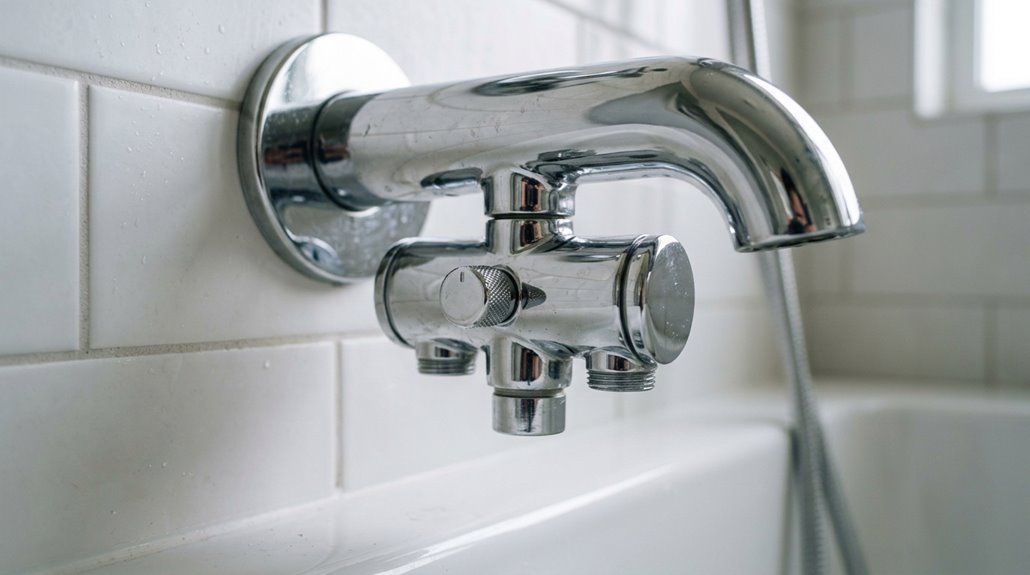
A bathtub spout diverter works by blocking one water path to force water up another. When you pull the knob or pin, it lifts a rubber gate inside the spout that normally lets water flow straight out. This gate blocks the tub outlet and creates backpressure that redirects water upward to your showerhead. The mechanism is simple, requiring no extra valves; just one moving part performs all the work.
These mechanisms eventually leak due to rubber degradation and mineral buildup, which can be addressed through cleaning or replacement.
What Is a Bathtub Spout Diverter?
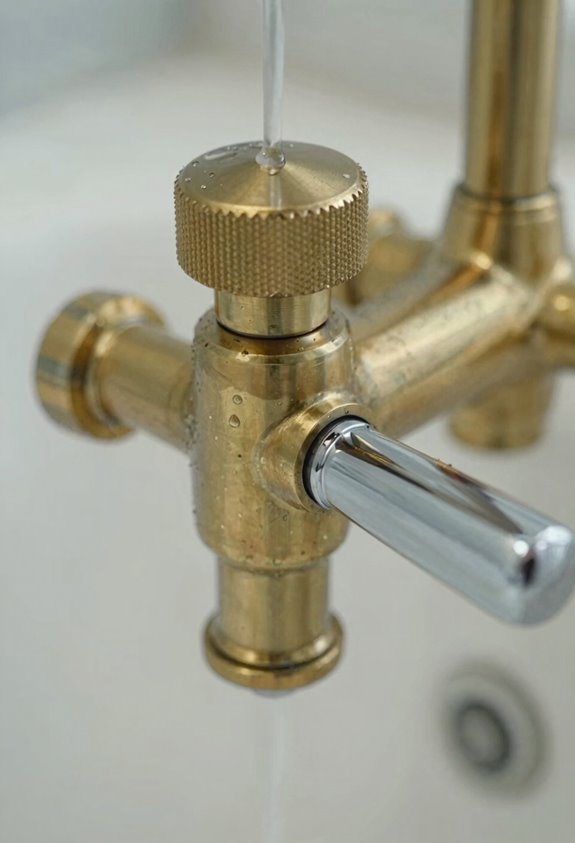
A bathtub spout diverter is a valve located inside your tub spout that redirects water from the tub to your showerhead. When you pull up the knob or pin on your tub spout, you engage this diverter valve. That simple action blocks water from flowing out through the spout and sends it upward to your showerhead instead. This mechanism allows you to switch between filling your tub and taking a shower without needing separate controls. Understanding how your diverter valve works helps you troubleshoot problems and maintain proper function of your bathing fixtures.

Set of cup seal and diverter gate numbered 101237 for a diverter tub spout, 4 sets in package. Refer to the picture for color specifications.

Widely Compatible - Universal Design. The tub spout diverter repair kit is designed for repairing most standard tub spouts, please compare the dimension image with your existing tub spout diverter before purchasing

Universal Design: the tub spout diverter repair kit is designed for repairing most standard tub spouts, and features straight edges; Nice tub spout repair replacement parts for faucet bathtub spouts
How Does the Diverter Mechanism Work?
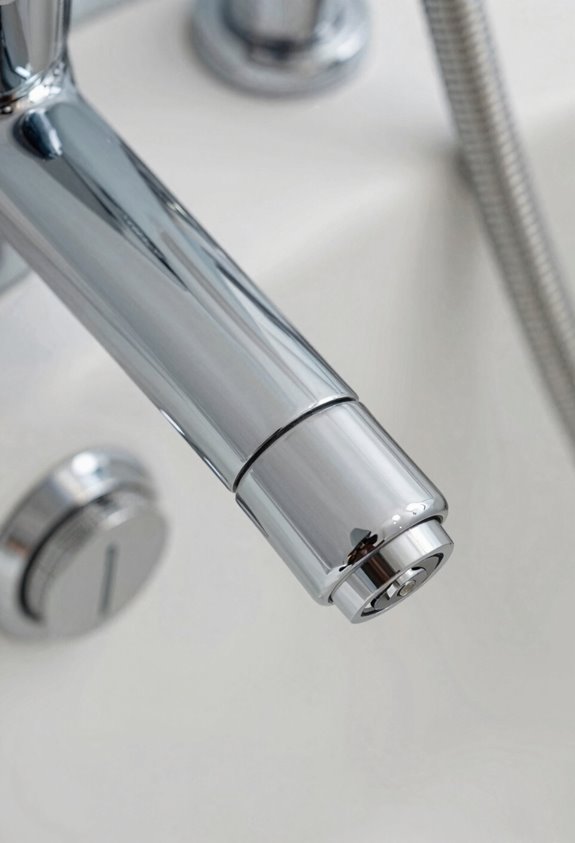
So how’s this valve actually doing its job? Here’s what happens when you pull that rubber liftgate up on your tub spout.
- Pulling the diverter – When you lift the rubber liftgate, it blocks the tub outlet completely
- Creating backpressure – This blocking forces water upward into the shower line instead of flowing down
- Redirecting flow – Water now travels up to your showerhead while the tub stays dry
The diverter mechanism works because of this simple principle: block one path, and water finds another. Worn rubber components cause leakage since they can’t seal properly. When that liftgate gets old and crusty, water sneaks past, causing drips from your tub spout even when the shower’s running. At this point, maintenance is necessary.

Universal Design: This bathtub faucet repair kit (stem: 6cm/2.36in tall, cap: 1.7cm/0.66in wide) fits most standard tub spouts. Please verify dimensions (rubber seals: 1cm/0.62in ID, 0.5cm/0.19in thick; plastic parts: 3cm/1.18in wide)

Package Includes: You will receive 2 sets of bathtub spout diverter repair kits, including 2 diverter valve stems, 2 seals and diverter doors, the kit can meet your repair needs.

Replacement Commercial service kit
What Are the Signs of a Failing Diverter?
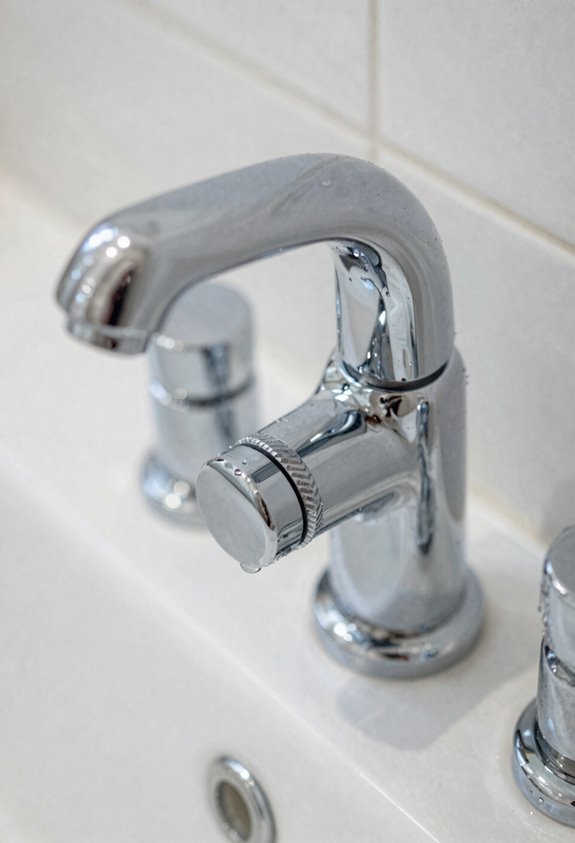
When my shower diverter started failing, I noticed water leaking from the tub spout even when I’d pulled it up to shower mode. This indicated that the internal seals were wearing out. I also realized my shower pressure had dropped considerably, and I’d find myself having to pull the diverter harder each time to get the water to redirect properly instead of just trickling out. If you’re experiencing either of these issues, your diverter probably needs replacement or repair soon.
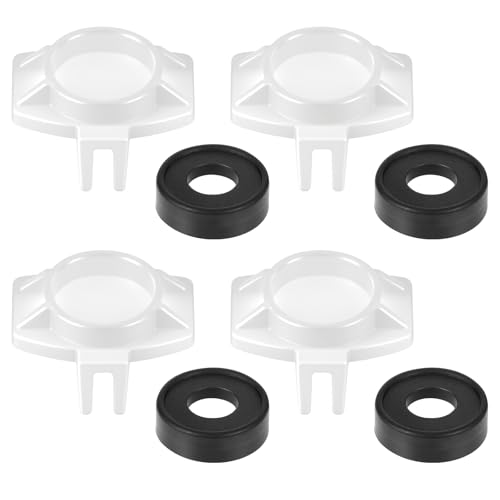
Compatibility & Function: This 101237 cup seal & diverter gate compatible with moen 3800 tub spout is the precise replacement part to fix leaks and restore proper diverter function in your shower bathtub faucet, serving as an essential tub spout diverter repair kit.

Package: Contains 3 sets (plastic cap & rubber seal), replacement part for diverter tub spout. Part number #101237

REPLACEMENT PART: Ideal for repairing problematic plumbing fixtures without the need to replace them
Water Leaks From Tub Faucet
Why’s water still trickling from your tub spout when you’ve switched to shower mode. This frustrating issue usually means your diverter leaks due to worn internal components.
- The lift gate, that small piece controlling water direction, gets stuck or damaged, letting water escape from the tub spout even during showers.
- Your internal seal deteriorates over time from constant water exposure, creating gaps that allow leaks.
- Rust-colored water appears, signaling corrosion inside your diverter that’s compromising its function.
When these signs appear, you need to take action. A repair kit can fix the problem yourself. If persistent leaks continue, professional assessment becomes necessary to restore proper water routing and get your shower working right again.
Reduced Shower Pressure Issues
Have you noticed your shower pressure dropping to a wimpy trickle while water stubbornly continues flowing from your tub spout. That’s your diverter failing you. When investigating this issue, the rubber seals inside wear out over time, allowing water to bypass the shower redirect and stay in the tub instead.
| Sign | What Happens | What It Means |
|---|---|---|
| Weak shower flow | Water barely comes out | Diverter isn’t blocking tub properly |
| Tub still leaks | Water flows from spout when diverted | Seals are worn |
| Rust-colored water | Discolored flow appears | Cartridge is corroding |
| Split pressure | Water from both outlets | Diverter stuck partially |
Replacing worn seals or the entire cartridge restores proper pressure and reliable diversion.
Why Do Diverters Leak and Fail?
Most diverters don’t fail all at once. They wear out slowly, and understanding how this happens helps you catch problems early. Here’s what typically goes wrong:
- Rubber deterioration – The rubber liftgate and gasket wear thin from constant water exposure, eventually losing their seal
- Metal corrosion – Internal metal parts rust over time, preventing smooth operation and creating gaps where water escapes
- Seal breakdown – Internal seals and washers flatten out, so diverter leakage gets worse with each use
Older diverters can leak up to 3.0 gallons per minute, which exceeds acceptable standards and represents significant water waste. You can catch this early by checking for dribbling from your tub spout during showers. Simple maintenance and timely repair kits can reduce water loss and lower your costs.
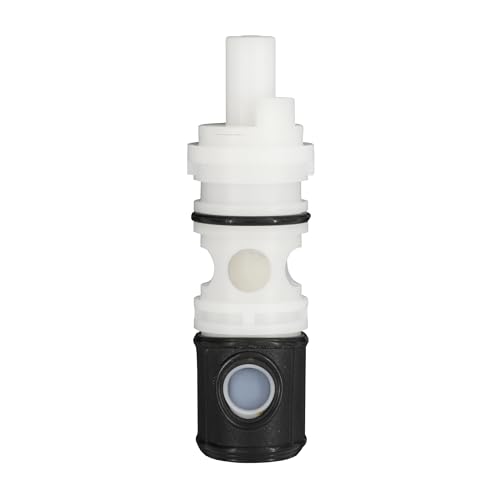
DESIGNED TO FIT Glacier Bay faucets

Restore Your Bath: Metal tub spout with a pull-up diverter in a beautiful chrome finish to help restore the overall look of your bath

Genuine Delta repair part
What Diverter Types Exist?
Understanding which diverter you have helps explain why yours might be leaking or working poorly. Knowing your bathtub spout setup makes troubleshooting easier.
The tee diverter is the most common type. It’s built right into your spout with one inlet and two outlets, one for your tub and one for your showerhead.
A three-way diverter works similarly but has three outlets instead of two, giving you more water routing options.
The cartridge diverter is the modern upgrade. It replaces old metal parts with plastic components, letting you adjust temperature and pressure smoothly.
Some diverters sit behind your wall, while others are front-serviceable for easier maintenance. Identifying your diverter type is the first step toward fixing it properly.
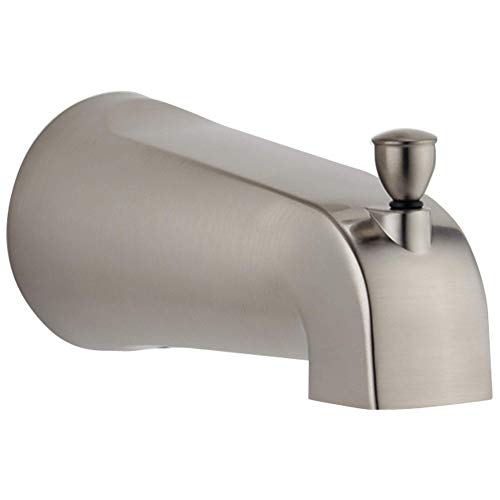
Coordinates perfectly with the Foundations and Windemere bath collection (sold separately)

Restore Your Bath: Metal spout with a chrome finish to help restore the overall look of your bath

Which Diverter Type Do You Have?
So how do you figure out what’s behind your bathroom wall? This guide walks you through identifying your diverter type, which helps you troubleshoot problems and understand what’s happening when water flows.
What to observe:
- Check your tub spout – Pull the knob or pin upward and notice how it feels. Does water stop flowing to the spout immediately?
- Count your outlets – A two-way diverter sends water only to the showerhead. A three-way diverter offers more control options for different water paths.
- Look for signs of wear and failure – Leaks around the spout or water that won’t divert properly often signal aging rubber components inside.
Understanding your specific diverter type makes repairs less intimidating and helps you communicate better with plumbers.

Universal Design: the tub spout diverter repair kit is designed for repairing most standard tub spouts, and features straight edges; Nice tub spout repair replacement parts for bathtub spouts

【Universal Connection】this tub spout with diverter fits 1/2" slip-fit copper pipe, 1/2" IPS threaded pipe, and 3/4" IPS threaded pipe, multiple installation methods, fits DIY homeowners to replace or repair bathroom bathtub faucets

Constructed of a strong and durable metal, meaning it was built for longevity in your tub/shower.
How Does Water Pressure Enable Diverter Function?
When you pull up that diverter knob, you’re not just flipping a mechanical switch. You’re harnessing water pressure itself to redirect your flow. Diverter pressure does the heavy lifting. When you engage the diverter, it blocks the tub spout outlet, creating backpressure that forces water upward toward the showerline instead. This is a pressure-driven system.
Think of it like this: water naturally wants to flow downward through your tub spout. But when you pull that knob, the diverter seals off that path. The building backpressure pushes water toward less resistance, straight up into the showerhead. Without sufficient diverter pressure and a solid seal, water flow control fails. You’ll get weak shower spray or water still trickling from the spout.

Universal Design: the tub spout diverter repair kit is designed for repairing most standard tub spouts, and features straight edges; Nice tub spout repair replacement parts for bathtub spouts

Quick Fix for Leaks: Designed specifically for tub spout diverters, it easily repairs leaks in bathroom showers and bathtub faucets with a simple installation that takes just a few minutes.

COMPLETE 2‑SET REPAIR KIT – EVERYTHING TO FIX A LEAKY TUB SPOUT: This all‑in‑one kit includes 2 diverter valve stems, 2 diverter gates, and 2 cup seals – enough parts to repair two separate tub spouts or have a full backup set. No more mismatched pieces or last‑minute hardware store runs. You get exactly what you need to get the job done right.
Can You Repair a Diverter Yourself?
I’ve found that before I grab my tools, I need to figure out what’s actually wrong with my diverter, whether it’s a worn rubber gasket I can replace myself or a cartridge issue that needs professional expertise. I can start with a simple DIY repair kit from my local hardware store, which usually includes replacement seals and gaskets, but I’ve learned the hard way that some problems like internal corrosion or broken metal pins demand calling a plumber. Knowing when to stop and ask for help prevents wasted time and unnecessary expenses, so I assess the damage honestly first and only attempt fixes that match my skill level.

Exact Replacement for Part #101237:Precision‑fit repair parts compatible with Moen 3800 series tub spouts. Effectively fixes spout leaks and restores normal diverter function for bathtub shower faucets.

The product is diverter tub spout kit

DIY Repair Kit Options
Most diverter issues don’t require replacing your entire tub spout. You can tackle this yourself with the right diverter repair kit.
Here’s what I recommend considering:
- Mechanical tub spout kits – These cost around $5 and work great if you’ve got a standard setup
- Cartridge diverter kits – I typically spend $15 to $25 on these for more complex three-way diverter systems
- Model-specific repair kits – I always match mine to my fixture’s configuration to ensure proper water flow control
Before starting any DIY repair, shut off the water supply and drain everything. Then test for leaks after reassembly. If you’re unsure about your diverter type, calling a plumber prevents potential damage.
Assessment Before Attempting Repairs
Before you grab that repair kit and start unscrewing things, you need to figure out what you’re actually dealing with. I learned this the hard way when I assumed every diverter worked the same way.
First, identify your diverter type. Is it a pin, pull-up knob, or cartridge? Different designs require different repairs. Next, pinpoint where the leaks occur. Water flowing from your tub spout during shower mode usually means worn seals or a degraded liftgate. If water pools around the base, you’ve got a different problem.
If your diverter sits behind the wall or you’re unsure about the mechanism, stop and call a professional. A wrong reassembly creates bigger headaches. Simple tub spout leaks can be handled with a basic diverter repair kit.
When Professional Help Is Needed
How do you know if you’re in over your head?
When I’m facing a diverter repair, I ask myself these questions:
- Is my diverter behind the wall or cartridge-based? These need professional assessment because improper work causes leakage and water damage.
- Do I know my diverter type? Tee, two-way, three-way, or six-way models require different approaches, and cartridge compatibility matters.
- Am I uncertain about what’s broken? A stuck valve, worn rubber liftgate, or failing cartridge need water system diagnostics I can’t do alone.
Calling a plumber prevents costly mistakes. A professional diagnoses whether you need simple diverter repair or full replacement, understands leakage risks, and handles cartridge compatibility correctly. This assessment protects your home from water damage and unnecessary expenses.
When Should You Call a Plumber?
When do you know it’s time to stop tinkering and pick up the phone? Certain diverter failures demand professional help. If you’re experiencing persistent leaks despite cleaning the wear-prone seals, that’s your signal. Call when leak diagnosis becomes confusing; maybe water sprays everywhere, or the diverter won’t budge. Misalignment issues often need tools and expertise you don’t have in your bathroom. Corrosion on metal parts usually means replacement, not repair. If you notice reduced shower pressure that won’t improve, the cartridge probably needs replacing. A plumber identifies problems quickly and fixes them right. Calling early prevents water damage in your home.

Chrome finish is highly reflective for a mirror-like look that works with any decorating style

COMPLETE FLEXIBILITY: Delta's MultiChoice Universal Valve gives you the flexibility to upgrade or change your shower trim without altering plumbing behind the wall because it is compatible with most Delta single-function (13 or 14 series), dual-function (17 series), or dual-function themostatic (17T series) trim kits