
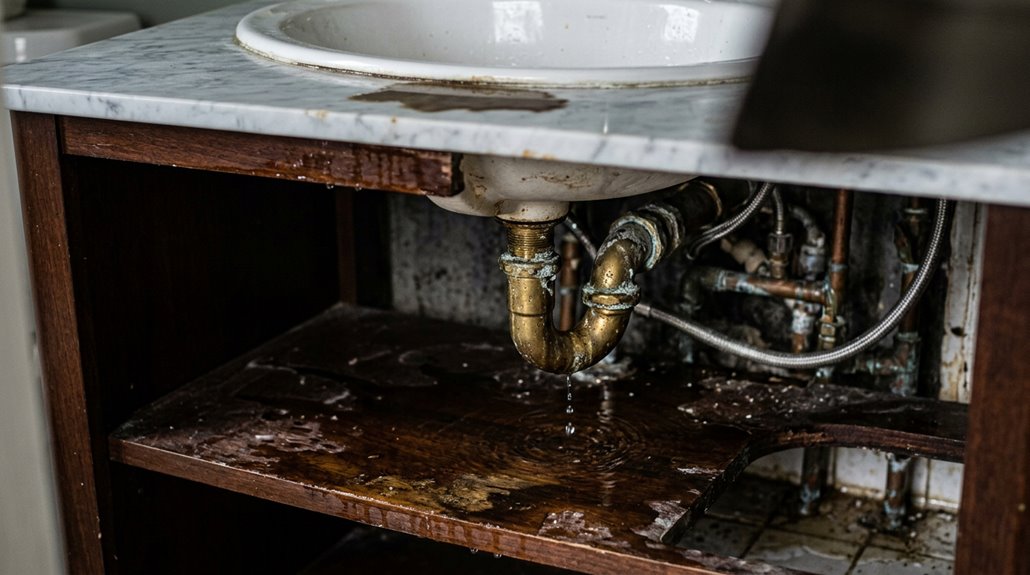
I’ve traced most under-sink leaks to worn washers, loose connections, corroded pipes, or cracked plumber’s putty. You’ll spot water pooling after shutting off the faucet, which points to your drain assembly or P-trap. Supply lines seep at joints, especially if they’re older than ten years and showing rust or greenish staining. Clogged drains create backpressure that damages seals. Many fixes, including tightening connections, replacing washers, and resealing drains, you can handle yourself, though severely corroded P-traps need professional help. Continue reading to discover exactly where your leak’s hiding.
How to Pinpoint Your Bathroom Sink Leak?
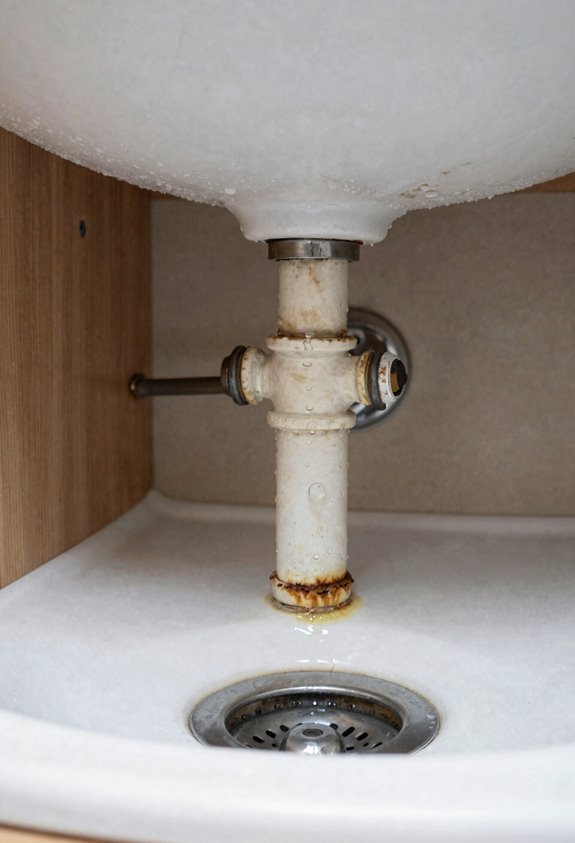
Where’s that water coming from? The best way to figure out your leak’s source is testing methodically.
First, turn off the water and run your taps. If water still drips, the problem is in your drain assembly or P-trap. If it stops, your supply lines are likely the culprit.
Next, inspect under your sink carefully. Check the P-trap, slip nuts, and connections for cracks or corrosion. Look for water stains and dampness on the cabinet floor. These reveal hidden leaks you might miss otherwise.
Then test with water flowing from your faucet while watching the drain area. Also pour a bucket of water into the sink to see exactly where it leaks. This two-part approach helps you pinpoint whether worn washers or damaged components are causing your under-sink leak.

Effective Waterproof & Oil-Proof Protection for Cabinets: This 22" x 19" under sink mat features a fully sealed waterproof and oil-proof surface with upgraded 0.59" raised edges and 3mm thick sides to contain leaks, spills, cleaning products, and plumbing drips before they reach your cabinet base. Helps prevent water damage, swelling wood, stains, and costly repairs while keeping cabinets clean and dry

Complete Cabinet Protection: Protect your kitchen and bathroom cabinets from stains, drips, scratches, and everyday messes. The SIKADEER under sink mat helps keep shelves and floors clean, dry, and easy to maintain for a tidy storage space.

Full Cabinet Protection – Jin&Bao under sink mat reinforced with a thicker, tougher silicone structure for enhanced durability and support. The 1.6 cm raised edge securely holds spills and leaks, shielding your cabinets, shelves, and floors from water damage, stains, and scratches.
Worn Washers and Seals: The Top Cause
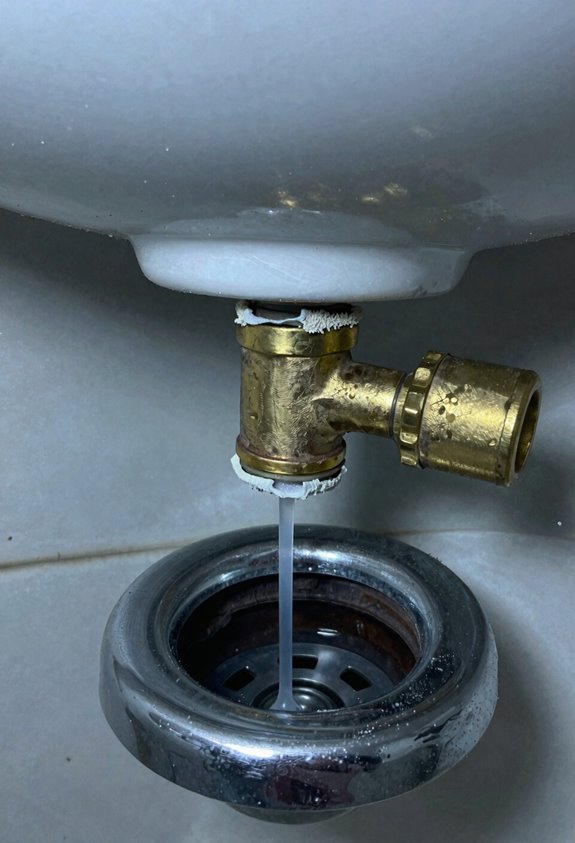
Worn washers and seals are usually the culprits behind under-sink leaks, and they’re one of the easiest problems to fix yourself. These rubber components wear out over time from constant water pressure and temperature changes, creating tiny gaps where water escapes at the joints. Replacing them restores a watertight seal and stops the drip before it becomes a larger problem.

One-stop Installation and Great Time Saver: The 1-1/2" sink trap kit is designed for easy installation , which includes all the needed parts and sink drain pipes to install or repair your kitchen sink drain, you don't have to spend much time fumbling around in the store, plumbing department trying to find the right thing,making it a user-friendly solution for all your kitchen sink drainage worries.

New design, Easy to install, J-bend can be adjusted for extend and bend.

Perfect for upgrading kitchen and bathroom sink fixtures, ensuring seamless functionality and style.
Rubber Components Break Down
Why does my sink suddenly start dripping when everything seemed fine last month? The answer lies beneath your cabinet. Rubber components break down over time, and this happens to everyone.
Here’s what happens:
- Rubber gaskets deteriorate from regular water exposure and heat
- Seals around connections wear thin, creating small drips
- P-trap seals fail, allowing water to escape at the drain assembly
- Worn washers can’t create tight connections anymore
When I noticed dampness under my sink, I discovered my rubber seals had simply aged out. The hot water I ran daily accelerated the breakdown faster than expected. These components don’t last forever. They need replacing every few years to prevent under-sink leaks. Regular checks catch worn washers early and prevent water damage and musty cabinet odors.
Replacement Restores Watertight Seals
When I finally replaced those deteriorated washers under my sink, the dripping stopped completely. I realized how simple the fix actually was. Over time, these rubber components wear down from constant water pressure and use. When I inspected my supply lines and drain, I found degraded seals causing water to escape at the joints.
| Component | Problem | Solution |
|---|---|---|
| Washers | Worn from use | Replace with new ones |
| P-trap | Loose gaskets | Tighten or reseal |
| Drain gaskets | Cracked seals | Install replacements |
| Supply lines | Leaking connections | Add plumber’s putty |
After replacing the old washers and drain gaskets, I resealed everything with plumber’s putty. This maintenance stopped my leak. Preventative replacement reduces future repair costs and prevents water damage to cabinets and flooring.
Loose Pipe Connections Under Your Sink
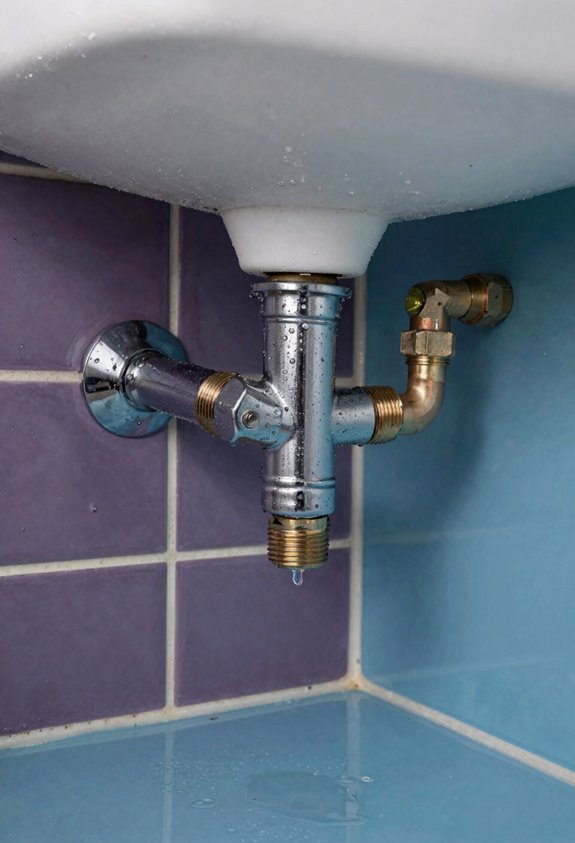
How often do you actually look under your sink? I didn’t either, until I found water pooling on my cabinet floor. My loose pipe connections were the culprit, and yours might be too.
Common leak sources:
- Supply lines can seep at joints where they meet your faucet
- Slip nuts gradually loosen from vibrations and regular use
- Drain connections at the P-trap are common leak spots
- Moisture and corrosion signal overtightened or corroded fittings
I grabbed a wrench and snugged my loose connections carefully, avoiding over-tightening. Sometimes I just replaced the washers and gaskets, which are cheap and effective. When my leak happened during running water, I knew it was a supply line issue, not a cracked pipe. The fix is straightforward and prevents water damage to your cabinets.

PRODCT SIZE:The sealing ring consists of an upper gasket and a lower gasket, there are 2 pairs in all. Outer Diameter57mm/2.24in Internal Diameter 37mm/1.46in.

【No Plumber's Putty Needed】Dual-layer EPE foam gasket + high-elasticity rubber seal ring combo creates instant watertight seal with simple twist-on installation. Eliminate messy traditional putty!
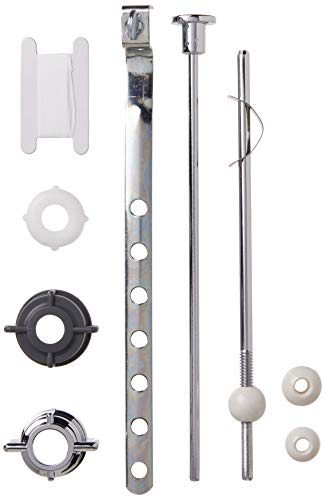
UNIVERSAL– Retrofits in most standard ball rod popup drains
Cracked Plumber’s Putty Around the Drain
There’s a culprit hiding right under your sink that you’ve probably never thought about: the plumber’s putty around your drain. I learned this when I noticed water pooling beneath my sink basin. That crumbly, dried-out putty is often the cause of under-sink leaks.
Putty cracks develop when it dries out, gets applied too thick, or isn’t compatible with your sink material. When this happens, water sneaks past your drain seal instead of staying contained. I fixed my sealing failure by replacing the old putty and resealing my sink drain flange properly.
After your putty replacement, make sure the drain flange sits flat and the new putty fills all gaps around the threads. If leaking continues, you may have a deeper issue with your gasket or basin itself.

【Universal Dishwasher Installation Kit】:Our dishwasher connection kit provides everything you need in connecting household water supply to dishwasher;suitable for most brand and models dishwasher,such as BOSCH,Samsung, GE, LG, Whirlpool, Frigidaire, etc..In particular the 3/8" x 3/8 "x 3/8" Comp tee stop valve, convenient for you add a branch waterways on the existing water supply and freely control on and off.

🔧 【3 WAY STOP VALVE】 Includes 1 pack of 1/2" NOM (5/8" OD) Inlet x 3/8'' OD Outlet x 3/8'' OD Outlet Angle Stop Valve with 2 Shut Off Valve/Handles.

DISHWASHER CONNECTOR KIT: Includes a 5 ft. stainless steel braided supply line with 3/8 in. compression x 3/8 in. compression ends for standard dishwasher installations
Your P-Trap Is Corroded or Cracked
Ever look under your sink and spot rust or discoloration on that curved pipe? That’s your P-trap, and it’s probably leaking. P-trap corrosion causes most under-sink puddles.
Check for these signs of damage:
- Visible rust or discoloration on the curved pipe itself
- Cracks or holes allowing water to escape at drain joints
- Drips from the slip nut gasket connection points
- Leaks that only appear when water’s running
When corrosion appears, replace the whole unit rather than patch it. The water leakage test is straightforward: run water and watch both ends. Use adjustable wrenches and plumber’s tape for a tight seal. A new P-trap will fix the leak underneath your sink.

10-Piece Sink Drain Gasket Set in Black and White: Includes ten slip-joint washers in two colors, giving you enough replacements for kitchen and bathroom sink repairs without running short. Keep spares on hand for future plumbing maintenance

【The Perfect Seal】 – This universal PVC slip joint nut and washer combo is engineered . This gasket compresses evenly as you tighten the nut, creating a watertight seal that stops leaks at the source - no need to buy a separate washer.

EZ-Fluid 1-1/2" x 1-1/4" Universal Reducing Brass Slip Joint Nut and Blue Heavy Duty Reducing Washer Gasket,Chrome for Under Sink Lavatory Kitchen Sink Tubular (1)
Worn Gaskets on Supply Hoses
When I traced a puddle under my sink last year, I found the culprit wasn’t the drain; it was the supply hose connection. Worn gaskets on supply hoses are common troublemakers in bathroom leaks. These rubber seals degrade over time, causing slow drips or sudden bursts where the hose meets the valve. Inspecting both ends of my supply line fittings revealed crusty mineral buildup and moisture, telltale signs of gasket degradation. The risk increases with hot water pressure, which stresses connections more. I tightened my connections and replaced the worn gaskets myself using basic tools. This simple fix stopped my under-sink leak and prevented water damage to my cabinet floor. Regular inspections keep my supply hoses working reliably.

Ultimate Protection: WINISOK under sink mat provides unparalleled protection to your cabinets, shelves, and floors from plumbing leaks, stains, scratches, spills, and more; With the capacity to hold gallons of liquid, it's the ultimate defense against damage
Ultimate Protection: WINISOK under sink mat provides unparalleled protection to your cabinets, shelves, and floors from plumbing leaks, stains, scratches, spills, and more; With the capacity to hold gallons of liquid, it's the ultimate defense against damage

Effective Waterproof & Oil-Proof Protection for Cabinets: This 22" x 19" under sink mat features a fully sealed waterproof and oil-proof surface with upgraded 0.59" raised edges and 3mm thick sides to contain leaks, spills, cleaning products, and plumbing drips before they reach your cabinet base. Helps prevent water damage, swelling wood, stains, and costly repairs while keeping cabinets clean and dry
Clogged Drains Creating Pressure Leaks
A clogged drain can create problems you might not expect, like leaks underneath your sink. When debris builds up in your pipes, it creates backpressure that pushes water toward weak spots. This pressure forces water to escape at joints, gaskets, and especially the P-trap under your sink.
What you should know:
- Backpressure from clogs damages drain seals over time
- Leaks at joints often appear as drips or pooling water
- P-trap leaks indicate serious blockage pressure
- Foul odors accompany clogged drain leaks
Light clogs respond to a plunger, but severe blockages need professional help. Regular maintenance with strainers prevents debris buildup before it becomes a problem. Keeping your drain clear prevents water damage to your cabinet and avoids expensive repairs.

Adjustable Length for Perfect Fit: Our P - trap kitchen sink features an adjustable length from 5.7 to 26.4 inches, making it suitable for a wide range of sink setups. No matter the size of your kitchen sink, it ensures a snug and secure connection.

Perfect for upgrading kitchen and bathroom sink fixtures, ensuring seamless functionality and style.

UNIVERSAL INSTALLATION: Our complete bathroom sink drain repair kit includes several replacement pipes and fittings to fit most sinks with drainage that connects to the wall or to the floor.
Faulty Faucet Cartridges Dripping When Off
While clogged drains create pressure problems deep in your pipes, sometimes the leak is actually coming from your faucet itself. I discovered this when my sink kept dripping even with the handle off. The culprit was a faulty cartridge.
Inside your faucet lives a cartridge that controls water flow. When mineral buildup or wear damages it, you’ll notice a constant seep at the faucet base. My leak started as a slow drip but got worse over time.
Fixing it requires shutting off your water shutoff valve, then disassembling the faucet to access the cartridge. I replaced mine with a manufacturer-specific part. The process is straightforward once you begin.
After cartridge replacement, run both hot and cold water to test everything. Check your faucet base for any remaining drips to confirm the repair was successful.

Complete Plumbing Repair Kit: This comprehensive set includes 2 EPE gaskets and 2 rubber strainer washers. It also features 10 cone seal rings, 6 flat rubber sealing rings, and 1 roll of thread seal tape to completely meet the replacement needs for a full set of sink drain pipes.

Product Introduction:The 88347 basin mack gasket is designed for most standard bathroom lavatory sink drains, serving as an ideal replacement seal for sink pop-up drain assemblies, Product dimensions 2-3/8" OD x 1-1/4" ID x 3/8" Thick

Comprehensive Leak Proof Kit: This essential set includes 1 metal nut, 4 fiber washers, and 4 rubber washers, providing everything needed to extend the life of your sink strainer. Washers & Lock Nut Fit 3-1/2 Inch Kitchen Sink Drains, these components minimize replacements and ensure a reliable, leak proof performance
Corroded Supply Lines and Tailpieces
Rust buildup on metal supply lines and tailpieces is one of the most common causes of under-sink leaks, particularly if your hoses are older than five to ten years. Greenish staining, flaking metal, or visible corrosion around connections indicate that replacement is necessary before pinhole leaks or more serious damage occurs. Replacing these parts requires shutting off your water supply and using a basin wrench to loosen tight fittings. This direct approach eliminates the leak at its source.

【Universal Dishwasher Hose Kit】:Our dishwasher connection kit provides a variety of standard thread fittings,meeting the needs of different situations installation,also suitable for most brand and model dishwashers.

【Universal Dishwasher Installation Kit】:Our dishwasher connection kit provides everything you need in connecting household water supply to dishwasher;suitable for most brand and models dishwasher,such as BOSCH,Samsung, GE, LG, Whirlpool, Frigidaire, etc..In particular the 3/8" x 3/8 "x 3/8" Comp tee stop valve, convenient for you add a branch waterways on the existing water supply and freely control on and off.

【Universal Dishwasher Hose Kit】:Our dishwasher connection kit provides a variety of standard thread fittings,meeting the needs of different situations installation,also suitable for most brand and model dishwashers.
Rust Buildup on Metal
One of the sneakiest culprits behind under-sink leaks is rust creeping up on your metal supply lines and tailpieces. Corrosion doesn’t announce itself; it just quietly eats away at your connections until water starts dripping.
Watch for these warning signs:
- Brown, reddish, or greenish staining along the metal lines
- Pitting or flaking on the surface of pipes
- Pinhole leaks that develop under water pressure
- Weakened joints at P-trap connections
When rust buildup appears under your sink, replacement is the best option rather than attempting repairs. Severely corroded supply lines and tailpieces won’t hold up long-term. Regular inspections help catch these problems early and prevent sudden under-sink leaks that can damage cabinets and floors.
Replacing Corroded Components
Corroded supply lines and tailpieces require replacement. When I discovered rust and white mineral deposits on my under-sink pipes, I knew leaks would follow if I didn’t act fast.
I shut off the water, disconnected the old fittings, and installed new braided supply lines rated for my sink. The tailpiece, that pipe connecting to your drain, also needed replacing since its threads were compromised.
Use fresh gaskets and washers, then tighten everything properly. A watertight seal prevents leaks and stops this problem from recurring within weeks. Proper installation ensures your system functions reliably.
DIY vs. Professional: What You Can Fix Yourself
When should you grab your wrench, and when should you call a plumber instead? Some fixes can be handled yourself, while others need professional help.
What you can fix without calling someone:
- Tightening loose drain connections and supply lines
- Replacing washers and gaskets in faucet seals
- Resealing your drain with fresh plumber’s putty
- Cleaning clogged pipes to reduce pressure
If your P-trap is cracked or corroded, you shouldn’t attempt repairs. Internal damage requires a professional plumber who has the right tools and experience. Patching problems yourself often leads to worse issues later. When leaks persist after basic fixes, calling a professional prevents wasted time and money while ensuring the work is done correctly.

10-Piece Sink Drain Gasket Set in Black: Includes ten slip-joint washers in two colors, giving you enough replacements for kitchen and bathroom sink repairs without running short. Keep spares on hand for future plumbing maintenance


EZ-Fluid 1-1/4" Universal Brass Slip Joint Nut and Blue Heavy Duty Washer Gasket,Chrome for Under Sink Lavatory Kitchen Sink Tubular (1)