
Building without a permit seems cheaper upfront, but it backfires fast. Inspectors issue stop-work orders, daily fines pile up, and you’ll face retroactive fees exceeding original permit costs. You might need to tear it down or retrofit it to code, both of which require permits anyway. Unpermitted work also complicates home sales and title insurance. Getting a permit first is the safest move. Keep reading to see exactly how these costs add up.
What Happens When You Build Without a Permit (And How Likely It Is)
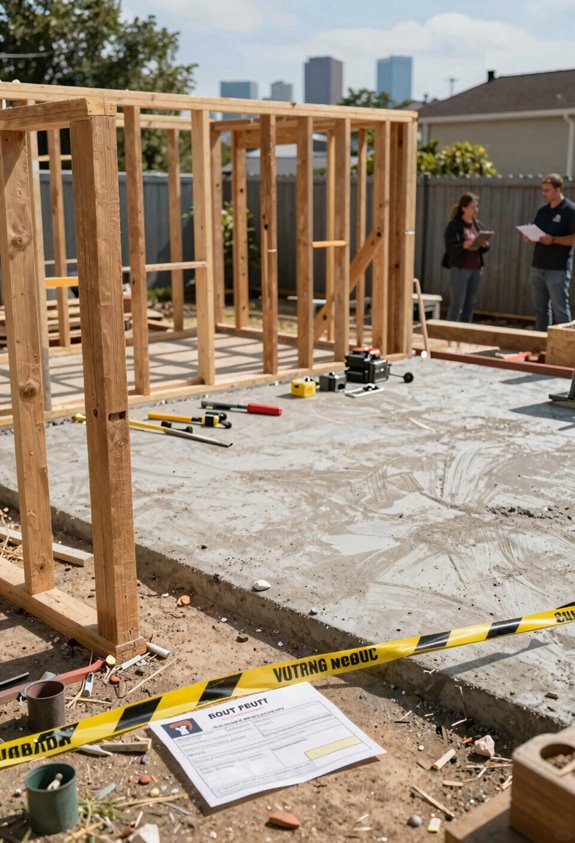
So what’s really at stake if you skip the permit and just build that patio? The consequences can pile up fast. Your city or county can hit you with fines, and they’ll likely issue stop-work orders that halt everything immediately. If inspectors discover your unpermitted construction, you might have to tear it down or rebuild it at your own expense. I’ve seen this happen to neighbors, and remediation costs them thousands more than getting the permit would’ve cost upfront. The exact penalties depend on where you live and what you built, but most jurisdictions take this seriously. Get that permit first. It’s the safest path forward.


Your First Financial Hit: Fines, Back-Dated Fees, and Retroactive Permits
Once the stop-work order lands on your door, the real costs start hitting your wallet. I learned this the hard way, and it’s not pretty.
Here’s what I faced:
- Daily fines – My city charged me per violation, and those add up fast
- Back-dated fees – I owed retroactive permits covering months of work I’d already completed
- Inspection costs – Getting my patio inspected after the fact cost extra money
- Noncompliance penalties – Additional charges for not following codes during construction
The total surprised me. Between fines, retroactive permits, and back-dated fees, I spent thousands more than I would’ve paid for a simple permit upfront. My mistake showed that skipping the permit process doesn’t save money; it multiplies expenses. Getting the permit right from the beginning would have saved significant time and money.


When the City Issues a Stop-Work Order: What That Means
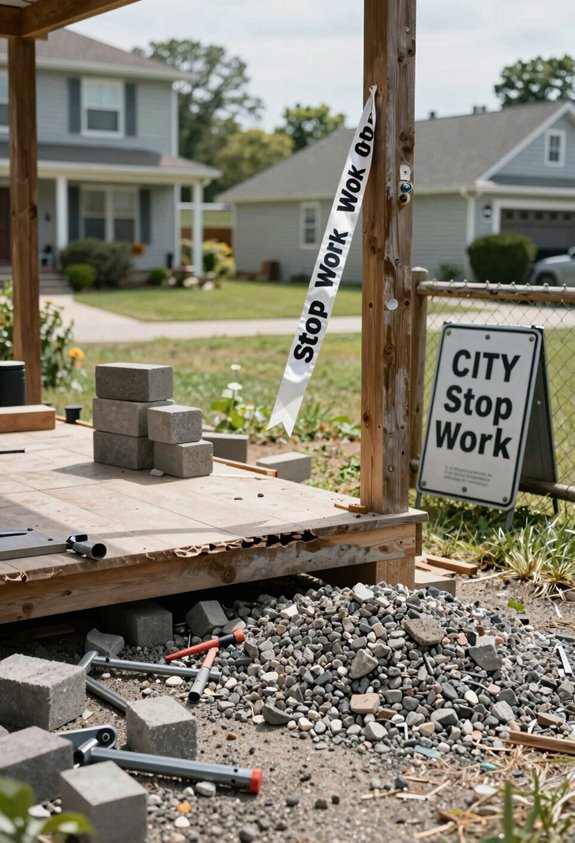
When a stop-work order arrives at your property, all construction halts immediately until the city verifies you’ve fixed violations and complies with code. The agency issues these orders when permits are missing, safety hazards exist, or code violations are found.
While that order sits on your site, daily penalties pile up fast. You’ll face fines and must cover the cost of removing or modifying noncompliant work yourself.
Once violations are corrected, scheduling a re-inspection typically takes weeks. Only after the building department approves your work can you resume construction.
This pause costs time and money. The city enforces these orders to keep neighborhoods safe and compliant.


Forced Removal or Modification: Bringing Your Patio Into Code
If the city orders you to fix or remove your unpermitted patio, you’ll face specific timelines, usually 30 to 90 days depending on your local codes, and you’ll need to cover all the costs yourself, which can run thousands of dollars for structural changes and inspections. Homeowners often face unexpected expenses when they realize they’re paying not just for removal, but also for rework, new permits, and professional plans that meet building standards. The longer you wait to address a stop-work order, the more expensive and complicated it gets. Acting quickly to bring your patio into compliance reduces costs and prevents further complications.

Removal Orders And Timelines
when a code official discovers your unpermitted patio, you’re not just facing a warning. You’re facing legal action. Removal orders are legal documents with real deadlines and enforceable consequences.
Here’s what typically happens:
- Stop-work orders halt construction immediately, sometimes within days of discovery
- You’ll receive removal orders detailing what must change or come down
- Timelines range from 30 to 90 days depending on your jurisdiction
- Fines and penalties accrue daily until you comply with building codes
The clock starts ticking the moment that order arrives. You’ll need to either demolish the unpermitted patio or invest significant money rebuilding it to code. Acting fast directly reduces costs and timeline extensions. Delays compound both financial liability and administrative complexity.
Compliance Costs And Expenses
Once that removal order lands in your mailbox, you’re facing a hard choice: tear it down or fix it. Fixing it costs more upfront. You’ll need permits, code inspections, and possibly structural upgrades to meet current standards. These compliance costs add up quickly. You’re looking at permit fees, inspection charges, and contractor costs for modifications. Then come the fines for building without permission initially. If stop-work orders were issued, you’ve already lost time. Bringing everything into compliance means passing inspections and documenting everything. It’s frustrating, but it beats losing your patio entirely. Paying these expenses now prevents bigger problems during home sales later.
How Unpermitted Patios Affect Home Sales and Title Insurance
Why does an unpermitted patio suddenly become such a big deal when you’re selling your house? I learned this the hard way. When I went to sell, my unpermitted patio created immediate problems I hadn’t anticipated.
Here’s what I discovered:
- Lien risks – The city can place a lien on your property if they discover unpermitted work during a title search
- Home sale disclosure – I had to legally reveal the patio’s status to buyers, which scared many away
- Title insurance complications – My insurance company excluded coverage for unpermitted improvements, requiring expensive endorsements
- Retroactive permits – I faced costly corrective inspections and had to apply for retroactive permits before closing
Many lenders won’t finance homes with undisclosed unpermitted improvements. Being upfront about these issues early prevents delays, reduces costs, and avoids complications at closing.
Legalizing an Unpermitted Patio: Your Options
If I’ve built a patio without a permit, I have real options to make it legal, though none are quick or free. I can file a retroactive permit application with my local building department, which means submitting plans, paying back fees, and letting inspectors verify that my patio meets current code requirements. Working with the authorities and fixing any compliance issues, what they call remediation, is my best path forward to avoid fines, stop-work orders, or having to tear the whole thing down.
Retroactive Permit Applications
So you’ve built your patio and now you’re realizing you should’ve gotten a permit first. You’re not alone in this situation. A retroactive permit can help you legalize your unpermitted patio, though it requires work on your part.
When exploring this path, consider these steps:
- Submit detailed site plans and drawings of your existing patio
- Pay back fees and any permit penalties the jurisdiction requires
- Allow inspectors to verify your work meets current code compliance standards
- Expect longer approval times due to backlogs and structural reviews
This process demands patience and honesty about your project. Some jurisdictions may require modifications, but legalizing your patio protects you from future complications when selling your home.
Working With Local Authorities
Once you’ve decided to legalize your unpermitted patio, your next move is contacting your local building department. This conversation may feel intimidating, but voluntary disclosure generally works better than concealment. Most building departments respect voluntary disclosure, which can actually reduce your penalties. Call and explain your situation directly.
The building department will guide you through the retroactive permit process and schedule inspections to check your patio’s compliance with local codes. You might need adjustments for setbacks or drainage. The process costs money and takes time. However, working directly with them prevents stop-work orders or demolition notices.
Many homeowners face this challenge. Taking action now protects your property value and avoids legal complications down the road.
Remediation and Compliance Options
How do you actually fix a patio you built without permission? You have several paths forward, and they’re more manageable than you might think.
- Submit a retroactive permit application to your local building department
- Provide detailed site plans and drawings of your patio’s construction
- Pay back permit fees and any associated penalties
- Schedule and pass required inspections to verify compliance
The process takes time, but it addresses the problem directly. Legalizing unpermitted work protects your home’s value and prevents future complications. Your local authorities prefer legalization over enforcement; they want your patio meeting current safety codes and drainage standards. Yes, you’ll invest money upfront, but avoiding forced removal or sale complications later is cost-effective. Many homeowners face these situations.
Tearing Down vs. Retrofitting: When Each Makes Sense
When you’ve got an unpermitted patio that doesn’t meet code, you’re facing a choice: tear it down and rebuild it right, or retrofit what’s already there.
Tearing down requires a permit even if you’re rebuilding to the same design. Your local jurisdiction uses this process to ensure code compliance. Retrofitting appears cheaper, but it often needs permits too if you’re making structural changes or adding drainage.
| Option | Permit Required | Cost | Timeline |
|---|---|---|---|
| Tear Down & Rebuild | Yes | Higher | Longer |
| Retrofit Existing | Usually | Lower | Shorter |
| Minor Repairs Only | Maybe Not | Lowest | Quick |
| Structural Changes | Yes | Variable | Varies |
To decide between these options, check your permit history and call your local building department. They will tell you what’s actually permissible and guide you toward the right path forward.
The Real Cost of Unpermitted Work vs. Getting a Permit From the Start
You’d think skipping the permit process saves money and time, but unpermitted work backfires more often than not. Here’s what actually happens when you choose unpermitted work over doing it right:
- Fines escalate quickly – City authorities don’t stay quiet. Penalties grow the longer your patio sits unpermitted.
- Stop-work orders halt everything – Projects get frozen mid-construction, forcing expensive demolition or retrofitting to meet codes.
- Home sales become nightmares – Buyers discover unpermitted work, triggering inspections and inspection penalties that derail deals.
- Retroactive permitting costs balloon – Getting permits after the fact means rework, reviews, and fees that often exceed your original budget.
Getting a permit upfront is straightforward and protects your investment. Starting right avoids enforcement hassles, inspection complications, and financial penalties down the road.