
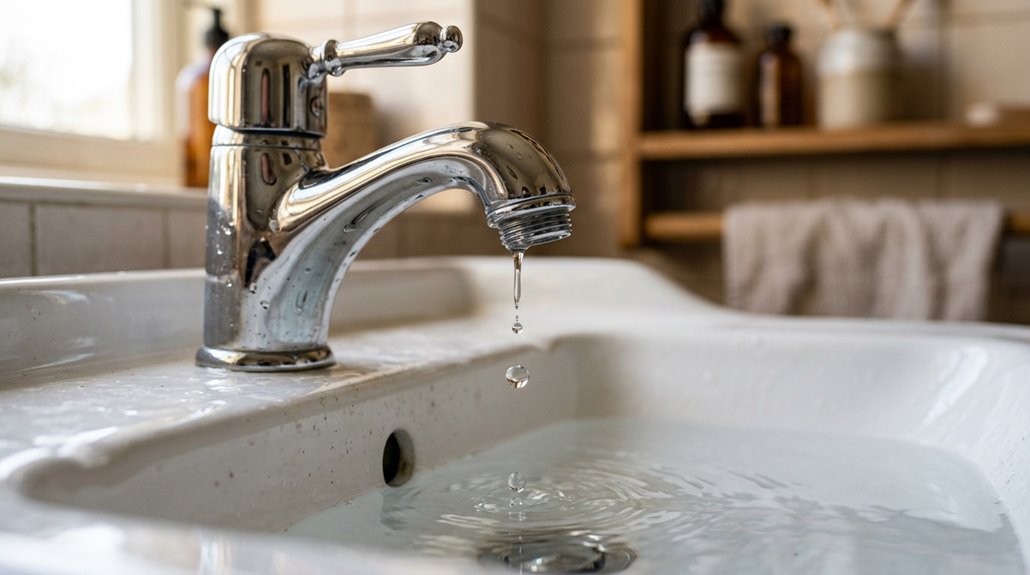
Your tub faucet drips because the rubber washer or O-ring inside has worn out, the valve seat’s gotten grooved, or your water pressure’s too high. Watching where the water falls tells you a lot. Dripping from the spout usually means a bad washer, while leaks around the stem point to valve seat damage. High pressure can force water past the diverter valve too. The fix often costs less than you’d think, but understanding what’s actually broken makes all the difference in stopping it for good.
Why Tub Faucets Drip
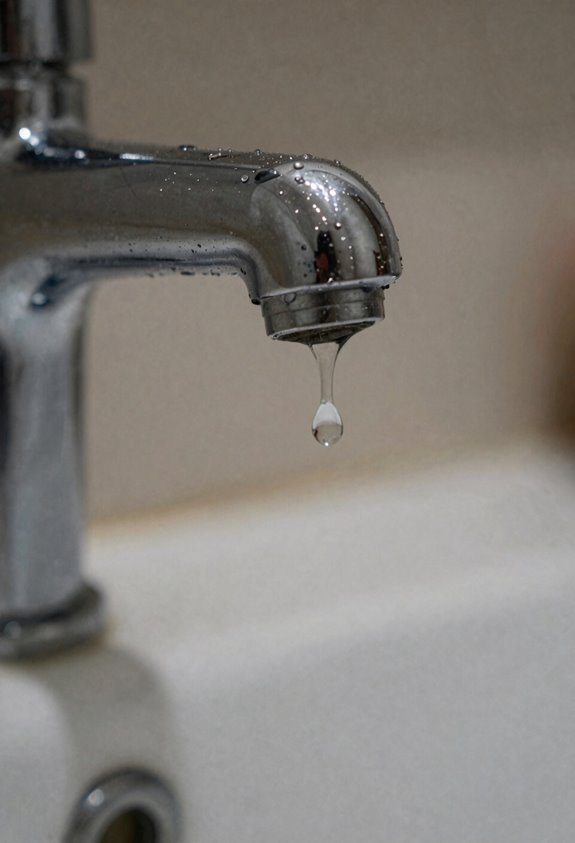
Why does that annoying drip keep you awake at night? Tub faucets leak for several common reasons. Worn valve stems are usually the culprit. These are the parts inside your faucet that control water flow. When they wear out, water sneaks past and drips. Deteriorated washers and damaged O-rings fail to seal properly, allowing water through. The diverter valve, which directs water between the tub spout and showerhead, can malfunction too. Sometimes mineral buildup accumulates inside, blocking proper function. Valve seats themselves can become grooved or damaged over time. Even improper installation causes persistent dripping. These issues are fixable, but pinpointing the exact cause helps determine your best solution.

Quality Materials : The outdoor faucet repair kit are made of high-quality rubber material, which is durable enough to withstand the rigors of daily use. Equipped with brass screws not easy to corrode. The black finish is low-profile and stain-resistant for long-term use

Compatibility: the 4 set 101237 cup seal & diverter gate is designed to compatible with 3800 series tub spouts, and features curved edges

Multiple sizes: 106 Pcs faucet washer kit with assorted different flat beveled common sizes: 3/8, 1/4L, 1/4, 1/4M 0, 1/4S 00. also comes with 6 non-corrosive brass screws to meet your various size repair replacement needs
Worn Washers and O-Rings: The Most Common Culprit
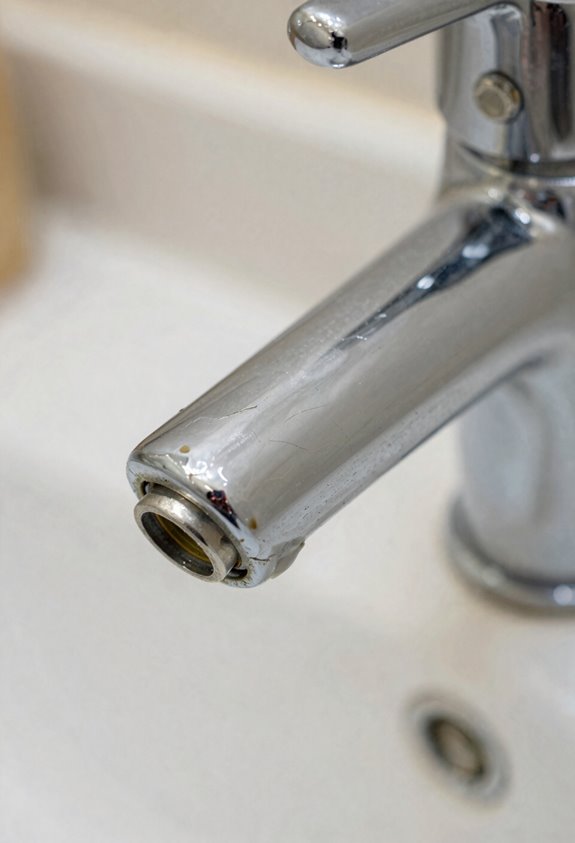
How often have you ignored a dripping faucet because you weren’t sure what was causing it? The answer usually involves worn washers or O-rings. These tiny parts do the heavy lifting in your faucet system.
| Faucet Type | Sealing Part | Problem | Solution |
|---|---|---|---|
| Compression | Washer | Deteriorates over time | Replace washer |
| Cartridge | O-ring | Cracks and wears | Replace O-ring |
| Both types | Valve seat | Debris buildup | Clean or replace |
| Compression | Stem washer | Loses flexibility | Replace |
| Cartridge | Multiple O-rings | Age-related failure | Full replacement |
When a worn washer is replaced, the dripping stops immediately. Debris and mineral buildup damage these seals, preventing them from sitting properly. Complete results often require replacing both the washer and valve-seat seal. This straightforward work reduces water waste and lowers utility costs.

Package Weight: 0.022 pounds

Premium Material: These assorted o rings are made of outstanding rubber material with good air tightness and high temperature resistance, which are oil resistant, heat resistant, wear resistant and durable for long time use.

Our bath plug seals offer excellent sealing, effectively stopping water leaks and replacing old, worn gaskets to ensure efficient operation of your sink drainage system.
Damaged Valve Seats and Grooved Faucet Internals
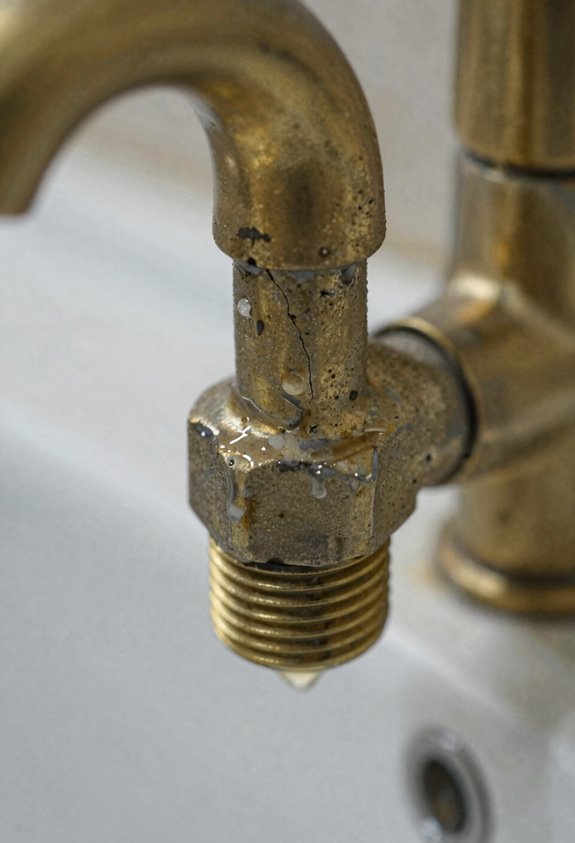
When I investigated my own dripping tub faucet, I discovered that mineral buildup and everyday wear had damaged the valve seat itself, the critical part that seals when you turn off the water. Over time, hard water deposits and constant friction create grooves and pitting in the valve seat. This damage means even a brand-new washer won’t seal properly and your faucet keeps dripping. The fix usually requires cleaning out mineral deposits or replacing the valve seat entirely. Doing this alongside washer replacement provides the most effective solution for stopping leaks.

Set of cup seal and diverter gate numbered 101237 for a diverter tub spout, 4 sets in package. Refer to the picture for color specifications.

Widely Compatible - Universal Design. The tub spout diverter repair kit is designed for repairing most standard tub spouts, please compare the dimension image with your existing tub spout diverter before purchasing

Universal Design: the tub spout diverter repair kit is designed for repairing most standard tub spouts, and features straight edges; Nice tub spout repair replacement parts for faucet bathtub spouts
Mineral Buildup and Wear
One of the most common culprits behind a stubborn dripping tub faucet is mineral buildup on the valve seat, that critical component sitting between your faucet stem and handle. Hard water leaves deposits that accumulate over time, creating grooves and pits on this surface. When minerals collect there, your valve seat can’t seal properly anymore. The washer or O-ring simply won’t sit flush against the damaged surface, so water sneaks past and drips continuously. Debris also prevents the stem from seating completely, even after replacing seals. The buildup essentially erodes the valve seat’s smooth finish. To fix this, you’ll need to either resurface or replace the valve seat entirely. This straightforward repair stops the drips by restoring a proper seal between the faucet components.
Grooved Seat Deterioration
Why does replacing the washer never stop my drip? The problem often isn’t the washer itself; it’s the valve seat underneath. Your valve seats are the surfaces where the washer actually seals. Over time, mineral deposits and debris groove and wear these seats, creating tiny channels where water sneaks through. Even a brand-new washer can’t seal against a damaged, grooved surface. I replaced my washer three times before realizing the valve seat was the culprit. When valve seats wear down, they can’t form a tight seal anymore, no matter what you put on top. Your drip persists because the valve seat itself is damaged. You need to address the valve seat to actually fix the problem.
Replacement and Prevention
How do you actually fix a damaged valve seat? Replacing worn valve seats is your best bet for stopping stubborn drips. I tried patching mine with new washers first, but the grooved seats kept causing leaks anyway. You can either replace the entire valve seat or use a reseating tool to smooth out the pits and grooves. I chose replacement because it’s more reliable.
Prevention matters too. Flush your faucet regularly to remove mineral buildup before it damages valve seats. Installing a water filter helps avoid contaminants that cause deterioration. These simple steps keep your tub faucet working properly and prevent frustrating drips.
High Water Pressure and Back Pressure Issues
Ever notice your shower head dripping even when you’ve switched the diverter to the tub. This happens because of back pressure issues. When water pressure gets too high, it creates problems throughout your system.
Here’s what happens:
- Excessive pressure stresses pipes and fixtures, creating tiny cracks
- High volume pushes water backward toward the shower head
- Tub spout flow forces water through the diverter unexpectedly
- Diverter valves overflow under too much pressure
- Water reaches the shower head even when you don’t want it there
Upgrading your pipes helps address this problem. Switching from PEX to copper or increasing pipe diameter reduces back pressure significantly. Better flow means less fighting against the system, and your dripping stops. Check your water pressure. If it’s above 80 PSI, you’ve likely found your culprit.

FITS PFISTER 970-500 AND 5713: Brass bibb seats compatible with Pfister and Price Pfister service numbers 970-500 and 5713, the threaded insert your stem washer closes against inside two-handle and three-handle compression tub and shower valves. Ten seats per pack.


Rubber seats and steel springs
Improper Installation and Loose Pipe Connections
High water pressure causes problems throughout your system, but how your faucet gets installed is equally critical. DIY replacements and improper installations frequently result in leaky connections that persist for months.
| Installation Issue | What Happens |
|---|---|
| Loose pipes in wall | Drips appear during use |
| Poor seating | Seal fails repeatedly |
| Misaligned connections | New leak paths form |
| Unsecured fixtures | Ongoing dripping continues |
Professional installation prevents these failures. Installers ensure proper alignment and secure all connections tightly. Getting this right eliminates wasted water, reduces water bills, and prevents water damage to your home. Call a professional rather than attempting DIY work that compounds your original problem.

Perfect Match: Our sink drinking water faucet has a finish, no matter the size or shape, this reverse osmosis faucet can be matched with the appearance of various kitchen faucets. It is also suitable for stainless steel sinks or marble countertops.

Versatile Design with Extra-Long 4 1/2" Stem: Our RO water filter faucet effortlessly complements various kitchen faucets and suits stainless steel sinks, marble countertops, and any kitchen style. Its standout feature is the industry-leading 4 1/2" stem, making it compatible with even the thickest countertops.

【360-Degree Rotating Nozzle Design】 This VMASSTONE reverse osmosis faucet is designed to be compatible with many RO systems or Non-air Gap water filtration systems. Its 360-degree rotating high-arc spout and 90-degree single-handle design allow you to easily access water from various angles. Simply wipe it with a cloth for daily cleaning.
Old Handles and Incomplete Shutoff Problems
When I turned my bathroom faucet handle all the way, the dripping didn’t stop. That’s when I realized the problem wasn’t inside the valve itself. My handle was the culprit.
Old handles cause real issues:
- Corrosion and rust prevent complete shutoff
- Worn handles can’t seat properly against the faucet stem
- Misaligned handles leave valves partially open
- Rust buildup hinders smooth operation
- Outdated fixtures seal less effectively than newer models
When handles deteriorate, they can’t fully close the internal valve. Water continues trickling out even though the handle is turned completely. Replacing an old handle with a properly sized new one solves persistent dripping problems. The solution is straightforward: update worn-out hardware.

Buyer's Guide - Our package contains 114 pcs Flat & Beveled Rubber Washers & Brass Bibb Screws of 12 sizes. For optimal performance, please verify the required size before purchase to ensure proper fitment.

Washer Repair Kit

Diverter Valve Problems and Shower Head Drips
When I’ve traced a shower head drip to the diverter valve, I’ve found it usually comes down to three main culprits: too much water volume overwhelming the valve, back pressure forcing water past the seals, or restrictions in the pipes that push flow the wrong way. Older PEX lines or undersized piping can create bottlenecks that make the diverter work harder than it should, and high water pressure compounds the problem. The fix often involves replacing the diverter, checking the O-rings, or upgrading to proper copper risers. In some cases, recalibrating the existing valve may resolve the issue.
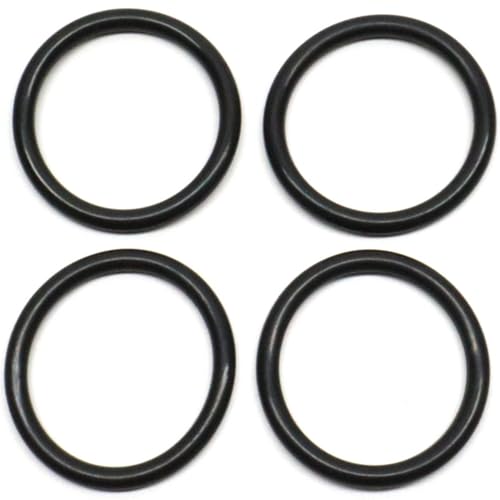
Part Number: T&S Brass 010389-045 O-Ring

Buyer's Guide - Our package contains 1040 pcs replaceable o ring assortment kit of 21 sizes. For optimal performance, please verify the required size before purchase to ensure proper fitment.

Easy to install: easy to install and replace. Insert the seal into the pop-up drain pipe and insert it into place to update the functional sink or bathtub drainage.
Excess Volume Causes Overflow
Why does water sometimes drip from your shower head when you’re filling the tub? It often comes down to excess volume overwhelming your diverter valve. When you turn on the tub faucet with high pressure, more water rushes through than the diverter can handle. Here’s what happens:
- High water pressure increases volume at the diverter
- The valve can’t redirect all water to the tub
- Excess water backs up into the shower line
- Piping restrictions create pressure buildup
- Water finds its way out through the shower head
Replacing or recalibrating the diverter solves this problem. Checking O-ring seating helps too. When you understand the mechanics behind the issue, the fix becomes straightforward.
Back Pressure And Dripping
Beyond just having too much water, back pressure is another culprit behind shower head drips. When water flows strongly from your tub spout, it creates pressure that forces water past the diverter seals. With the diverter engaged, water still dripped from the shower head due to this effect.
The problem gets worse with higher overall water pressure in your home. That extra force pushes water where it shouldn’t go. Checking your tub spout flow helps identify the issue. If it’s too strong, back pressure builds up and overwhelms the diverter valve.
Proper diverter seating or reconfiguring your pipes with copper instead of PEX can reduce back pressure issues significantly.
Pipe Material And Restrictions
How much does your actual plumbing setup matter regarding shower head drips? It matters significantly. Your pipe material and restrictions directly affect how your diverter valve performs.
- PEX tubing can restrict water flow and create back pressure
- Copper lines allow better flow to your tub spout
- Small pipe diameters force water to back up into the shower head
- Obstructions or kinks in lines prevent proper diversion
- Valve calibration issues worsen when combined with restricted piping
When I replaced my PEX with copper lines, my shower head stopped dripping immediately. My diverter valve wasn’t faulty; my pipes were. Larger fittings and proper line sizing let water flow freely to where it’s supposed to go. The root cause of diverter problems often lies in your piping infrastructure rather than the valve itself.
How to Identify Which Part Is Actually Leaking?
Before you call a plumber or start replacing parts, figure out where that drip is actually coming from. Watch where the water falls. Is it dripping from the spout or leaking around the valve stem where the handle connects? This observation tells you a lot. Next, check if water is escaping when you switch between the tub and shower. A drip from the spout usually means a worn washer or O-ring inside. If water leaks around the handle itself, you’re looking at the valve stem or seat. Mineral buildup can hide the real problem. Inspect the stem closely; sometimes debris prevents proper sealing. Taking time with this step prevents you from replacing the wrong part.
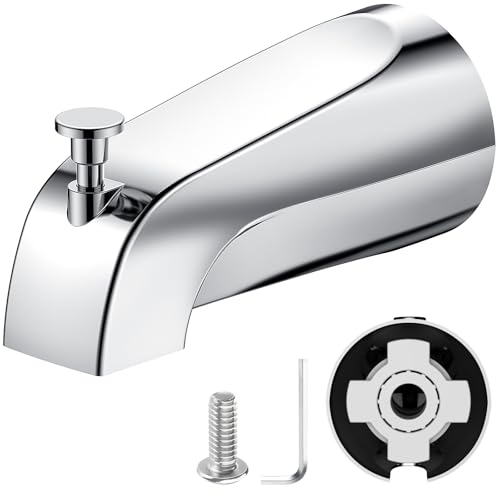
【UNIVERSAL SLIP-FIT COMPATIBILITY】Designed to fit most 1/2" copper pipe slip-fit connections, this tub spout with diverter ensures a secure and watertight fit without the need for threading or adapters. It’s ideal for both new installations and replacements in standard U.S. bathrooms. Please confirm your copper pipe extends 1-1/2" MIN to 3" MAX from finished wall

All Metal Construction

Size & Package - The tub spout diverter repair kit includes 1 pieces of diverter gate with a size of 30.5 x 22.5 x 17.5 mm / 1.2 x 0.89 x 0.69 Inch (L x W x H) and 1 pieces of diverter cup seals with a size of 16 x 5 x 8 mm / 0.63 x 0.2 x 0.31 Inch (L x W x ID). The quantity is enough for your daily use and parts replacement.
Do You Need to Replace the Whole Faucet or Just Parts?
When I first discovered my tub faucet was leaking, I panicked and assumed I’d need to buy an entirely new one.
The truth is that most drips come from worn internal parts, not the faucet body itself. What I learned about deciding between partial and full replacement:
- Compression faucets usually need washer and seat replacement
- Cartridge/valve components often require just a cartridge swap
- Replacing internal parts costs significantly less than a new faucet
- Full replacement makes sense if the stem is corroded beyond repair
- Brand-specific parts sometimes make complete replacement simpler
Identifying my faucet type first saved me money and frustration. If debris or misalignment persists after trying repairs, that’s when full replacement becomes necessary. Starting with the cheaper fix worked for me.

Brass Renewable Seats for 2 and 3 Handle Concealed Tub & Shower with Brass Underbody

Durable brass construction

Compatibility –Our RP46074 cartridge assembly replacement for Monitor rough-in valves (R10000, R1100, R1800, R2200, etc.) and most single-handle 13/14 series tub/shower faucets Kit. (Excludes 1300/1400 series)
DIY Tub Faucet Repair: What You’ll Need and How to Do It
I’ve found that fixing a dripping tub faucet myself gets easier once I gather the right tools: a screwdriver, seat wrench, handle puller, and some basic supplies like Teflon pipe dope and faucet grease. The actual repair process involves shutting off the water, removing the handle and stem, and then replacing worn washers or the valve seat where the drip usually happens. With these essentials on hand and a clear step-by-step approach, I can tackle most drips without calling a plumber.

[DESIGN of ESOW DRINKING WATER FILTRATION FAUCET]-Design with Premium metal construction of faucet body and handles ensures reliability. Finishes resist corrosion and tarnishing through everyday use. Water Outlet gathers water together and concentrates no splash, showing the smooth of the tap water.
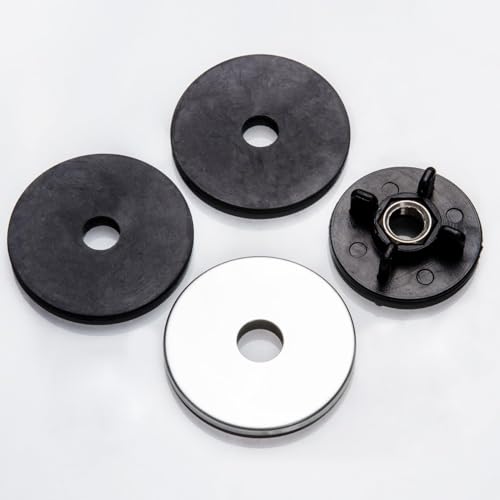
Plate Package includes Front Plate, Front Washer, Back Washer, Wing nut (Lock Washer), brass nut, Tube insert and tube collar

This Oak Brook Tub and Shower Diverter Cartridge Assembly is ideal for repairing your tub and shower to be good as new
Essential Tools Required
How ready are you to tackle that dripping faucet? I wasn’t prepared the first time I tried, but gathering the right tools made all the difference.
You’ll need:
- Screwdriver (for handle screws)
- Handle puller (to detach the handle safely)
- Seat wrench (removes and replaces the valve seat)
- Deep tub wrench (reaches tight spaces)
- Plumber’s grease or Teflon pipe dope (helps everything seal properly)
You might also need a bonnet nut wrench and replacement parts like washers, O-rings, or seats for your specific faucet model. Before starting, shut off your water supply and relieve the pressure. Having these tools ready prevents wasting time searching halfway through the job.
Step-By-Step Repair Process
Now that you’ve got your tools ready, it’s time to actually fix that drip. I start by shutting off the water supply, then I remove the handle screw and use my handle puller to lift the handle away. Next, I take off the dress ring and loosen the stem nut to extract the stem completely.
I use my seat wrench to remove the valve seat, which is the part that usually causes the dripping. I inspect it carefully for grooves or debris that might prevent a tight seal. Then I replace the worn washer on the stem. Before reassembling, I apply Teflon pipe dope to the seat and faucet grease to the stem. Finally, I put everything back together in reverse order and test the faucet.
Professional Repair vs. DIY: Cost and Complexity
When you’re staring at that dripping faucet, you’ve got two paths ahead: fix it yourself or call a pro.
I’ve tackled both approaches with my dripping tub, and what I’ve learned:
- DIY saves money but requires tools like seat wrenches and handle pullers
- Professional repair typically costs around two hours plus parts
- Complexity varies depending on whether you have a compression or cartridge faucet
- Mistakes happen. I’ve had incomplete work leave my faucet dripping worse than before
- Professionals replace stems and seats rather than entire assemblies, often the smarter move
The real question isn’t just cost. It’s whether you’re comfortable handling small parts, accessing bonnet nuts, and ensuring proper valve seating. Professionals catch debris I’d miss and guarantee their work won’t create new leaks.
Why the Leak Returns After You Repair It
You’d think fixing a dripping tub faucet would solve the problem permanently, but the leak often returns because worn valve seats underneath can’t seal properly against new washers, or tiny debris sneaks in during reassembly and blocks the seal. When rushing through reinstalling parts without checking alignment or making sure the handle shuts all the way, that drip returns within days. The real culprit is usually that only the symptom gets patched, replacing a washer or two, without fixing the root cause like grooved seats or a misaligned diverter valve that lets water escape no matter what new parts get installed.
Worn Valve Seats Persist
Why does that drip come back even after you’ve replaced the washer or stem? The culprit is often your valve seats. Fixing only the obvious parts doesn’t solve everything.
What you should know about worn valve seats:
- They sit between your stem and handle, controlling water flow
- Mineral buildup gradually erodes and grooves them over time
- A damaged seat won’t seal properly, no matter what else you replace
- Leaks worsen when water pressure increases through the faucet
- Replacing just the washer leaves the real problem untouched
When valve seats wear down, they can’t create a tight seal anymore. Replacing washers multiple times without addressing the seat itself is ineffective. You’ll need professional seat replacement or a complete valve body service to stop that persistent drip.
Debris Affects New Stems
Installing a shiny new stem doesn’t automatically fix your drip, especially if debris is lurking inside your valve body. When I replaced my stem without flushing the line first, the leak came right back. Dirt and mineral deposits were hiding in there, ready to damage my new parts.
Debris lodges in seats or O-rings, blocking full closure and letting water seep through. Even a new stem can’t seal properly when gunk is in the way. Replacing stems without clearing debris wastes time and money.
The real fix is to flush the line thoroughly and clean or replace seats and washers. This prevents the frustrating moment when your new repair fails almost immediately. It’s the step that stops the drip for good.
Incorrect Installation Causes Recurrence
Even pristine replacement parts won’t stop a drip if they’re installed wrong in the first place. When I installed my tub faucet myself, I didn’t realize how critical proper setup is.
What goes wrong:
- Loose pipes create leaks that return within weeks
- Misaligned diverter valves cause water to flow the wrong way
- Stems and O-rings need perfect seating or they’ll weep again
- Mismatched fittings like PEX on copper lines build back pressure
- Gaskets behind elbows must be sealed tight or leaks restart
The core issue is that I’d fixed the symptom but ignored the installation problem. That drip came right back. Taking time to align everything correctly and tightening connections properly prevents leaks from recurring, which saves money on repeated repairs and service calls.
Does Your Delta or Cartridge Faucet Drip? What’s Different
How’s your tub faucet behaving lately? If you’ve got a Delta or cartridge faucet, drips work differently than other types. Cartridge seals wear down over time, and that’s usually the real culprit behind persistent dripping.
Simply tightening things doesn’t solve the problem. The issue lives inside, in those deteriorated O-rings and cartridge seals. Debris and mineral buildup can prevent proper seating, so inspect carefully before assuming the worst.
Replacing the cartridge or worn components actually stops the leak. This approach works reliably where tightening failed. If your Delta faucet keeps dripping despite your efforts, replacing internal parts is your best bet for a lasting fix.
Stop Future Drips: Annual Maintenance Checks
Now that you know how to fix a dripping Delta or cartridge faucet, focus on preventing future leaks.
Preventing faucet leaks is easier than fixing them. Schedule annual maintenance checks to catch problems early:
- Inspect all faucet handles and spouts for wear, corrosion, and loose fittings
- Replace worn washers, O-rings, and valve seats to stop chronic drips
- Test diverter valves for proper function and obstructions
- Check your water pressure and regulate it if needed
- Examine pipe connections and elbows behind walls for hidden damage
This routine maintenance reduces repair costs and prevents water damage. When you stay on top of these checks, small issues get fixed before they worsen. You’ll extend your fixtures’ lifespan and eliminate dripping sounds in your bathroom.
When DIY Fails: Signs You Need a Professional?
What if you’ve tried replacing the washer, cleaned out debris, and reassembled everything correctly, but your faucet still drips? At that point, professional help becomes necessary.
When leaks persist after DIY valve repair attempts, hidden problems exist inside the valve body. A plumber can identify worn valve seats or damaged cartridges that basic replacements cannot fix.
Multiple dripping fixtures across your home indicate something larger, such as pressure issues or diverter problems. Back pressure causing your shower head to drip during tub filling signals a need for professional diagnosis.
Sometimes wall damage, bent pipes, or stuck bonnet nuts make access impossible. Licensed plumbers have the right tools and expertise to diagnose problems that remain invisible to homeowners.