
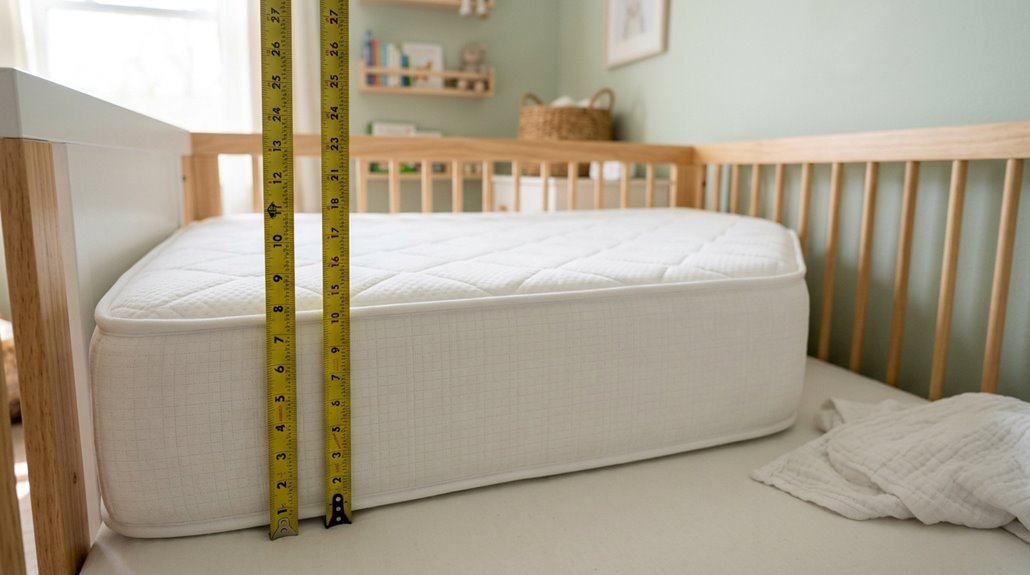
A standard crib mattress measures 28 inches wide by 52 3/8 inches long. Your mattress needs to fit snugly inside your crib with no more than a 1-inch gap around the edges. Parents who grab the wrong size can create dangerous squeeze points, so measure your crib’s interior before buying. The mattress shouldn’t exceed 6 inches in height either. If your crib’s measurements fall outside the standard range, consult your crib’s specifications or manufacturer guidelines.
Standard Full-Size Crib Mattress Dimensions
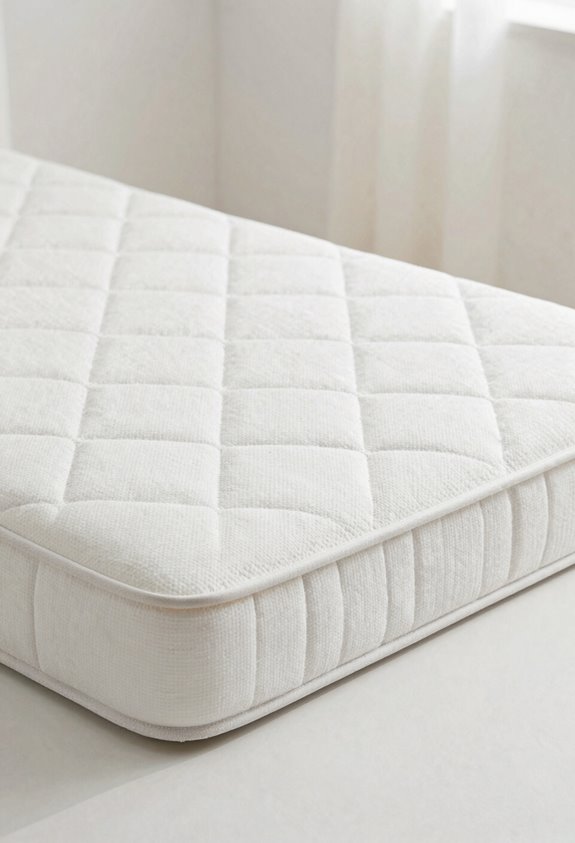
When shopping for a crib mattress, understanding the actual measurements is essential rather than selecting one based on appearance alone.
A standard full-size crib mattress needs to fit snugly inside your crib. The crib mattress dimensions you’re looking for are 28 inches wide by 52 3/8 inches long. That’s the target size most manufacturers use. There is a built-in tolerance of plus or minus 5/8 inch, which gives you some flexibility.
The minimum safe size is 27 1/4 inches wide by 51 5/8 inches long. This ensures your mattress fits securely without dangerous gaps. Height matters as well; your mattress shouldn’t exceed 6 inches from seam to seam. Check these specific measurements before making a purchase to ensure proper fit and safety.

Better & Safety Sleep: Our crib mattress has undergone thorough independent testing to craft a design that significantly reduces the risk of suffocation and overheating. As parents, we understand. We know your baby's safety comes first and we know how much you want to give them a proper start. We always prioritize your baby's health and safety. The safest and most comfortable sleep option for your baby.

NON-TOXIC, OEKO-TEX STANDARD 100 CERTIFIED COVER: Tested against a list of 1,000+ harmful substances, the soft cover is non-toxic and gentle on a newborn's delicate skin — safe for your baby and family. Best for parents who want a chemical-screened sleep surface from day one.

Safety Certifications: The crib mattress meets the16-CFR-1633,16-CFR-1632 and 16 CFR 1241 Federal Flammability tests
Why Mattress Size Requires a Snug Fit
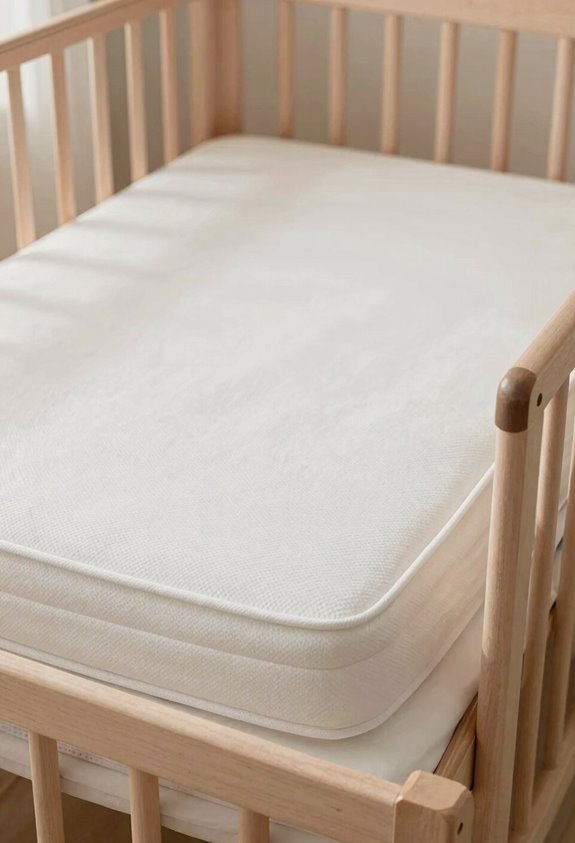
Now that you know the exact measurements a standard crib mattress should have, let’s talk about why that snug fit matters. A mattress that’s too small creates dangerous gaps where a baby’s head or limbs can get stuck. That’s why manufacturers design mattresses to fit snugly, with no more than about a 1-inch gap between the mattress and crib walls. This tight fit keeps everything secure and stable. When you use the correct size for your specific crib model, you’re protecting your baby from entrapment risks. A snug-fitting mattress reduces the risk of suffocation and positional asphyxia by eliminating spaces where a baby could become wedged.

Healthy Support: GREENGUARD Gold certified crib mattress; Tested for low chemical emissions; Creates a cleaner sleeping environment for newborns and infants; Meets stringent safety standards; Pediatrician recommended design
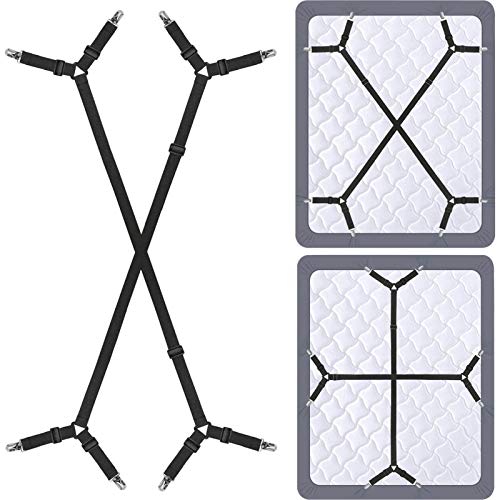
1, BED SHEET STRAPS SUSPENDERS : Multi-functional Adjustable length from 96cm/38inch –171cm/67.3inch, Nickel Plated Clamps with Fabric Protector.

【100% Washable】Both the mattress topper cover and the inner core can be machine washed directly, freeing your hands. The cover is removable with a zipper
How to Measure Your Crib’s Interior
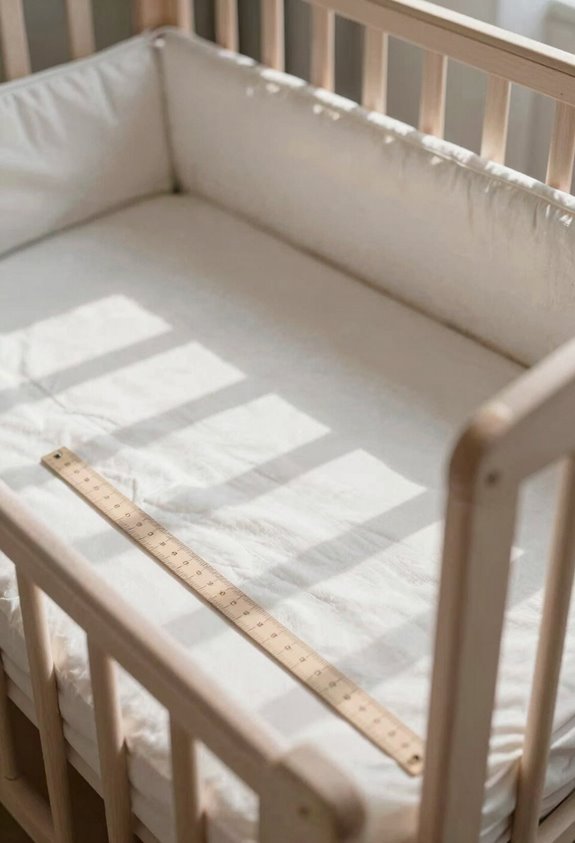
I’ll walk you through measuring your crib so you can find the right mattress size for your baby’s sleep space. First, I’ll show you the standard dimensions you’re aiming for, and then I’ll explain how to check if your crib matches those measurements or if it’s different.

DUAL-SIDED CRIB MATTRESS IN A BOX: Free of fiberglass, free of chemical flame retardants; Fits any brand of standard full-size crib and toddler bed; Allow baby crib mattress to expand fully immediately upon delivery in a room temperature setting for up to 48 hours

General Note: Please allow 24 - 72 hours for your Mattress to regain its full shape. Any memory foam will expand faster in a warmer room. In cold temperature, at delivery, your mattress may take a bit longer to return to full sized from its compressed state.The expansion time of the mattress will vary as per the surrounding.

MADE IN THE USA FOR TRUSTED SAFETY & QUALITY- Manufactured in the USA (with U.S. and imported materials) for consistent quality and safety requirements. High-density core made with recycled materials; free from fiberglass and chemical flame retardants
Interior Dimension Guidelines
Before you buy a mattress, measure your crib’s interior to ensure you’re getting the right size. Standard cribs should measure 28 inches wide by 52 3/8 inches long, but slight variations are acceptable, up to 5/8 inch more or less in either direction.
This tolerance exists because manufacturers follow ASTM and federal regulations. If your measurements fall outside this window, your crib is non-standard, and you should contact your crib’s manufacturer for guidance on mattress size. Once you know your dimensions, you can select the right mattress that fits snugly with no more than about 1 inch of gap.
Verification And Adjustment Steps
How do you know if your crib mattress will actually fit? I measure twice before buying. First, I grab a tape measure and check my crib’s interior width and length. Standard dimensions are 28 inches wide by 52 3/8 inches long, but mine might differ slightly. Up to 5/8 inch variation is acceptable.
Next, I verify the product-specific mattress dimensions, not the shipping box size. I used to confuse these measurements. I ensure the mattress fits snugly with no more than a 1-inch gap between the edge and crib wall. If my crib’s interior measurements don’t match standard sizes, I contact the manufacturer to confirm compatible options. This verification ensures the mattress fits properly and meets safety standards.
CPSC and ASTM Standards Explained
The Consumer Product Safety Commission (CPSC) and the American Society for Testing and Materials (ASTM) set the standards for crib mattresses. These organizations created strict standards covering mattress dimensions and the firmness required for proper crib fit, with the most recent updates in August 2022. Products meeting these certifications are designed to prevent gaps where babies could become trapped.

【No Seams - Fits all 54 "x29.5" cribs】We use hand sewing techniques to provide a tight fit to the crib every time. No risk of unsafe space or losing pacifiers, toys on either side or corner of your crib. And this comfortable Crib & Toddler mattress meets 16-CFR-1633,16-CFR-1632,16-CFR-1241 standard.

WATERPROOF COVER: Waterproof for easy cleaning | Pattern on mattress cover may vary | Fiber core made from recycled bottles delivers ideal firmness level while helping save over 300 bottles from the landfill

【Soft as Clouds】The CertiPUR-US certified foam crib mattress has the ideal firmness, providing cloud-like comfort
Federal Regulations And Requirements
Why do crib mattress sizes matter so much? Federal regulations exist to keep babies safe. When researching crib mattresses, I discovered that standards like 16 CFR part 1241 and ASTM F2933 set specific requirements that cannot be ignored.
What I found important:
- Product measurements matter. Use actual dimensions, not shipping sizes, to ensure proper fit.
- Height limits protect babies. Mattresses cannot exceed 6 inches to reduce climbing and gap risks.
- Gap requirements are strict. No more than 1-inch gaps between mattress edges and crib walls keep babies secure.
Manufacturers need a CPC to certify compliance. These regulations establish the technical standards necessary for creating a safer sleep space. Understanding these requirements provides the confidence needed to choose the right mattress for a baby’s crib.
ASTM Standard Specifications
When I started looking into what makes a crib mattress actually safe and legal, I realized that two organizations, ASTM and CPSC, basically wrote the rulebook that manufacturers have to follow. I discovered they work together through specific standards, particularly ASTM F2933, which sets exact crib mattress sizing requirements.
| Standard | Purpose | What It Covers |
|---|---|---|
| ASTM F2933 | Main safety guide | Crib mattress dimensions |
| 16 CFR 1241 | Federal safety rules | Full-size crib standards |
| 16 CFR 1220 | Testing requirements | Mattress safety testing |
| 16 CFR 1221 | Additional compliance | Non-full-size cribs |
| CPC Certificate | Manufacturer proof | Adherence to all standards |
These standards ensure every mattress fits properly and safely. When I bought my first crib mattress, I looked for that CPC certificate, confirming the manufacturer met every requirement. This certification verifies compliance with all regulatory requirements.
Compliance Testing And Certification
So manufacturers must prove their crib mattresses are safe. They can’t make claims without backing them up through real testing. Manufacturers follow CPSC compliance rules and use standards like 16 C.F.R. part 1241 and ASTM F2933 to test their products thoroughly.
This process involves:
- Testing requirements: Mattresses undergo rigorous checks for firmness, thickness, and safety hazards
- Children’s Product Certificate (CPC): Manufacturers must provide documentation showing their mattresses meet all federal standards
- Permanent labeling: Each mattress gets labeled with compliance information so you know it’s been certified
The certification process ensures that the mattress in your baby’s crib has been tested and proven safe. This represents real accountability rather than marketing claims.
Minimum Width and Length Requirements
How do you know if a crib mattress will actually fit your crib? Checking the minimum width and length requirements is essential. Standard crib mattresses must measure at least 27 1/4 inches wide by 51 5/8 inches long to fit properly within standard crib dimensions of 28 inches by 52 inches.
| Measurement | Crib Frame | Mattress Minimum |
|---|---|---|
| Width | 28 inches | 27 1/4 inches |
| Length | 52 inches | 51 5/8 inches |
| Gap Goal | Minimal | Snug fit |
| Safety Benefit | Frame support | Prevents entrapment |
| Action needed | Verify dimensions | Measure your mattress |
That snug fit reduces dangerous gaps where babies could get stuck. Measure carefully against your crib’s interior dimensions and check the manufacturer’s specifications before buying.

MADE FROM RECYCLED MATERIALS: Firm fiber core made from recycled bottles delivers the ideal firmness level for newborns, infants and toddlers while helping save over 300 bottles from the landfill--great for babies, great for the environment

SIZE: 28" x 52"; designed to fit both standard baby crib and toddler bed mattresses.

Fully certified crib mattress:It meets CPSC requirements and passes CFR 1632 & 1633 flammability tests, with firmness and size matching ASTM F2933-25 standards. Rigorous standards crafted for babies offer full peace of mind to mothers.
Safe Gap Guidelines for Mattress Fit
Now that you’ve measured your mattress against the crib frame, check the actual gaps between the mattress and the crib walls.
Keeping the gap to no more than 1 inch is essential for your baby’s safety. Even small spaces can create squeeze points where a little arm or leg might get trapped.
When checking the fit, focus on:
- Measure all four sides to ensure consistent spacing around the entire mattress
- Check the corners specifically since gaps tend to be larger there
- Feel for snugness by gently pushing the mattress; it shouldn’t shift or move easily
Verifying these gaps helps ensure your baby’s sleeping space meets safety standards.
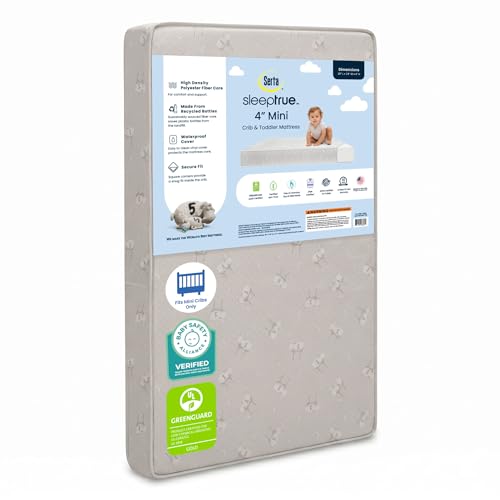
FITS MOST MINI & PORTABLE CRIBS: This crib mattress fits most mini cribs and portable cribs; mattress measures 38"L x 24"W x 4"H (not designed for standard cribs or pack 'n plays) | Measure your crib first to ensure a perfect fit.General Note: Please allow 24 - 72 hours for your Mattress to regain its full shape. Any memory foam will expand faster in a warmer room. In cold temperature, at delivery, your mattress may take a bit longer to return to full sized from its compressed state.The expansion time of the mattress will vary as per the surrounding

Safety Certifications: The mini crib mattress meets the 16 CFR 1632 /1633 and 16 CFR 1241 Federal Flammability tests
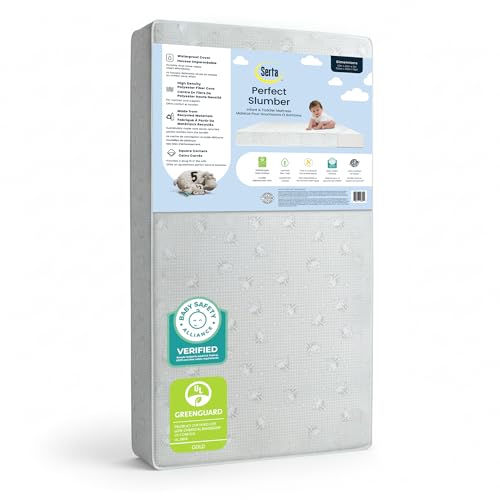
SAFEST OPTION: Non-toxic construction is free from harmful materials/chemicals; Meets or exceeds flammability, lead, phthalate and CPSIA testing and does not contain toxic fire retardants.General Note: Please allow 24 - 72 hours for your Mattress to regain its full shape. Any memory foam will expand faster in a warmer room. In cold temperature, at delivery, your mattress may take a bit longer to return to full sized from its compressed state.The expansion time of the mattress will vary as per the surrounding
The 6-Inch Height Limit Explained
The 6-inch height limit is built into crib safety standards to keep your baby from climbing out as they get bigger and stronger. This measurement works with your crib’s interior dimensions to prevent gaps where a child’s head or body could get stuck. Check your mattress specs before buying to ensure it meets this requirement, since a mattress that’s too thick can create real hazards.

88 interwoven, heat tempered coils

MADE IN THE USA FOR TRUSTED SAFETY & QUALITY- Manufactured in the USA (with U.S. and imported materials) for consistent quality and safety requirements. High-density core made with recycled materials; free from fiberglass and chemical flame retardants

Odorless and Transparent: Crib mattress moving bag is made of 100% virgin polyethylene, BPA and phthalate free, no chemical smell.
Safety and Climbing Prevention
Why does mattress height matter so much? A shallow mattress keeps your baby safer as they grow and become more mobile. The FDA/ASTM standard limits mattress height to 6 inches seam-to-seam for good reason; it reduces climbing risk significantly.
When choosing a crib mattress, these key safety benefits matter:
- A lower mattress prevents babies from gaining leverage against crib rails
- Reduced height makes it harder for climbing toddlers to escape the crib
- Proper mattress height works with snug fit requirements to minimize dangerous gaps
Mattress height works alongside the 1-inch gap rule. Together, they create a secure sleeping environment. Verifying your specific mattress height against your crib’s interior dimensions of 28 inches by 52⅜ inches ensures you meet current safety standards for your growing child.
Mattress Firmness Standards
How does that 6-inch height limit actually protect your baby? This measurement directly prevents climbing risks as your little one grows stronger. The height matters because taller mattresses create dangerous gaps near the crib rails, places where your baby could get stuck.
The 6-inch seam-to-seam limit works alongside firmness to keep your child safe. A firm mattress won’t compress excessively under weight, which maintains that protective height standard. Understanding this connection helps parents make informed choices. You’re not just picking any mattress; you’re selecting one that supports both comfort and safety. The firmness requirement serves a specific purpose: it’s designed for babies who are becoming more mobile and curious about their surroundings.
Measuring Height Compliance
Mattress height directly impacts your baby’s safety in the crib. You’ll measure from seam to seam when your mattress sits flat in the crib. This measurement prevents climbing risks as your baby grows stronger.
Check the following:
- Measure the mattress height yourself using a ruler or measuring tape
- Compare your results against the manufacturer’s specifications listed on the product
- Verify clearance between the mattress top and crib rail to prevent gaps
The 6-inch height limit exists to keep your child safe and comfortable during sleep. Mattress dimensions that exceed this standard create gaps where limbs can become trapped or allow babies to climb out of the crib.
Foam vs. Spring Mattress Materials
When I was shopping for my daughter’s crib, I quickly realized that foam and spring mattresses aren’t created equal. Foam mattresses are lightweight and usually machine-washable, which I appreciated for easy cleaning. They’re made from high-density polyurethane and stay firm, meeting safety standards. Spring mattresses, on the other hand, are heavier and more durable. They often last longer but cost more upfront.
Both types need to be firm with minimal compression to keep babies safe. Some mattresses I found were dual-sided, with a firmer infant side and softer toddler side. You can flip them as your child grows. If you’re considering eco-friendly options, organic mattresses made with cotton, wool, or latex exist too. The firmness of your chosen mattress directly impacts your baby’s safety and comfort.

GROWS WITH BABY: Dual-sided crib mattress features a firm infant side (0–12 months) and a cushioned toddler side (12 months+), providing long-lasting comfort, proper support, and a safe sleep surface as your baby transitions from newborn to toddler stage.

【Safety Certificate】This baby crib mattress meets the flammability, lead, phthalate testing standards and (CPSIA) requirements. It does not contain any toxic flame retardants and meets the standards set by federal regulations 16 - CFR - 1633, 16 - CFR - 1632 and 16 - CFR - 1241, providing your baby with a worry-free and safe sleeping environment.
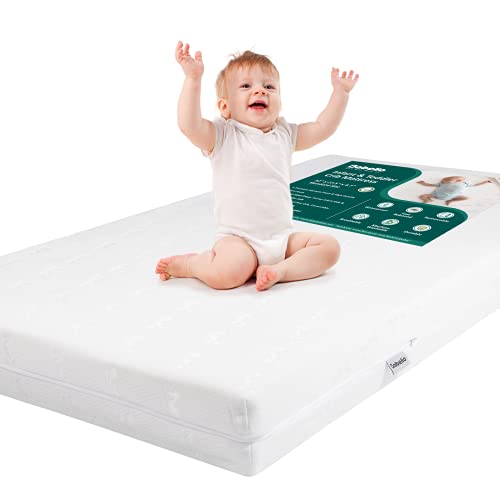
【Soft as Clouds】The crib mattress is designed for infants' growth and development. The toddler mattress has the ideal firmness, comfortable and breathable
Dual-Sided Mattresses for Growing Babies
I’ve found that dual-sided mattresses are practical because I can use the firmer infant side when my baby’s newborn and needs that extra support, then flip it to the softer toddler side as she grows and needs more comfort. The infant side keeps her from sinking too deep into the mattress, which is important for safety, but the toddler side gives her cushioning without compromising how snugly it fits in the crib frame. When I made the switch, I checked that both sides still fit perfectly inside my crib so there weren’t any dangerous gaps.

STANDARD FULL SIZE CRIB & TODDLER BED MATTRESS - Designed to fit standard full-size cribs and toddler beds, this 52" x 28" x 5" mattress is made for a proper fit and firm support. Measure your crib before ordering, as this mattress does not fit mini cribs or playards.

2-Pack Baby Crib Sheets - KeaBabies Soothe Fitted Crib Sheets for boys and girls; fit standard crib mattresses (52"x28" with height 3" to 8") perfectly, offering your baby a safe and restful sleep.

Super Soft and Breathable: These muslin crib sheets are made of 100% cotton (Muslin) for breathable with skin-friendly soft touch and retain its color after washed for several times. Keep your baby super comfortable and soft with this crib sheet
Infant Side Firmness Benefits
Why does a firmer mattress matter so much for newborns? Firmness on the infant side of dual-sided crib mattresses is essential for your baby’s safety and development.
Firmness prevents excessive sinking, which supports proper spine alignment during those crucial early months. The reinforced edges and higher-density foam create stability that keeps your infant secure, even during restless sleep.
Key benefits include:
- Reduces the risk of suffocation by maintaining a flat, supportive surface
- Supports healthy spinal development during critical growth periods
- Provides the stability newborns need for safer, more restful sleep
As your baby grows, you’ll flip to the softer toddler side, but those early months require that firmer foundation.
Toddler Side Softness Features
Your baby’s growing body needs something different than that firm infant side provided. When you flip your daughter’s mattress to the toddler side, you’ll notice the softer surface immediately. This gentler cushioning supports her emerging mobility and makes longer sleep periods more comfortable.
Dual-sided mattresses maintain edge stability on both sides while offering that noticeable softness difference. Manufacturers label each side clearly, so there’s no guessing which orientation to use. Standard cradle mattress dimensions stay consistent; you’re simply flipping for development changes.
| Feature | Infant Side | Toddler Side |
|---|---|---|
| Firmness | Very firm | Noticeably softer |
| Purpose | Support newborns | Comfort toddlers |
| Support | Maximum | Balanced |
| Edge stability | Consistent | Consistent |
| Sleep comfort | Shorter periods | Longer periods |
When flipping over, ensure the mattress still fits snugly with no more than a 1-inch gap around edges.
Flipping For Growth Stages
When should you flip your baby’s mattress? Dual-sided crib mattresses must work for both infants and toddlers, which is why timing matters. Most manufacturers recommend flipping around 18 months or when your child transitions to toddlerhood.
Consider these factors when making the switch:
- The infant side offers firm support for newborns, while the toddler side becomes softer as babies grow
- Check that the mattress stays snug in the crib (28″ x 52″ ± 5/8″) with minimal gaps on both sides
- Follow manufacturer guidance to ensure you’re using the correct side for your child’s age and weight
Flipping extends your mattress’s life and keeps your growing child comfortable and safe throughout these important developmental stages.
Non-Standard Crib Sizes: What’s Different
Not all cribs follow the standard 28″ x 52″ blueprint. When I tried fitting a regular mattress into my daughter’s mini crib, it bunched up at the corners. The interior dimensions of your crib matter significantly. Mini cribs run roughly 24″ x 38″, while bassettes and vintage cribs have their own measurements entirely. Standard 27¼” x 51⅝” mattresses won’t work for these smaller versions. Before buying a mattress, check your crib’s instruction manual first. Getting the exact interior dimensions from your manufacturer ensures you’ll find a CPC-compliant mattress that fits properly. A properly fitted mattress prevents safety hazards and eliminates installation problems.

DESIGNED FOR DEEPER, SAFER SLEEP. Because your baby’s comfort is more than just rest. It’s development, bonding, and peace of mind from the very first night. The Little...
Mini Cribs vs. Standard Mattresses
Since we’ve covered the different crib sizes out there, I should address a common mistake I see parents make: assuming all crib mattresses are interchangeable. They’re not. Mini cribs and standard cribs require completely different crib mattresses, and mixing them up creates safety problems.
Mini cribs use mattresses around 24 inches wide by 38 inches long. Standard crib mattresses are 28 inches wide by 52 inches long. That’s a significant difference. Forcing a standard mattress into a mini crib leaves dangerous gaps. Similarly, a mini mattress in a standard crib creates unsafe squeeze points.
Mini crib mattresses (24″ × 38″) and standard crib mattresses (28″ × 52″) are not interchangeable—mismatches create dangerous gaps or squeeze points.
What matters:
- Always verify your crib’s interior dimensions before buying
- Check the product measurements, not the shipping box size
- Ensure no more than a 1-inch gap between mattress and crib walls
Play Yard Mattresses: Different Sizing Rules
Why do play yard mattresses seem to follow completely different rules than crib mattresses? They’re designed for framed enclosures with mesh sides, not standard crib mattresses. Play yards target children under 35 inches tall, and their interior dimensions vary by model, unlike the standard 28″ x 52″ crib mattress size.
Verifying your specific play yard’s measurements before buying is essential. Each manufacturer sets different requirements, so check the instructions first. A snug fit matters because gaps create entrapment risks. Play yard mattresses fall under infant product regulations requiring CPC certification and proper labeling. Understanding these different sizing rules prevents costly mistakes and ensures your child’s safety.
Testing Your Mattress Fit at Home
Once you’ve ordered a mattress, test the fit before relying on it for sleep. Measurements on paper don’t always match reality in your nursery.
Always test your ordered mattress for proper fit before relying on it—measurements on paper rarely match nursery reality.
Start by measuring your crib’s interior. It should be 28 inches wide by 52 inches long, with a ± 0.625-inch tolerance. Then check these key points:
- Mattress height: Confirm it’s no more than 6 inches (seam to seam) for safety
- Gap size: Ensure no more than 1-inch space exists between the mattress edge and crib wall
- Two-finger rule: You should fit exactly two fingers between the edge and frame
Verify that product measurements refer to interior crib dimensions, not shipping size. Compare these against your manufacturer’s specifications for your exact crib model. This careful testing prevents safety issues with crib mattresses.
Common Sizing Mistakes to Avoid
How often do you actually measure before you buy? Guessing on mattress sizes costs time and money. Here’s what works best:
| Mistake | What Happens | How to Fix It |
|---|---|---|
| Using shipping measurements | Mattress doesn’t fit your crib | Measure interior crib opening instead |
| Buying mini crib mattresses | Dangerous gaps form | Check standard dimensions first |
| Ignoring the 1-inch gap rule | Safety risks increase | Verify snug fit around all sides |
| Choosing mattresses over 6 inches | Baby can climb out | Measure height seam to seam |
Always verify measurements against your specific crib model, not approximate sizes. Standard mattresses need to be 27¼ inches wide by 51⅝ inches long minimum. Getting these details right ensures a properly fitted mattress with no dangerous gaps that could pose a suffocation or entrapment hazard to your baby.
When to Replace Your Crib Mattress
At some point, that mattress that fit perfectly when you first set up the crib will start showing its age. This is your signal to replace it. Mattress condition directly affects your baby’s safety and comfort.
Replace your crib mattress when you notice:
Replace your crib mattress when it loses its snug fit, shows sagging or staining, or no longer provides adequate firmness and support.
- The mattress no longer maintains that snug-fit guideline (1-inch gap or less), creating dangerous spaces
- Sagging, staining, odors, or visible wear that cleaning won’t fix
- Loss of firmness and support over time
A worn mattress compromises both safety and comfort. Replace your mattress promptly when these signs appear. Your baby needs a mattress that fits properly and maintains adequate support.