
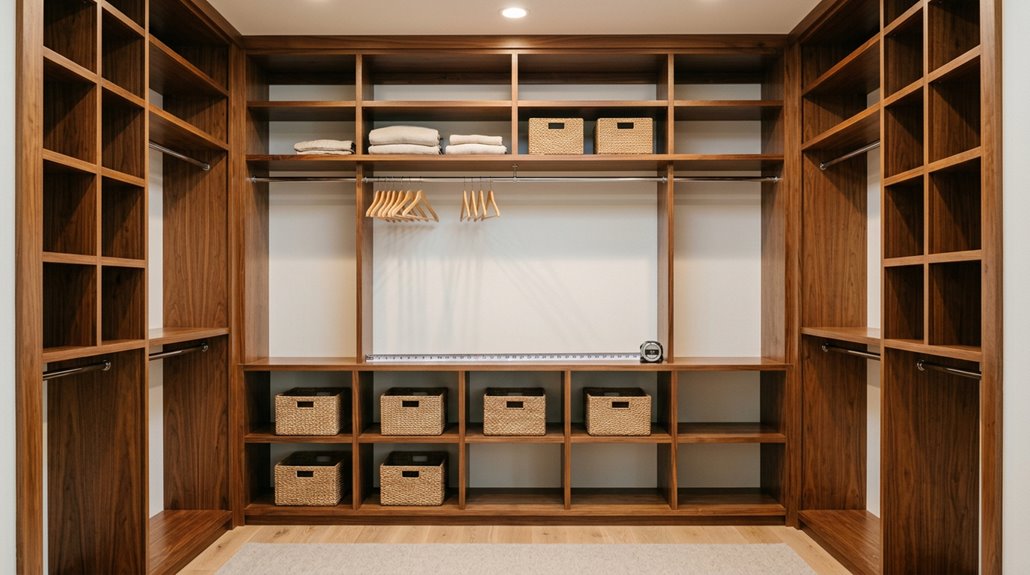
I’ve found that standard closets really depend on what you’re storing. Reach-in closets typically run 3 to 8 feet wide and need at least 24 inches deep for hanging clothes. Walk-in closets should be around 4 by 4 feet minimum, though 6 by 10 feet works better. Your bedroom closet might be 3 to 5 feet wide, while bathroom linen closets stay narrower at 30 to 36 inches. The key is matching the size to your actual space and what you’ll store.
Standard Closet Sizes: What You Need to Know
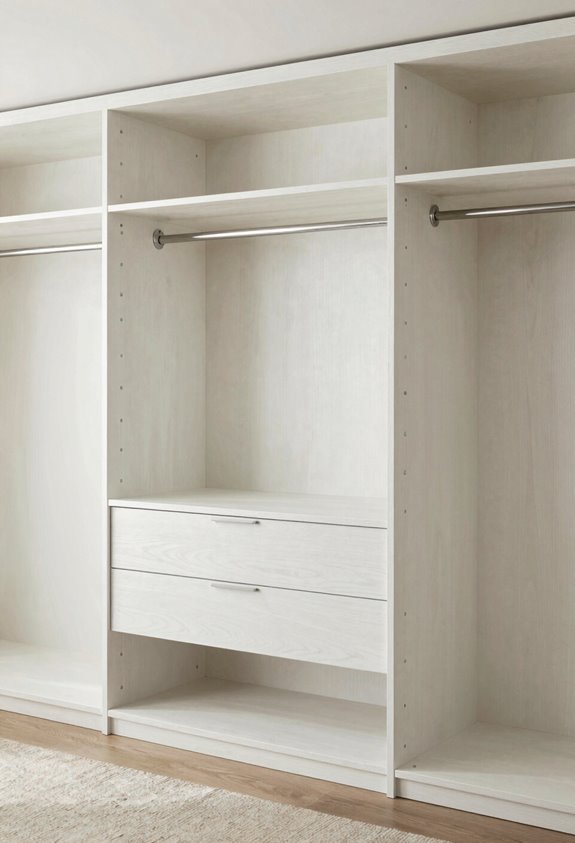
Ever considered why some closets feel cramped while others have plenty of room? Understanding standard closet sizes makes a real difference. A reach-in closet typically ranges from 3 to 8 feet wide with 24 inches of closet depth, the minimum needed to hang clothes comfortably. For more storage space, 30 inches of depth works better. Walk-in closets start around 4 by 4 feet, but 6 by 10 feet accommodates two people sharing more effectively. Closet width varies by type, and linen closets stay narrower at 30 to 36 inches wide. Matching closet size to your actual storage needs ensures efficient use of space.

【Upgrade Adjustable Width & Height】The width range is from 17 to 29 inches, and the height range is from 14.6 to 37.1 inches. The user-friendly design has six adjustable heights, which can maximize the unused space beneath hanging clothes. Dimensions: 37.1"H x 29"W (Fully Expand)

Stepless Adjustment Closet Rod: The upgraded Supforce closet rod features the stepless adjustment design, allows you to precisely adjust according to your closet's specific size; Without any size gaps, No manual cutting is required.

【Space Saving Closet Organizer – Maximize Vertical Storage】Transform wasted wardrobe space with this adjustable closet hanging rod. Its innovative vertical design eliminates clothes crushing and messy piles, instantly doubling your closet capacity. Perfect closet hanger extender rod for small apartments, dorms, and compact wardrobes—turn dead space into organized storage.
Reach-In Closets: Width and Depth Essentials
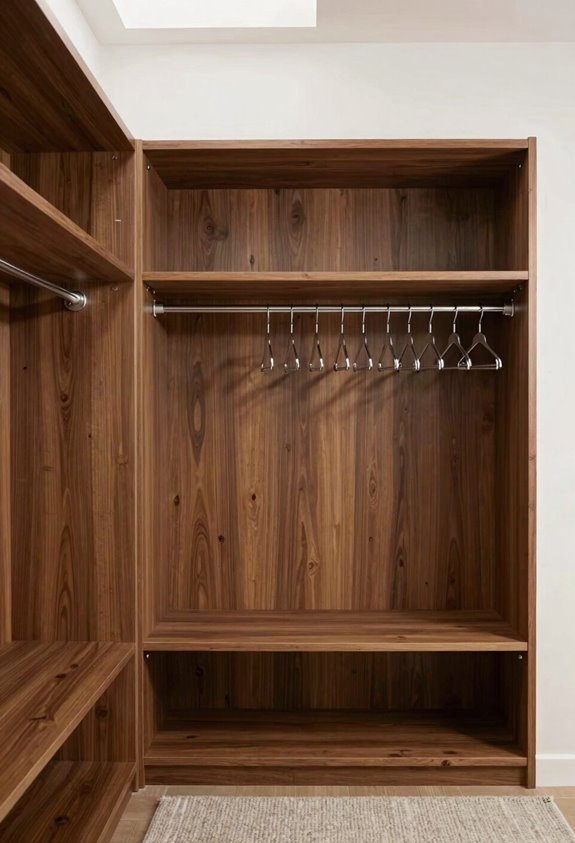
I’ve found that getting the width and depth right makes all the difference in a reach-in closet’s usefulness. You’ll want your closet to be at least 3 feet wide (though 3 to 8 feet is standard), and 24 inches deep is the bare minimum for hanging clothes comfortably, while 30 inches gives you room for extra shelves or drawers. These measurements work together so you can actually access everything without squeezing past hanging clothes.

Compact Portable Closet: With 3 expandable closet shelves and 2 extendable hanging rod, the VIPEK X1 freestanding closet rack adjustable from 2' to 3'5" for small space, provides flexible storage solutions for you to space save

Adjustable Height for Every Family Member - If you buy 3 of these height-adjustable hanging closet systems, you can install them at 75" for kids, 80" for women, and 87" for men—making it the perfect all-in-one organizer for families with different height needs.

Adjustable Height for Every Family Member - If you buy 3 of these height-adjustable hanging closet systems, you can install them at 75" for kids, 80" for women, and 87" for men—making it the perfect all-in-one organizer for families with different height needs.
Standard Width Guidelines
What’s the right width for a reach-in closet? Width dramatically changes how much you can actually store. Here’s what you need to know about reach-in closet width and how it affects your hanging space.
| Width | Best For | Hanging Space | Door Type |
|---|---|---|---|
| 3 feet | Single person | Basic | Swing |
| 4-5 feet | Couples | Moderate | Bifold |
| 6-8 feet | Families | Extensive | Sliding |
| 7+ feet | Two-sided | Double rods | Multiple |
A 3-foot width provides basic storage, while 4 to 8 feet offers significantly more capacity. At 7 feet, you can fit two-sided accessibility with hanging on both walls. Your door panel width matters too; standard 24 to 36 inches fit most configurations. Combined with a standard depth of 24 inches minimum, you get functional, comfortable hanging space that performs well.
Optimal Depth Specifications
How deep should your reach-in closet actually be? Reach-in depth significantly affects functionality and storage capacity. Here’s what works best:
- Standard depth of 24 inches gives you comfortable hanging space without clothes bunching against the wall
- 30-inch depth provides extra room for additional closet shelves and drawers above your hanging area
- Proper hanging space ensures your clothes won’t wrinkle from being crammed too tightly
- Double-hanging configurations become possible with adequate depth, letting you maximize vertical storage
24 inches is the minimum depth required for garments to hang freely. A 30-inch depth upgrade provides additional storage space for folded items and accessories. The standard depth you choose depends on your space and storage needs, but either option provides significantly better functionality than a too-shallow closet.
Walk-In Closets: Minimum and Ideal Dimensions
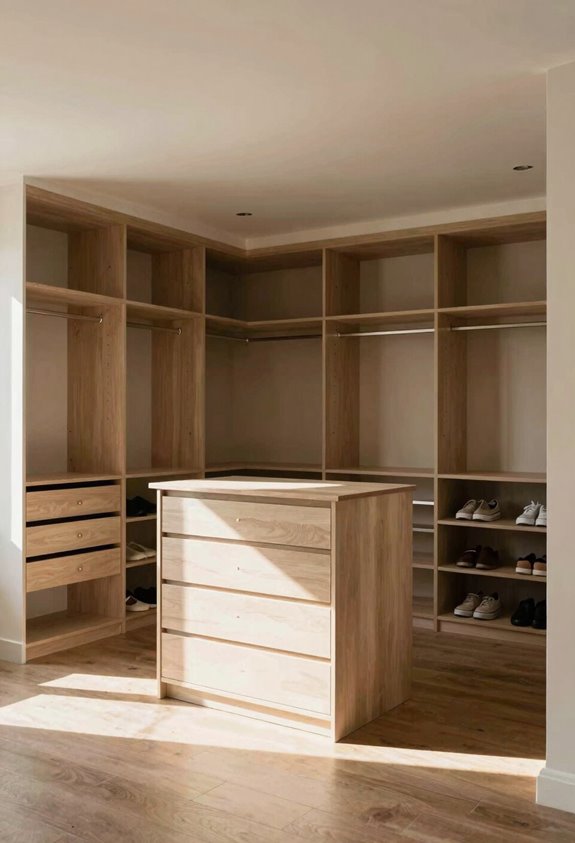
When planning a walk-in closet, focus on three main areas: figuring out the bare minimum space you need, understanding what size works best for your belongings, and deciding how to arrange everything inside. Going bigger than the minimum, from 4 by 4 feet to 6 by 10 feet, significantly improves organization and usability. The layout you choose, whether simple hanging rods or more complex designs with islands and shelving, depends on both your available space and storage requirements.

Simply Modern, Seamless Fit: The CUSTOS Collection pairs crisp right‑angled lines with handy open storage to create a minimalist look that fits easily into your home. Complete your space with matching storage furniture for a cohesive look

Simply Modern, Seamless Fit: The CUSTOS Collection pairs crisp right‑angled lines with handy open storage to create a minimalist look that fits easily into your home. Complete your space with matching storage furniture for a cohesive look

Expandable Hanging Rods:This closet organizer system features 4 expandable hanging rods that extend from 28.74" to 47.24", allowing the overall closet system to adjust from 4.6 ft to 10 ft for different room layouts and storage spaces
Minimum Space Requirements
So you’re wondering if that tiny closet space in your home could actually work as a walk-in.
The absolute minimum walk-in size is about 4 by 4 feet, roughly 16 square feet. That sounds small, but it’s workable if you plan carefully. Consider these essential requirements:
- Minimum clearance: You’ll need at least a 24-inch walkway to move around comfortably
- Hanging space: Aim for 24 inches minimum to access your clothes without frustration
- Closet depth: Start at 36 inches so you can reach items on both sides
- ADA clearance: If accessibility matters to you, plan for a 30-by-48-inch space with items between 15 and 48 inches high
These measurements might feel tight, but they’ll help your walk-in feel functional rather than cramped.
Ideal Sizing Guidelines
While a 4-by-4-foot walk-in technically works, most people feel cramped in anything that small. Aim for a walk-in closet size of 6 by 10 feet or 7 by 10 feet instead. You’ll get roughly 100 square feet of storage capacity, which provides comfortable functionality.
For closet depth, stick to 30 to 36 inches. This lets you move around easily and reach everything without awkwardly stretching. You’ll want at least 24 inches of hanging space to avoid crowding your clothes.
If accessibility matters to you, keep an accessible turning space of 30 by 48 inches in mind. Larger walk-ins give you flexibility for features like varied rod heights and shoe shelving, increasing storage efficiency and usability.
Configuration Types And Layouts
How you arrange your walk-in closet matters just as much as its size. Choosing the right layout options can transform how well your storage works. Different configurations include:
- Standard linear layout: Hang clothes on one or both walls, keeping everything accessible
- Island storage: Add a center island for folded items and accessories when you have enough depth and space
- U-shaped design: Use three walls for hanging space, maximizing storage without feeling cramped
- Corner shelving: Install shelves in corners to use every inch efficiently
Standard walk-in depth runs 30–36 inches, providing comfortable movement and easy access. Combining hanging space with varied storage configurations lets you organize everything from shoes to seasonal items. The key is making your closet work for how you actually get dressed.
How Closet Depth Affects Storage and Movement
When standing in front of a closet trying to reach something in the back, closet depth significantly impacts how clothes are stored and how movement occurs inside.
| Closet Type | Depth | Best For | Movement | Storage |
|---|---|---|---|---|
| Reach-in | 24 inches | Hanging clothes | Limited | Standard |
| Reach-in | 30 inches | Extra shelves | Moderate | Increased |
| Walk-in | 30-36 inches | Double rods | Easy | Maximum |
| Walk-in | 36+ inches | Organizers | Comfortable | Flexible |
Shallower reach-in closets at 24 inches work for basic hanging, but additional storage options are limited. Upgrading to 30 inches provides room for drawers and shelves. Walk-in closets require that extra depth to allow movement without obstacles. Deeper spaces improve organization and accessibility for all stored items. Planning for adequate depth prevents storage constraints and maximizes usable space.

SIMPLE & FUNCTIONAL DESIGN: This closet organizer and storage features a 3-tier layout with reversible assembly, making it an ideal storage solution for bedrooms, closets, or entryways

Whitmor's closet shelves create multi-purpose additional storage

PREMIUM MATERIALS: (This product does not contain hooks and shelving liners)Made from strength steel tube and taking the form of ''spider web'', Each shelf can support a weight capacity of up to 250lbs, stable and sturdy
Closet Width by Room: Bedrooms, Bathrooms, and Laundry
Closet width really matters depending on which room you’re organizing. Bedrooms need different space than bathrooms or laundry rooms. In my own home, my bedroom closet at 3 feet wide was too cramped for hanging clothes side by side, while my bathroom linen closet only needs about 12 to 24 inches to store towels and toiletries efficiently. When planning a laundry area, sizing matters just as much there. Understanding these room-specific measurements helped me avoid costly mistakes.

Adds adjustable shelf space to any Rubbermaid Configurations kit. Uprights not included

10 INCH DEEP SHELVES - Axeman 10 inch deep floating shelves are designed to maximize storage while adding style. Available in various lengths, these shelves allow you to mix and match, creating a visually appealing display that beautifully combines functionality and design

👗 Upgraded 4" Deeper Design: Unlike standard hanging closet organizers that leave unused space behind, this upgraded design extends 4 inches deeper to sit closer to the closet wall. It creates more usable storage for clothes, scarves, and socks while improving overall stability and reducing wobble during use.
Bedroom Closet Width Standards
Why do so many bedroom closets feel cramped? Understanding closet width standards makes a real difference in how functional your space becomes.
Bedroom closet width standards include:
- Standard reach-in closets typically measure 3 to 5 feet wide and 24 to 30 inches deep
- Walk-in closet minimum size should be at least 7 feet by 7 feet for comfortable movement
- Reach-in closets benefit from taller doors that let you access upper shelving more easily
- Optimized closet design matches width to your room’s layout, avoiding wasted space
Many primary bedrooms suffer from narrow closets that cannot accommodate storage on both sides. When architects ignore closet width standards, they create inefficiency. Matching your bedroom closet width to your actual room layout prevents this problem. This approach to optimized closet design ensures you will use all your space effectively.
Bathroom Storage Space Dimensions
Bathroom closets trip me up more often than bedroom ones do, mostly because I’m trying to squeeze towels, cleaning supplies, and extra toiletries into a space that’s often an afterthought. Bathroom storage works best when closet depth stays between 15 to 24 inches. Going deeper makes items harder to reach. For linen closet dimensions, I aim for 30 to 36 inches wide, which gives me plenty of accessible shelving without wasting floor space. In walk-in setups, I plan about 16 to 18 inches of wall storage per side while maintaining a 3-foot walking clearance. Depths beyond 24 inches waste space and create accessibility problems when items stored in the back become unreachable.
Laundry Room Closet Sizing
When it comes to laundry spaces, standard dimensions work differently than they do in bedrooms or bathrooms. You need to consider what you’re actually storing and using.
Key specifications for laundry closets:
- Laundry closet width: Plan for 24 to 36 inches, with 30 inches being ideal
- Closet depth: Aim for 30 inches to fit appliances comfortably
- Standard laundry closet size: A functional space needs around 5 feet by 6 feet minimum
- Shelving and hanging space: Include both for towels, linens, and supplies
Reach-in closet dimensions matter less in laundry spaces than in bedrooms because you’re not hanging clothes; you’re organizing cleaning products and folding supplies. A stacked washer-dryer takes up significant floor space, so prioritize width over depth. Extra shelf space for hampers and detergent bottles will improve functionality and organization.
Standard Rod Heights and Double-Rod Configurations
How would you like to nearly double your closet’s hanging space without making it any deeper? Double-rod configurations transform storage capacity completely. Standard closet rod heights typically run 60–66 inches for single rods, but installing two rods instead works better: one at 42 inches for shorter items and another at 84 inches for longer garments.
| Configuration | Rod Height | Best For |
|---|---|---|
| Single Rod | 60–66 inches | Long coats, dresses |
| Lower Rod | 42 inches | Shirts, pants, kids’ clothes |
| Upper Rod | 84 inches | Dresses, jackets |
Maintaining 24 inches of horizontal hanging space on each side and preserving 24 inches of walkway clearance ensures accessibility for children, adults, and wheelchair users. Double-rod setups effectively double usable hanging area without expanding your closet’s footprint.

Instantly Double Your Storage: Transform unused vertical space into a second tier to maximize capacity in small closets, dorms, and apartments

Heavy-Duty Stainless Steel Closet Rod: Built with a 1.3-inch diameter tube that supports up to 68 lbs for enhanced strength and stability. Holds coats, jackets, jeans, sweaters, and other garments
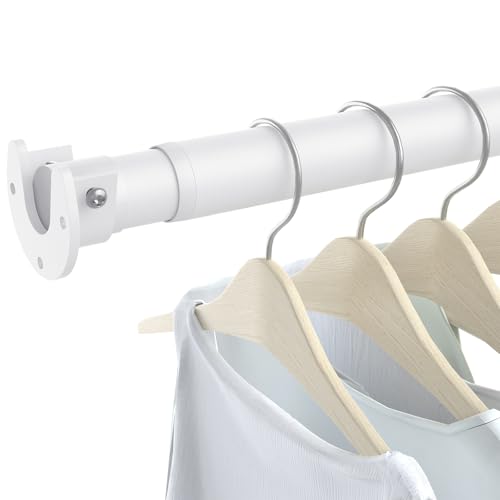
Stepless Adjustable Closet Rod: Closet rods feature a stepless design for precise adjustments without cutting. The stepless design means you won't be stuck with preset holes, and you can absolutely adjust the length of the closet hanging rod to fit your space.
How Closet Layout (Single vs. Double-Sided) Changes Dimensions
Where you hang your clothes significantly affects closet functionality. Understanding single-sided vs double-sided layouts is essential for planning appropriate closet dimensions.
Standard closet dimensions break down as follows:
- Single-sided layouts need about 24 inches of hanging space width on one wall
- Double-sided configurations require roughly 6 feet of walk-in closet width minimum, with 24 inches per side plus a center aisle
- Closet depth ranges from 24–30 inches for reach-in styles to accommodate hanging without wall contact
- Double-sided setups effectively double storage by using both parallel walls plus vertical space
Double-sided layouts multiply available hanging and shelf space compared to single-sided options. While single-sided designs rely on auxiliary furniture, double-sided approaches utilize wall storage more efficiently. The layout choice directly impacts storage capacity and accessibility.

Premium 8FT Closet System: Maximize your storage with 2 spacious drawers, 3 adjustable shelf towers, 4 expandable rods, and interior storage shelves. Designed to organize 200+ pcs of clothes, accessories, and luggage while keeping your private wardrobe neatly compartmentalized

✅【3 Sets * Closet Systems, Design your own closet Layout】 The Big Shelving units can be used alone or combined with more units to be Even 12FT or 16FT for your dream walk-in layout. Arrange it L-shaped or straight, and make it fit your life—T-shirts, coats, long dresses, shoes, bags, or bedding—everything has a home.

【Set of 2 pcs of 2FT Closet System 】This 24"/2FT Closet System perfect for narrow spaces. It has an extra adjustable rod (22”-39.4”) to expand Side hanging space. It easy to move and it can be combine to make 4FT, 6FT, 8FT closet. Buy 2 fit for 4FT, 3 for 6FT, 4 for 8FT. You can custom your own stylish closet system. Say goodbye to clutter and upgrade your organization. Durable and versatile, it maximizes storage while keeping your closet neat and tidy.
Closet Door Types and How They Impact Space
Your closet door choice affects how much storage you can fit in your space. Sliding doors work great for reach-in closets since they’re only 24–36 inches wide and don’t consume floor space. Bifold doors fold back neatly, giving you about 30–36 inches of total width to work with. Swing doors are common for walk-in closets and need serious floor clearance, typically 28–36 inches, which means you’ll lose usable space in front of your closet. Lighter, slimmer door types maximize what fits inside your closet. Your door type affects both reach-in closet width and how much room you have to move around.

Unique Trapezoid Design: Our closet bins feature a unique trapezoid design with a lower front for easier visibility and access. The Homsorout shelf organizers now come in 10 new colours, offering more options for your space

Easy Top Access: The angled front opening gives clear visibility and easy reach, so you can grab what you need from high shelves fast.

Double the Storage Capacity: The widened purse organizer for closet combines 10 upper hooks, a fabric basket, open shelves and 6 side hooks to create more usable storage for handbags, totes, backpacks, clutches and accessories in one compact station
Custom Closets When Standard Sizes Don’t Fit
Once I picked my closet door, I realized my bedroom had an awkward corner that no standard closet could fill. Standard closet sizes just didn’t work for my space, so I explored custom closet options instead.
A custom closet let me tackle my specific needs:
- Adjustable shelving that I could reposition as my storage changed
- Built-in drawers that fit perfectly into the corner space
- Walk-in closets converted from wasted area under my sloped ceiling
- Varied rod heights for different clothing lengths
My designer offered three designs at different prices. I chose the middle option, balancing space planning with my budget. Custom closets cost more than standard solutions, but they transformed my awkward corner into functional storage. This solution works when standard closet sizes cannot fit your space.
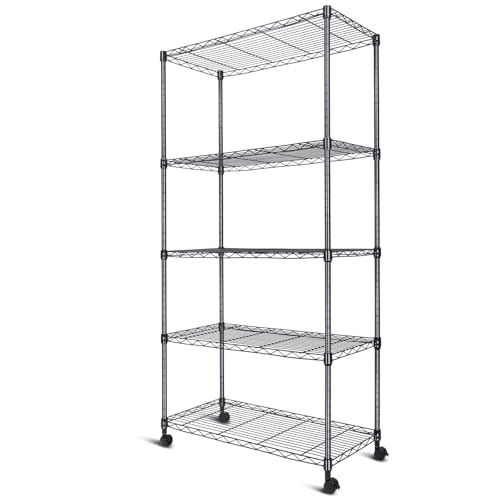
【Ample Storage with Compact Design】 This 5-tier metal shelving unit offers generous storage space while maintaining a compact footprint. Ideal for organizing tools, kitchenware, cleaning supplies, or household items, making everything easy to access and neatly arranged.

HEAVY-DUTY LOAD CAPACITY: This metal shelf supports up to 450 lbs total (150 lbs per shelf), making it ideal for garage shelving, pantry shelves, and heavy duty shelving applications.

CREATE A CLOSET ORGANIZATION SYSTEM: Shelf & Hang Rod Set designed to be installed to a compatible Modular Storage Collection stackable unit or to a wall; Can be installed wall-to-wall, unit-to-unit or unit-to-wall
Quick Reference: Standard Closet Dimensions by Type
How do I know what size closet I actually need? Understanding basic closet dimensions helps me choose what fits my space and lifestyle. Each closet type serves different purposes, so their standard sizes vary.
| Closet Type | Typical Dimensions |
|---|---|
| Reach-in closet | 3–8 feet wide, 24–30 inches depth |
| Walk-in closet | 4×4 feet minimum, often 6×10 or 7×10 feet |
| Linen closet | 30–36 inches wide, 15–24 inches depth |
| Wardrobe closet | 30–60 inches wide, 72 inches tall |
| Walk-in single-sided | 24 inches hanging space minimum |
Reaching for hanging space requires at least 24 inches of depth. Knowing these standard sizes allows for better storage planning when designing a home.

CLOSET ORGANIZER SYSTEM: All in one wire closet shelves kit that creates up to 96 in. of hanging space and 144 in. of shelf space; Kit includes hang track, standards, shelf brackets, closet rods, closet rod support and SuperSlide shelves

【Multifunctional Storage Solution】This Versatile closet shelves are not only ideal for space saving clothing storage—including clothes, shoes, bags, sweaters, scarves, and underwear—but can also store towels, books, toys, groceries, and more. Whether as a armoire wardrobe closet, entryway shoe rack for closet, cube bookshelf, kitchen rack, or pantry shelves, this multifunctional shelves for closet helps you effortlessly transform cluttered spaces into organized areas, ensuring your closet organizer systems shelving truly fits your home layout.
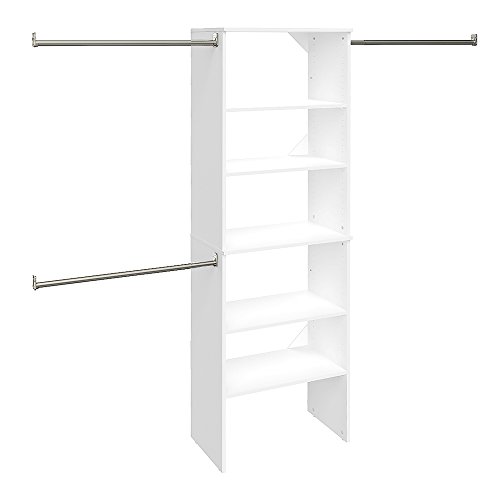
ALL-IN-ONE CLOSET ORGANIZER: Wood closet organizer system kit includes tower, (3) expandable rods, (5) interior closet shelving (2 shelves are adjustable)