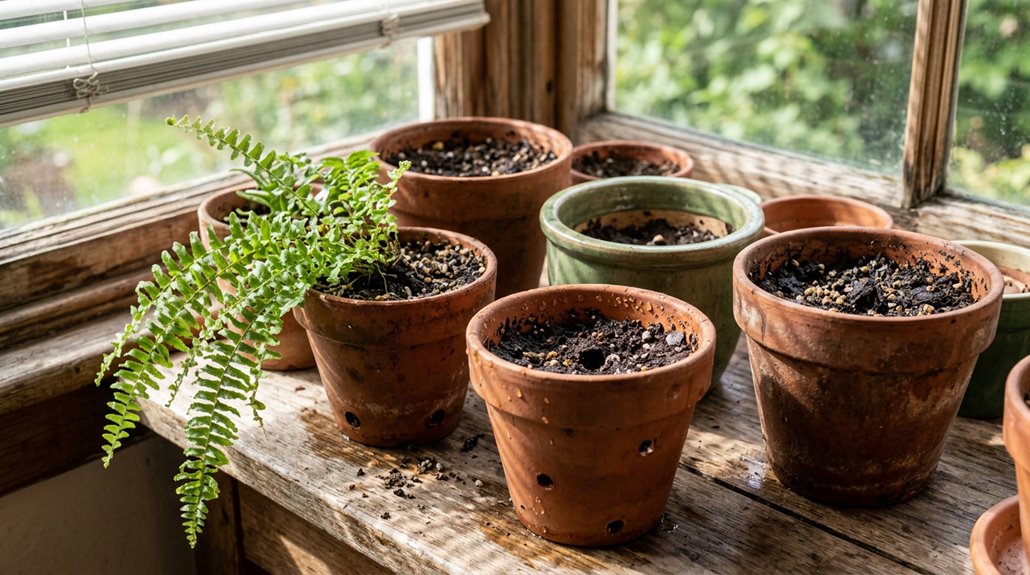
I’ve learned the hard way that drainage holes aren’t optional. They’re the difference between a thriving plant and a rotting root system. Without them, water pools around roots, blocking oxygen and inviting fungal diseases that kill plants quickly. Excess moisture also traps salts that burn leaf tips. I now use pots with drainage holes or place inner pots inside decorative planters to keep roots healthy. Some plants like Snake Plants tolerate less drainage with careful watering, but most need it. Discover which plants are the exceptions and smart drainage strategies for sealed planters.
Why Do Drainage Holes Matter?
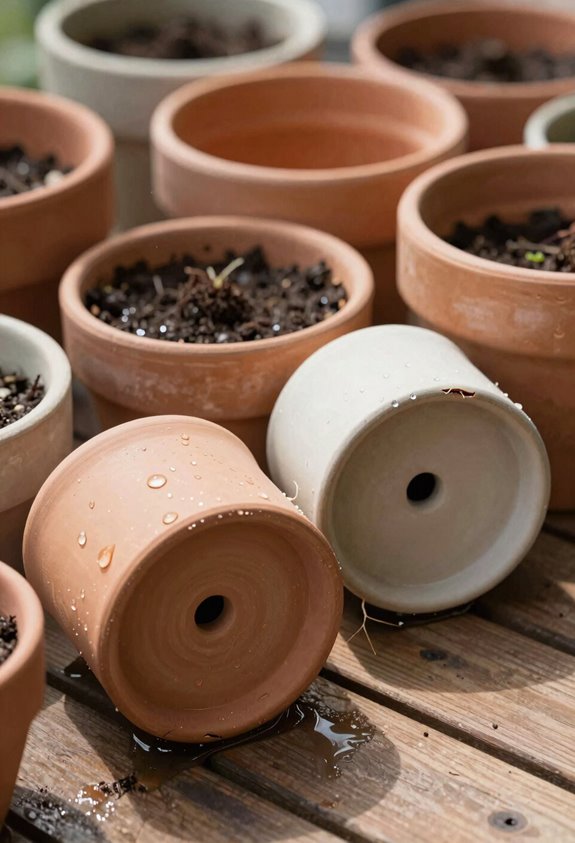
Ever wondered why your plant leaves start turning yellow even though you’re watering it regularly. Poor drainage is often the culprit. Without drainage holes, water pools in your soil, causing waterlogging and root rot that kills plants from the roots up. Drainage holes are essential for soil aeration and moisture management.
When I added proper drainage holes to my planters, I noticed immediate improvements. The holes let excess water escape and help flush out harmful salt buildup. Whether you choose traditional planters with holes or use inner pots and drip trays for aesthetic planter design, managing water keeps roots healthy and plants thriving.

Plant Pots / Flower Pots - Invest in a beautiful garden to harvest the seeds of love, with the set of pots for indoor or outdoor plants

Three-Size 36-Pack: Includes 12 each of 3.5-inch, 4-inch and 5-inch nursery pots, giving growers practical steps for starting seeds, rooting cuttings and moving young plants into a larger container.

【Modern Circle Pattern】The flower pot is designed with a 3D imitation ceramic plastic textured round rope pattern add a lively and modern feeling, brings out a modern stylish visual representation for any home/office decor without any sense of violation. Enhance your space with these planters and watch your plants flourish.
What Happens Without Drainage?
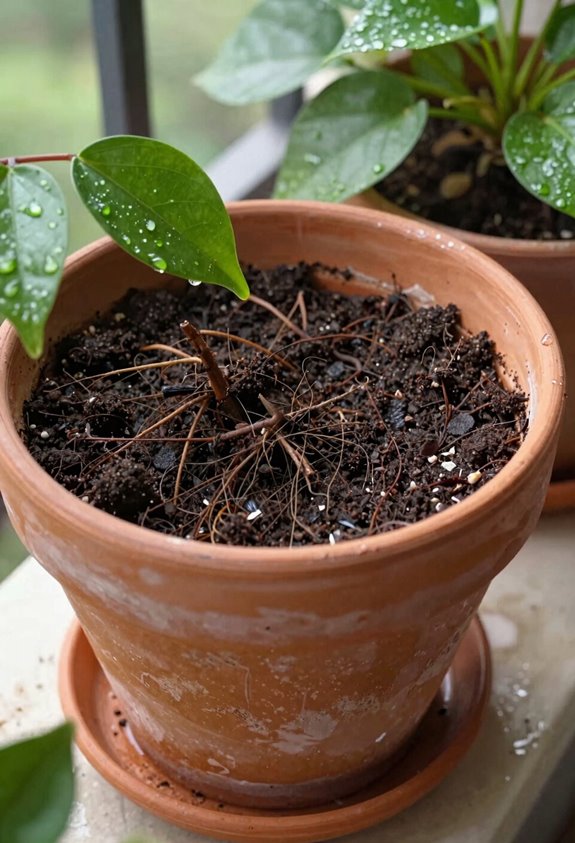
When I skip drainage holes, I’m basically creating a swamp at the bottom of my pot, where problems start. Water pools around the roots, they can’t breathe, and root rot moves in quickly. Without proper drainage, fungi and bacteria thrive in that soggy soil, which stops plants from absorbing the nutrients they need to grow. All that sitting water leaves behind salt buildup in the soil over time, and that buildup actually harms plants even more.

Premium Quality: These terra cotta pots are constructed of high-quality clay, which allows more water and air to circulate freely within the pots while yet maintaining their structural integrity. It's an excellent choice for cactus, succulents, and other plants that thrive in dry soil, and it's also appropriate for areas with lower temperatures. The high air permeability of the pot walls helps the soil to dry out more quickly

Dimension: The clay pots for plants measure 4 inches in height, 6 inches in outer diameter. Perfect size pots where you can fit different indoor or outdoor plants. Package includes 4 pcs pots, plants and soil are not included.
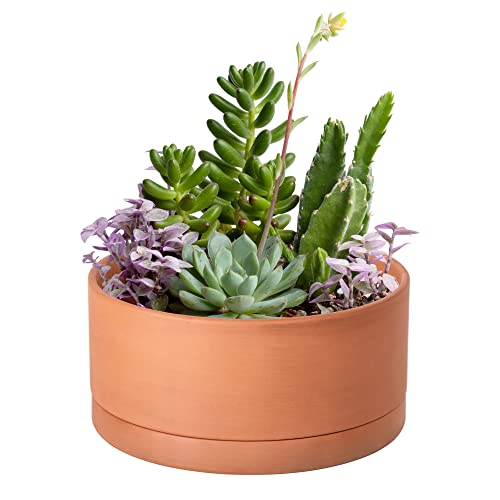
Size: 8 Inch Succulent Terracotta Shallow Pot with Drainage Hole and Saucer
Root Rot And Waterlogging
Without drainage holes, excess water doesn’t just sit on top of the soil. It pools at the bottom of the pot and creates a swampy environment that plants can’t survive in. When waterlogging happens, the soil becomes saturated and oxygen can’t reach the roots. This suffocation leads to root rot, where roots decay and can’t absorb nutrients or water properly.
Plants decline quickly in this situation. The prolonged moisture also encourages fungal and bacterial growth, which speeds up disease. Even with a careful watering schedule, pots without drainage holes make it nearly impossible to prevent root damage. Proper drainage holes are essential for plant health. They’re not optional; they’re fundamental to keeping roots alive and functioning.
Bacterial And Fungal Buildup
Drainage holes do more than just move water out of your pot. They’re your first defense against bacterial growth and dangerous fungal pathogens. Without drainage holes, water stagnation creates the perfect environment for disease development. Moisture levels stay high at the bottom of non-draining containers, which is when problems begin. Fungi like Phytophthora and Pythium thrive in wet, airless conditions. Bacterial blooms follow. Once root rot sets in, your plant’s health declines rapidly. Standing water actively invites disease rather than sitting harmlessly. Ensuring your pots have proper drainage holes gives your roots the oxygen they need and keeps harmful pathogens from establishing themselves.
Salt Accumulation In Soil
White crusty stuff on your soil surface or pot rim is salt buildup. Without drainage holes, irrigating leaves soluble salts behind as water evaporates. These fertilizer salts concentrate in the soil, creating osmotic stress that damages roots and causes leaf tip burn.
Proper drainage holes flush excess salts away continuously, protecting plants’ root zones. In pots without drainage, regular flushing with water leaches salts out, though it’s less effective than actual drainage.
Low-salt fertilizer and soil with good porosity minimize soil salinity problems. The combination of leaching and better soil keeps containerized plants healthier without salt deposits.
Should You Use Sealed Planters?
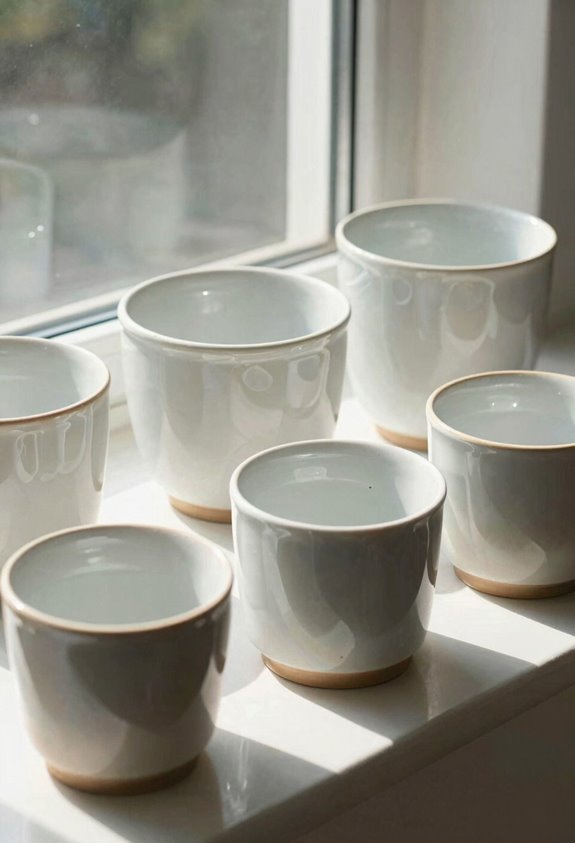
How do you keep your floors dry while still giving your plants the moisture they need? Sealed planters can be helpful for indoor use, but they require smart solutions to prevent waterlogging and root rot.
What works best:
- Place a plastic grow pot with drainage holes inside your sealed planter
- Use drip trays underneath to catch excess water
- Choose soil with excellent drainage properties
- Monitor moisture levels closely to avoid overwatering
Sealed planters protect your floors while inner pots handle the actual drainage. This setup keeps things visually appealing while giving plants what they need. The solution involves maintaining proper soil drainage and preventing water from pooling around roots. These strategies will protect your floors and keep your plants healthy.

Package includes:12 pcs self watering plastic planter with inner pots,each pot contains an inner basin

Clear Inner Pot Easily Monitor Root Growth: Each 3" self-watering pot includes a semi-transparent inner cup, making it easy to observe root development and check water levels, while ventilation holes support airflow. The white outer pot reflects heat from sunlight-suitable for bright indoor spaces like shelves or windowsills

[Clear Inner Pot – Easily Monitor Root Growth] Each 4" (3.76”) self-watering pot includes a semi-transparent inner cup, making it easy to observe root development and check water levels, while ventilation holes support airflow. The white outer pot reflects heat from sunlight—ideal for bright indoor spaces like shelves or windowsills.
What Alternatives Work Without Holes?
What if you’ve fallen in love with a pot that doesn’t have drainage holes? Several solutions work effectively.
A cache pot pairs a plastic inner pot with drainage holes inside an outer planter. Water drains from the inner pot while your surfaces stay dry. You can also use a liner or inner pot inside a decorative outer planter for the same effect.
Drip trays catch excess moisture and protect your furniture. Place them under pots to manage water buildup.
For a more hands-off approach, self-watering systems with sub-irrigation reservoirs provide moisture without standing water.
Layering stones at the pot’s bottom helps with drainage. These alternatives allow you to keep a beautiful planter while maintaining your plant’s health.

Sturdy Ceramic Material: Crafted from durable ceramic, our ceramic plant saucer is designed to be sturdy, keeps water from seeping in, not easy to fade and maintains its shape, ensuring long-lasting use for indoor outdoor

Rustic French Country look -- Decorative reusable plant saucer tray with striped edge feature a unique retro metal look & feel - Designed for Impressive Display on your Outdoor Balcony, Patio, Garden, Deck or Indoors.
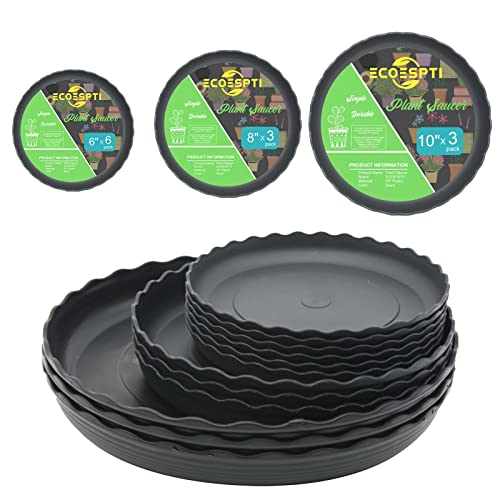
Size: This package includes 12 pcs black plant saucer. 6 pcs 15cm/6inch, 3 pcs 20cm/8inch, 3pcs 26cm/10inch outer diameter.
How Do You Drill Drainage Holes?
If you’re ready to add drainage holes to that perfect pot you found, you’ll need the right tools and a careful approach. Success depends on matching your tool to your planter material.
Success with drainage holes depends on matching your tool to your planter material.
For plastic pots, use a spur-point drill bit starting at 1/2 inch, drilling slowly to prevent melting. With fiberglass planters, switch to a spade bit between 1/2 and 1 inch, drilling from the interior after carefully marking your hole location. Follow this process:
- Mark interior positions before drilling begins
- Drill over scrap wood to protect surfaces
- Use a chamfer bit on fiberglass to smooth rough edges
- Vacuum debris immediately after finishing
Protecting your workspace reduces cleanup time, and pre-drilled planters offer convenient shortcuts when building your collection.

【Self-Watering Design】These 4 inch self watering pots for indoor plants are designed with a wick rope that draws water from the reservoir at the bottom. The set of 6 plastic self watering planter provides an optimal air circulation system for plant roots

INCLUDES: Pot with saucer for almost any type of plant; ideal for indoor or outdoor decor

PLANT POTS WITH DRAINAGE: Each ceramic planter features a drainage hole and a matching ceramic saucer permanently attached to the bottom, eliminating the hassle of loose trays while helping catch excess water and protect furniture surfaces. Five premium mesh pads are included to prevent soil loss while promoting healthy root growth. These plant pots with drainage make plant care simple and convenient, allowing both beginners and experienced plant lovers to enjoy healthier plants with less effort.
Which Plants Can Skip Drainage?
Not every plant demands drainage holes. I’ve killed more plants by overwatering than by choosing the wrong pot. Snake Plants and Spider Plants thrive in planters without drainage holes because they prefer drier conditions. The secret is moisture control. I water only when the top two inches of soil feel dry, which prevents root rot entirely. With no-drainage plants, I use inner pots or water reservoirs carefully, checking soil frequently. Larger containers help too; they dry slower and give roots breathing room. Careful watering beats perfect drainage every time. These no-drainage plants suit a busy schedule because they’re forgiving when a watering day is skipped.
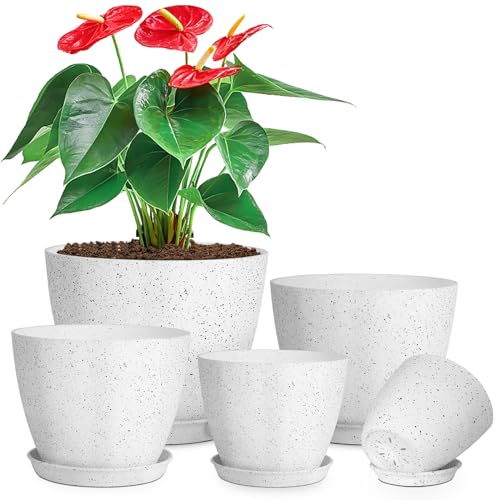
Different Size Planters: Set of 5 plastic planters in different sizes (7.5/6.5/5.7/4.9/4.1 inches) to accommodate various small to medium-sized indoor or outdoor plants.

Garden Planting Container: 20 Pack flower pots, including 5 pieces each of 4 inch;5 inch;6 inch and 7 inch clear nursery pots. These pots accommodate different plants, from small succulents to medium-sized foliage, catering to diverse gardening needs

【Practical Size Combo】-These plastic planters indoor combines with 6 different sizes, 8 inch 7inch 6.5 inch 6 inch 5.5 inch 5 inch which are suitable for planting most small and medium-sized home office plants.Ideal gift,Carbonfree Certified.